Aristocracy has three successive ages. First superiority, then privileges and finally vanities. Having passed from the first, it degenerates in the second and dies in the third.
• Original version: L'aristocratie a trois âges successifs : l'âge des supériorités, l'âge des privilèges, l'âge des vanités ; sortie du premier, elle dégènère dans le second et s'éteint dans le dernier.
• Book I, Ch. 1 : The Vallé-aux-loups
Aristocracy has three successive ages, — the age of superiorities, the age of privileges, and the age of vanities; having passed out of the first, it degenerates in the second, and dies away in the third.
What It Means
This is a placeholder explanation generated by the low-overhead model. It interprets "Aristocracy has three successive ages, — the age of superiorities, the age of privileges, and the age of vanities; having passed out of the first, it degenerates in the second, and dies away in the third." in the context of "Variants: Aristocracy has three successive ages. First superiorities, then privileges and finally vanities. Having passed from the first, it degenerates in the second and dies in the third.
Aristocracy has three successive ages. First superiority, then privileges and finally vanities. Having passed from the first, it degenerates in the second and dies in the third.
• Original version: L'aristocratie a trois âges successifs : l'âge des supériorités, l'âge des privilèges, l'âge des vanités ; sortie du premier, elle dégènère dans le second et s'éteint dans le dernier.
• Book I, Ch. 1 : The Vallé-aux-loups" to mean that wisdom is timeless.

Tags
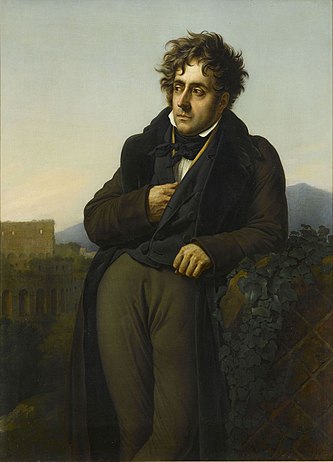
About François-René de Chateaubriand