Link Copied!
Emil Cioran Quotes (1911-1995)
Philosopher
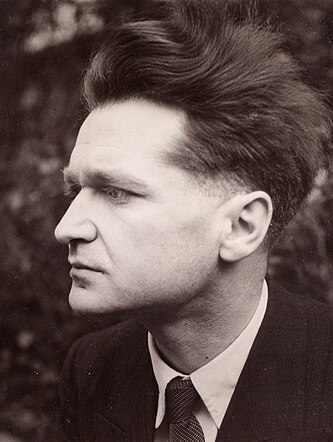


About Emil Cioran
Emil Cioran (8 April 1911 – 20 June 1995) was a Romanian philosopher and essayist whose work is known for its pervasive philosophical pessimism, which frequently engages with issues of suffering, decay, and nihilism.
Best Emil Cioran Quotes
Shortest
Earliest
Explore our curated collection of the most famous and impactful Emil Cioran quotes.

“Existing is plagiarism.”






“Consciousness is nature's nightmare.”




“We are all secularised anarchists today.”


“Anxiety — or the fanaticism of the worst.”



Emil Cioran Quotes by Topic
Find exactly what you are looking for by browsing this categorized list of Emil Cioran quotes by topic.
Emil Cioran on Antinatalism 22 quotes
View all 22 quotes on Antinatalism →Emil Cioran on Philosophical pessimism 22 quotes
“Can it really be that for us existence means exile, and nothingness, home?”

Emil Cioran on Suicide 3 quotes
“It is not worth the bother of killing yourself, since you always kill yourself too late.”

Emil Cioran on History 2 quotes
“Isn't history ultimately the result of our fear of boredom?”

Emil Cioran on Impostor
Emil Cioran on Aversion
“Jealousy - that jumble of secret worship and ostensible aversion.”

Emil Cioran on Quotations
Emil Cioran on Language
“One does not inhabit a country; one inhabits a language. That is our country, our fatherland — and no other.”

Emil Cioran on Self-pity
Emil Cioran on Syllogism
“All important things bear the sign of death: Haven't people learned yet that the time of superficial intellectual games is over, that agony is infinitely more important than syllogism, that a cry of despair is more revealing than the most subtle thought, and that tears always have deeper roots than smiles?”

Emil Cioran on Revenge
“Doubtless, revenge is not always sweet, once it is consummated we feel inferior to our victim, or else we are tangled in the subtleties of remorse; so vengeance too has its venom, though it comes closer to what we are, to what we feel, to the very law of the self; it is also healthier than magnanimity. The Furies were held to antedate the gods, Zeus included. Vengeance before Divinity! This is the Major intuition of ancient mythology.”

Emil Cioran on Cemetery
“I have a weakness for cemeteries, though they aren't so beautiful anymore, because they are simply overpopulated! When I meet friends or people I know who are going through a difficult period, I usually have this advice for them: "Go for twenty minutes in a cemetery and you'll see that, though your worry won't disappear, you'll almost forget about it and you'll feel better." Just a few days ago I told a young woman who was suffering fearfully from an unhappy love, "Since you don't live far from Montparnasse, take a walk through the cemetery, just half an hour, and you will see that your misery will appear bearable." In such a situation, it is much better to do that than to go to a doctor; there is no medicine that can help. To visit a cemetery in such a situation is a lesson, a lesson in wisdom! I have always practiced such methods, or recommended them, although it may not seem altogether serious, but it has been effective in every case. What can one say that is meaningful to someone in despair? Absolutely nothing, or almost nothing. My advice shows immediate results.”

Emil Cioran on Failure
“The most shocking things in life are perhaps the great defeats, and there are many of them, for everyone. When one gets to know people in that situation, one experiences the most of them. I am very often visited by people in complete despair, mostly young, who feel that they have failed. It is quite an extraordinarily important lesson, for there are people for whom it is not easy to go through such a crisis; it is a matter of sensitivity, of nerves, possibly even something inherited. Nevertheless, there are these crises in every social sphere and one must say that, fundamentally, failure merely constitutes the experience of life. That is really not so bad for the one who comprehends everything—what can happen to him? But it hits the ambitious exceptionally hard, those who have a plan for their lives, who think about the future, who have a future. Just because they take everything so seriously, I say to these people, "Go to the cemetery!" and it is right, and the results prove it. It is the only weapon with which to minimize such an essentially tragic situation.... Best of all, go find the grave of a friend! It is perhaps absurd and yet it has not only meaning, but is, as I said, the only way to alleviate a personal drama. One learns in life just about everything but this, how to survive such a crisis. And in literary circles, which are often afflicted in this regard, there is certainly a lot of disappointment.”

Emil Cioran on Sleep
“Sleep breaks up the state of waking life, but for the sleepless one, who remains lucid in the middle of the night, there is no difference between day and night. He lives in a kind of ceaseless, endless time. It is another time and another world. Life in essence can only be sustained because of the discontinuity. Why else does one sleep? Not to rest, but above all to forget. A person who wakes up after a night of unbroken sleep has the illusion of beginning something new. When one instead remains awake the whole night long, nothing new begins. At eight in the morning one is in the same condition as at eight at night and one's perspective on things is naturally completely different. I believe that the fact that I have never believed in progress, that I have never allowed myself to be seduced by "progress," has to do with that. One has simply a completely different attitude toward time: not time that passes, but time that will not go away. That alters a life, naturally. And on account of that I believe, now as then, that the greatest experiences one can have in life are white nights: they mark one forever, until death. That is of course understandable: in former times they tortured people by depriving them of sleep; after a few sleepless nights, one would admit to or sign anything. The secret of life is sleep; it makes life possible. If one could prevent mankind from sleeping, I am convinced that a massacre without end would ensue; it would mean the end of history.”

What Emil Cioran Said About Others
Discover personal opinions Emil Cioran shared regarding contemporaries.
Emil Cioran on Joseph de Maistre
“[Maistre] fulminated as a littérateur, even as a grammarian, and his frenzies not only failed to diminish his passion for the correct and elegant formulation but augmented it even more. An epileptic temperament infatuated with the trifles of the Word: trances and boutades, convulsions and bagatelles, grace and a foaming mouth – everything combined to compose a pamphleteering universe at whose heart he harried ‘error’ with blows of invective, those ultimatums of impotence.”

Emil Cioran on Friedrich Nietzsche
“Nothing is more irritating than those works which “coordinate” the luxuriant products of a mind that has focused on just about everything except a system. What is the use of giving a so-called coherence to Nietzsche’s ideas, for example, on the pretext that they revolve around a central motif? Nietzsche is a sum of attitudes, and it only diminishes him to comb his work for a will to order, a thirst for unity. A captive of his moods, he has recorded their variations. His philosophy, a meditation on his whims, is mistakenly searched by the scholars for the constants it rejects.”

Quotes About Emil Cioran
Gain deeper perspective through quotes about Emil Cioran from others.
Nic Pizzolatto on Emil Cioran
“As an aphorist, Cioran has no rivals other than perhaps Nietzsche, and many of his philosophies are echoed by Ligotti. But Ligotti is far more disturbing than Cioran, who is actually very funny. In exploring these philosophies, nobody I've read has expressed the idea of humanity as aberration more powerfully than Cioran and Ligotti.”
Saint-John Perse on Emil Cioran
Susan Sontag on Emil Cioran 2 quotes
“...the most distinguished figure in the tradition since Kierkegaard, Nietzsche and Wittgenstein.”

About Emil Cioran
Emil Cioran (8 April 1911 – 20 June 1995) was a Romanian philosopher and essayist whose work is known for its pervasive philosophical pessimism, which frequently engages with issues of suffering, decay, and nihilism.