Link Copied!
E. B. White Quotes (1899-1985)
Writer, Poet
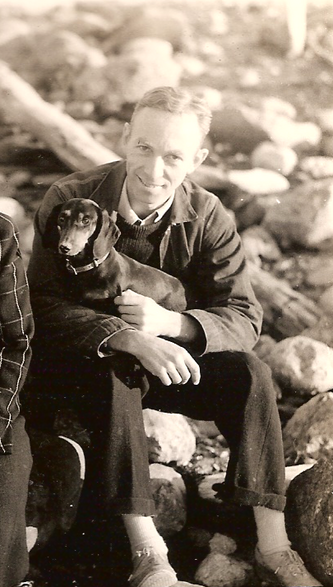




About E. B. White
Elwyn Brooks White (July 11, 1899 – October 1, 1985) was an American essayist, columnist, poet and editor. He is best known today for his work in a writers' guide, The Elements of Style, and for three children's books Charlotte's Web, Stuart Little and The Trumpet of the Swan generally regarded as classics.
Best E. B. White Quotes
Shortest
Earliest
Explore our curated collection of the most famous and impactful E. B. White quotes.
“Salutations”

“One of the most time-consuming things is to have an enemy.”
“Everything in life is somewhere else, and you get there in a car.”

“Everything (he kept saying) is something it isn't. And everybody is always somewhere else.”


“Did it ever occur to you that there's no limit to how complicated things can get, on account of one thing always leading to another?”
“I discovered, though, that once having given a pig an enema there is no turning back, no chance of resuming one of life's more stereotyped roles.”
“Humor can be dissected, as a frog can, but the thing dies in the process and the innards are discouraging to any but the pure scientific mind.”
“I have occasionally had the exquisite thrill of putting my finger on a little capsule of truth, and heard it give the faint squeak of mortality under my pressure.”

“I would feel more optimistic about a bright future for man if he spent less time proving that he can outwit Nature and more time tasting her sweetness and respecting her seniority.”

“As long as there is one upright man, as long as there is one compassionate woman, the contagion may spread and the scene is not desolate. Hope is the one thing left to us in a bad time.”
E. B. White Quotes by Topic
Find exactly what you are looking for by browsing this categorized list of E. B. White quotes by topic.
E. B. White on Television 2 quotes
“Television will enormously enlarge the eye's range, and, like radio, will advertise the Elsewhere. Together with the tabs, the mags, and the movies, it will insist that we forget the primary and the near in favor of the secondary and the remote.”

E. B. White on Genius
E. B. White on Christmas
E. B. White on Pies
E. B. White on Health
“If a man is in health, he doesn't need to take anybody else's temperature to know where he is going.”

E. B. White on Invention
E. B. White on Necessity
E. B. White on Sauce
E. B. White on Weather
“Sailors have an expression about the weather: they say the weather is a great bluffer. I guess the same is true of our human society.”

E. B. White on Poets
E. B. White on Essay
“A great deal of writing is not "plotted"—most of my essays have no plot structure, they are a ramble in the woods, or a ramble in the basement of my mind.”
E. B. White on Fear
“I am a member of a party of one, and I live in an age of fear. Nothing lately has unsettled my party and raised my fears so much as your editorial, on Thanksgiving Day, suggesting that employees should be required to state their beliefs in order to hold their jobs. The idea is inconsistent with our constitutional theory and has been stubbornly opposed by watchful men since the early days of the Republic.”

What E. B. White Said About Others
Discover personal opinions E. B. White shared regarding contemporaries.
E. B. White on Editors
E. B. White on Rachel Carson
E. B. White on Harold Ross
“The New Yorker had an interest in publishing any writer that could turn in a good piece. It read everything submitted. Hemingway, Faulkner, and the others were well established and well paid when The New Yorker came on the scene. The magazine would have been glad to publish them, but it didn’t have the money to pay them off, and for the most part they didn’t submit. They were selling to The Saturday Evening Post and other well-heeled publications, and in general were not inclined to contribute to the small, new, impecunious weekly. Also, some of them, I would guess, did not feel sympathetic to The New Yorker’s frivolity. Ross had no great urge to publish the big names; he was far more interested in turning up new and yet undiscovered talent, the Helen Hokinsons and the James Thurbers. We did publish some things by Wolfe—“Only the Dead Know Brooklyn” was one. I believe we published something by Fitzgerald. But Ross didn’t waste much time trying to corral “emerged” writers. He was looking for the ones that were found by turning over a stone.”

About E. B. White
Elwyn Brooks White (July 11, 1899 – October 1, 1985) was an American essayist, columnist, poet and editor. He is best known today for his work in a writers' guide, The Elements of Style, and for three children's books Charlotte's Web, Stuart Little and The Trumpet of the Swan generally regarded as classics.