Link Copied!
David Hume Quotes (1711-1776)
Philosopher



























About David Hume
David Hume (7 May 1711, N.S. April 26, O.S. – 25 August 1776) was a Scottish philosopher, historian, economist and essayist.
Best David Hume Quotes
Shortest
Earliest
Explore our curated collection of the most famous and impactful David Hume quotes.
“Hypothetical liberty is allowed to everyone who is not a prisoner and in chains”
“The life of man is of no greater importance to the universe than that of an oyster.”

“A propensity to hope and joy is real riches: One to fear and sorrow, real poverty.”

“During such calm sunshine of the mind, these spectres of false divinity never make their appearance.”

“The conclusion [of the essay 'Of the Protestant Succession'] shows me a Whig, but a very sceptical one.”
“Generally speaking, the errors in religion are dangerous; those in philosophy only ridiculous.”

“By liberty, then, we can only mean a power of acting or not acting, according to the determinations of the will.”

“The sense of justice and injustice is not deriv'd from nature, but arises artificially... from education, and human conventions.”

“He is happy, whose circumstances suit his temper; but he is more excellent, who can suit his temper to any circumstances.”

“What would become of history, had we not a dependence on the veracity of the historian, according to the experience, what we have had of mankind?”

“That the sun will not rise to-morrow is no less intelligible a proposition, and implies no contradiction, than the affirmation, that it will rise.”

“In vain, therefore, should we pretend to determine any single event, or infer any cause or effect, without the assistance of observation and experience.”

“'Tis only from the selfishness and confin'd generosity of men, along with the scanty provision nature has made for his wants, that justice derives its origin.”

“Nature may certainly produce whatever can arise from habit: Nay, habit is nothing but one of the principles of nature, and derives all its force from that origin.”

“I say, then, that belief is nothing but a more vivid, lively, forcible, firm, steady conception of an object, than what the imagination alone is ever able to attain”

“This avidity alone, of acquiring goods and possessions for ourselves and our nearest friends, is insatiable, perpetual, universal, and directly destructive of society.”
“As to the Approbation or Esteem of those Blockheads who call themselves the Public, & whom a Bookseller, a Lord, a Priest, or a Party can guide, I do most heartily despise it.”
“... no testimony is sufficient to establish a miracle, unless the testimony be of such a kind, that its falsehood would be more miraculous, than the fact, which it endeavors to establish.”
“The same good sense, that directs men in the ordinary occurrences of life, is not hearkened to in religious matters, which are supposed to be placed altogether above the cognizance of human reason.”
“Morals excite passions, and produce or prevent actions. Reason of itself is utterly impotent in this particular. The rules of morality, therefore, are not conclusions of our reason.”

“It is natural for us to seek a Standard of Taste; a rule, by which the various sentiments of men may be reconciled; at least, a decision, afforded, confirming one sentiment, and condemning another.”
“From the comparison of theism and idolatry, we may form some other observations, which will also confirm the vulgar observation that the corruption of the best things gives rise to the worst.”
David Hume Quotes by Topic
Find exactly what you are looking for by browsing this categorized list of David Hume quotes by topic.
David Hume on Reason 13 quotes
“If we reason a priori, anything may appear able to produce anything.”
David Hume on Philosophical pessimism 6 quotes
“All the goods of life united would not make a very happy man; but all the ills united would make a wretch indeed; and any one of them almost (and who can be free from every one?) nay often the absence of one good (and who can possess all?) is sufficient to render life ineligible.”

David Hume on Ambiguity 5 quotes
“The chief obstacle... to our improvement in the moral and metaphysical sciences is the obscurity of the ideas, and ambiguity of the terms.”

David Hume on Understanding 4 quotes
“Morals and criticism are not so properly objects of the understanding as of taste and sentiment.”

David Hume on Animals 4 quotes
“Next to the ridicule of denying an evident truth, is that of taking much pains to defend it; and no truth appears to me more evident, than that beasts are endow'd with thought and reason as well as men. The arguments are in this case so obvious, that they never escape the most stupid and ignorant.”

David Hume on Wild animal suffering 4 quotes
“The whole earth, believe me ... is cursed and polluted. A perpetual war is kindled amongst all living creatures. Necessity, hunger, want, stimulate the strong and courageous: Fear, anxiety, terror, agitate the weak and infirm. The first entrance into life gives anguish to the new-born infant and to its wretched parent: Weakness, impotence, distress, attend each stage of that life: and it is at last finished in agony and horror.”

David Hume on Suicide 3 quotes
“If suicide is a crime, only cowardice can drive us to it. If it is not a crime, both prudence and courage should lead us to rid ourselves of existence when it becomes a burden. If that time comes, suicide is our only way to be useful to society—setting an example which, if imitated, would preserve to everyone his chance for happiness in life, and effectively free him from all risk of misery.”

David Hume on Right to die 3 quotes
“If suicide is a crime, only cowardice can drive us to it. If it is not a crime, both prudence and courage should lead us to rid ourselves of existence when it becomes a burden. If that time comes, suicide is our only way to be useful to society—setting an example which, if imitated, would preserve to everyone his chance for happiness in life, and effectively free him from all risk of misery.”

David Hume on Beauty 2 quotes
“Beauty is no quality in things themselves: It exists merely in the mind which contemplates them; and each mind perceives a different beauty.”

David Hume on Quantity 2 quotes
“Does it contain any abstract reasoning concerning quantity or number? No. Does it contain any experimental reasoning concerning matter of fact and existence? No. Commit it then to the flames: for it can contain nothing but sophistry and illusion.”
David Hume on Causality 2 quotes
“If reason (I mean abstract reason, derived from inquiries a priori) be not alike mute with regard to all questions concerning cause and effect, this sentence at least it will venture to pronounce, That a mental world, or universe of ideas, requires a cause as much, as does a material world, or universe of objects; and, if similar in its arrangement, must require a similar cause. For what is there in this subject, which should occasion a different conclusion or inference? In an abstract view, they are entirely alike; and no difficulty attends the one supposition, which is not common to both of them.”
What David Hume Said About Others
Discover personal opinions David Hume shared regarding contemporaries.
David Hume on Edward I of England 3 quotes
“But the chiefe advantage which the people of England reaped, and still continue to reap, from the reign of this great prince, was the correction, extension, amendment, and establishment of the laws, which Edward maintained in great vigour, and left much improved to posterity: For the work of wise legislation commonly remain; while the acquisitions of conquerors often perish with them. This merit has justly gained to Edward the appellation of the English Justinian.”

David Hume on Thucydides 2 quotes
“The first page of Thucydides is, in my opinion, the commencement of real history. All preceding narrations are so intermixt with fable, that philosophers ought to abandon them, in a great measure, to the embellishment of poets and orators.”

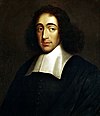
David Hume on Baruch Spinoza 2 quotes
“I assert, that the doctrine of the immateriality, simplicity, and indivisibility of a thinking substance is a true atheism, and will serve to justify all those sentiments, for which Spinoza is so universally infamous. From this topic, I hope at least to reap one advantage, that my adversaries will not have any pretext to render the present doctrine odious by their declamations, when they see that they can be so easily retorted on them.”
David Hume on Charles II of England 2 quotes
“When we consider him as a sovereign, his character, though not altogether destitute of virtue, was in the main dangerous to his people, and dishonourable to himself. Negligent of the interests of the nation, careless of its glory, averse to its religion, jealous of its liberty, lavish of its treasure, sparing only of its blood; he exposed it by his measures, though he ever appeared but in sport, to the danger of a furious civil war, and even to the ruin and ignominy of a foreign conquest. Yet may all these enormities, if fairly and candidly examined, be imputed, in a great measure, to the indolence of his temper; a fault, which, however unfortunate in a monarch, it is impossible for us to regard with great severity.”

David Hume on Edward Fairfax
“Fairfax has translated Tasso with an elegance and ease, and at the same time with an exactness, which for that age are surprising.”

David Hume on Oliver Cromwell
“His character does not appear more extraordinary and unusual by the mixture of so much absurdity with so much penetration, than by his tempering such violent ambition, and such enraged fanaticism with so much regard to justice and humanity.”

David Hume on John Napier
“Among other persons of distinction, who united themselves to him [the earl of Montrose, in support of the royalists and Charles I of England], was Lord Napier of Merchiston, son of the famous inventor of the logarithms, the person to whom the title of GREAT MAN is more justly due, than to any other whom his country ever produced.”

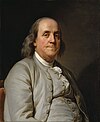
David Hume on Benjamin Franklin
“America has sent us many good things, gold, silver, sugar, tobacco; but you are the first philosopher for whom we are beholden to her. It is our own fault that we have not kept him; whence it appears that we do not agree with Solomon, that wisdom is above gold; for we take good care never to send back an ounce of the latter, which we once lay our fingers upon.”
David Hume on Edward Gibbon
“As I ran through your volume of history with great avidity and impatience, I cannot forbear discovering somewhat of the same impatience in returning you thanks for your agreeable present, and expressing the satisfaction which the performance has given me. Whether I consider the dignity of your style, the depth of your matter, or the extensiveness of your learning, I must regard the work as equally the object of esteem.”

David Hume on Edmund Spenser
“This poet contains great beauties, a sweet and harmonious versification, easy elocution, a fine imagination: Yet ... it soon becomes a kind of task-reading; and it requires some effort and resolution to carry us on to the end of his long performance. ...the affectations, and conceits, and fopperies of chivalry...appear ridiculous... The tediousness of continued allegory, and that too seldom striking or ingenious, has also contributed to render the Fairy Queen peculiarly tiresome; not to mention the too great frequency of its descriptions, and the languor of its stanza. Upon the whole, Spencer maintains his place in the shelves among our English classics: But he is seldom seen on the table.”

David Hume on Pierre Bayle
“When men follow this blind and powerful instinct of nature, they always suppose the very images, presented by the senses, to be the external objects, and never entertain any suspicion, that the one are nothing but representations of the other....This argument is drawn from Dr. Berkeley; and indeed most of the writings of that very ingenious author form the best lessons of scepticism which are to be found either among the ancient or modern philosophers, Bayle not excepted. He professes, however, in his title page (and undoubtedly with great truth) to have composed his book against the sceptics as well as against the atheists and free-thinkers. But that all his arguments, though otherwise intended, are, in reality, merely sceptical, appears from this, that they admit of no answer and produce no conviction. Their only effect is to cause that momentary amazement and irresolution and confusion, which is the result of scepticism.”

David Hume on George Berkeley
“When men follow this blind and powerful instinct of nature, they always suppose the very images, presented by the senses, to be the external objects, and never entertain any suspicion, that the one are nothing but representations of the other. ...This argument is drawn from Dr. Berkeley; and indeed most of the writings of that very ingenious author form the best lessons of scepticism which are to be found either among the ancient or modern philosophers, Bayle not excepted. He professes, however, in his title page (and undoubtedly with great truth) to have composed his book against the sceptics as well as against the atheists and free-thinkers. But that all his arguments, though otherwise intended, are, in reality, merely sceptical, appears from this, that they admit of no answer and produce no conviction. Their only effect is to cause that momentary amazement and irresolution and confusion, which is the result of scepticism.”

David Hume on Richard I of England
“The most shining part of this prince's character are his military talents. No man, even in that romantic age, carried personal courage and intrepidity to a greater height, and this quality gained him the appellation of the lion-hearted, 'Coeur de Lion.' He passionately loved glory, chiefly military glory; and as his conduct in the field was not inferior to his valour, he seems to have possessed every talent necessary for acquiring it. His resentments also were high, his pride unconquerable, and his subjects as well as his neighbours, had therefore reason to apprehend, from the continuance of his reign, a perpetual scene of blood and violence. Of an impetuous and vehement spirit, he was distinguished by all the good as well as the bad qualities incident to that character; he was open, frank, generous, sincere, and brave; he was revengeful, domineering, ambitious, haughty, and cruel; and was thus better calculated to dazzle men by the splendour of his enterprises, than either to promote their happiness or his own grandeur by a sound and well regulated policy.”

David Hume on John, King of England
“The character of this prince is nothing but a complication of vices, equally mean and odious; ruinous to himself, and destructive to his people. Cowardice, inactivity, folly, levity, licentiousness, ingratitude, treachery, tyranny, and cruelty; all these qualities appear too evidently in the several incidents of his life to give us room to suspect, that the disagreeable picture has been any-wile overcharged by the prejudice of the antient historians. It is hard to say, whether his conduct to his father, his brother, his nephew, or his subjects was most culpable; or whether his crimes in these respects were not even exceeded by the baseness, which appeared in his transactions with the King of France, the Pope, and the barons. His dominions, when they devolved to him by the death of his brother, were more extensive than have, ever since his time, been ruled by any English monarch: But he first lost by his misconduct the flourishing provinces in France, the antient patrimony of his family: He subjected his kingdom to a shameful vassalage under the fee of Rome: He saw the prerogatives of his crown diminished by law, and still more reduced by faction: And he died at last, when in danger of being totally expelled by a foreign power, and of either ending his life miserably in prison, or seeking shelter as a fugitive from the pursuit of his enemies.”
Quotes About David Hume
Gain deeper perspective through quotes about David Hume from others.
Annette Baier on David Hume
“I think there is at least one moral theory of respectable lineage and good independent credentials that can accommodate such fairly minimal intuitions about us and animals. This is the theory Hume offers us. I do not consider Hume a forerunner of utilitarianism, and therefore what I shall go on to say in defense of Hume is not intended as a defense of any version of utilitarianism. I see Hume to be much closer to Aristotle than to Mill, to be offering us a theory about human virtues, not a theory about utility maximization and the duties that might involve.”

Christian Bay on David Hume
“Standards of morality and of justice are what Hume calls "artifacts"; they are neither divinely ordained, nor an integral part of original human nature, nor revealed by pure reason. They are an outcome of the practical experience of mankind, and the sole consideration in the slow test of time is the utility each moral rule can demonstrate toward promoting human welfare. Hume may be called a precursor to Darwin in the sphere of ethics. In effect, he proclaimed a doctrine of the survival of the fittest among human conventions—fittest not in terms of good teeth but in terms of maximum social utility.”
John S. Bell on David Hume
“Well, it does not really explain things; in fact the founding fathers of quantum mechanics rather prided themselves on giving up the idea of explanation. They were very proud that they dealt only with phenomena: they refused to look behind the phenomena, regarding that as the price one had to pay for coming to terms with nature. And it is a fact of history that the people who took that agnostic attitude towards the real world on the microphysical level were very successful. At the time it was a good thing to do. But I don't believe it will be so indefinitely. Of course, I cannot produce theorems to that effect. If you go back to, say, David Hume, who made a careful analysis of our reasons for believing things, you find that there is no good reason for believing that the sun will come up tomorrow, or that this programme will ever be broadcast. It's a habit we have, of believing that things will continue very much as they did before. However, it is a fact that this seems to be a good habit! I cannot make that a theorem, because I think Hume's analysis is sound, but nevertheless I do believe it's a good habit, to look for explanations.”
Edwin Arthur Burtt on David Hume
“Berkeley, Hume, Kant, Fichte, Hegel, James, Bergson all are united in one earnest attempt, the attempt to reinstate man with his high spiritual claims in a place of importance in the cosmic scheme.”
Alfred Cobban on David Hume 2 quotes
“David Hume, sceptic, suspected atheist and Tory, was not a man with whom Burke was likely to claim affiliations; but Hume it is, nevertheless, who in the first half of the eighteenth century introduces clearly those principles which were to emerge more definitely later in the theories of Burke and the Romantic movement. Locke had substituted empiricism for rationalism in philosophy, but he still treated ethics and politics as deductive sciences of the same nature as mathematics. Hume carries the attack on rationalism into these fields and enounces a naturalism which anticipates in many respects the subsequent return to nature of the Romantics.”
William Ewart Gladstone on David Hume
“[R]ead Hume—a delightful history—barring the religious principles.”

Friedrich Hayek on David Hume 7 quotes
“Hume gives us probably the only comprehensive statement of the legal and political philosophy which later became known as liberalism... Hume's History did probably as much to spread Whig liberalism throughout Europe in the eighteenth century as Macaulay's History did in the nineteenth.”

G. W. F. Hegel on David Hume
“Humean skepticism should be well distinguished from Greek skepticism. Hume's assumes as basic the truth of the empirical, of feeling, of intuition, and from that base contests general determinations and laws—because they lack justification from sense perception. Ancient skepticism was so far from making feeling and intuition the principle of truth that, on the contrary, it turned first of all against the senses.”
Thomas Jefferson on David Hume 2 quotes
“Every one knows that judicious matter and charms of style have rendered Hume's history the manual of every student. I remember well the enthusiasm with which I devoured it when young, and the length of time, the research and reflection which were necessary to eradicate the poison it had instilled into my mind. It was unfortunate that he first took up the history of the Stuarts, became their apologist, and advocated all their enormities... [H]e still continues to be put into the hands of all our young people, and to infect them with the poison of his own principles of government. It is this book which has undermined the free principles of the English government, has persuaded readers of all classes that these were usurpations on the legitimate and salutary rights of the crown, and has spread universal toryism over the land.”

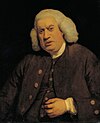
Samuel Johnson on David Hume
Immanuel Kant on David Hume
“I freely admit that the remembrance of David Hume was the very thing that many years ago first interrupted my dogmatic slumber and gave a completely different direction to my researches in the field of speculative philosophy.”

Thomas Babington Macaulay on David Hume
“Hume, from whose fascinating narrative the great mass of the reading public are still contented to take their opinions, hated religion so much that he hated liberty for having been allied with religion, and has pleaded the cause of tyranny with the dexterity of an advocate, while affecting the impartiality of a judge.”

Misattributed Quotes
Quotes mistakenly credited to David Hume
“Character is the result of a system of stereotyped principles.”
“The difference between a man who is led by opinion or emotion and one who is led by reason. The former, whether he will or not, performs things of which he is entirely ignorant; the latter is subordinate to no one, and only does those things which he knows to be of primary importance in his life, and which on that account he desires the most; and therefore I call the former a slave, but the latter free.”
About David Hume
David Hume (7 May 1711, N.S. April 26, O.S. – 25 August 1776) was a Scottish philosopher, historian, economist and essayist.