Link Copied!
David Hume Quotes (1711-1776)
Philosopher





























About David Hume
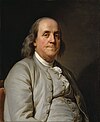
David Hume (7 May 1711, N.S. April 26, O.S. – 25 August 1776) was a Scottish philosopher, historian, economist and essayist.
Best David Hume Quotes
Shortest
Earliest
Explore our curated collection of the most famous and impactful David Hume quotes.
“Hypothetical liberty is allowed to everyone who is not a prisoner and in chains”
“The life of man is of no greater importance to the universe than that of an oyster.”

“A propensity to hope and joy is real riches: One to fear and sorrow, real poverty.”

“During such calm sunshine of the mind, these spectres of false divinity never make their appearance.”

“The conclusion [of the essay 'Of the Protestant Succession'] shows me a Whig, but a very sceptical one.”
“Generally speaking, the errors in religion are dangerous; those in philosophy only ridiculous.”

“By liberty, then, we can only mean a power of acting or not acting, according to the determinations of the will.”

“The sense of justice and injustice is not deriv'd from nature, but arises artificially... from education, and human conventions.”

“He is happy, whose circumstances suit his temper; but he is more excellent, who can suit his temper to any circumstances.”

“What would become of history, had we not a dependence on the veracity of the historian, according to the experience, what we have had of mankind?”

“That the sun will not rise to-morrow is no less intelligible a proposition, and implies no contradiction, than the affirmation, that it will rise.”

“In vain, therefore, should we pretend to determine any single event, or infer any cause or effect, without the assistance of observation and experience.”

“'Tis only from the selfishness and confin'd generosity of men, along with the scanty provision nature has made for his wants, that justice derives its origin.”

“Nature may certainly produce whatever can arise from habit: Nay, habit is nothing but one of the principles of nature, and derives all its force from that origin.”

“I say, then, that belief is nothing but a more vivid, lively, forcible, firm, steady conception of an object, than what the imagination alone is ever able to attain”

“This avidity alone, of acquiring goods and possessions for ourselves and our nearest friends, is insatiable, perpetual, universal, and directly destructive of society.”
“As to the Approbation or Esteem of those Blockheads who call themselves the Public, & whom a Bookseller, a Lord, a Priest, or a Party can guide, I do most heartily despise it.”
“... no testimony is sufficient to establish a miracle, unless the testimony be of such a kind, that its falsehood would be more miraculous, than the fact, which it endeavors to establish.”
“The same good sense, that directs men in the ordinary occurrences of life, is not hearkened to in religious matters, which are supposed to be placed altogether above the cognizance of human reason.”
“Morals excite passions, and produce or prevent actions. Reason of itself is utterly impotent in this particular. The rules of morality, therefore, are not conclusions of our reason.”

“It is natural for us to seek a Standard of Taste; a rule, by which the various sentiments of men may be reconciled; at least, a decision, afforded, confirming one sentiment, and condemning another.”
“From the comparison of theism and idolatry, we may form some other observations, which will also confirm the vulgar observation that the corruption of the best things gives rise to the worst.”
“Though experience be our only guide in reasoning concerning matters of fact; it must be acknowledged, that this guide is not altogether infallible, but in some cases is apt to lead us into errors.”

“The great end of all human industry, is the attainment of happiness. For this were arts invented, sciences cultivated, laws ordained, and societies modelled, by the most profound wisdom of patriots and legislators.”

“The heights of popularity and patriotism are still the beaten road to power and tyranny ; flattery to treachery ; standing armies to arbitrary government ; and the glory of God to the temporal interest of the clergy.”

“Does a man of sense run after every silly tale of hobgoblins or fairies, and canvass particularly the evidence? I never knew anyone, that examined and deliberated about nonsense who did not believe it before the end of his enquiries.”
“But though all the general rules of art are founded only on experience and on the observation of the common sentiments of human nature, we must not imagine, that, on every occasion, the feelings of men will be conformable to these rules.”
“People who invented the word charity, and used it in a good sense, inculcated more clearly, and much more efficaciously, the precept, Be charitable, than any pretended legislator or prophet, who should insert such a maxim in his writings.”
“In our reasonings concerning matter of fact, there are all imaginable degrees of assurance, from the highest certainty to the lowest species of moral evidence. A wise man, therefore, proportions his belief to the evidence.”

“Where men are the most sure and arrogant, they are commonly the most mistaken, and have there given reins to passion, without that proper deliberation and suspense, which can alone secure them from the grossest absurdities.”

“His character does not appear more extraordinary and unusual by the mixture of so much absurdity with so much penetration, than by his tempering such violent ambition, and such enraged fanaticism with so much regard to justice and humanity.”
“We speak not strictly and philosophically when we talk of the combat of passion and of reason. Reason is, and ought only to be the slave of the passions, and can never pretend to any other office than to serve and obey them.”
“By this means all knowledge degenerates into probability; and this probability is greater or less, according to our experience of the veracity or deceitfulness of our understanding, and according to the simplicity or intricacy of the question.”

“Necessity may be defined in two ways, conformably to the two definitions of cause, of which it makes an essential part. It consists either in the constant conjunction of like objects, or in the inference of the understating from one object to another.”
“Now as we call every thing custom, which proceeds from a past repetition, without any new reasoning or conclusion, we may establish it as a certain truth, that all the belief, which follows upon any present impression, is deriv'd solely from that origin.”

“Love in animals, has not for its only object animals of the same species, but extends itself farther, and comprehends almost every sensible and thinking being. A dog naturally loves a man above his own species, and very commonly meets with a return of affection.”
“But though there be naturally a wide difference in point of delicacy between one person and another, nothing tends further to encrease and improve this talent, than practice in a particular art, and the frequent survey or contemplation of a particular species of beauty.”

“'Tis certainly a kind of indignity to philosophy, whose sovereign authority ought every where to be acknowledg'd, to oblige her on every occasion to make apologies for her conclusions, and justify herself to every particular art and science, which may be offended at her.”
“Next to the ridicule of denying an evident truth, is that of taking much pains to defend it; and no truth appears to me more evident, than that beasts are endow'd with thought and reason as well as men. The arguments are in this case so obvious, that they never escape the most stupid and ignorant.”
“There is nothing in any object, consider'd in itself, which can afford us a reason for drawing a conclusion beyond it; [...] even after the observation of the frequent or constant conjunction of objects, we have no reason to draw any inference concerning any object beyond those of which we have had experience.”
“For do our Theologians pretend to make a monopoly of the word, action, and may not the atheists likewise take possession of it, and affirm that plants, animals, men, &c. are nothing but particular actions of one simple universal substance, which exerts itself from a blind and absolute necessity?”

“It is a great mortification to the vanity of man, that his utmost art and industry can never equal the meanest of nature's productions, either for beauty or value. Art is only the under-workman, and is employed to give a few strokes of embellishment to those pieces, which come from the hand of the master”

“The sentiments of men often differ with regard to beauty and deformity of all kinds, even while their general discourse is the same ... In all matters of opinion and science, the case is opposite: The difference among men is there oftener found to lie in generals than in particulars; and to be less in reality than in appearance.”
“Methinks I am like a man, who having struck on many shoals, and having narrowly escap'd shipwreck in passing a small frith, has yet the temerity to put out to sea in the same leaky weather-beaten vessel, and even carries his ambition so far as to think of compassing the globe under these disadvantageous circumstances.”
“All sentiment is right; because sentiment has a reference to nothing beyond itself, and is always real, wherever a man is conscious of it. But all determinations of the understanding are not right; because they have a reference to something beyond themselves, to wit, real matter of fact; and are not always conformable to that standard.”
“[...] men are not astonish'd at the operations of their own reason, at the same time, that they admire the instinct of animals, and find a difficulty in explaining it, merely because it cannot be reduc'd to the very same principles. [...] reason is nothing but a wonderful and unintelligible instinct in our souls[.]”

“Beauty is no quality in things themselves: It exists merely in the mind which contemplates them; and each mind perceives a different beauty. One person may even perceive deformity, where another is sensible of beauty; and every individual ought to acquiesce in his own sentiment, without pretending to regulate those of others.”
“'Tis from the resemblance of the external actions of animals to those we ourselves perform, that we judge their internal likewise to resemble ours; and the same principle of reasoning, carry'd one step farther, will make us conclude that since our internal actions resemble each other, the causes, from which they are deriv'd, must also be resembling.”
“With regard to politics and the character of princes and great men, I think I am very moderate. My views of things are more conformable to Whig principles; my representation of persons to Tory prejudices. Nothing can so much prove that men commonly regard more persons than things, as to find that I am commonly numbered among the Tories.”
“There is no method of reasoning more common, and yet none more blameable, than in philosophical debates to endeavour to refute any hypothesis by a pretext of its dangerous consequences to religion and morality. When any opinion leads us into absurdities, 'tis certainly false; but 'tis not certain an opinion is false, because 'tis of dangerous consequence.”

“The most perfect philosophy of the natural kind only staves off our ignorance a little longer: as perhaps the most perfect philosophy of the moral or metaphysical kind serves only to discover larger portions of it. Thus the observation of human blindness and weakness is the result of all philosophy, and meets us at every turn, in spite of our endeavours to elude or avoid it.”
“At present they [philosophers] seem to be in a very lamentable condition, and such as the poets have given us but a faint notion of in their descriptions of the punishment of Sisyphus and Tantalus. For what can be imagin'd more tormenting, than to seek with eagerness, what for ever flies us; and seek for it in a place, where 'tis impossible it can ever exist?”
“The slaving Poor are incapable of any Principles: Gentlemen may be converted to true Principles, by Time and Experience. The middling Rank of Men have Curiosity and Knowledge enough to form Principles, but not enough to form true ones, or correct any Prejudices that they may have imbib'd: And 'tis among the middling Rank, that Tory Principles do at present prevail most in England.”

“But such is the nature of the human mind, that it always lays hold on every mind that approaches it; and as it is wonderfully fortified by an unanimity of sentiments, so is it shocked and disturbed by any contrariety. Hence the eagerness, which most people discover in a dispute; and hence their impatience of opposition, even in the most speculative and indifferent opinions.”

“Avarice, the spur of industry, is so obstinate a passion, and works its way through so many real dangers and difficulties, that it is not likely to be scared by an imaginary danger, which is so small, that it scarcely admits of calculation. Commerce, therefore, in my opinion, is apt to decay in absolute governments, not because it is there less secure, but because it is less honourable.”
“Ignorance is the mother of Devotion: A maxim that is proverbial, and confirmed by general experience. Look out for a people, entirely destitute of religion: If you find them at all, be assured, that they are but few degrees removed from brutes. What so pure as some of the morals, included in some theological system? What so corrupt as some of the practices, to which these systems give rise?”
“A wise man's kingdom is his own breast: or, if he ever looks farther, it will only be to the judgment of a select few, who are free from prejudices, and capable of examining his work. Nothing indeed can be a stronger presumption of falsehood than the approbation of the multitude; and Phocion, you know, always suspected himself of some blunder when he was attended with the applauses of the populace.”
“When we run over libraries, persuaded of these principles, what havoc must we make? If we take in our hand any volume; of divinity or school metaphysics, for instance; let us ask, Does it contain any abstract reasoning concerning quantity or number? No. Does it contain any experimental reasoning concerning matter of fact and existence? No. Commit it then to the flames: For it can contain nothing but sophistry and illusion.”
“Heaven and Hell suppose two distinct species of men, the good and the bad; but the greatest part of mankind float betwixt vice and virtue. -- Were one to go round the world with an intention of giving a good supper to the righteous, and a sound drubbing to the wicked, he would frequently be embarrassed in his choice, and would find that the merits and the demerits of most men and women scarcely amount to the value of either.”
“An evil may be real, tho' its cause has no relation to us: It may be real, without being peculiar: It may be real, without shewing itself to others: It may be real, without being constant: And it may be real, without falling under the general rules. Such evils as these will not fail to render us miserable, tho' they have little tendency to diminish pride: And perhaps the most real and the most solid evils of life will be found of this nature.”

“The Christian Religion not only was at first attended with miracles, but even at this day cannot be believed by any reasonable person without one. Mere reason is insufficient to convince us of its veracity: and whoever is moved by Faith to assent to it, is conscious of a continued miracle in his own person, which subverts all the principles of his understanding, and gives him a determination to believe what is most contrary to custom and experience.”

“We must therefore glean up our experiments in this science from a cautious observation of human life, and take them as they appear in the common course of the world, by men's behaviour in company, in affairs, and in their pleasures. Where experiments of this kind are judiciously collected and compared, we may hope to establish on them a science, which will not be inferior in certainty, and will be much superior in utility to any other of human comprehension.”

“The heroes in paganism correspond exactly to the saints in popery, and holy dervises in MAHOMETANISM. The place of, HERCULES, THESEUS, HECTOR, ROMULUS, is now supplied by DOMINIC, FRANCIS, ANTHONY, and BENEDICT. Instead of the destruction of monsters, the subduing of tyrants, the defence of our native country; whippings and fastings, cowardice and humility, abject submission and slavish obedience, are become the means of obtaining celestial honours among mankind.”

“Actions may be laudable or blameable; but they cannot be reasonable: Laudable or blameable, therefore, are not the same with reasonable or unreasonable. The merit and demerit of actions frequently contradict, and sometimes controul our natural propensities. But reason has no such influence. Moral distinctions, therefore, are not the offspring of reason. Reason is wholly inactive, and can never be the source of so active a principle as conscience, or a sense of morals.”
“Here am I who have written on all sorts of subjects calculated to excite hostility, moral, political, and religious, and yet I have no enemies — except, indeed, all the Whigs, all the Tories, and all the Christians.”

“To oppose the torrent of scholastic religion by such feeble maxims as these, that it is impossible for the same thing to be and not to be, that the whole is greater than a part, that two and three make five; is pretending to stop the ocean with a bullrush. Will you set up profane reason against sacred mystery? No punishment is great enough for your impiety. And the same fires, which were kindled for heretics, will serve also for the destruction of philosophers.”
“There is an inconvenience which attends all abstruse reasoning. That it may silence, without convincing an antagonist, and requires the same intense study to make us sensible of its force, that was at first requisite for its invention. When we leave our closet, and engage in the common affairs of life, its conclusions seem to vanish, like the phantoms of the night on the appearance of the morning; and 'tis difficult for us to retain even that conviction, which we had attain'd with difficulty.”
“The very port and gait of a swan, or turkey, or peacock show the high idea he has entertain'd of himself; and his contempt of all others. This is the more remarkable, that in the two last species of animals, the pride always attends the beauty, and is discover'd in the male only. The vanity and emulation of nightingales in singing have been commonly remark'd [...] All these are evident proofs, that pride and humility are not merely human passions, but extend themselves over the whole animal creation.”

“Eloquence, when at its highest pitch, leaves little room for reason or reflection; but addressing itself entirely to the fancy or the affections, captivates the willing hearers, and subdues their understanding. Happily, this pitch it seldom attains. But what a Tully or a Demosthenes could scarcely effect over a Roman or Athenian audience, every Capuchin, every itinerant or stationary teacher can perform over the generality of mankind, and in a higher degree, by touching such gross and vulgar passions.”
“In all ages of the world, priests have been enemies to liberty; and it is certain, that this steady conduct of theirs must have been founded on fixed reasons of interest and ambition. Liberty of thinking, and of expressing our thoughts, is always fatal to priestly power, and to those pious frauds, on which it is commonly founded; and, by an infallible connexion, which prevails among all kinds of liberty, this privilege can never be enjoyed, at least has never yet been enjoyed, but in a free government.”

“THERE is no method of reasoning more common, and yet none more blameable, than, in philosophical disputes, to endeavour the refutation of any hypothesis, by a pretence of its dangerous consequences to religion and morality. When any opinion leads to absurdities, it is certainly false; but it is not certain that an opinion is false, because it is of dangerous consequence. Such topics, therefore, ought entirely to be forborne; as serving nothing to the discovery of truth, but only to make the person of an antagonist odious.”
“If nature has been frugal in her gifts and endowments, there is the more need of art to supply her defects. If she has been generous and liberal, know that she still expects industry and application on our part, and revenges herself in proportion to our negligent ingratitude. The richest genius, like the most fertile soil, when uncultivated, shoots up into the rankest weeds; and instead of vines and olives for the pleasure and use of man, produces, to its slothful owner, the most abundant crop of poisons.”

“When anyone tells me, that he saw a dead man restored to life, I immediately consider with myself, whether it be more probable, that this person should either deceive or be deceived, or that the fact, which he relates, should really have happened. I weigh the one miracle against the other; and according to the superiority, which I discover, I pronounce my decision, and always reject the greater miracle. If the falsehood of his testimony would be more miraculous, than the event which he relates; then, and not till then, can he pretend to command my belief or opinion.”
“The whole is a riddle, an aenigma, an inexplicable mystery. Doubt, uncertainty, suspence of judgment appear the only result of our most accurate scrutiny, concerning this subject. But such is the frailty of human reason, and such the irresistible contagion of opinion, that even this deliberate doubt could scarcely be upheld; did we not enlarge our view, and opposing one species of superstition to another, set them a quarrelling; while we ourselves, during their fury and contention, happily make our escape, into the calm, though obscure, regions of philosophy.”

“I thought that I was the only historian, that had at once neglected present power, interest, and authority, and the cry of popular prejudices; and as the subject was suited to every capacity, I expected proportional applause. But miserable was my disappointment: I was assailed by one cry of reproach, disapprobation, and even detestation; English, Scotch, and Irish, Whig and Tory, churchman and sectary, freethinker and religionist, patriot and courtier, united in their rage against the man, who had presumed to shed a generous tear for the fate of Charles I and the Earl of Strafford.”

“In a word, human life is more governed by fortune than by reason; is to be regarded more as a dull pastime than as a serious occupation; and is more influenced by particular humour, than by general principles. Shall we engage ourselves in it with passion and anxiety? It is not worthy of so much concern. Shall we be indifferent about what happens? We lose all the pleasure of the game by our phlegm and carelessness. While we are reasoning concerning life, life is gone; and death, though perhaps they receive him differently, yet treats alike the fool and the philosopher.”

“Custom, then, is the great guide of human life. It is that principle alone which renders our experience useful to us, and makes us expect, for the future, a similar train of events with those which have appeared in the past. Without the influence of custom, we should be entirely ignorant of every matter of fact beyond what is immediately present to the memory and senses. We should never know how to adjust means to ends, or to employ our natural powers in the production of any effect. There would be an end at once of all action, as well as of the chief part of speculation.”
“Hear the verbal protestations of all men: Nothing so certain as their religious tenets. Examine their lives: You will scarcely think that they repose the smallest confidence in them. The greatest and truest zeal gives us no security against hypocrisy: The most open impiety is attended with a secret dread and compunction. No theological absurdities so glaring that they have not, sometimes, been embraced by men of the greatest and most cultivated understanding. No religious precepts so rigorous that they have not been adopted by the most voluptuous and most abandoned of men.”
“In all determinations of morality, this circumstance of public utility is ever principally in view; and wherever disputes arise, either in philosophy or common life, concerning the bounds of duty, the question cannot, by any means, be decided with greater certainty, than by ascertaining, on any side, the true interests of mankind. If any false opinion, embraced from appearances, has been found to prevail; as soon as farther experience and sounder reasoning have given us juster notions of human affairs, we retract our first sentiment, and adjust anew the boundaries of moral good and evil.”
“'Tis evident, that sympathy, or the communication of passions, takes place among animals, no less than among men. Fear, anger, courage and other affections are frequently communicated from one animal to another [...] And 'tis remarkable, that tho' almost all animals use in play the same member, and nearly the same action as in fighting; a lion, a tyger, a cat their paws; an ox his homs; a dog his teeth; a horse his heels: Yet they most carefully avoid harming their companion, even tho' they have nothing to fear from his resentment; which is an evident proof of the sense brutes have of each other's pain and pleasure.”
“What a noble privilege is it of human reason to attain the knowledge of the supreme Being; and, from the visible works of nature, be enabled to infer so sublime a principle as its supreme Creator? But turn the reverse of the medal. Survey most nations and most ages. Examine the religious principles, which have, in fact, prevailed in the world. You will scarcely be persuaded, that they are any thing but sick men's dreams: Or perhaps will regard them more as the playsome whimsies of monkies in human shape, than the serious, positive, dogmatical asseverations of a being, who dignifies himself with the name of rational.”

“Nothing appears more surprising to those, who consider human affairs with a philosophical eye, than the easiness with which the many are governed by the few; and the implicit submission, with which men resign their own sentiments and passions to those of their rulers. When we enquire by what means this wonder is effected, we shall find, that, as Force is always on the side of the governed, the governors have nothing to support them but opinion. It is therefore, on opinion only that government is founded; and this maxim extends to the most despotic and most military governments, as well as to the most free and most popular.”
“Here then we may learn the fallacy of the remark... that any particular state is weak, though fertile, populous, and well cultivated, merely because it wants money. It appears that the want of money can never injure any state within itself: For men and commodities are the real strength of any community. It is the simple manner of living which here hurts the public, by confining the gold and silver to few hands, and preventing its universal diffusion and circulation. On the contrary, industry and refinements of all kinds incorporate it with the whole state, however small its quantity may be: They digest it into every vein, so to speak; and make it enter into every transaction and contract.”

“How can you worship leeks and onions? we shall suppose a SORBONNIST to say to a priest of SAIS. If we worship them, replies the latter; at least, we do not, at the same time, eat them. But what strange object of adoration are cats and monkeys? says the learned doctor. They are at least as good as the relics or rotten bones of martyrs, answers his no less learned antagonist. Are you not mad, insists the Catholic, to cut one another's throat about the preference of a cabbage or a cucumber? Yes, says the pagan; I allow it, if you will confess, that those are still madder, who fight about the preference among volumes of sophistry, ten thousand of which are not equal in value to one cabbage or cucumber.”

“Nature has pointed out a mixed kind of life as most suitable to the human race, and secretly admonished them to allow none of these biases to draw too much, so as to incapacitate them for other occupations and entertainments. Indulge your passion for science, says she, but let your science be human, and such as may have a direct reference to action and society. Abstruse thought and profound researches I prohibit, and will severely punish, by the pensive melancholy which they introduce, by the endless uncertainty in which they involve you, and by the cold reception which your pretended discoveries shall meet with, when communicated. Be a philosopher; but, amidst all your philosophy, be still a man.”
“It is, therefore, a just political maxim, that every man must be supposed a knave: Though at the same time, it appears somewhat strange, that a maxim should be true in politics, which is false in fact. But to satisfy us on this head, we may consider, that men are generally more honest in their private than in their public capacity, and will go greater lengths to serve a party, than when their own private interest is alone concerned. Honour is a great check upon mankind: But where a considerable body of men act together, this check is, in a great measure, removed; since a man is sure to be approved of by his own party, for what promotes the common interest; and he soon learns to despise the clamours of adversaries.”

“The universal propensity to believe in invisible, intelligent power, if not an original instinct, being at least a general attendant of human nature, may be considered as a kind of mark or stamp, which the divine workman has set upon his work; and nothing surely can more dignify mankind, than to be thus selected from all other parts of the creation, and to bear the image or impression of the universal Creator. But consult this image, as it appears in the popular religions of the world. How is the deity disfigured in our representations of him! What caprice, absurdity, and immorality are attributed to him! How much is he degraded even below the character, which we should naturally, in common life, ascribe to a man of sense and virtue!”

“Morality is a subject that interests us above all others: We fancy the peace of society to be at stake in every decision concerning it; and 'tis evident, that this concern must make our speculations appear more real and solid, than where the subject is, in a great measure, indifferent to us. What affects us, we conclude can never be a chimera; and as our passion is engag'd on the one side or the other, we naturally think that the question lies within human comprehension; which, in other cases of this nature, we are apt to entertain some doubt of. Without this advantage I never should have ventur'd upon a third volume of such abstruse philosophy, in an age, wherein the greatest part of men seem agreed to convert reading into an amusement, and to reject every thing that requires any considerable degree of attention to be comprehended.”

“No government, at that time, appeared in the world, nor is perhaps to be found in the records of any history, which subsisted without the mixture of some arbitrary authority, committed to some magistrate; and it might reasonably, beforehand, appear doubtful, whether human society could ever arrive at that state of perfection, as to support itself with no other control, than the general and rigid maxims of law and equity. But the parliament justly thought, that the King was too eminent a magistrate to be trusted with discretionary power, which he might so easily turn to the destruction of liberty. And in the event it has been found, that, though some inconveniencies arise from the maxim of adhering strictly to law, yet the advantages so much overbalance them, as should render the English forever grateful to the memory of their ancestors, who, after repeated contests, at last established that noble principle.”
“ The more exquisite any good is, of which a small specimen is afforded us, the sharper is the evil, allied to it; and few exceptions are found to this uniform law of nature. The most sprightly wit borders on madness; the highest effusions of joy produce the deepest melancholy; the most ravishing pleasures are attended with the most cruel lassitude and disgust; the most flattering hopes make way for the severest disappointments. And, in general, no course of life has such safety (for happiness is not to be dreamed of) as the temperate and moderate, which maintains, as far as possible, a mediocrity, and a kind of insensibility, in every thing. As the good, the great, the sublime, the ravishing are found eminently in the genuine principles of theism; it may be expected, from the analogy of nature, that the base, the absurd, the mean, the terrifying will be equally discovered in religious fictions and chimeras.”
“The admirers and followers of the Alcoran insist on the excellent moral precepts interspersed through that wild and absurd performance. But it is to be supposed, that the Arabic words, which correspond to the English, equity, justice, temperance, meekness, charity were such as, from the constant use of that tongue, must always be taken in a good sense; and it would have argued the greatest ignorance, not of morals, but of language, to have mentioned them with any epithets, besides those of applause and approbation. But would we know, whether the pretended prophet had really attained a just sentiment of morals? Let us attend to his narration; and we shall soon find, that he bestows praise on such instances of treachery, inhumanity, cruelty, revenge, bigotry, as are utterly incompatible with civilized society. No steady rule of right seems there to be attended to; and every action is blamed or praised, so far only as it is beneficial or hurtful to the true believers.”
“We may observe, that, notwithstanding the dogmatical, imperious style of all superstition, the conviction of the religionists, in all ages, is more affected than real, and scarcely ever approaches, in any degree, to that solid belief and persuasion, which governs us in the common affairs of life. Men dare not avow, even to their own hearts, the doubts which they entertain on such subjects: They make a merit of implicit faith; and disguise to themselves their real infidelity, by the strongest asseverations and most positive bigotry. But nature is too hard for all their endeavours, and suffers not the obscure, glimmering light, afforded in those shadowy regions, to equal the strong impressions, made by common sense and by experience. The usual course of men's conduct belies their words, and shows, that their assent in these matters is some unaccountable operation of the mind between disbelief and conviction, but approaching much nearer to the former than to the latter.”
“The admirers and followers of the Alcoran insist on the excellent moral precepts interspersed throughout that wild and absurd performance. But it is to be supposed, that the Arabic words, which correspond to the English, equity, justice, temperance, meekness, charity, were such as, from the constant use of that tongue, must always be taken in a good sense; and it would have argued the greatest ignorance, not of morals, but of language, to have mentioned them with any epithets, besides those of applause and approbation. But would we know, whether the pretended prophet had really attained a just sentiment of morals? Let us attend to his narration; and we shall soon find, that he bestows praise on such instances of treachery, inhumanity, cruelty, revenge, bigotry, as are utterly incompatible with civilized society. No steady rule of right seems there to be attended to; and every action is blamed or praised, so far only as it is beneficial or hurtful to the true believers.”
“Nothing is more usual and more natural for those, who pretend to discover anything new to the world in philosophy and the sciences, than to insinuate the praises of their own systems, by decrying all those, which have been advanced before them. And indeed were they content with lamenting that ignorance, which we still lie under in the most important questions, that can come before the tribunal of human reason, there are few, who have an acquaintance with the sciences, that would not readily agree with them. 'Tis easy for one of judgment and learning, to perceive the weak foundation even of those systems, which have obtained the greatest credit, and have carried their pretensions highest to accurate and profound reasoning. Principles taken upon trust, consequences lamely deduced from them, want of coherence in the parts, and of evidence in the whole, these are every where to be met with in the systems of the most eminent philosophers, and seem to have drawn disgrace upon philosophy itself.”
“Take any action allow'd to be vicious: Wilful murder, for instance. Examine it in all lights, and see if you can find that matter of fact, or real existence, which you call vice. In which-ever way you take it, you find only certain passions, motives, volitions and thoughts. There is no other matter of fact in the case. The vice entirely escapes you, as long as you consider the object. You never can find it, till you turn your reflexion into your own breast, and find a sentiment of disapprobation, which arises in you, towards this action. Here is a matter of fact; but 'tis the object of feeling, not of reason. It lies in yourself, not in the object. So that when you pronounce any action or character to be vicious, you mean nothing, but that from the constitution of your nature you have a feeling or sentiment of blame from the contemplation of it. Vice and virtue, therefore, may be compar'd to sounds, colours, heat and cold, which, according to modern philosophy, are not qualities in objects, but perceptions in the mind[.]”
“It is a very comfortable reflection to the lovers of liberty, that this peculiar privilege of Britain is of a kind that cannot easily be wrested from us, but must last as long as our government remains, in any degree, free and independent. It is seldom, that liberty of any kind is lost all at once. Slavery has so frightful an aspect to men accustomed to freedom, that it must steal upon them by degrees, and must disguise itself in a thousand shapes, in order to be received. But, if the liberty of the press ever be lost, it must be lost at once. The general laws against sedition and libelling are at present as strong as they possibly can be made. Nothing can impose a farther restraint, but either the clapping an Imprimatur upon the press, or the giving to the court very large discretionary powers to punish whatever displeases them. But these concessions would be such a bare-faced violation of liberty, that they will probably be the last efforts of a despotic government. We may conclude, that the liberty of Britain is gone for ever when these attempts shall succeed.”
“And any practice, recommended to him, which either serves to no purpose in life, or offers the strongest violence to his natural inclinations; that practice he will the more readily embrace, on account of those very circumstances, which should make him absolutely reject it. It seems the more purely religious, because it proceeds from no mixture of any other motive or consideration. And if, for its sake, he sacrifices much of his ease and quiet, his claim of merit appears still to rise upon him, in proportion to the zeal and devotion which he discovers. In restoring a loan, or paying a debt, his divinity is nowise beholden to him; because these acts of justice are what he was bound to perform, and what many would have performed, were there no god in the universe. But if he fast a day, or give himself a sound whipping; this has a direct reference, in his opinion, to the service of God. No other motive could engage him to such austerities. By these distinguished marks of devotion, he has now acquired the divine favour; and may expect, in recompence, protection and safety in this world, and eternal happiness in the next.”

“This deficiency in our ideas is not, indeed, perceived in common life, nor are we sensible, that in the most usual conjunctions of cause and effect we are as ignorant of the ultimate principle, which binds them together, as in the most unusual and extraordinary. But this proceeds merely from an illusion of the imagination; and the question is, how far we ought to yield to these illusions. This question is very difficult, and reduces us to a very dangerous dilemma, whichever way we answer it. For if we assent to every trivial suggestion of the fancy; beside that these suggestions are often contrary to each other; they lead us into such errors, absurdities, and obscurities, that we must at last become asham'd of our credulity. Nothing is more dangerous to reason than the flights of the imagination, and nothing has been the occasion of more mistakes among philosophers. Men of bright fancies may in this respect be compar'd to those angels, whom the scripture represents as covering their eyes with their wings. This has already appear'd in so many instances, that we may spare ourselves the trouble of enlarging upon it any farther.”
“As every enquiry, which regards religion, is of the utmost importance, there are two questions in particular, which challenge our attention, to wit, that concerning its foundation in reason, and that concerning its origin in human nature. Happily, the first question, which is the most important, admits of the most obvious, at least, the clearest, solution. The whole frame of nature bespeaks an intelligent author; and no rational enquirer can, after serious reflection, suspend his belief a moment with regard to the primary principles of genuine Theism and Religion. But the other question, concerning the origin of religion in human nature, is exposed to some more difficulty. The belief of invisible, intelligent power has been very generally diffused over the human race, in all places and in all ages; but it has neither perhaps been so universal as to admit of no exception, nor has it been, in any degree, uniform in the ideas, which it has suggested. Some nations have been discovered, who entertained no sentiments of Religion, if travellers and historians may be credited; and no two nations, and scarce any two men, have ever agreed precisely in the same sentiments.”

“I cannot forbear adding to these reasonings an observation, which may, perhaps, be found of some importance. In every system of morality, which I have hitherto met with, I have always remarked, that the author proceeds for some time in the ordinary way of reasoning, and establishes the being of a God, or makes observations concerning human affairs; when of a sudden I am surprized to find, that instead of the usual copulations of propositions, is, and is not, I meet with no proposition that is not connected with an ought, or an ought not. This change is imperceptible; but is, however, of the last consequence. For as this ought, or ought not, expresses some new relation or affirmation, it is necessary that it should be observed and explained; and at the same time that a reason should be given, for what seems altogether inconceivable, how this new relation can be a deduction from others, which are entirely different from it. But as authors do not commonly use this precaution, I shall presume to recommend it to the readers; and am persuaded, that this small attention would subvert all the vulgar systems of morality, and let us see, that the distinction of vice and virtue is not founded merely on the relations of objects, nor is perceived by reason.”
“For my part, when I enter most intimately into what I call myself, I always stumble on some particular perception or other, of heat or cold, light or shade, love or hatred, pain or pleasure. I never can catch myself at any time without a perception, and never can observe any thing but the perception. When my perceptions are remov'd for any time, as by sound sleep; so long am I insensible of myself, and may truly be said not to exist. And were all my perceptions remov'd by death, and cou'd I neither think, nor feel, nor see, nor love, nor hate after the dissolution of my body, I shou'd be entirely annihilated, nor do I conceive what is farther requisite to make me a perfect non-entity. If any one upon serious and unprejudic'd reflexion, thinks he has a different notion of himself, I must confess I can reason no longer with him. All I can allow him is, that he may be in the right as well as I, and that we are essentially different in this particular. He may, perhaps, perceive something simple and continu'd, which he calls himself; tho' I am certain there is no such principle in me... But setting aside some metaphysicians of this kind, I may venture to affirm of the rest of mankind, that they are nothing but a bundle or collection of different perceptions, which succeed each other with an inconceivable rapidity, and are in a perpetual flux and movement.”
“That original intelligence, say the MAGIANS, who is the first principle of all things, discovers himself immediately to the mind and understanding alone; but has placed the sun as his image in the visible universe; and when that bright luminary diffuses its beams over the earth and the firmament, it is a faint copy of the glory which resides in the higher heavens. If you would escape the displeasure of this divine being, you must be careful never to set your bare foot upon the ground, nor spit into a fire, nor throw any water upon it, even though it were consuming a whole city. Who can express the perfections of the Almighty? say the Mahometans. Even the noblest of his works, if compared to him, are but dust and rubbish. How much more must human conception fall short of his infinite perfections? His smile and favour renders men for ever happy; and to obtain it for your children, the best method is to cut off from them, while infants, a little bit of skin, about half the breadth of a farthing. Take two bits of cloth, say the Roman catholics, about an inch or an inch and a half square, join them by the corners with two strings or pieces of tape about sixteen inches long, throw this over your head, and make one of the bits of cloth lie upon your breast, and the other upon your back, keeping them next your skin: There is not a better secret for recommending yourself to that infinite Being, who exists from eternity to eternity.”
“It was a fixed maxim in this reign, as well as in some of the subsequent, that no native of the island should ever be advanced to any dignity, ecclesiastical, civil, or military. The king therefore, upon Stigand's deposition, promoted Lanfranc, a Milanese monk, celebrated for his learning and piety, to the vacant see. This prelate was rigid in defending the prerogatives of his station; and after a long process before the pope, he obliged Thomas, a Norman monk, who had been appointed to the see of York, to acknowledge the primacy of the archbishop of Canterbury. Where ambition can be so happy as to cover its enterprizes, even to the person himself, under the appearance of principle, it is the most incurable and inflexible of all human passions. Hence Lanfranc's zeal in promoting the interests of the papacy, by which he himself augmented his own authority, was indefatigable; and met with proportionable success. The devoted attachment to Rome continually encreased in England; and being favoured by the sentiments of the conquerors, as well as by the monastic establishments formerly introduced by Edred and by Edgar, it soon reached the same height, at which it had, during some time, stood in France and Italy. It afterwards went much farther; being favoured by that very remote situation, which had at first obstructed its progress; and being less checked by knowledge and a liberal education, which were still somewhat more common in the southern countries.”

“No quality of human nature is more remarkable, both in itself and in its consequences, than that propensity we have to sympathize with others, and to receive by communication their inclinations and sentiments, however different from, or even contrary to our own. This is not only conspicuous in children, who implicitly embrace every opinion propos'd to them; but also in men of the greatest judgment and understanding, who find it very difficult to follow their own reason or inclination, in opposition to that of their friends and daily companions. To this principle we ought to ascribe the great uniformity we may observe in the humours and turn of thinking of those of the same nation; and ’tis much more probable, that this resemblance arises from sympathy, than from any influence of the soil and climate, which, tho’ they continue invariably the same, are not able to preserve the character of a nation the same for a century together. A good-natur'd man finds himself in an instant of the same humour with his company; and even the proudest and most surly take a tincture from their countrymen and acquaintance. A chearful countenance infuses a sensible complacency and serenity into my mind; as an angry or sorrowful one throws a sudden dump upon me. Hatred, resentment, esteem, love, courage, mirth and melancholy; all these passions I feel more from communication than from my own natural temper and disposition. So remarkable a phaenomenon merits our attention, and must be trac'd up to its first principles.”

“What may at first occur on this head, is, that as nothing can be contrary to truth or reason, except what has a reference to it, and as the judgments of our understanding only have this reference, it must follow, that passions can be contrary to reason only so far as they are accompany'd with some judgment or opinion. According to this principle, which is so obvious and natural, `tis only in two senses, that any affection can be call'd unreasonable. First, When a passion, such as hope or fear, grief or joy, despair or security, is founded on the supposition or the existence of objects, which really do not exist. Secondly, When in exerting any passion in action, we chuse means insufficient for the design'd end, and deceive ourselves in our judgment of causes and effects. Where a passion is neither founded on false suppositions, nor chuses means insufficient for the end, the understanding can neither justify nor condemn it. `Tis not contrary to reason to prefer the destruction of the whole world to the scratching of my finger. `Tis not contrary to reason for me to chuse my total ruin, to prevent the least uneasiness of an Indian or person wholly unknown to me. `Tis as little contrary to reason to prefer even my own acknowledge'd lesser good to my greater, and have a more ardent affection for the former than the latter. A trivial good may, from certain circumstances, produce a desire superior to what arises from the greatest and most valuable enjoyment; nor is there any thing more extraordinary in this, than in mechanics to see one pound weight raise up a hundred by the advantage of its situation. In short, a passion must be accompany'd with some false judgment. in order to its being unreasonable; and even then `tis not the passion, properly speaking, which is unreasonable, but the judgment.”
“I am first affrighted and confounded with that forelorn solitude, in which I am plac'd in my philosophy, and fancy myself some strange uncouth monster, who not being able to mingle and unite in society, has been expell'd all human commerce, and left utterly abandon'd and disconsolate. Fain wou'd I run into the crowd for shelter and warmth; but cannot prevail with myself to mix with such deformity. I call upon others to join me, in order to make a company apart; but no one will hearken to me. Every one keeps at a distance, and dreads that storm, which beats upon me from every side. I have expos'd myself to the enmity of all metaphysicians, logicians, mathematicians, and even theologians; and can I wonder at the insults I must suffer? I have declar'd my disapprobation of their systems; and can I be surpriz'd, if they shou'd express a hatred of mine and of my person? When I look abroad, I foresee on every side, dispute, contradiction, anger, calumny and detraction. When I turn my eye inward, I find nothing but doubt and ignorance. All the world conspires to oppose and contradict me; tho' such is my weakness, that I feel all my opinions loosen and fall of themselves, when unsupported by the approbation of others. Every step I take is with hesitation, and every new reflection makes me dread an error and absurdity in my reasoning.
For with what confidence can I venture upon such bold enterprises, when beside those numberless infirmities peculiar to myself, I find so many which are common to human nature? Can I be sure, that in leaving all established opinions I am following truth; and by what criterion shall I distinguish her, even if fortune shou'd at last guide me on her foot-steps? After the most accurate and exact of my reasonings, I can give no reason why I shou'd assent to it; and feel nothing but a strong propensity to consider objects strongly in that view, under which they appear to me. Experience is a principle, which instructs me in the several conjunctions of objects for the past. Habit is another principle, which determines me to expect the same for the future; and both of them conspiring to operate upon the imagination, make me form certain ideas in a more intense and lively manner, than others, which are not attended with the same advantages. Without this quality, by which the mind enlivens some ideas beyond others (which seemingly is so trivial, and so little founded on reason) we cou'd never assent to any argument, nor carry our view beyond those few objects, which are present to our senses. Nay, even to these objects we cou'd never attribute any existence, but what was dependent on the senses; and must comprehend them entirely in that succession of perceptions, which constitutes our self or person. Nay farther, even with relation to that succession, we cou'd only admit of those perceptions, which are immediately present to our consciousness, nor cou'd those lively images, with which the memory presents us, be ever receiv'd as true pictures of past perceptions. The memory, senses, and understanding are, therefore, all of them founded on the imagination, or the vivacity of our ideas.”
For with what confidence can I venture upon such bold enterprises, when beside those numberless infirmities peculiar to myself, I find so many which are common to human nature? Can I be sure, that in leaving all established opinions I am following truth; and by what criterion shall I distinguish her, even if fortune shou'd at last guide me on her foot-steps? After the most accurate and exact of my reasonings, I can give no reason why I shou'd assent to it; and feel nothing but a strong propensity to consider objects strongly in that view, under which they appear to me. Experience is a principle, which instructs me in the several conjunctions of objects for the past. Habit is another principle, which determines me to expect the same for the future; and both of them conspiring to operate upon the imagination, make me form certain ideas in a more intense and lively manner, than others, which are not attended with the same advantages. Without this quality, by which the mind enlivens some ideas beyond others (which seemingly is so trivial, and so little founded on reason) we cou'd never assent to any argument, nor carry our view beyond those few objects, which are present to our senses. Nay, even to these objects we cou'd never attribute any existence, but what was dependent on the senses; and must comprehend them entirely in that succession of perceptions, which constitutes our self or person. Nay farther, even with relation to that succession, we cou'd only admit of those perceptions, which are immediately present to our consciousness, nor cou'd those lively images, with which the memory presents us, be ever receiv'd as true pictures of past perceptions. The memory, senses, and understanding are, therefore, all of them founded on the imagination, or the vivacity of our ideas.”
David Hume Quotes by Topic
Find exactly what you are looking for by browsing this categorized list of David Hume quotes by topic.
David Hume on Reason 13 quotes
“If we reason a priori, anything may appear able to produce anything.”
David Hume on Philosophical pessimism 6 quotes
“All the goods of life united would not make a very happy man; but all the ills united would make a wretch indeed; and any one of them almost (and who can be free from every one?) nay often the absence of one good (and who can possess all?) is sufficient to render life ineligible.”

David Hume on Ambiguity 5 quotes
“The chief obstacle... to our improvement in the moral and metaphysical sciences is the obscurity of the ideas, and ambiguity of the terms.”

David Hume on Understanding 4 quotes
“Morals and criticism are not so properly objects of the understanding as of taste and sentiment.”
David Hume on Animals 4 quotes
“Next to the ridicule of denying an evident truth, is that of taking much pains to defend it; and no truth appears to me more evident, than that beasts are endow'd with thought and reason as well as men. The arguments are in this case so obvious, that they never escape the most stupid and ignorant.”
What David Hume Said About Others
Discover personal opinions David Hume shared regarding contemporaries.
David Hume on Edward I of England 3 quotes
“But the chiefe advantage which the people of England reaped, and still continue to reap, from the reign of this great prince, was the correction, extension, amendment, and establishment of the laws, which Edward maintained in great vigour, and left much improved to posterity: For the work of wise legislation commonly remain; while the acquisitions of conquerors often perish with them. This merit has justly gained to Edward the appellation of the English Justinian.”

David Hume on Thucydides 2 quotes
“The first page of Thucydides is, in my opinion, the commencement of real history. All preceding narrations are so intermixt with fable, that philosophers ought to abandon them, in a great measure, to the embellishment of poets and orators.”

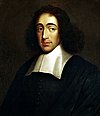
David Hume on Baruch Spinoza 2 quotes
“I assert, that the doctrine of the immateriality, simplicity, and indivisibility of a thinking substance is a true atheism, and will serve to justify all those sentiments, for which Spinoza is so universally infamous. From this topic, I hope at least to reap one advantage, that my adversaries will not have any pretext to render the present doctrine odious by their declamations, when they see that they can be so easily retorted on them.”
David Hume on Charles II of England 2 quotes
“When we consider him as a sovereign, his character, though not altogether destitute of virtue, was in the main dangerous to his people, and dishonourable to himself. Negligent of the interests of the nation, careless of its glory, averse to its religion, jealous of its liberty, lavish of its treasure, sparing only of its blood; he exposed it by his measures, though he ever appeared but in sport, to the danger of a furious civil war, and even to the ruin and ignominy of a foreign conquest. Yet may all these enormities, if fairly and candidly examined, be imputed, in a great measure, to the indolence of his temper; a fault, which, however unfortunate in a monarch, it is impossible for us to regard with great severity.”

David Hume on Edward Fairfax
“Fairfax has translated Tasso with an elegance and ease, and at the same time with an exactness, which for that age are surprising.”

Quotes About David Hume
Gain deeper perspective through quotes about David Hume from others.
Annette Baier on David Hume
“I think there is at least one moral theory of respectable lineage and good independent credentials that can accommodate such fairly minimal intuitions about us and animals. This is the theory Hume offers us. I do not consider Hume a forerunner of utilitarianism, and therefore what I shall go on to say in defense of Hume is not intended as a defense of any version of utilitarianism. I see Hume to be much closer to Aristotle than to Mill, to be offering us a theory about human virtues, not a theory about utility maximization and the duties that might involve.”

Christian Bay on David Hume
“Standards of morality and of justice are what Hume calls "artifacts"; they are neither divinely ordained, nor an integral part of original human nature, nor revealed by pure reason. They are an outcome of the practical experience of mankind, and the sole consideration in the slow test of time is the utility each moral rule can demonstrate toward promoting human welfare. Hume may be called a precursor to Darwin in the sphere of ethics. In effect, he proclaimed a doctrine of the survival of the fittest among human conventions—fittest not in terms of good teeth but in terms of maximum social utility.”
John S. Bell on David Hume
“Well, it does not really explain things; in fact the founding fathers of quantum mechanics rather prided themselves on giving up the idea of explanation. They were very proud that they dealt only with phenomena: they refused to look behind the phenomena, regarding that as the price one had to pay for coming to terms with nature. And it is a fact of history that the people who took that agnostic attitude towards the real world on the microphysical level were very successful. At the time it was a good thing to do. But I don't believe it will be so indefinitely. Of course, I cannot produce theorems to that effect. If you go back to, say, David Hume, who made a careful analysis of our reasons for believing things, you find that there is no good reason for believing that the sun will come up tomorrow, or that this programme will ever be broadcast. It's a habit we have, of believing that things will continue very much as they did before. However, it is a fact that this seems to be a good habit! I cannot make that a theorem, because I think Hume's analysis is sound, but nevertheless I do believe it's a good habit, to look for explanations.”
Edwin Arthur Burtt on David Hume
“Berkeley, Hume, Kant, Fichte, Hegel, James, Bergson all are united in one earnest attempt, the attempt to reinstate man with his high spiritual claims in a place of importance in the cosmic scheme.”
Alfred Cobban on David Hume 2 quotes
“David Hume, sceptic, suspected atheist and Tory, was not a man with whom Burke was likely to claim affiliations; but Hume it is, nevertheless, who in the first half of the eighteenth century introduces clearly those principles which were to emerge more definitely later in the theories of Burke and the Romantic movement. Locke had substituted empiricism for rationalism in philosophy, but he still treated ethics and politics as deductive sciences of the same nature as mathematics. Hume carries the attack on rationalism into these fields and enounces a naturalism which anticipates in many respects the subsequent return to nature of the Romantics.”




Misattributed Quotes
Quotes mistakenly credited to David Hume
“Character is the result of a system of stereotyped principles.”
“The difference between a man who is led by opinion or emotion and one who is led by reason. The former, whether he will or not, performs things of which he is entirely ignorant; the latter is subordinate to no one, and only does those things which he knows to be of primary importance in his life, and which on that account he desires the most; and therefore I call the former a slave, but the latter free.”
About David Hume
David Hume (7 May 1711, N.S. April 26, O.S. – 25 August 1776) was a Scottish philosopher, historian, economist and essayist.