Walahfrid, Walahfrid's Preface (translated 2008 by David Ganz)
“
Charles was the keenest of all kings to seek out and support wise men so that they might philosophize with all delight. Almost all of the kingdom entrusted to him by God was so foggy and almost blind, but he made it luminous with the new ray of knowledge, almost unknown to this barbarous land, with God lighting the way so it could see. But now studies are growing weak, and the light of wisdom because it is less loved grows rarer among most people.
— Walahfrid
What It Means
This is a placeholder explanation generated by the low-overhead model. It interprets "Charles was the keenest of all kings to seek out and support wise men so that they might philosophize with all delight. Almost all of the kingdom entrusted to him by God was so foggy and almost blind, but he made it luminous with the new ray of knowledge, almost unknown to this barbarous land, with God lighting the way so it could see. But now studies are growing weak, and the light of wisdom because it is less loved grows rarer among most people." in the context of "Walahfrid, Walahfrid's Preface (translated 2008 by David Ganz)" to mean that wisdom is timeless.
Source: Wikiquote: "Charlemagne" (Quotes about Charlemagne)
The 'What it means' explanation text was generated by Google Gemini Flash (accessed January 18, 2026). https://gemini.google.com/app
Tags
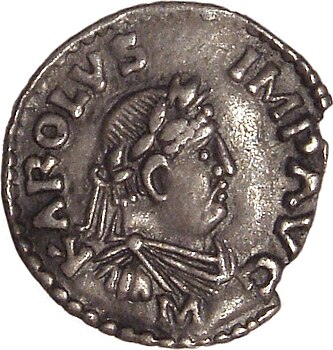
About Charlemagne
Charlemagne (2 April 742/747/748 – 28 January 814), a member of the Carolingian dynasty, was King of the Franks from 768, King of the Lombards from 774, and the first Holy Roman Emperor from 800. Charlemagne succeeded in uniting the majority of western and central Europe and was the first recognized emperor to rule from western Europe after the fall of the Western Roman Empire around three centuries earlier. The expanded Frankish state that Charlemagne founded was the Carolingian Empire. He was canonized by Antipope Paschal III— an act later treated as invalid—and he is now regarded by some as beatified (which is a step on the path to sainthood) in the Catholic Church. His reign spurred the Carolingian Renaissance, a period of energetic cultural and intellectual activity within the Western Church.
View all quotes →