Link Copied!
B. R. Ambedkar Quotes (1891-1956)
Writer, Politician






About B. R. Ambedkar
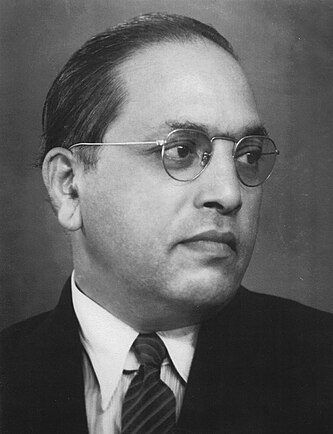
Bhimrao Ramji Ambedkar (April 14, 1891 – December 6, 1956), an Indian polymath: jurist, economist, politician, and writer. He pioneered revival of Buddhism in India and inspired the modern Buddhist movement. He was independent India's first law minister, and the major architect of the Constitution of India.
Best B. R. Ambedkar Quotes
Shortest
Earliest
Explore our curated collection of the most famous and impactful B. R. Ambedkar quotes.
“Indifferentism is the worst kind of disease that can affect people.”

“If I find the constitution being misused, I shall be the first to burn it.”

“Equality may be a fiction but nonetheless one must accept it as governing principle.”
“In Hinduism, conscience, reason, and independent thinking have no scope for development.”

““The history of India is a history of mortal conflict between Buddhism and Brahmanism.””


“[the invasionist interpretation of the Rigveda is] “a perversion of scientific investigation.””
“Nothing is infallible. Nothing is binding forever. Everything is Subject to inquiry and examination.”
“[varNa,] “it originally meant a class belonging to a particular faith and it had nothing to do with colour or complexion.””

“[the idea that the Aryan languages must originally have been spoken in a common homeland is] “an inference from an inference.””

“For a successful revolution, it is not enough that there is enough discontent. What is required is a profound and thorough conviction of justice, necessity and importance of political and social rights.”

“There is no place for an individual in Hindu society. The Hindu religion is constituted on the class concept. The Hindu religion does not teach as to how an individual should behave with another individual.”

“The theory is a perversion of scientific investigation. It is not allowed to evolve out of facts. On the contrary, the theory is preconceived and facts are selected to prove it. It falls to the ground at every point.”

“Like the Christians and Muslims in the Turkish Empire, the Hindus and Muslims of India have met as enemies on many fields, and the result of the struggle has often brought them into the relation of conquerors and conquered.”
B. R. Ambedkar Quotes by Topic
Find exactly what you are looking for by browsing this categorized list of B. R. Ambedkar quotes by topic.
B. R. Ambedkar on Decline of Buddhism in the Indian subcontinent 3 quotes
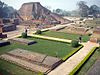
“There can be no doubt that the fall of Buddhism in India was due to the invasions of the Musalmans. Islam came out as the enemy of the 'But'. The word 'But' as everybody knows, is the Arabic word and means an idol. Thus the origin of the word indicates that in the Moslem mind idol worship had come to be identified with the Religion of the Buddha. To the Muslims, they were one and the same thing. The mission to break the idols thus became the mission to destroy Buddhism. Islam destroyed Buddhism not only in India but wherever it went. Before Islam came into being Buddhism was the religion of Bactria, Parthia, Afghanistan, Gandhar, and Chinese Turkestan, as it was of the whole of Asia. In all these countries Islam destroyed Buddhism.”
B. R. Ambedkar on Slavery 2 quotes
“Everybody infers that Islam must be free from slavery and caste. Regarding slavery nothing needs to be said. It stands abolished now by law. But while it existed much of its support was derived from Islam and Islamic countries.”

B. R. Ambedkar on Legislature
“All things are now possible because of your being able to participate in the politics and legislature of your country.”

B. R. Ambedkar on Discrimination
“What are we having this liberty for? We are having this liberty in order to reform our social system, which is full of inequality, discrimination and other things, which conflict with our fundamental rights.”

B. R. Ambedkar on Conflict of interest
“History shows that where ethics and economics come in conflict, victory is always with economics. Vested interests have never been known to have willingly divested themselves unless there was sufficient force to compel them.”

B. R. Ambedkar on Slavery in India
B. R. Ambedkar on Identity
“Unlike a drop of water which loses its identity when it joins the ocean, man does not lose his being in the society in which he lives. Man's life is independent. He is born not for the development of the society alone, but for the development of his self.”

B. R. Ambedkar on Indian National Congress
“Mr Gandhi had become a positive danger to this country. He had choked all free-thought. He was holding together the Congress, which is a combination of all the bad and selfseeking elements in society who agreed on no social or moral principle governing the life of society except the one of praising and flattering Mr Gandhi. Such a body is unfit to govern a country.”

B. R. Ambedkar on Pakistan
“It appears to be the dawn of a new vision pointing to a new destiny symbolized by a new name, Pakistan. The Muslims appear to have started a new worship of a new destiny for the first time. But this is really not so. The worship is new because the sun of their new destiny which was so far hidden in the clouds has only now made its appearance in full glow. The magnetism of this new destiny cannot but draw the Muslims towards it.”

B. R. Ambedkar on Idolatry
“Islam came out as the enemy of the 'But'. The word 'But' as everybody knows, is the Arabic word and means an idol. Thus the origin of the word indicates that in the Moslem mind idol worship had come to be identified with the Religion of the Buddha. To the Muslims, they were one and the same thing. The mission to break the idols thus became the mission to destroy Buddhism. Islam destroyed Buddhism not only in India but wherever it went.”

B. R. Ambedkar on Dalit
“Another illustration would be the attitude of the Muslims towards the problem of the Untouchables. The Muslims have always been looking at the Depressed Classes with a sense of longing, and much of the jealousy between Hindus and Muslims arises out of the fear of the latter that the former might become stronger by assimilating the Depressed Classes. In 1909 the Muslims took the bold step of suggesting that the Depressed Classes should not be enrolled in the census as Hindus.”

B. R. Ambedkar on Muslim conquests in the Indian subcontinent
“There can be no doubt that the fall of Buddhism in India was due to the invasions of the Musalmans. Islam came out as the enemy of the 'But'. The word 'But' as everybody knows, is the Arabic word and means an idol. Thus the origin of the word indicates that in the Moslem mind idol worship had come to be identified with the Religion of the Buddha. To the Muslims, they were one and the same thing. The mission to break the idols thus became the mission to destroy Buddhism. Islam destroyed Buddhism not only in India but wherever it went.”

What B. R. Ambedkar Said About Others
Discover personal opinions B. R. Ambedkar shared regarding contemporaries.
B. R. Ambedkar on Gandhi 2 quotes
“Well, I must say at the outset that I feel quite surprised you see the interest the outside world western world particularly seems to be taking in Mr Gandhi. I can’t understand that so far as India is concerned, He was in my judgement, he was an episode in the history of India, never an epoch-maker. Gandhi has already vanished from the memory of people of this country, His memory is kept up because Congress party you see annually gives holiday, either on his birthday or some other day connected with some event in his life, has a celebration every year going on for seven days in a week, naturally people memory is revived, but if this artificial respiration were not given, I think Gandhi would belong long forgotten.”

B. R. Ambedkar on Muhammad bin Bakhtiyar Khalji
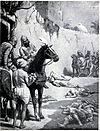
“The Mussalman invaders sacked the Buddhist universities of Nalanda, Vikramshila, Jagaddala, Odantapuri to name only a few. They razed to the ground Buddhist monasteries with which the country was studded. The monks fled away in thousands to Nepal, Tibet and other places outside India. A very large number were killed outright by the Muslim commanders. How the Buddhist priesthood perished by the sword of the Muslim invaders has been recorded by the Muslim historians themselves. Summarizing the evidence relating to the slaughter of the Buddhist Monks perpetrated by the Musalman General in the course of his invasion of Bihar in 1197 AD, Mr. Vincent Smith says, "The Musalman General, who had already made his name a terror by repeated plundering expeditions in Bihar, seized the capital by a daring stroke... Great quantities of plunder were obtained, and the slaughter of the 'shaven headed Brahmans', that is to say the Buddhist monks, was so thoroughly completed, that when the victor sought for someone capable of explaining the contents of the books in the libraries of the monasteries, not a living man could be found who was able to read them. 'It was discovered,' we are told, 'that the whole of that fortress and city was a college, and in the Hindi tongue they call a college Bihar.' "Such was the slaughter of the Buddhist priesthood perpetrated by the Islamic invaders. The axe was struck at the very root. For by killing the Buddhist priesthood, Islam killed Buddhism. This was the greatest disaster that befell the religion of the Buddha in India....”
Quotes About B. R. Ambedkar
Gain deeper perspective through quotes about B. R. Ambedkar from others.
Lord Richard Casey on B. R. Ambedkar
“Ambedkar stands as the fountainhead of wisdom and knowledge in modern India.”
Tenzin Gyatso on B. R. Ambedkar 2 quotes
“Dr. Ambedkar, the creator of Indian Constitution, spread awareness about the religion in 1956. Today, we need to understand the real meaning of Buddha, Buddhism.”
Elst on B. R. Ambedkar
“Ambedkar took a cool and hard look at Islam as a sworn enemy of Hindu society, even while being bitterly critical of the latter. Dr. Ambedkar was particularly outspoken about the social injustices in Islam, especially in his book Pakistan or the Partition of India... Many of Dr. Ambedkar’s observations on Islam would now be branded as “Hindu communalist” by the very people who claim his heritage. In fact, the literature of the RSS Parivar offers no counterpart to Ambedkar’s strong language about Islam: he was more openly anti-Islamic than Savarkar, Golwalkar or any Hindutva stalwart who is regularly accused of being just that. From the Hindu Revivalist point of view, Ambedkar, in writing his incisive criticism of Islam, did the homework which the Hindutva ideologues neglected... At Sangh Parivar functions, a picture of Ambedkar is mostly displayed along with pictures of Maharana Pratap, Shivaji, Guru Govind Singh, Hedgewar, Golwalkar and other more obvious Hindutva heroes. During BJP President L.K. Advani's flopped Rath Yatra (car procession) before the 1996 Lok Sabha elections, his car carried just two pictures: of freedom fighter Subhash Chandra Bose and of Dr. Ambedkar.”
Elst K. Indigenous Indians on B. R. Ambedkar
“Dr. Ambedkar has become a saint, and his opinions can now only be recited and quoted as final authority, but not subjected to any criticism on penalty of being dubbed "Brahminical reactionary". Dr. Ambedkar was a complex personality, not fit for simple glorification, nor of course for vilification. Undoubtedly, he was a very strong man, who stood his ground, and who rendered sterling services to the nation. On his intellectual achievements, our judgment will be more diversified. He was essentially a Western-educated man, and had imbibed some of the condescending incomprehension so typical of westernized Natives. Yet, among this class of Western-educated Indians, there is hardly any who has to such extent freed himself from pervasive prejudices and fashionable beliefs, such as the claim of a racial basis of caste. Because he himself had suffered the humiliation which many caste Hindus kept on inflicting on the untouchables, it is not abnormal that he was intemperately bitter against Hinduism. Nevertheless, he remained loyal to Hinduism in the broad sense, and rejected eager offers to take his followers into mass conversion to soul- greedy and imperialist religions. If we have uttered some criticism of his intellectual shortcomings regarding specific subjects, we could do so in a spirit of respect because we are also aware of his substantial intellectual qualities and merits, apart from his well-known political achievements for his country and his community. As an independent thinker, Dr. Ambedkar contrasts brightly with wind-bags like M.N. Roy and Jawaharlal Nehru, whose parrotting of fashionable slogans has not prevented them from remaining trendsetters for the secularist elite which is still ruling India. If he was not perfect in every respect, we would say that there is only so much which a man can do in a lifetime, so if a busy politician could not always find the time to seek out all the historical facts about complex subjects, it is really not abnormal.”
Elst K. Ayodhya on B. R. Ambedkar
“Ambedkar was a nationalist, and he saw through the anti-national, colonial inspiration of the Aryan Invasions theory (which the British called the furniture of Empire).”
Dhananjay Keer on B. R. Ambedkar
“The year 1940 was coming to an end when Ambedkar's magnum opus, Thoughts on Pakistan, was published. Written at a psychological moment, it fell like a bombshell on the heated atmosphere of the day... This historic book castigates the anti-reformist tendency of the Muslims... Some penetrating and caustic paragraphs describing the regressive bent of the Muslim mind, however, were deleted, it is said, at the instance of Ambedkar's close admirers. Otherwise [Ambedkar] would have experienced what H.G. Wells experienced at the hands of Muslims in London!... Thoughts on Pakistan is a masterpiece in which learning and thinking are blended and displayed at their highest order. It is entracing in its magic, intriguing in its construction, terse in its style, and provocative in its manner. It is a model in scientific propagation.... The effect of this book was terrible... It was applauded as an epitome of the political and social history of India; and it rocked Indian politics for over a decade. The Muslims rejoiced at this support to their ideal.”
Aamir Khan on B. R. Ambedkar
“Dr. Babasaheb Ambedkar was fearless. He propogated love and humanity. He loved people and gave them a thought of humanity. Babasaheb never gave up he was fearless. So today I have had difficulties, problems or situation is bad I remember Babasaheb. That's why I get inspiration from him. That's why Babasaheb is my role model"”

T. T. Krishnamachari on B. R. Ambedkar
“The House is perhaps aware that of the seven members nominated by you, one had reigned from the House and was never replaced One had died & wasn’t replaced. One was away in America & his place was not filled up, and another person was engaged in state affairs, & there was a void to that extent. One or two people were far away from Delhi and perhaps reasons of health did not permit them to attend. So it happened ultimately that the burden of drafting this Constitution fell upon Dr. Ambedkar and I have no doubt that we are grateful to him for having achieved this task in a manner which is undoubtedly commendable.”
Lord Linlithgow on B. R. Ambedkar
“He [Ambedkar] was quite clear that Muslims proposed to hold to their demands for 50:50 and so gradually lay the foundation of Pakistan, and he was perfectly content himself, he said, with that state of things, and in favour of the Pakistan idea quite frankly because it meant the British would have to stay in India. He saw not the least prospect of our overcoming difficulties here by guarantees of any sort and (like most minorities) he has, I suspect, little interest in constitutional progress....”
Droupadi Murmu on B. R. Ambedkar
“Dr. Babasaheb Ambedkar like God to me, I am President because of him. I feel happy and privileged that I am attending the convocation ceremony of the Dr Babasaheb Bhimrao Ambedkar University which is named after Dr Babasaheb Ambedkar. His life was full of struggles and so it was with notable works.”

About B. R. Ambedkar
Bhimrao Ramji Ambedkar (April 14, 1891 – December 6, 1956), an Indian polymath: jurist, economist, politician, and writer. He pioneered revival of Buddhism in India and inspired the modern Buddhist movement. He was independent India's first law minister, and the major architect of the Constitution of India.