Arthur Schopenhauer, trans. E. F. J. Payne, The World as Will and Representation, Vol. 2 (1966), CHAPTER XXVIII - Characterization of the Will-to-Live
“
That exceedingly strong tendency of all animals and human beings to maintain life and continue it as long as possible . . . is by no means the result of any objective knowledge of the value of life, but is independent of all knowledge; or, in other words, that those beings exhibit themselves not as drawn from the front, but as driven from behind.
— Arthur Schopenhauer on Philosophical pessimism
What It Means
This is a placeholder explanation generated by the low-overhead model. It interprets "That exceedingly strong tendency of all animals and human beings to maintain life and continue it as long as possible . . . is by no means the result of any objective knowledge of the value of life, but is independent of all knowledge; or, in other words, that those beings exhibit themselves not as drawn from the front, but as driven from behind." in the context of "Arthur Schopenhauer, trans. E. F. J. Payne, The World as Will and Representation, Vol. 2 (1966), CHAPTER XXVIII - Characterization of the Will-to-Live " to mean that wisdom is timeless.

Source: Wikiquote: "Philosophical pessimism" (S)
The 'What it means' explanation text was generated by Google Gemini Flash (accessed January 26, 2026). https://gemini.google.com/app
Tags
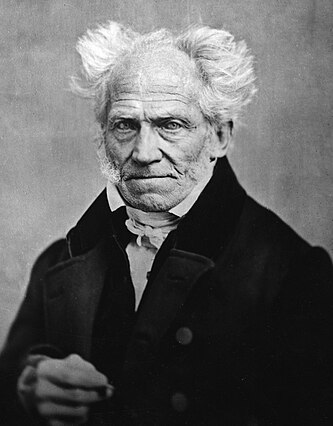
About Arthur Schopenhauer
Arthur Schopenhauer (22 February 1788 – 21 September 1860) was a German philosopher, most famous for his work The World as Will and Representation (1819).
About Arthur Schopenhauer
Arthur Schopenhauer (22 February 1788 – 21 September 1860) was a German philosopher, most famous for his work The World as Will and Representation (1819).
View all quotes →