Link Copied!
Aristotle Quotes (-384--322)





























































About Aristotle
Aristotle, a student of Plato, revolutionized Western thought through his systematic approach to logic, ethics, and natural sciences. His emphasis on empirical observation and deductive reasoning laid the foundation for scientific inquiry and profoundly shaped philosophy for centuries to come.
Best Aristotle Quotes
Shortest
Earliest
Explore our curated collection of the most famous and impactful Aristotle quotes.

“Philosophy is the science of truth.”


“Misfortune shows those who are not really friends.”
“The third kind of life is the life of contemplation (Bk. 1, Chapter III)”

“[I]t is impossible for motion to subsist without place, and void, and time.”
“The least initial deviation from the truth is multiplied later a thousandfold.”

“[U]niversal is known according to reason, but that which is particular, according to sense...”


“It is simplicity that makes the uneducated more effective than the educated when addressing popular audiences.”

“Now men seem, not unreasonably, to form their notions of the supreme good and of happiness from the lives of men.”

“My lectures are published and not published; they will be intelligible to those who heard them, and to none beside.”
“For the purposes of poetry a convincing impossibility is preferable to an unconvincing possibility.”

Aristotle Quotes by Topic
Find exactly what you are looking for by browsing this categorized list of Aristotle quotes by topic.
Aristotle on Infinity 25 quotes
“If 'bounded by a surface' is the definition of body there cannot be an infinite body either intelligible or sensible.”

Aristotle on Friendship 6 quotes
“Misfortune shows those who are not really friends.”

Aristotle on Politics 4 quotes
View all 4 quotes on Politics →Aristotle on Happiness 4 quotes
View all 4 quotes on Happiness →Aristotle on Justice 4 quotes
“Justice is that virtue of the soul which is distributive according to desert.”

Aristotle on Pragmatism 4 quotes
“That which is desirable on its own account and for the sake of knowing it is more of the nature of Wisdom than that which is desirable on account of its results.”

Aristotle on Wisdom 3 quotes
View all 3 quotes on Wisdom →Aristotle on Knowledge 3 quotes
“All teaching and all intellectual learning come about from already existing knowledge.”
Aristotle on 1 (number) 3 quotes
“More knowable than the number is the unit; for it is prior and the source of every number.”

Aristotle on Pythagoreanism 3 quotes
“These thinkers seem to consider that number is the principle both as matter for things and as constituting their attributes and permanent states.”

Aristotle on Democracy 3 quotes
“If liberty and equality, as is thought by some, are chiefly to be found in democracy, they will be best attained when all persons alike share in the government to the utmost.”

Aristotle on Virtue 3 quotes
“Virtue, then, is a state of character concerned with choice, lying in a mean ... it is a mean between two vices, that which depends on excess and that which depends on defect.”

What Aristotle Said About Others
Discover personal opinions Aristotle shared regarding contemporaries.
Aristotle on Women 3 quotes
“Haughtiness of women has been the ruin of many tyrannies.”

Aristotle on Agathon 2 quotes
View all 2 quotes on Agathon →Aristotle on Pythagoras 2 quotes
“These thinkers seem to consider that number is the principle both as matter for things and as constituting their attributes and permanent states.”
Aristotle on Euripides
Aristotle on Thomas Robert Malthus
Aristotle on John Amos Comenius
“Aristoteles hominis animum comparavit tabulae rasae, cui nihil inscriptum sit, inscribi tamen omnia possint. … Hoc interest, quod in tabula lineas ducere non licet, nisi quousque margo permittat: in mente usque et usque scribendo, et sculpendo, terminum nusquam invenies quia (ut ante monitum) interminabilis est.”

Aristotle on Zeno of Elea
“Zeno's arguments about motion, which cause so much disquietude to those who try to solve the problems that they present, are four in number. The first asserts the non-existence of motion on the ground that that which is in locomotion must arrive at the half-way stage before it arrives at the goal. [...] The second is the so-called 'Achilles', and it amounts to this, that in a race the quickest runner can never overtake the slowest, since the pursuer must first reach the point whence the pursued started, so that the slower must always hold a lead.”

Aristotle on Melissus of Samos
“This is indeed the first question we have to ask: is generation a fact or not? Earlier speculation was at variance both with itself and with the views here put forward as to the true answer to this question. Some removed generation and destruction from the world altogether. Nothing that is, they said, is generated or destroyed, and our conviction to the contrary is an illusion. So maintained the school of Melissus and Parmenides. But however excellent their theories may otherwise be, anyhow they cannot be held to speak as students of nature. There may be things not subject to generation or any kind of movement, but if so they belong to another and a higher inquiry than the study of nature. They, however, had no idea of any form of being other than the substance of things perceived; and when they saw, what no one previously had seen, that there could be no knowledge or wisdom without some such unchanging entities, they naturally transferred what was true of them to things perceived.”

Quotes About Aristotle
Gain deeper perspective through quotes about Aristotle from others.
Maya Angelou on Aristotle
“I was very fortunate. I was curious and handicapped as a young person. And so I read everything I could get my hands on and I have a good memory. And I have a lot of energy. It's a blessing. So I continued to learn. I'm hungry for knowledge still. Not every young person is blessed or visited with that combination. So he or she desperately needs to go to a university and be introduced to some of the great ideas of humankind. One needs to worry over the question of "Why am I here, what am I doing here of all things in this place, this life?" One needs to know Aristotle and Plato. One needs it desperately. One must have Leopold and Pascal. Must! I mean desperately, if one is to be at ease anywhere. One should have read the African folk tale to see what the West African calls deep thinking. One must worry over ideas that if I come forward how far do we have to go before we meet? And when we meet will I go through you and you go through me and continue until we meet someone else? This is an African concept. Do we stay once we meet or do I actually go right through you and pass through you and continue on that road. Is that what life is? All this knowledge is available at universities and one is more likely to run into a great teacher at a university than one is at a pool hall. It just follows.”

Anonymous on Aristotle
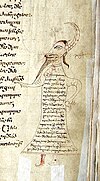
“Once upon a time, Aristotle taught Alexander that he should restrain himself from frequently approaching his wife, who was very beautiful, lest he should impede his spirit from seeking the general good. Alexander acquiesed to him. The queen, when she perceived this and was upset, began to draw Aristotle to love her. Many times she crossed paths with him alone, with bare feet and disheveled hair, so that she might entice him. At last, being enticed, he began to solicit her carnally. She says, "This I will certainly not do, unless I see a sign of love, lest you be testing me. Therefore, come to my chamber crawling on hand and foot, in order to carry me like a horse. Then I'll know that you aren't deluding me." When he had consented to that condition, she secretly told the matter to Alexander, who lying in wait apprehended him carrying the queen. When Alexander wished to kill Aristotle, in order to excuse himself, Aristotle says, If thus it happened to me, an old man most wise, that I was deceived by a woman, you can see that I taught you well, that it could happen to you, a young man." Hearing that, the king spared him, and made progress in Aristotle's teachings.”

H.P. Blavatsky on Aristotle
“Aristotle, notwithstanding that for political reasons of his own he maintained a prudent silence as to certain esoteric matters, expressed very clearly his opinion on the subject. It was his belief that human souls are emanations of God, that are finally re-absorbed into Divinity. (p. 13)”
Carl B. Boyer on Aristotle
“Robert [Grosseteste] became much interested in science and scientific method... He was conscious of the dual approach by means of induction and deduction (resolution and composition); i.e., from the empirical knowledge one proceeds to probable general principles, and from these as premises one them derives conclusions which constitute verifications or falsifications of the principles. This approach to science was not that far removed from Aristotle...”
Rachel Carson "Chesapeake Eels Seek the Sargasso Sea" article included on Aristotle
“Some 2,000 years ago Aristotle declared that eels were generated spontaneously from mud.”
Benjamin Franklin Cocker on Aristotle
“[Aristotle] totally misrepresents Plato's doctrine of "Ideas." ... It is also pertinent to inquire, what is the difference between the "formal cause" of Aristotle and the archetypal ideas of Plato? ... Yet Aristotle is forever congratulating himself that he alone has properly treated the "formal" and the "final cause"!”
A. C. Crombie on Aristotle 2 quotes
“According to Aristotle, scientific investigation and explanation was a twofold process, the first inductive and the second deductive. The investigator must begin with what was prior in the order of knowing, that is, with the facts observed through the senses, and he must ascend through induction to generalizations or universal forms or causes which were most remote from sensory experience, yet causing that experience and therefore prior in the order of nature. [Footnote:] The idea that the order of demonstration was the order of nature came from Plato. Aristotle said that the order of discovery was the reverse of the order of demonstration.”
Robert A. Dahl on Aristotle
“Is the ordinary person incompetent? No judgment is more decisive for one's political philosophy. It was perhaps the single most important difference in judgment between Plato and Aristotle.”

Will Durant on Aristotle
“It is difficult to be enthusiastic about Aristotle, because it was difficult for him to be enthusiastic about anything... He realized too completely the Delphic command to avoid excess: he is so anxious to pare away extremes that at last nothing is left. He is so fearful of disorder that he forgets to be fearful of slavery; he.is so timid of uncertain change that he prefers a certain changelessness that near resembles death. He lacks that Heraclitean sense of flux which justifies the conservative in believing that all permanent change is gradual, and justifies the radical in believing that no changelessness is permanent. He forgets that Plato's communism was meant only for the elite, the unselfish and ungreedy few; and he comes deviously to a Platonic result when he says that though property should be private, its use should be as far as possible common. He does not see (and perhaps he could not be expected in his early day to see) that individual control of the means of production was stimulating and salutary only when these means were so simple as to be purchasable by any man; and that their increasing complexity and cost lead to a dangerous centralization of ownership and power, and to an artificial and finally disruptive inequality.”

Charles Darwin on Aristotle
“From quotations I had seen I had a high notion of Aristotle's merits, but I had not the most remote notion what a wonderful man he was. Linnaeus and Cuvier have been my two gods, though in very different ways, but they were mere schoolboys to old Aristotle.”

Thomas Davidson on Aristotle
“It is pretty definitely settled, among men competent to form a judgment, that Aristotle was the best educated man that ever walked on the surface of this earth. He is still, as he was in Dante's time, the "master of those that know." It is, therefore, not without reason that we look to him, not only as the best exponent of ancient education, but as one of the worthiest guides and examples in education generally. That we may not lose the advantage of his example, it will be well, before we consider his educational theories, to cast a glance at his life, the process of his development, and his work.”
W E B Du Bois on Aristotle
“I sit with Shakespeare and he winces not. Across the color-line I move arm in arm with Balzac and Dumas, where smiling men and welcoming women glide in gilded halls. From out the caves of the evening that swing between the strong-limbed earth and the tracery of the stars, I summon Aristotle and Aurelius and what soul I will, and they come all graciously with no scorn nor condescension. So, wed with Truth, I dwell above the Veil. Is this the life you grudge us, O knightly America? Is this the life you long to change into the dull red hideousness of Georgia? Are you so afraid lest peering from this high Pisgah, between Philistine and Amalekite, we sight the Promised Land?”
Disputed Quotes
Quotes attributed to Aristotle that are questionable.
“Amicus Plato, sed magis amica veritas.
• Variant: Plato is my friend, but the truth is more my friend.”
• Variant: Plato is my friend, but the truth is more my friend.”
“The single harmony produced by all the heavenly bodies singing and dancing together springs from one source and ends by achieving one purpose, and has rightly bestowed the name not of "disordered" but of "ordered universe" upon the whole.”
“Remember that time slurs over everything, let all deeds fade, blurs all writings and kills all memories. Except are only those which dig into the hearts of men by love.”
“Man is a goal-seeking animal. His life only has meaning if he is reaching out and striving for goals.”
Misattributed Quotes
Quotes mistakenly credited to Aristotle
“We are what we repeatedly do. Excellence, then, is not an act, but a habit.
• Variant: We are what we repeatedly do, therefore excellence is not an act, but a habit.”
• Variant: We are what we repeatedly do, therefore excellence is not an act, but a habit.”
“The aim of art is to represent not the outward appearance of things, but their inward significance.”
“The worst form of inequality is to try to make unequal things equal. (Whilst a paraphrase this is based on Aristotle's writings as Aristotle stated "For instance, it is thought that justice is equality, and so it is, though not for everybody but only for those who are equals; and it is thought that inequality is just, for so indeed it is, though not for everybody, but for those who are unequal" in https://www.loebclassics.com/view/aristotle-politics/1932/pb_LCL264.211.xml Politics, III. V. 8.”
“Suffering becomes beautiful when anyone bears great calamities with cheerfulness, not through insensibility but through greatness of mind.”
About Aristotle
Aristotle, a student of Plato, revolutionized Western thought through his systematic approach to logic, ethics, and natural sciences. His emphasis on empirical observation and deductive reasoning laid the foundation for scientific inquiry and profoundly shaped philosophy for centuries to come.