Link Copied!
Andrew Dickson White Quotes (1832-1918)
President, Author, King





About Andrew Dickson White
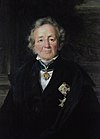
Andrew Dickson White (November 7, 1832 – November 4, 1918) was an American diplomat, author, and educator who was the co-founder and first president of Cornell University.
Best Andrew Dickson White Quotes
Shortest
Earliest
Explore our curated collection of the most famous and impactful Andrew Dickson White quotes.
“Carlyle uttered a pregnant truth when he said that the history of any country is in the biographies of the men who made it.”
“Never was there a more perfect demonstration of the truth asserted by Daniel Webster, that, of all contrivances for defrauding the working people of a country, arbitrary issues of paper money are the most effective.”

“My early years abroad were spent mainly upon the European Continent, and public duties since have led me to make prolonged stays in various Continental states—France, Germany, the Netherlands, Italy, Russia—where the study of Continental statesmen has been almost forced upon me.”
“Even before Melanchthon sank into his grave, he was dismayed at seeing Lutheranism stiffen into dogmas and formulas, and heartbroken by a persecution from his fellow-Protestants more bitter than anything he had ever experienced from Catholics.”
“For similar folly, our own country, in the transition from the colonial period, also paid a fearful price; and from a like catastrophe the United States has been twice saved in our time by the arguments formulated by Turgot.”
“Refusing to heed his argument the French people had again to be punished more severely than in John Law's time: the over-issue of assignats and mandats during the Revolution came forty years after his warning; and paper money inflation was again paid for by widespread bankruptcy and ruin.”
“The British ambassador was Sir Robert Morier. He too was a strong character, though lacking apparently in some of General [der Infanterie] von Schweinitz's more kindly qualities. He was big, roughish, and at times so brusque that he might almost be called brutal. When bullying was needed it was generally understood that he could do it con amore.”
“The greatness of Turgot now began to appear: while he performed all the duties of the seminary and studied thoroughly what was required, he gave himself to a wide range of other studies, and chiefly in two very different directions—to thought and work upon those problems in religion which transcend all theologies, and upon those problems in politics which are of vast importance in all countries, and which especially needed discussion in his own.”
“A new danger now beset him [Grotius],—the danger of becoming simply a venal pleader, a creature who grinds out arguments on this or that side, for this or that client:—a mere legal beast of prey. Fortunately for himself and for the world he took a higher view of his life-work: his determination clearly was to make himself a thoroughly equipped jurist, and then, as he rose more and more in his profession, to use his powers for the good of his country and of mankind.”

“Persons who clamor for governmental control of American railways should visit Germany, and above all Russia, to see how such control results. In Germany its defects are evident enough; people are made to travel in carriages which our main lines would not think of using, and with a lack of conveniences which with us would provoke a revolt; but the most amazing thing about this administration in Russia is to see how, after all this vast expenditure, the whole atmosphere of the country seems to paralyze energy.”

“While I have given references which will enable historical students to verify my statements and follow them further, I have constantly had in mind the average man intelligently interested in political affairs. It is for this reason that to each of these personages is given a somewhat extended historical setting which may enable any reader to understand his environment, the men and things with which he contended, and the results which he sought and accomplished.”
“The young man [Turgot] destined for an ecclesiastical career was placed within walls carefully designed to keep out all currents of new thought; his studies, his reading, his professors, his associates, all were combined to keep from him any results of observation or reflection save those prescribed: probably, of all means for stifling healthy and helpful thought, a theological seminary, as then conducted—whether Catholic or Protestant, Jewish or Mohammedan, was the most perfect.”

“His [Turgot's] first important literary and scholastic effort was a treatise On the Existence of God. Few fragments of it remain, but we are helped to understand him when we learn that he asserted, and to the end of his life maintained, his belief in an Almighty Creator and Upholder of the Universe. It did, indeed, at a later period suit the purposes of his enemies, exasperated by his tolerant spirit and his reforming plans, to proclaim him an atheist; but that sort of charge has been the commonest of missiles against troublesome thinkers in all times.”
“A thoughtful historian tells us that, between the Middle Ages and the nineteenth century, Italy produced three great men. As the first of these, he names Machiavelli, who he says, "taught the world to understand political despotism and to hate it"; as the second, he names Sarpi, who "taught the world after what manner the Holy Spirit guides the Councils of the Church"; and as the third, Galileo, who "taught the world what dogmatic theology is worth when it can be tested by science."”

“My purpose in writing these essays has been to acquaint men who are interested in the bearings of modern history on public life with sundry statesmen whose time was devoted not to seeking office or to winning a brief popular fame by chicanery or pettifoggery, but to serving the great interests of modern states and, indeed, of universal humanity. I would present these statesmen and their work as especially worthy to be studied by those who aspire to serve their country in any way.”
“The British representative was an ambassador, and had a spacious, suitable, and well-furnished house in which he could entertain fitly and largely, and to which the highest Russian officials thought it an honor to be invited. The American representatives were simply ministers; from time immemorial had never had such a house; had generally no adequate place for entertaining; had to live in apartments such as they might happen to find vacant in various parts of the town—sometimes in very poor quarters, sometimes in better; were obliged to furnish them at their own expense; had, therefore, never been able to obtain a tithe of that social influence, so powerful in Russia, which was exercised by the British Embassy.”

“This whole theory [of John Law and Jean Terrasson], as dear to French financial schemers in the eighteenth century as to American "Greenbackers" in the nineteenth, had resulted, under the Orleans Regency and Louis XV, in ruin to France financially and morally, had culminated in the utter destruction of all prosperity, the rooting out of great numbers of the most important industries, and the grinding down of the working people even to starvation.”

“The French philosophy of the eighteenth century was in full strength. Those were the years in which Voltaire ruled European opinion, and Turgot could not but take account of his influence. Yet no one could apparently be more unlike those who were especially named as the French philosophers of the eighteenth century. He remained reverential; he was never blasphemous, never blatant; he was careful to avoid giving needless pain or arousing fruitless discussion; and, while the tendency of his whole thinking was evidently removing him from the orthodoxy of the Church, his was a broader and deeper philosophy than that which was then dominant.”

“He [Grotius] avoided another danger as serious as his precocity had been. He steered clear of the quicksands of useless scholarship, which had engulfed so many strong men of his time. The zeal of learned men in that period was largely given to knowing things not worth knowing, to discussing things not worth discussing, to proving things not worth proving. Grotius seemed plunging on, with all sails set, into these quicksands; but again his good sense and sober judgment saved him: he decided to bring himself into the current of active life flowing through his land and time, and with this purpose he gave himself to the broad and thorough study of jurisprudence.”
“Of all tyrannies of unreason in the modern world, one holds a supremely evil preeminence. It covered the period from the middle of the sixteenth century to the middle of the seventeenth, and throughout those hundred years was waged a war of hatreds,—racial, religious, national, and personal;—of ambitions, ecclesiastical and civil;—of aspirations, patriotic and selfish;—of efforts, noble and vile. During all those weary generations Europe became one broad battlefield,—drenched in human blood and lighted from innumerable scaffolds. In this confused struggle great men appeared—heroes and martyrs, ruffians and scoundrels: all was anarchic. The dominant international gospel was that of Machiavelli.”
“The work of this young professor (Thomasius) and his disciples was to dethrone the heavy Protestant orthodoxy which had nearly smothered German patriotism, to undermine the pedantry which had paralyzed German scholarship, to substitute thought for formulas, to bring right reason to bear upon international and municipal law, to discredit religious intolerance, to root out witchcraft persecution and procedure by torture from all modern codes, and to begin that emancipation, of public and especially university instruction from theological control, which has given such strength to Germany, and which today is invincibly making its way in all other lands, including our own.”

“A change had indeed been brought by the emancipation of the serfs, but there was little outward sign of it. The muzhik remained, to all appearance, what he was before: in fact, as our train drew into St. Petersburg, the peasants, with their sheepskin caftans, cropped hair, and stupid faces, brought back the old impressions so vividly that I seemed not to have been absent a week. The old atmosphere of repression was evident everywhere. I had begun my experience of it under Nicholas I, had seen a more liberal policy under Alexander II, but now found a recurrence of reaction, and everywhere a pressure which deadened all efforts at initiating a better condition of things.”
“The theologians who took up the work which the first reformers had laid down soon came to consider intolerance as a main evidence of spiritual life: erelong they were using all their powers in crushing every germ of new thought. Their theory was simply that the world had now reached its climax; that the religion of Luther was the final word of God to man; that everything depended upon keeping it absolutely pure; that men might comment upon it in hundreds of pulpits and lecture rooms and in thousands of volumes;—but change it in the slightest particle—never. And in order that it might never be changed it was petrified into rituals and creeds and catechisms and statements, and, above all, in 1579, into the "Formula of Concord," which, as more than one thoughtful man has since declared, turned out to be a "formula of discord."”
“I was... told by a person who had known him [future Emperor Nicholas II] intimately from his childhood, that, though courteous, his main characteristic was an absolute indifference to most persons and things about him, and that he never showed a spark of ambition of any sort. This was confirmed by what I afterward saw of him at court. He seemed to stand about listlessly, speaking in a good-natured way to this or that person when it was easier than not to do so; but on the whole, indifferent to all which went on about him. After his accession to the throne, one of the best judges in Europe, who had many opportunities to observe him closely, said to me, "He knows nothing of his empire or of his people; he never goes out of his house, if he can help it." This explains in some degree the insufficiency of his program for the Peace Conference at The Hague and for the Japanese War, which, as I revise these lines, is bringing fearful disaster and disgrace upon Russia.”

Andrew Dickson White Quotes by Topic
Find exactly what you are looking for by browsing this categorized list of Andrew Dickson White quotes by topic.
Andrew Dickson White on Evolution 2 quotes
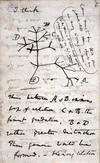
“Aristotle especially, both by speculation and observation... reached something like the modern idea of a succession of higher organizations from lower, and made the fruitful suggestion of "a perfecting principle" in Nature. With the coming in of Christian theology this tendency toward a yet truer theory of evolution was mainly stopped, but the old crude view remained...”
Andrew Dickson White on History of science 2 quotes
“In all modern history, interference with science in the supposed interest of religion, no matter how conscientious such interference may have been, has resulted in the direst evils both to religion and to science, and invariably; and, on the other hand, all untrammelled scientific investigation, no matter how dangerous to religion some of its stages may have seemed for the time to be, has invariably resulted in the highest good both of religion and of science.”

Andrew Dickson White on Fanaticism
Andrew Dickson White on Scientific revolution
“The inquiry into Nature having thus been pursued nearly two thousand years theologically, we find by the middle of the sixteenth century some promising beginnings of a different method—the method of inquiry into Nature scientifically—the method which seeks not plausibilities but facts.”

Andrew Dickson White on Perfection
“Aristotle especially, both by speculation and observation... reached something like the modern idea of a succession of higher organizations from lower, and made the fruitful suggestion of "a perfecting principle" in Nature. With the coming in of Christian theology this tendency toward a yet truer theory of evolution was mainly stopped, but the old crude view remained...”
Andrew Dickson White on Relationship between religion and science
“The early fathers of the Church ... impressed upon Christendom more and more strongly the belief that the universe was created in a perfectly literal sense by the hands or voice of God. Here and there sundry theologians of larger mind attempted to give a more spiritual view regarding some parts of the creative work, and of these were St. Gregory of Nyssa and St. Augustine. Ready as they were to accept the literal text of Scripture, they revolted against the conception of an actual creation of the universe by the hands and fingers of a Supreme Being, and in this they were followed by Bede and a few others; but the more material conceptions prevailed.”

Andrew Dickson White on Allegorical interpretation of the Bible
“More and more, as the organic world was observed, the vast multitude of petty animals, winged creatures, and "creeping things" was felt to be a strain upon the sacred narrative. More and more it became difficult to reconcile the dignity of the Almighty with his work in bringing each of these creatures before Adam to be named; or to reconcile the human limitations of Adam with his work in naming "every living creature"; or to reconcile the dimensions of Noah's ark with the space required for preserving all of them, and the food of all sorts necessary for their sustenance. ...Origen had dealt with it by suggesting that the cubit was six times greater than had been supposed. Bede explained Noah's ability to complete so large a vessel by supposing that he worked upon it during a hundred years.”

Andrew Dickson White on Theologians
“Among the early fathers of the Church this general view of creation became fundamental; they impressed upon Christendom more and more strongly the belief that the universe was created in a perfectly literal sense by the hands or voice of God. Here and there sundry theologians of larger mind attempted to give a more spiritual view regarding some parts of the creative work, and of these were St. Gregory of Nyssa and St. Augustine. Ready as they were to accept the literal text of Scripture, they revolted against the conception of an actual creation of the universe by the hands and fingers of a Supreme Being, and in this they were followed by Bede and a few others; but the more material conceptions prevailed, and we find these taking shape not only in the sculptures and mosaics and stained glass of cathedrals, and in the illuminations of missals and psalters, but later, at the close of the Middle Ages, in the pictured Bibles and in general literature.”

Andrew Dickson White on Science in classical antiquity
“Herein lies the truth of all bibles, and especially of our own. ...they are eminently precious, not as a record of outward fact, but as a mirror of the evolving heart, mind, and soul of man. They are true because they have been developed in accordance with the laws governing the evolution of truth in human history, and because in poem, chronicle, code, legend, myth, apologue, or parable they reflect this development of what is best in the onward march of humanity. To say that they are not true is as if one should say that a flower or a tree or a planet is not true; to scoff at them is to scoff at the law of the universe. In welding together into noble form, whether in the book of Genesis, or in the Psalms, or in the book of Job, or elsewhere, the great conceptions of men acting under earlier inspiration, whether in Egypt, or Chaldea, or India, or Persia, the compilers of our sacred books have given to humanity a possession ever becoming more and more precious; and modern science, in substituting a new heaven and a new earth for the old—the reign of law for the reign of caprice, and the idea of evolution for that of creation...”

What Andrew Dickson White Said About Others
Discover personal opinions Andrew Dickson White shared regarding contemporaries.
Andrew Dickson White on Anne Robert Jacques Turgot 6 quotes
“He now, in 1749, at the age of twenty two, wrote... a letter which has been an object of wonder among political thinkers ever since. Its subject was paper money. Discussing the ideas of John Law, and especially the essay of Terrasson which had supported them, he dissected them mercilessly, but in a way useful not only in those times but in these.”
Andrew Dickson White on Camillo Benso, Count of Cavour
Andrew Dickson White on John Dalberg-Acton, 1st Baron Acton
“Lord Acton... [is] the nearest approach to omniscience I have ever seen, with the possible exception of Theodore Parker.”
Andrew Dickson White on Peter Heylin
“Even as late as the middle of the seventeenth century Heylin, the most authoritative English geographer of the time, shows a like tendency to mix science and theology.”
Andrew Dickson White on Charles Darwin
“We may well remember Darwin's remark on the stimulating effect of mistaken theories, as compared with the sterilizing effect of mistaken observations: mistaken observations lead men astray, mistaken theories suggest true theories.”

Andrew Dickson White on Gottfried Leibniz
“Leibnitz, though not propounding any full doctrine on evolution, gave it an impulse by suggesting a view contrary to the sacrosanct belief in the immutability of species... His punishment at the hands of the Church came a few years later, when in 1712, the Jesuits defeated his attempt to found an Academy of Science at Vienna.”

Andrew Dickson White on Aristotle
“Aristotle especially, both by speculation and observation... reached something like the modern idea of a succession of higher organizations from lower, and made the fruitful suggestion of "a perfecting principle" in Nature. With the coming in of Christian theology this tendency toward a yet truer theory of evolution was mainly stopped, but the old crude view remained...”

Andrew Dickson White on Johann Wolfgang von Goethe
“About the end of the eighteenth century fruitful suggestions and even clear presentations of this or that part of a large evolutionary doctrine came thick and fast, and from the most divergent quarters. Especially remarkable were those which came from Erasmus Darwin in England, from Maupertuis in France, from Oken in Switzerland, and from Herder, and, most brilliantly of all, from Goethe in Germany.”
Andrew Dickson White on Johann Gottfried Herder
“About the end of the eighteenth century fruitful suggestions and even clear presentations of this or that part of a large evolutionary doctrine came thick and fast, and from the most divergent quarters. Especially remarkable were those which came from Erasmus Darwin in England, from Maupertuis in France, from Oken in Switzerland, and from Herder, and, most brilliantly of all, from Goethe in Germany.”

Andrew Dickson White on Roger Bacon
“After Bruno's death, during the first half of the seventeenth century, Descartes seemed about to take the leadership of human thought... in promoting an evolution doctrine as regards the mechanical formation of the solar system... but his constant dread of persecution, both from Catholics and Protestants, led him steadily to veil his thoughts and even to suppress them. ...Since Roger Bacon, perhaps, no great thinker had been so completely abased and thwarted by theological oppression.”

Andrew Dickson White on Augustine of Hippo
“This idea of these great fathers of the Eastern Church took even stronger hold on the great father of the Western Church. For St. Augustine, so fettered usually by the letter of the sacred text, broke from his own famous doctrine as to the acceptance of Scripture and spurned the generally received belief of a creative process... In his great treatise [De Cenesi contra Manichæos] on Genesis he says: "To suppose that God formed man from the dust with bodily hands is very childish. ...God neither formed man with bodily hands nor did he breathe upon him with throat and lips."”
Andrew Dickson White on Thomas Aquinas
“St. Thomas Aquinas ...in the Summa, which remains the greatest work of medieval thought, accepts the idea that certain animals, spring from the decaying bodies of plants and animals, and declares that they are produced by the creative word of God either actually or virtually. He develops this view by saying, "Nothing was made by God, after the six days of creation, absolutely new, but it was in some sense included in the work of the six days"; and that "even new species, if any appear, have existed before in certain native properties, just as animals are produced from putrefaction."”
About Andrew Dickson White
Andrew Dickson White (November 7, 1832 – November 4, 1918) was an American diplomat, author, and educator who was the co-founder and first president of Cornell University.