L’Âge d’Homme, Lausanne (1975), p. 91
“
Great heed has to be taken about the fact that most of us desire to remain unconscious: felicity (in eyes of common man) is rapture and rapture seems a quenching of awareness reduced to the awareness of its obliteration... Sex and Religion are centred on it both and I dare say that their convenience will in future be to join instead of rivalling, as they are wont to do, obscenity will be religious as it was long ago.
— Albert Caraco
What It Means
This is a placeholder explanation generated by the low-overhead model. It interprets "Great heed has to be taken about the fact that most of us desire to remain unconscious: felicity (in eyes of common man) is rapture and rapture seems a quenching of awareness reduced to the awareness of its obliteration... Sex and Religion are centred on it both and I dare say that their convenience will in future be to join instead of rivalling, as they are wont to do, obscenity will be religious as it was long ago." in the context of "L’Âge d’Homme, Lausanne (1975), p. 91" to mean that wisdom is timeless.

Source: Wikiquote: "Albert Caraco" (Quotes, Ma confession (1975))
The 'What it means' explanation text was generated by Google Gemini Flash (accessed January 18, 2026). https://gemini.google.com/app
Tags
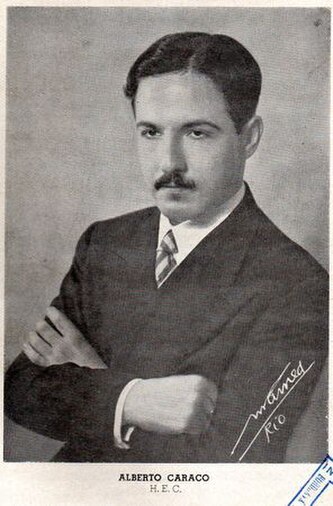
About Albert Caraco
Albert Caraco (8 July 1919 – 7 September 1971) was a French-Uruguayan philosopher, writer, essayist and poet of Turkish Jewish descent. He is best known for his two major works, Post Mortem (1968) and posthumously published Bréviaire du chaos (1982). He is often compared to the philosophers and writers such as Emil Cioran, Louis-Ferdinand Céline, Nicolás Gómez Dávila and Friedrich Nietzsche.
View all quotes →