Link Copied!
Albert Camus Quotes (1913-1960)
Philosopher, Author























About Albert Camus
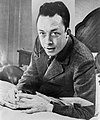
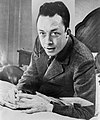
Albert Camus (November 7, 1913 – January 4, 1960) was a French Pied-Noir author, absurdist philosopher and winner of the 1957 Nobel Prize for Literature.
Best Albert Camus Quotes
Shortest
Earliest
Explore our curated collection of the most famous and impactful Albert Camus quotes.
“A fate is not a punishment.”
“The artist reconstructs the world to his plan.”


“An intellectual is someone whose mind watches itself.”


“Everything considered, a determined soul will always manage.”


“Every ideology is contrary to human psychology.”
Albert Camus Quotes by Topic
Find exactly what you are looking for by browsing this categorized list of Albert Camus quotes by topic.
Albert Camus on Absurdism 6 quotes
View all 6 quotes on Absurdism →Albert Camus on Rebellion 5 quotes
View all 5 quotes on Rebellion →Albert Camus on Trivialism 5 quotes
View all 5 quotes on Trivialism →Albert Camus on Love 4 quotes
View all 4 quotes on Love →Albert Camus on Capital punishment 3 quotes
“A punishment that penalizes without forestalling is indeed called revenge.”

Albert Camus on Absurdity 3 quotes
“The absurd is born of the confrontation between the human call and the unreasonable silence of the world.”
Albert Camus on Meaning 3 quotes
“You will never be happy if you continue to search for what happiness consists of. You will never live if you are looking for the meaning of life.”
Albert Camus on Money 2 quotes
“It's a kind of spiritual snobbery that makes people think they can be happy without money.”

Albert Camus on Consequentialism 2 quotes
“Does the end justify the means? That is possible. But what will justify the end? To that question, which historical thought leaves pending, rebellion replies: the means.”
Albert Camus on Atomic bombings of Hiroshima and Nagasaki 2 quotes
“Even before the bomb, one did not breathe too easily in this tortured world. Now we are given a new source of anguish; it has all the promise of being our greatest anguish ever. There can be no doubt that humanity is being offered its last chance. Perhaps this is an occasion for the newspapers to print a special edition. More likely, it should be cause for a certain amount of reflection and a great deal of silence. … Let us be understood. If the Japanese surrender after the destruction of Hiroshima, having been intimidated, we will rejoice. But we refuse to see anything in such grave news other than the need to argue more energetically in favor of a true international society, in which the great powers will not have superior rights over small and middle-sized nations, where such an ultimate weapon will be controlled by human intelligence rather than by the appetites and doctrines of various states. Before the terrifying prospects now available to humanity, we see even more clearly that peace is the only goal worth struggling for. This is no longer a prayer but a demand to be made by all peoples to their governments — a demand to choose definitively between hell and reason.”

Albert Camus on Irony
“Ironic philosophies produce passionate works.”

What Albert Camus Said About Others
Discover personal opinions Albert Camus shared regarding contemporaries.
Albert Camus on Fyodor Dostoyevsky 3 quotes
“The real 19th century prophet was Dostoevsky, not Karl Marx.”

Albert Camus on Max Scheler 3 quotes
“Scheler wants to demonstrate that humanitarian feelings are always accompanied by a hatred of the world. Humanity is loved in general in order to avoid having to love anybody in particular.”
Albert Camus on Friedrich Nietzsche 2 quotes
“The more exciting life is, the more absurd is the idea of losing it. This is perhaps the secret of that proud aridity felt in Nietzsche's work. In this connection, Nietzsche appears to be the only artist to have derived the extreme consequences of an aesthetic of the Absurd, inasmuch as his final message lies in a sterile and conquering lucidity and an obstinate negation of any supernatural consolation.”

Albert Camus on Gandhi
Albert Camus on Adolf Hitler
Albert Camus on Franz Kafka
“The whole art of Kafka consists in forcing the reader to re-read. His endings or his absence of endings, suggest explanations which, however, are not revealed in clear language but, before they seem justified, require that the story be reread.”
Albert Camus on Napoleon
“‘Do you know,’ Napoleon once said to Fontanes, ‘what fills me most with wonder? The powerlessness of force to establish anything. There are only two powers in the world: the sword and the mind. In the end, the sword is always conquered by the mind.’”

Quotes About Albert Camus
Gain deeper perspective through quotes about Albert Camus from others.
Edwidge Danticat chapter on Albert Camus 2 quotes
“In "L'artiste et son temps," translated into English as "Create Dangerously," Camus writes: "Art cannot be a monologue. We are on the high seas. The artist, like everyone else, must bend to his oar, without dying if possible"...There are many possible interpretations of what it means to create dangerously, and Albert Camus, like the poet Osip Mandelstam, suggests that it is creating as a revolt against silence, creating when both the creation and the reception, the writing and the reading, are dangerous undertakings, disobedience to a directive.”
Angela Davis on Albert Camus
“I had gotten very much involved in the writings of the so-called Existentialists. Camus. Sartre. I retreated into myself and rejected practically everything outside. Only in the artificial surroundings of an isolated, virtually all-white college campus could I have allowed myself to cultivate this nihilistic attitude. It was as if in order to fight off the unreal quality of my environment, I leaped desperately into another equally unreal mode of living.”

Ottar G. Draugsvold on Albert Camus
“As a writer Camus maintained his independence from both friends and enemies in the political and philosophical movements that attempted to subvert his writing to their own ends. ... Camus combines a taut writing style, as well as profound insights on society, with the courage to report back from the abyss of despair, unblinking.”
Mark Kurlansky on Albert Camus
“What was also unusual for Americans was that so many of the revered figures were writers and intellectuals. This is perhaps because to a very large extent theirs was a movement from the universities. Perhaps the single most influential writer for young people in the sixties was Algerian-born French Nobel Prize laureate Albert Camus, who died in 1960 in an automobile crash at age forty-seven, just as what should have been his best decade was beginning. Because of his 1942 essay, “The Myth of Sisyphus,” in which he argued that the human condition was fundamentally absurd, he was often associated with the existential movement. But he refused to consider himself part of that group. He was not a joiner, which is one of the reasons he was more revered than the existentialist and communist Jean-Paul Sartre, even though Sartre lived through and even participated in the sixties student movements. Camus, who worked with the Resistance against the Nazi occupiers of France editing an underground newspaper, Le Combat, often wrote from the perspective of a moral imperative to act. His 1948 novel, The Plague, is about a doctor who risks his life and family to rid his community of a sickness he discovers. In the 1960s, students all over the world read The Plague and interpreted it as a call to activism. Mario Savio’s famous 1964 speech, “There’s a time when the operation of the machine becomes so odious . . . you’ve got to put your bodies upon the gears . . . and you’ve got to make it stop,” sounds like a line from The Plague. “There are times when the only feeling I have is one of mad revolt,” Camus wrote. American civil rights workers read Camus. His books were passed from one volunteer to the next in SNCC. Tom Hayden wrote that he considered Camus to be one of the great influences in his decision to leave journalism and become a student activist. Abbie Hoffman used Camus to explain in part the Yippie! movement, referring to Camus’s words in Notebooks: “The revolution as myth is the definitive revolution.””

Gabriel Marcel on Albert Camus
“There is a fundamental question which Camus never seems to have put to himself: by what right am I qualified to pass this sort of verdict on the world [the verdict that the world is absurd]? Of two things, one: either I myself do not belong to the world under discussion, but in that case have I not every reason to suppose that it is impenetrable to me and that I am not qualified to judge its value- or, on the other hand, I really am part of the world, and if the world is absurd, so am I absurd too. Camus, perhaps, might concede this. It is, however, a destructive concession. Again, of two things, one: either I am myself absurd in my ultimate nature- in which case so are my judgements absurd, they negate themselves, it cannot be conceded that they have any sort of validity- or, on the other hand, we have to admit that I have a double nature, that is there is a part of me which is not absurd and which can make valid judgements about absurdity: but how did this aspect of me which is not absurd get there? I cannot even admit the possibility of its existence without beginning to formulate a kind of dualism which, in some sense, splits my original assertion of the total absurdity of the universe apart.”

Margaret Mead on Albert Camus
“Some of the dissident young look abroad for models. They are attracted by the writing of the French novelist Albert Camus, who, in his conflict between his Algerian birth and his intellectual allegiance to France, expressed some of the conflict they feel; but he is dead.”

Sir Herbert Read on Albert Camus
“All revolutions in modern times, Camus points out, have led to a reinforcement of the power of the State. ... The counterrevolutions of fascism only serve to reinforce the general argument. Camus shows the real quality of his thought in his final pages. It would have been easy, on the facts marshaled in this book, to have retreated into despair or inaction. Camus substitutes the idea of "limits." "We now know, at the end of this long inquiry into rebellion and nihilism, that rebellion with no other limits but historical expediency signifies unlimited slavery. To escape this fate, the revolutionary mind, if it wants to remain alive, must therefore, return again to the sources of rebellion and draw its inspiration from the only system of thought which is faithful to its origins: thought that recognizes limits." To illustrate his meaning Camus refers to syndicalism, that movement in politics which is based on the organic unity of the cell, and which is the negation of abstract and bureaucratic centralism. He quotes Tolain: "Les etres humains ne s'emancipent qu'au sein des groupes naturels" — human beings emancipate themselves only on the basis of natural groups. "The commune against the State... deliberate freedom against rational tyranny, finally altruistic individualism against the colonization of the masses, are, then, the contradictions that express once again the endless opposition of moderation to excess which has animated the history of the Occident since the time of the ancient world." This tradition of "mesure" belongs to the Mediterranean world, and has been destroyed by the excesses of German ideology and of Christian otherworldliness — by the denial of nature. Restraint is not the contrary of revolt. Revolt carries with it the very idea of restraint, and "moderation, born of rebellion, can only live by rebellion. It is a perpetual conflict, continually created and mastered by the intelligence.... Whatever we may do, excess will always keep its place in the heart of man, in the place where solitude is found. We all carry within us our places of exile, our crimes and our ravages. But our task is not to unleash them on the world; it is to fight them in ourselves and in others.”
Fred Rosen on Albert Camus
“Although a few commentators have noted the influence of Simone Weil on the thought of Albert Camus, their relationship has never been fully explored ... I shall examine several aspects of that influence in ... Weil's critique of Marxism which Camus adopted in L'Homme Révolté... the conception of the rebel as an artisan which Camus also used in L'Homme Révolté, and ... Weil's mysticism, to which Camus was reluctantly though definitely drawn. ... I shall consider more fully the different conceptions of freedom and justice which appear in their writings and argue that their contributions to political thought here lay with their appreciation of the impulse in modern man to seek and impose absolute values. In this context, we shall see that Camus and Simone Weil provide different routes to individual authenticity and integrity in an absurd world.”
Edward Said on Albert Camus
“No less a considerable writer, Camus is a wonderful stylist, certainly an exemplary novelist in many respects. He certainly talks about resistance. But what bothers me is that he is read out of his own context, his own history. Camus's history is that of a colon, a pied noir. He was born and grew up in a place very close to a city in Algeria on the coast, Annaba in Arabic, Bone by the French. It was made over into a French town in the 1880s and 1890s. His family came variously from Corsica and various parts of southern Europe and France. His novels, in my opinion, are really expressions of the colonial predicament. Meursault, in L'Etranger (The Stranger), kills the Arab, to whom Camus gives no name and no history. The whole idea at the end of the novel where Meursault is put on trial is an ideological fiction. No Frenchman was ever put on trial for killing an Arab in colonial Algeria. That's a lie. So he constructs something. Second of all, in his later novel La Peste (The Plague), the people who die in the city are Arabs, but they're not mentioned. The only people who mattered to Camus and to the European reader of the time, and even now, are Europeans. Arabs are there to die. The story, interestingly enough, is always interpreted as a parable or an allegory of the German occupation of France. My reading of Camus, and certainly of his later stories, starts with the fact that he, in the late 1950s, was very much opposed to independence for Algeria. He in fact compared the FLN to Abdel Nasser in Egypt, after Suez, after 1956.”

Leslie Marmon Silko on Albert Camus
“I love Camus so much. I read and reread The Plague. I enjoy the Notebooks, though sometimes he seems so wary of women and love I feel he is too wise about life. He perhaps needed to know the blue coast was there, was possible, in order to go so deeply into that windy chill winter of the Algerian plague city— somehow I understood that “place””

Colin Wilson on Albert Camus
“I could see clearly that this problem could only be solved on the individual and personal level; political revolt is irrelevant. Both Camus and Sartre had been neatly hog-tied by their earlier radicalism. Camus came to see that rebellion is a political roundabout that revolves back to the same old tyranny; too ashamed to admit that he had outgrown his leftism, he found himself in an intellectual cul-de-sac. Sartre accused Camus of being a reactionary; but he paid for his own refusal to reexamine his political convictions by congealing into a grotesque attitude of permanent indignation, shaking his fist at some abstract Authority. Where politics is concerned, he seemed determined to be guided by his emotions.”

Disputed Quotes
Quotes attributed to Albert Camus that are questionable.
“Great novelists are philosopher-novelists who write in images instead of arguments.”
“The only way to deal with an unfree world is to become so absolutely free that your very existence is an act of rebellion.”
Misattributed Quotes
Quotes mistakenly credited to Albert Camus
About Albert Camus
Albert Camus (November 7, 1913 – January 4, 1960) was a French Pied-Noir author, absurdist philosopher and winner of the 1957 Nobel Prize for Literature.