Link Copied!
Abraham Lincoln Quotes (1809-1865)
Politician



































































About Abraham Lincoln
Abraham Lincoln, a self-taught lawyer and politician, steered the United States through its most tumultuous period, the Civil War. His unwavering commitment to preserving the Union and abolishing slavery forever altered the course of American history and enshrined him as a champion of equality and justice.
Best Abraham Lincoln Quotes
Shortest
Earliest
Explore our curated collection of the most famous and impactful Abraham Lincoln quotes.


Attributed to Lincoln in an 1888 quotations book, "Force is all-conquering, but its victories are short-lived" lacks verifiable evidence in Lincoln's writings, casting doubt on its authenticity.
“Force is all-conquering, but its victories are short-lived.”
“The Confederacy stands for slavery and the Union for freedom.”
- Abraham Lincoln, 1860s)

“Those who deny freedom to others deserve it not for themselves.”
- Abraham Lincoln, 1820s)
Though widely attributed to Abraham Lincoln, the adage "Folks are usually about as happy as they make their minds up to be" likely originated with Frank Crane in 1914, lacking any verifiable link to Lincoln's writings or speech.
“Folks are usually about as happy as they make their minds up to be.”
“Will springs from the two elements of moral sense and self-interest.”
- Abraham Lincoln, 1850s)

“Truth is generally the best vindication against slander.”
- Abraham Lincoln, 1860s)
Attributed to Abraham Lincoln by William Barclay, this sentiment echoes a possible inspiration from Holy Roman Emperor Sigismund, suggesting reconciliation as a powerful form of conquest.
“Do I not destroy my enemies when I make them my friends?”


“Military glory, — that attractive rainbow that rises in showers of blood.”
- Abraham Lincoln, 1840s)

“The better part of one's life consists of his friendships.”
- Abraham Lincoln, 1840s)
“The Lord prefers common-looking people. That is why he made so many of them.”


Misattributed, Abraham Lincoln's actual 1861 message to Congress emphasized the government's crucial role in suppressing the rebellion, not solely relying on the people's initiative.
“The people will save their government, if the government itself will allow them.”

“I have always hated slavery, I think as much as any Abolitionist.”
- Abraham Lincoln, 1850s, Speech at Chicago
“Will springs from the two elements of moral sense and self-interest.”
- Abraham Lincoln, 1850s, Speech on the Dred Scott Decision

Abraham Lincoln Quotes by Topic
Find exactly what you are looking for by browsing this categorized list of Abraham Lincoln quotes by topic.
Abraham Lincoln on American Civil War 51 quotes
Amidst post-Civil War calls for retribution, Abraham Lincoln advocated preserving the infamous Libby Prison as a stark reminder of the conflict's brutality.
“No, leave it as a monument.”
- Abraham Lincoln, U.S. President Abraham Lincoln visits Richmond

Abraham Lincoln on United States 13 quotes
“The Autocrat of all the Russias will resign his crown, and proclaim his subjects free republicans sooner than will our American masters voluntarily give up their slaves.”

Abraham Lincoln on Federal government of the United States 11 quotes
“Let us then turn this Government back into the channel in which the framers of the Constitution originally placed it.”

Abraham Lincoln on Union (United States) 10 quotes
“The Confederacy stands for slavery and the Union for freedom.”
- Abraham Lincoln, L)
Abraham Lincoln on Republican Party (United States) 9 quotes
“The Republican principle, the unalterable principle, never to be lost sight of, is that slavery is wrong.”
- Abraham Lincoln, L)

Abraham Lincoln on Government 8 quotes
“A house divided against itself cannot stand. I believe this government cannot endure permanently half-slave and half-free.”
Abraham Lincoln on Equality 7 quotes
“Allow all the governed an equal voice in the government, and that, and that only, is self-government.”
Abraham Lincoln on Democratic Party (United States) 7 quotes
“You think slavery is right and should be extended; while we think slavery is wrong and ought to be restricted. That I suppose is the rub. It certainly is the only substantial difference between us.”

Abraham Lincoln on United States Declaration of Independence 7 quotes
“Nearly eighty years ago we began by declaring that all men are created equal; but now from that beginning we have run down to the other declaration, that for some men to enslave others is a "sacred right of self-government." These principles cannot stand together. They are as opposite as God and Mammon; and whoever holds to the one must despise the other. ... Our republican robe is soiled and trailed in the dust. Let us repurify it. ... Let us re-adopt the Declaration of Independence, and with it, the practices, and policy, which harmonize with it. ... If we do this, we shall not only have saved the Union: but we shall have saved it, as to make, and keep it, forever worthy of the saving.”

Abraham Lincoln on Freedom 5 quotes
“The Confederacy stands for slavery and the Union for freedom.”
Abraham Lincoln on United States Navy 5 quotes
“Can't the navy do something at this particular moment to make history?”
- Abraham Lincoln, L)

What Abraham Lincoln Said About Others
Discover personal opinions Abraham Lincoln shared regarding contemporaries.
Abraham Lincoln on Ulysses S. Grant 5 quotes
Faced with criticism of Ulysses S. Grant's performance after Shiloh, President Lincoln staunchly defended his general, declaring, "I can't spare this man--he fights."
“I can't spare this man--he fights.”

Abraham Lincoln on Andrew Johnson 3 quotes
Sensing Andrew Johnson's awkwardness at his inauguration, Abraham Lincoln confided to a friend that the incoming Vice President was, simply, "a queer man."
“This Johnson is a queer man.”

Abraham Lincoln on George B. McClellan 3 quotes
“I do not forget that I was satisfied with your arrangement to leave Banks at Mannassas Junction; but when that arrangement was broken up, and nothing was substituted for it, of course I was not satisfied. I was constrained to substitute something for it myself. And now allow me to ask "Do you really think I should permit the line from Richmond, via Mannassas Junction, to this city to be entirely open, except what resistance could be presented by less than twenty thousand unorganized troops?" This is a question which the country will not allow me to evade.”

Abraham Lincoln on Owen Lovejoy 2 quotes
“To the day of his death, it would scarcely wrong any other to say, he was my most generous friend.”

Abraham Lincoln on George Washington 2 quotes
“Could Washington himself speak, would he cast the blame of that sectionalism upon us, who sustain his policy, or upon you who repudiate it? We respect that warning of Washington.”

Abraham Lincoln on Thomas Jefferson 2 quotes
In an 1859 letter, Lincoln praises Thomas Jefferson's inclusion of universal human rights principles in the Declaration of Independence as a bulwark against tyranny.
“All honor to Jefferson to the man, who, in the concrete pressure of a struggle for national independence by a single people, had the coolness, forecast, and capacity to introduce into a mere revolutionary an abstract truth, applicable to all men and all time, and so to embalm it there to-day and in all coming days it shall be a rebuke and a stumbling block to the very harbingers of reappearing tyranny and oppression.”

Abraham Lincoln on Thomas Paine
Abraham Lincoln on Mothers
Abraham Lincoln on Harriet Beecher Stowe
Abraham Lincoln on Edwin M. Stanton
Lincoln's self-deprecating wit shines in this anecdote, revealing his respect for Secretary of War Edwin Stanton's blunt honesty, even when the assessment was unflattering.
“Did Stanton say I was a damned fool? Then I dare say I must be one, for Stanton is generally right and he always says what he means.”

Abraham Lincoln on Alexander H. Stephens
“You think slavery is right and should be extended; while we think slavery is wrong and ought to be restricted. That I suppose is the rub. It certainly is the only substantial difference between us.”

Abraham Lincoln on Germans
“In regard to Germans and foreigners, I esteem foreigners no better than other people, nor any worse. They are all of the great family of men, and if there is one shackle upon any of them, it would be far better to lift the load from them than to pile additional loads upon them.”
- Abraham Lincoln, L)

Quotes About Abraham Lincoln
Gain deeper perspective through quotes about Abraham Lincoln from others.
Source on Abraham Lincoln 7 quotes
In a letter to Kentuckians, Lincoln explains his evolving stance on slavery, balancing his personal abhorrence with his constitutional duty to preserve the Union.
“I am naturally anti-slavery. If slavery is not wrong, nothing is wrong. I can not remember when I did not so think, and feel. And yet I have never understood that the Presidency conferred upon me an unrestricted right to act officially upon this judgment and feeling. It was in the oath I took that I would, to the best of my ability, preserve, protect, and defend the Constitution of the United States. I could not take the office without taking the oath. Nor was it my view that I might take an oath to get power, and break the oath in using the power. I understood, too, that in ordinary civil administration this oath even forbade me to practically indulge my primary abstract judgment on the moral question of slavery. I had publicly declared this many times, and in many ways. And I aver that, to this day, I have done no official act in mere deference to my abstract judgment and feeling on slavery. I did understand however, that my oath to preserve the constitution to the best of my ability, imposed upon me the duty of preserving, by every indispensable means, that government — that nation — of which that constitution was the organic law.”
- Abraham Lincoln, 1860s, "If Slavery Is Not Wrong, Nothing Is Wrong"
Alexander II on Abraham Lincoln
“I did more for the Russian serf in giving him land as well as personal liberty, than America did for the negro slave set free by the proclamation of President Lincoln. I am at a loss to understand how you Americans could have been so blind as to leave the negro slave without tools to work out his salvation. In giving him personal liberty, you have him an obligation to perform to the state which he must be unable to fulfill. Without property of any kind he cannot educate himself and his children. I believe the time must come when many will question the manner of American emancipation of the negro slaves in 1863. The vote, in the hands of an ignorant man, without either property or self respect, will be used to the damage of the people at large; for the rich man, without honor or any kind of patriotism, will purchase it, and with it swamp the rights of a free people.”
Paul M. Angle on Abraham Lincoln
“The Illinois State Republican Convention met at Bloomington on May 29, 1856. It furnished the setting for one of the most dramatic episodes of Lincoln's life … A speech by Lincoln was rarely an ordinary occurrence, but on this occasion he made one of the really great efforts of his life. So powerful was his eloquence that the reporters forgot to take notes of what he was saying. Several commenced, but in a few minutes they were entirely captured by the speaker's power, and their pencils were still.”
Joseph E. Brown on Abraham Lincoln
“What will be the result to the institution of slavery, which will follow submission to the inauguration and administration of Mister Lincoln as the President of one section of the Union? My candid opinion is, that it will be the total abolition of slavery... I do not doubt, therefore, that submission to the administration of Mister Lincoln will result in the final abolition of slavery. If we fail to resist now, we will never again have the strength to resist.”
Pearl S. Buck on Abraham Lincoln 4 quotes
“I don't know whether Abraham Lincoln knew exactly what he was doing when he freed the slaves. Perhaps he did it only as a war measure. The war, you remember, dragged along without any heart in it. Nobody seemed to want to fight. There was everything to fight for- the Union, the preservation of a country whole- but the idea of union, even of country, did not seem enough to make men want to fight... There were even plenty of people, accustomed to the small compact nations of Europe, who thought that perhaps this great expanse of America should not be one country, that it might be better if it were divided into nations instead of states. But others were determined that the continual bickering and quarreling between the little nations of Europe should not be repeated here and they were determined to keep the country whole and large, and among these was Abraham Lincoln.”

George H. W. Bush on Abraham Lincoln
“Perhaps nowhere do we learn more about Lincoln even now than in a portrait that I talked about last month off the coast of Malta before meeting Chairman Gorbachev. It is, as this one is, by George Healy, and hangs on the wall of my office upstairs. And in it you see the agony and the greatness of a man who nightly fell on his knees to ask the help of God. The painting shows two of his generals and an admiral meeting near the end of a war that pitted brother against brother. And outside at the moment a battle rages. And yet what we see in the distance is a rainbow — a symbol of hope, of the passing of the storm. The painting's name:The Peacemakers. And for me, this is a constant reassurance that the cause of peace will triumph and that ours can be the future that Lincoln gave his life for: a future free of both tyranny and fear.”

George W. Bush on Abraham Lincoln
“One space on the wall was reserved for the president's most influential predecessor. I chose Lincoln. He'd had the most trying job of any president, preserving the Union. Some asked why I didn't put Dad's portrait in that spot. "Number forty-one hangs in my heart," I said. "Sixteen is on the wall."”

Lydia Maria Child on Abraham Lincoln
“I think we have reason to thank God for Abraham Lincoln. With all his deficiencies, it must be admitted that he has grown continually.”

Charles Carleton Coffin on Abraham Lincoln
“Abraham Lincoln was walking their streets; and, worst of all, that plain, honest-hearted man was recognizing the 'niggers' as human beings by returning their salutations! The walk was long, and the President halted a moment to rest. 'May de good Lord bless you, President Linkum!' said an old negro, removing his hat, and bowing with tears of joy rolling down his cheeks. The President removed his own hat, and bowed in silence; but it was a bow which upset the forms, laws, customs, and ceremonies of centuries. It was a death-shock to chivalry, and a mortal wound to caste. Recognize a nigger! Faugh! A woman in an adjoining house beheld it, and turned from the scene in unspeakable disgust. There were men in the crowd who had daggers in their eyes; but the chosen assassin was not there, the hour for the damning work had not come, and that great-hearted man passed on to the executive mansion of the late Confederacy.”
George William Curtis on Abraham Lincoln
“Abraham Lincoln, President of the United States, walked through the streets of Richmond and respectfully lifted his hat to the men who blacked Louis Wigfall's boots and curried his horse. What did it mean? It meant that the truest American president we have ever had, the companion of Washington in our love and honor, recognized that the poorest man, however outraged, however ignorant, however despised, however black, was, as a man, his equal. The child of the American people was their most prophetic man, because, whether as small shop-keeper, as flat-boatman, as volunteer captain, as honest lawyer, as defender of the Declaration, as President of the United States, he knew by the profoundest instinct and the widest experience and reflection, that in the most vital faith of this country it is just as honorable for an honest man to curry a horse and black a boot as it is to raise cotton or corn, to sell molasses or cloth, to practice medicine or law, to gamble in stocks or speculate in petroleum. He knew the European doctrine that the king makes the gentleman; but he believed with his whole soul the doctrine, the American doctrine, that worth makes the man.”

Calvin Coolidge on Abraham Lincoln
“The first duty of a government is to be true to itself. This does not mean perfection, it means a plan to strive for perfection. It means loyalty to ideals. The ideals of America were set out in the Declaration of Independence and adopted in the Constitution. They did not represent perfection at hand, but perfection found. The fundamental principle was freedom. The fathers knew that this was not yet apprehended. They formed a government firm in the faith that it was ever to press toward this high mark. In selfishness, in greed, in lust for gain, it turned aside. Enslaving others, it became itself enslaved. Bondage in one part consumed freedom in all parts. The government of the fathers, ceasing to be true to itself, was perishing. Five score and ten years ago, that divine providence which infinite repetition has made only the more a miracle, sent into the world a new life destined to save a nation. No star, no sign foretold his coming. About his cradle all was poor and mean, save only the source of all great men, the love of a wonderful woman. When she faded away in his tender years from her deathbed in humble poverty, she endowed her son with greatness. There can be no proper observance of a birthday which forgets the mother. Into his origin, as into his life, men long have looked and wondered. In wisdom great, but in humility greater, in justice strong, but in compassion stronger, he became a leader of men by being a follower of the truth. He overcame evil with good. His presence filled the nation. He broke the might of oppression. He restored a race to its birthright. His mortal frame has vanished, but his spirit increases with the increasing years the richest legacy of the greatest century. Men show by what they worship what they are. It is no accident that before the great example of American manhood, our people stand with respect and reverence. In Abraham Lincoln is revealed our ideal; the hope of our country fulfilled. He was the incarnation of what America was to be. Through him, the Almighty bestowed upon the nation a new birth of freedom that this dear land of ours might be returned to the health of its fathers. We are the beneficiaries of a life of surpassing service. Wise in wisdom and gentle in gentleness. Freedom has many sides and angles. Human slavery has been swept away. With security of personal rights has come security of property rights. The freedom of the human mind is recognized in the right to free speech and free press. The public schools have made education possible for all and ignorance a disgrace. In political affairs, the vote of the humblest has long counted for as much as the vote of the most exalted. We are working towards the day when, in our industrial life, equal honor shall fall to equal endeavor.”

Royal Cortissoz on Abraham Lincoln
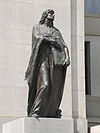
Royal Cortissoz, art critic, penned the inscription adorning the Lincoln Memorial statue, a poignant tribute to Lincoln's legacy enshrined both in stone and the nation's heart.
“In this temple As in the hearts of the people For whom he saved the Union The memory of Abraham Lincoln Is enshrined forever”
Misattributed Quotes
Quotes mistakenly credited to Abraham Lincoln
“Prohibition will work great injury to the cause of temperance. It is a species of intemperance within itself, for it goes beyond the bounds of reason in that it attempts to control a man's appetite by legislation, and makes a crime out of things that are not crimes. A Prohibition law strikes a blow at the very principles upon which our government was founded.”
“It will not do to investigate the subject of religion too closely, as it is apt to lead to Infidelity.”
“My earlier views on the unsoundness of the Christian scheme of salvation and the human origin of the scriptures have become clearer and stronger with advancing years, and I see no reason for thinking I shall ever change them.”
“Now, I say to you, my fellow-citizens, that in my opinion the signers of the Declaration had no reference to the negro whatever when they declared all men to be created equal. They desired to express by that phrase, white men, men of European birth and European descent, and had no reference either to the negro, the savage Indians, the Fejee, the Malay, or any other inferior and degraded race, when they spoke of the equality of men. One great evidence that such was their understanding, is to be found in the fact that at that time every one of the thirteen colonies was a slaveholding colony, every signer of the Declaration represented a slave-holding constituency, and we know that no one of them emancipated his slaves, much less offered citizenship to them when they signed the Declaration, and yet, if they had intended to declare that the negro was the equal of the white man, and entitled by divine right to an equality with him, they were bound, as honest men, that day and hour to have put their negroes on an equality with themselves.”
“As a result of the war, corporations have been enthroned and an era of corruption in high places will follow, and the money power of the country will endeavor to prolong its reign by working upon the prejudices of the people until all wealth is aggregated in a few hands and the Republic is destroyed. I feel at this moment more anxiety for the safety of my country than ever before, even in the midst of war. God grant that my suspicions may prove groundless.”
“I like to see a man proud of the place in which he lives. I like to see a man live so that his place will be proud of him. Be honest, but hate no one; overturn a man's wrongdoing, but do not overturn him unless it must be done in overturning the wrong. Stand with a man while he is right, and part with him when he goes wrong.”
“You cannot bring about prosperity by discouraging thrift. You cannot strengthen the weak by weakening the strong. You cannot help small men by tearing down big men. You cannot help the poor by destroying the rich. You cannot lift the wage earner by pulling down the wage payer. You cannot keep out of trouble by spending more than your income. You cannot further the brotherhood of man by inciting class hatreds. You cannot establish security on borrowed money. You cannot build character and courage by taking away a man's initiative and independence. You cannot help men permanently by doing for them what they could and should do for themselves.”
“There is no room for two distinct races of white men in America, much less for two distinct races of whites and blacks. I can conceive of no greater calamity than the assimilation of the Negro into our social and political life as an equal... Within twenty years we can peacefully colonize the Negro in the tropics and give him our language, literature, religion, and system of government under conditions in which he can rise to the full measure of manhood. This he can never do here. We can never attain the ideal Union our fathers dreamed, with millions of an alien, inferior race among us, whose assimilation is neither possible nor desirable.”
“Congressmen who willfully take actions during wartime that damage morale and undermine the military are saboteurs and should be arrested, exiled, or hanged.”
“Money is the creature of law and creation of the original issue of money should be maintained as an exclusive monopoly of national government.… Democracy will rise superior to Money Power.”
“You have to do your own growing no matter how tall your grandfather was.”
“You cannot escape the responsibility of tomorrow by evading it today.”
“And in the end, it’s not the years in your life that count. It’s the life in your years.
• Variant: It is not the years in your life but the life in your years that counts.”
• Variant: It is not the years in your life but the life in your years that counts.”
About Abraham Lincoln
Abraham Lincoln, a self-taught lawyer and politician, steered the United States through its most tumultuous period, the Civil War. His unwavering commitment to preserving the Union and abolishing slavery forever altered the course of American history and enshrined him as a champion of equality and justice.