Link Copied!
Michael Witzel Quotes (1943-)
Author, Activist


About Michael Witzel
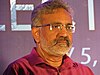
Michael Witzel (born July 18, 1943) is a German-American philologist and academic. Witzel is the Wales Professor of Sanskrit at Harvard University and the editor of the Harvard Oriental Series (volumes 50-80). He is an author on Indian sacred texts and Indian history, and a critic of the "Indigenous Aryans" theory and of right-wing Hindu activists. In 2005, he attracted the scorn of Hindu activists when he opposed their attempts to influence USA school curricula in the California textbook controversy over Hindu history.
Best Michael Witzel Quotes
Shortest
Earliest
Explore our curated collection of the most famous and impactful Michael Witzel quotes.
“Book 5 [...] even knows, in a hymn not suspected as an addition, of the Yamunā.”
“Chicken and still later exports from India are absent in common Laurasan ritual.”
“The so-called ‘invasion’ of IA speakers is not (yet) visible in the archaeology.”

““apart from archaeology, our principal source for the early period must be. the Rigveda…””


“[Kurukṣetra] became the heartland of the Bharatas well into the Vedic period. It is here that 3.53.11 places the centre of the earth.”
“Theoretically, since Gartsamada Saunaka [the eponymous Rsi of Mandala II of the Rigveda] is made a Bhargava, he could be later than Book 6.”


“Between the arrival of the Aryans ... and the formation of the oldest hymns of the Rigveda a much longer period must have elapsed than is normally thought.”



“This word [Druhyu] means, literally, ‘the ones who seek to cheat’. Non-linguist as he is, Talageri missed a great chance for a ‘socio-ethnic’ study based on an etymology!”

““all these geographical notes belonging to diverse hymns are attributed to one and the same poet, SyAvASva, which is indicative of the poet’s travels.” [about Mandala 5 of the RV]”
“Ironically, many of those expressing these anti-migrational views are emigrants themselves, engineers or technocrats like N. S. Rajaram... who ship their ideas to India from U.S. shores.”
“The IAs, as described in the RV, represent something definitely new in the subcontinent […] The obvious conclusion should be that these new elements somehow came from the outside.”

“Since the SarasvatI, which dries up progressively after the mid 2nd millennium BC is still described as a mighty river in the Rigveda, the earliest hymns in the latter must have been composed by C.1500 BC. (p. 98)”

“[W]hile it would be easy to assume reference to skin colour, this would go against the spirit of the hymns: for Vedic poets, black always signifies evil, and any other meaning would be secondary in these contexts.”
“We know very little about the Püru domination in the Panjab. It is only clear that they were the leaders in a coalition of Five Peoples, and some other tribes, against the Bharata chief Sudäs in the dasaräjna battle.”

“Given the scholarly inclinations among the expatriate communities in North America we may expect a slew of new interpretations, in fact, a whole new cottage industry. Their impact will appear especially on the internet.”
“[the SarasvatI is] “prominent in Book 7: it flows from the mountains to the sea (7.95.2) - which would put the battle of 10 kings prior to 1500 BC or so due to the now well-documented dessication of the SarasvatI”. (p. 335)”
Michael Witzel Quotes by Topic
Find exactly what you are looking for by browsing this categorized list of Michael Witzel quotes by topic.
Michael Witzel on Indo-Aryan migrations 2 quotes
“If the so-called “invasion” of IA speakers is not (yet) visible in the archaeology, it must be stressed that such movements rarely leave clear physical traces.”

Michael Witzel on Ratha
Michael Witzel on Baudhayana Shrauta Sutra
“There is the following direct statement contained in the (admittedly much later) BSS, 18.44:397.9 sqq which has once again been over-looked, not having been translated yet: ‘Ayu went eastwards. His (people) are the Kuru-PañcAla and the KASI-Videha. This is the Ayava (migration). (His other people) stayed at home in the West. His people are the GAndhArI, ParSu and AraTTa. This is the AmAvasava (group)’.”

What Michael Witzel Said About Others
Discover personal opinions Michael Witzel shared regarding contemporaries.
Michael Witzel on Nicholas Kazanas
“Kazanas is heavily influenced here by Frawley’s most amazing paradox.”
Michael Witzel on Koenraad Elst
“One wonders how he survives with 4 children... just his Indian book sales??... Obviously, the point is not Elst's private life or his unnamed children. Rather, his financing. Which is a mystery. We know that he is financed by some Indian publishers and that he gives lectures here and there. But there must be other sources. And his financing is of *some* interest, given the various VERY political stances he takes. This is not an ivory tower scholar, but a rather public figure, and we thus can take interest in his financial dealings, like those of -- ahem, much better known politicians, say Rev. Jackson or Mrs. Blair or of our great leaders here. Thus: curious... about the politics behind this. Why : to start with, obvious extremist right wing politics apart, Elst et al., are giving Indology a bad name. We have *some* social reponsibility.”

Michael Witzel on Wendy Doniger O'Flaherty
“And of course, [Wendy Doniger's] translation, again is a ‘re’-translation” of others’ works” in which she has “merely added a fashionable(?) Freudian coating… Simple question: if ‘that’ much is wrong in just one story (and this is a small selection only!) — what about the rest of this book and her other translations?… It might have been better to have used the old translations and to have added her Freudian interpretation to them… In sum: The “translation” simply is UNREALIABLE... In view of all of this, I wonder indeed whether Doniger’s translation would have been accepted in the Harvard Oriental Series rather than in Penguin… And a little less hype would also do: ‘a landmark translation, the first authoritative translation in this century’ (cover); ‘to offer to more specialized scholars new interpretations of many difficult verses.’ (p. lxi) — I doubt it.”
Michael Witzel on Tony Joseph
“Tony Joseph's book provides a remarkably accessible overview of the early stages of Indian history, starting with the immigration from Africa of current humans to the age of the Vedas. He provides evidence from several fields of scientific enquiry, notably archaeology linguistics, ancient texts and the very recent study of ancient genes (aDNA). The latter is currently revolutionising ancient history not just of India but also of Europe, Africa and South America. Accordingly, T.Joseph lays to rest the question about the origins of the so-called (Indo-)Aryans and their settlement in ancient India - which has basically been politically motivated, especially for the past 40 years. As common in scholarship, not all individual scholars may agree on all questions and conclusions (such as the nature of the Indus civilization and its relation with the origin of the Dravidian speakers). However, finally, a firm basis for writing the history of ancient India is laid. The various sciences, in the end, lead us from darkness to the light of insight.”
Quotes About Michael Witzel
Gain deeper perspective through quotes about Michael Witzel from others.
Elst on Michael Witzel 2 quotes
“It will be an important reference work in mythological studies for decades to come, being easily the most ambitious work in that field. Witzel makes an attempt, with apparent success, to reconstruct the history of myth, not for one culture in the past several thousand years but for mankind as a whole since its dispersal from Africa more than fifty-thousand years ago. ... Note that this work has only become possible now. We have collected the mythologies of nearly all tribes, very often recording them just as they were dying, either because tribes got converted to Christianity and were forgetting their own traditions, or because communities disintegrated into modern societies.... For the first time, we can give an account of the whole world’s myths, and therefore we must be glad that finally someone has taken on this task. ... This builds its reconstruction with the help of the archaeological and genetic evidence. Specialists of those disciplines will certainly complain that more of it could have been given, but then this book is a pioneering innovation and other scholars are invited to expand on this new paradigm.”
David Frawley. Quoted on Michael Witzel
““Witzel quotes favourably a statement at the beginning of this rather long article about India's role as "the cultural diffusion cul -de-sac of Asia" (p.1), an idea that has "kept me occupied on and off over the past few years." This sums up Witzel's view of Indian civilisation — it is the cultural backwater and dead end of Asia, where wandering nomads can go no further, with no real civilisation of its own. Not surprisingly Witzel has little appreciation for the Vedas, Vedanta, Yoga, Buddhism or anything else India has produced. His extensive bibliographies on ancient India seldom refer to any Indian scholars, and certainly avoid mentioning any yogis like Aurobindo who have different views. You would never find Witzel chanting Om, practicing Yoga or in any other way honouring the great traditions of the region. His anti-India views reflect those of the colonial era which he is continuing. For this reason Witzel is mainly honoured by Marxists in India whose political agenda favours rejecting anything great not only in the Vedas but in Indian civilisation as a whole, which many Marxists following Marx himself see as an invention of the British. However, no one who really studies and loves the Vedas will be fooled by such theatrics. There is much more to the Vedas than Witzel's philology.”
Shrikant Talageri on Michael Witzel
“To sum up: when it comes to indulging in “inane accusations and outright slander”, even under cover of writing a “review article” of a book, Witzel is second to none! .... Throughout the whole debate, Witzel epitomizes the kind of scholar described by Max Muller (in his book “India – what it can teach us”) as being very rare in India, but not so rare in the west (a generalization which need not be true in general, but is definitely true in this case): the scholar who indulges in “rudeness of speech … quibbling….. special pleading ….. (and) untruthfulness” and who “writes down what he knows perfectly well to be false, and snaps his fingers at those who still value truth…””

About the Witzel on Michael Witzel
“Translations of this kind pervade the Witzel/Goto version, but I find them remarkable both for meaninglessness, and for lack of poetic charm. They stand out as bizarrely improbable in the context of the contemplative lyricism of the poems. Like Chomsky’s “colourless green ideas sleep furiously”, although grammatical, they don’t make sense.”
Manogna Sastry on Michael Witzel
“Witzel’s scholarship ... is a prime example of intellectual misdirection and falsity... It may also serve as a warning exposition, of the sly and dangerous assortment of techniques frequently employed by such “scholars” to cast traps for those with a sincere intent to pursue civilizational studies and then co-opt them into a school of thought with deception, falsification, fabrication as its pillars.”
About Michael Witzel
Michael Witzel (born July 18, 1943) is a German-American philologist and academic. Witzel is the Wales Professor of Sanskrit at Harvard University and the editor of the Harvard Oriental Series (volumes 50-80). He is an author on Indian sacred texts and Indian history, and a critic of the "Indigenous Aryans" theory and of right-wing Hindu activists. In 2005, he attracted the scorn of Hindu activists when he opposed their attempts to influence USA school curricula in the California textbook controversy over Hindu history.