Link Copied!
China Miéville Quotes (1972-)
Writer





About China Miéville
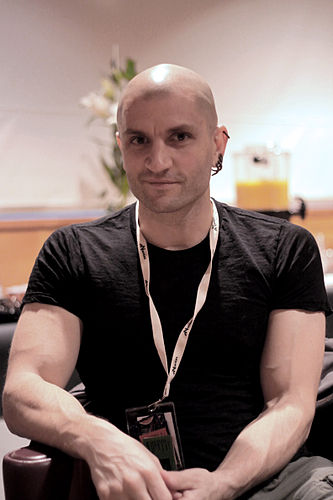
China Miéville (born 6 September 1972) is a Hugo, Arthur C. Clarke and Locus award-winning English fantastic fiction writer.
Best China Miéville Quotes
Shortest
Earliest
Explore our curated collection of the most famous and impactful China Miéville quotes.
“Folklore was self-generating.”
“I want to know everything, he says.”

“Mercantile law ruled: let the buyer beware.”


“Abomination from one perspective, it was advertising copy from another.”

“What if the chosen one misunderstands what he’s been chosen for?”
“There wasn’t even any reasoning. Secrecy was just a bureaucrats’ reflex.”


China Miéville Quotes by Topic
Find exactly what you are looking for by browsing this categorized list of China Miéville quotes by topic.
China Miéville on Fate
China Miéville on Firearm
China Miéville on Persuasion
“It ain't that he's not interested in, like, persuasiveness, get me? He's interested in it. Like something in a jar.”

China Miéville on Gulliver's Travels
China Miéville on Looking Backward: 2000–1887
“A hugely influential, rather bureaucratic egalitarian/naïve communist utopia. Deals very well with the confusion of the “modern” (19th Century) protagonist in a world he hasn’t helped create.”
China Miéville on Faith
China Miéville on Dexterity
“If you take something like Cthulhu in Lovecraft, for example, it is completely incomprehensible and beyond all human categorization. But in the game Call of Cthulhu, you see Cthulhu's “strength,” “dexterity,” and so on, carefully expressed numerically.”

China Miéville on Prayer
China Miéville on Frankenstein (novel)
“Not a warning “not to mess with things that should be let alone” (which would be a reactionary anti-rationalist message) but an insistence on the necessity of grappling with forces one unleashes and the fact that there is no “innate” nature to people, but a socially-constructed one.”
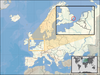
China Miéville on Principality of Sealand
“Ships have allowed groups ranging from cheerfully illicit pirate radio stations to socially committed abortion providers, like Women On Waves, to avoid local laws. [...] It is the less instrumentalist iterations that inspire the imagination. Occasionally, in a spirit of can-do contrarianism, some offshore spit or rig has been designated an independent country, such as Sealand, a sea-tower-based nation with no permanent inhabitants on Britain’s Suffolk coast.”
What China Miéville Said About Others
Discover personal opinions China Miéville shared regarding contemporaries.
China Miéville on Jack London
“London’s undoubted socialism is undermined by the most appalling racism.”

China Miéville on M. John Harrison
“A stunning writer, who expresses the alienation of the modern everyday with terrible force.”

China Miéville on Ken MacLeod
“Trotskyist (of strongly libertarian bent), all of whose (very good) works examine Left politics without sloganeering.”

China Miéville on Gene Wolfe
“Gene Wolfe is a religious Republican, but his tragico-Catholic perspective leads to a deeply unglamorized and unsanitized awareness of social reality.”

China Miéville on Octavia Butler
“Kindred is her most overtly political novel, the Patternmaster series the most popular. Survivor brilliantly blends genre SF with issues of colonialism and racism.”

China Miéville on Ayn Rand
“Rand was an obsessive “objectivist” (libertarian pro-capitalist individualist) whose hatred of socialism and any form of “collectivism” is visible in this important an influential—though vile and ponderous—novel.”

China Miéville on M. R. James
“James is regularly cited as a – or the – founder of the ‘tradition’ of English ghost stories. It is commonplace to then wryly point out that James’s ghosts are in fact often not ghosts, but inhuman ‘demons’ of one sort or another.”

China Miéville on Michael Moorcock
“Moorcock is an erudite Left-anarchist and a giant of fantasy literature. Almost everything he’s written is of interest, but Hawkmoon is chosen here in honor of Moorcock having said about it: “In a spirit consciously at odds with the jingoism of the day, I chose a German for a hero and the British for villains.””

China Miéville on William Hope Hodgson
“The Night Land is one of the most extraordinary works in the English language. It is the story of the human race, trying to live long after it should have gone, long after everything should have gone, after the Sun has died, and the utter existential horror of that fact is the merest backdrop. It is a bestiary and an atlas of the bleakest dread imaginable. It is a piece of such stunning imaginative power, such awesome and terrible beauty, such majesty, that it defies its own faults and is a masterpiece.”

China Miéville on H. P. Lovecraft
“Lovecraft's writing is a kind of purple poetry, notoriously parody-able. Of course such language can be done badly, and is not a necessary corollary of Weird Fiction (see, for example, the more robust register of Hodgson in many of his short stories, or Blackwood's melancholy ruminations). However, at its best Lovecraft's (and others') writing achieves affect because of, not despite, its prose, a crime against a certain au courant middlebrow minimalism , that will in passing extol barer prose as "spare", as if logo-parsimoniousness were a self-evident virtue ; or, even more absurdly, as "precise", as if the word " table " is somehow more like a table than a prolix descriptive alternative.”

China Miéville on Philip Pullman
“[about Northern Lights] Pullman let us down. This book is here because it deals with moral/political complexities with unsentimental respect for its (young adult) readers and characters. Explores freedom and social agency, and the question of using ugly means for emanicipatory ends. It raises the biggest possible questions, and doesn’t patronise us that there are easy answers. The second in the trilogy, The Subtle Knife, is a perfectly good bridging volume… and then in book three, The Amber Spyglass, something goes wrong. It has excellent bits, it is streets ahead of its competition… but there’s sentimentality, a hesitation, a formalism, which lets us down. Ah well. Northern Lights is still a masterpiece.”

About China Miéville
China Miéville (born 6 September 1972) is a Hugo, Arthur C. Clarke and Locus award-winning English fantastic fiction writer.