Link Copied!
Herbert Marcuse Quotes (1898-1979)
Philosopher









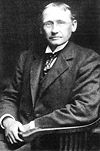


About Herbert Marcuse
Herbert Marcuse (July 19, 1898 – July 29, 1979) was a prominent German-American philosopher and sociologist of the Frankfurt School.
Best Herbert Marcuse Quotes
Shortest
Earliest
Explore our curated collection of the most famous and impactful Herbert Marcuse quotes.
“Being is continuous becoming. P. 136”
“This is the pure form of servitude: to exist as an instrument.”

“the need for stupefying work where it is no longer a real necessity.”
“The slaves of developed industrial civilization are sublimated slaves.”

“The tangible source of exploitation disappears behind the façade of objective rationality.”

“Domination has its own aesthetics, and democratic domination has its democratic aesthetics.”

“The happy consciousness is shaky enough—a thin surface over fear, frustration, and disgust.”

“The Superego, in censoring the unconscious and in implanting conscience, also censors the censor.”

“Entertainment and learning are not opposites; entertainment may be the most effective mode of learning.”

“When capitalism is negated, social processes no longer stand under the rule of blind natural laws. P. 318”

“[Art] can speak its own language only as long as the images are alive which refuse and refute the established order.”

“The liberating force of technology—the instrumentalization of things—turns into … the instrumentalization of man.”
“The transition from philosophy to the domain of state and society had been an intrinsic part of Hegel’s system. P. 251”

“The precarious ontological link between Logos and Eros is broken, and scientific rationality emerges as essentially neutral.”
“The present stage redefines the possibilities of man and nature in accordance with the new means available for their realization.”
“The avant-garde and the beatniks share in the function of entertaining without endangering the good conscience of the men of good will.”
“It is the sphere farthest removed from the concreteness of society which may show most clearly the extent of the conquest of thought by society.”

“Liberating tolerance, then, would mean intolerance against movements from the Right, and toleration of movements from the Left.”
“The spontaneous reproduction of superimposed needs by the individual does not establish autonomy; it only testifies to the efficacy of the control.”
“Non-operational ideas are non-behavioral and subversive. The movement of thought is stopped at barriers which appear as the limits of Reason itself.”
“If man has learned to see and know what really is, he will act in accordance with truth, Epistemology is in itself ethics, and ethics is epistemology.”

“Reason and Revolution, Hegel and the Rise of Social Theory, Herbert Marcuse, London Routledge & Kegan Paul LTD 2nd edition 1941, reprinted 1955”

“The social and political theory responsible for the development of Fascist Germany was, then, related to Hegelianism in a completely negative way. P. 418”
Herbert Marcuse Quotes by Topic
Find exactly what you are looking for by browsing this categorized list of Herbert Marcuse quotes by topic.
Herbert Marcuse on Dialectic 4 quotes
“This organization of functional discourse is of vital importance; it serves as a vehicle of coordination and subordination. The unified, functional language is an irreconcilably anti-critical and anti-dialectical language. In it, operational and behavioral rationality absorbs the transcendent, negative, oppositional elements of Reason.”

Herbert Marcuse on Individualism 2 quotes
“What is taking place is a sweeping redefinition of thought itself, of its function and content. The coordination of the individual with his society reaches into those layers of the mind where the very concepts are elaborated which are designed to comprehend the established reality. These concepts are taken from the intellectual tradition and translated into operational terms—a translation which has the effect of reducing the tension between thought and reality by weakening the negative power of thought.”

Herbert Marcuse on Critical theory 2 quotes
“If the progressing rationality of advanced industrial society tends to liquidate, as an “irrational rest,” the disturbing elements of Time and Memory, it also tends to liquidate the disturbing rationality contained in this irrational rest. Recognition and relation to the past as present counteracts the functionalization of thought by and in the established reality. It militates against the closing of the universe of discourse and behavior; it renders possible the development of concepts which destabilize and transcend the closed universe by comprehending it as historical universe. Confronted with the given society as object of its reflection, critical thought becomes historical consciousness as such, it is essentially judgment. Far from necessitating an indifferent relativism, it searches in the real history of man for the criteria of truth and falsehood, progress and regression.”

Herbert Marcuse on Art
“Art ... can speak its own language only as long as the images are alive which refuse and refute the established order.”

Herbert Marcuse on Critique of technology
“The liberating force of technology—the instrumentalization of things—turns into ... the instrumentalization of man.”

Herbert Marcuse on Irrationality
“We are again confronted with one of the most vexing aspects of advanced industrial civilization: the rational character of its irrationality.”
Herbert Marcuse on Mass production
“Mass production and mass distribution claim the entire individual, and industrial psychology has long since ceased to be confined to the factory.”

Herbert Marcuse on Epistemology
“If man has learned to see and know what really is, he will act in accordance with truth, Epistemology is in itself ethics, and ethics is epistemology.”
Herbert Marcuse on Ideology
“Today the ideology is in the process of production itself. ... The productive apparatus and the goods and services which it produces “sell” or impose the social system as a whole.”
Herbert Marcuse on Periodization
“Coming to life as classics, they come to life as other than themselves; they are deprived of their antagonistic force, of the estrangement which was the very dimension of their truth.”

Herbert Marcuse on Sales
“The music of the soul is also the music of salesmanship. Exchange value, not truth value counts. On it centers the rationality of the status quo, and all alien rationality is bent to It.”

Herbert Marcuse on High culture
“In its relation to the reality of daily life, the high culture of the past was many things—opposition and adornment, outcry and resignation. But it was also the appearance of the realm of freedom: the refusal to behave.”

What Herbert Marcuse Said About Others
Discover personal opinions Herbert Marcuse shared regarding contemporaries.
Herbert Marcuse on Erich Fromm
“Fromm revives all the time-honored values of idealistic ethics as if nobody had ever demonstrated their conformist and repressive features. He speaks of the productive realization of the personality, of care, responsibility, and respect for one’s fellow men, of productive love and happiness – as if man could actually practice all this and still remain sane and full of “well-being” in a society which Fromm himself describes as one of total alienation, dominated by the commodity relations of the “market.” In such a society, the self-realization of the “personality” can proceed only on the basis of a double repression: first, the “purification” of the pleasure principle and the internalization of happiness and freedom; second, their reasonable restriction until they become compatible with the prevailing unfreedom and unhappiness. As a result, productiveness, love, responsibility become “values” only in so far as they contain manageable resignation and are practiced within the framework of socially useful activities (in other words, after repressive sublimation); and then they involve the effective denial of free productiveness and responsibility.”

Quotes About Herbert Marcuse
Gain deeper perspective through quotes about Herbert Marcuse from others.
Peter Beilharz on Herbert Marcuse
“Critical theory was sometimes teased for its aristocratic components, its disinclination to praise popular culture, jazz or Americanism, its sometimes overwhelming sense of cultural pessimism, and all these sentiments echo the larger and older traditions of aristocratic radicalism, for which the old world, in general, was better than the brashness and shock of the new. The European critique of modernity was born as a critique of the mass, mass society, mass production, mass migration, the mass man, the image of life based on the factory, on its regimentation and yesmen, the conformism of following orders. This was also Marcuse’s anxiety into the 1960s – that the lucid or erotic components of being had been submerged into dull regimes of compliance, consumption, and getting on. Perhaps this was the moment when sociology began to shifts its focus from the realm of production to that of consumption. Gramsci had already anticipated the cultural turn in marxian thirty years earlier. Marcuse was not the only high-profile critical theorist, though the fact that he remained in the USA after Horkheimer and Adorno returned to Germany placed him strategically to be more significantly influential into the 1960s. More, he wrote in jeremiad form, unlike the laconic and dense Adorno, anticipating, in this sense, the later popularity of Zygmunt Bauman, another critical Cassandra figure. The second generation of critical theory became associated especially with the work and figure of Jürgen Habermas, who turned back to the inspiration of Kantian universalism. Where Marcuse saw systemic closure and frustration, Habermas saw possibilities for change, reform, and democratization. His early work drew together Marxian and Weberian themes and filaments, again seeking a critical theory with a practical or emancipatory intention in the manner of Marx.”
Roxanne Dunbar-Ortiz on Herbert Marcuse
“His most accessible works-Reason and Revolution, One-Dimensional Man, and Eros and Civilization-synthesized the essence of the great nineteenth-century German thinkers-Hegel, Marx, and Freud. Every time I'd heard him speak at UCLA, Marcuse drew huge crowds and commanded rapt attention, speaking in a heavy German accent, somber and professorial...The San Diego authorities and the newly elected California governor, Ronald Reagan, did everything within legal limits to get Marcuse fired, and their terrorist kindred threatened his life and property. Marcuse never budged nor responded; he was a gift we may or may not have deserved.”

Jane Slaughter on Herbert Marcuse
“To understand the scope and significance of women's involvement in radical political movements, we must have some idea of the contradictions and patterns of this participation as they have appeared in the past. The struggle of other women to define ideology, translate feminist consciousness into practice, and scale major obstacles provides us with a historical base by which we can more accurately assess the current potential of feminist radicalism and understand the real portent of Herbert Marcuse's observation that the "Women's Liberation movement today is perhaps the most important and potentially the most radical political movement we have"”
Herbert Gintis on Herbert Marcuse
“A couple of years later I was an Assistant Professor and read Critique of Pure Tolerance. I quite hated it. It espoused a doctrine of the objective truth of what are in fact simply personal opinions with emotive value but no fact value. I also read Herbert Marcuse's One-Dimensional Man, which I also hated. I had lunch with Marcuse when he was lecturing in Cambridge, Ma. I quite liked Marcuse because his was capable of changing his mind, and was mentally vigorous at an advanced age (most of my colleagues ceased thinking beyond tenure). I told him that he and his critical studies comrades were true totalitarians. They hoped for a workers' revolution, after which they would be appointed Cultural Commisars by the Great Leader of the working class, and they would teach people what to think.”
Friedrich Hayek on Herbert Marcuse
“Mr. Marcuse. . . . It’s the kind of Marxism which I dislike the most. It’s a combination of Marxism and Freudianism. I am equally opposed to both of the sources, and in its combined form I find it particularly repulsive.”

Mark Kurlansky on Herbert Marcuse 2 quotes
“By 1968 there was another intellectual it seemed everybody wanted to quote: Marxist-Hegelian revisionist revolutionary Herbert Marcuse. His most appealing idea was what he called "the great refusal," the time to say "No, this is not acceptable"—another idea that was expressed in Savio's "odious machine" speech. Marcuse, a naturalized American citizen who had fled the Nazis, was on the faculty of Brandeis when Abbie Hoffman was a student there, and Hoffman was enormously influenced by him, especially by his book Eros and Civilization, which talked about guilt-free physical pleasure and learned about "false fathers, teachers, and heroes." The most talked about Marcuse book of the late sixties, One-Dimensional Man, was published in 1964. It denounced technological society as shallow and conformist and put into the carefully orchestrated discipline of German philosophy all of the sentiments of the 1950s James Dean-style rebels and the 1960s student revolutionaries. The New York Times called Marcuse "the most important philosopher alive." In 1968, at the age of seventy, Marcuse taught at San Diego State, where he could be seen fussing over his rust-colored cat and enjoying the hippos at the zoo, an avuncular white-haired figure whose impact was felt across the globe. The students who forced the University of Rome to close in March of that year carried a banner with three Ms that stood for Marx, Mao, and Marcuse.”

Alasdair MacIntyre on Herbert Marcuse
“In his essay on Repressive Tolerance...Marcuse argues that the tolerance of the advanced industrial democracies is a deceit... Freedom of speech is not an overriding good, for to allow freedom of speech in the present society is to assist in the propagation of error, and "the telos of tolerance is truth." The truth is carried by the revolutionary minorities and their intellectual spokesmen, such as Marcuse, and the majority have to be liberated by being re-educated into the truth by this minority, who are entitled to suppress rival and harmful opinions. This is perhaps the most dangerous of all Marcuse's doctrines, for not only is what he asserts false, but his is a doctrine which if it were widely held would be an effective barrier to any rational progress and liberation... What, then, are the true connections between tolerance, rationality, and liberation? The telos of tolerance is not truth but rationality. Certainly we value rationality because it is by rational methods that we discover truth; but a man may be rational who holds many false beliefs, and a man may have true beliefs and yet be irrational. What is crucial is that the former has the possibility of progressing toward truth, while the second not only has no grounds for asserting what he believes, even though it is true, but is continually liable to acquire false beliefs. What is it to be rational? It is a necessary condition of rationality that a man shall formulate his beliefs in such a way that it is clear what evidence would be evidence against them and that he shall lay himself open to criticism and refutation in the light of any possible extreme. But to foreclose on tolerance is precisely to cut oneself off from such criticism and refutation. It is to gravely endanger one’s own rationality by not admitting one's own fallibility.”
Robert Service on Herbert Marcuse 2 quotes
“Another veteran communist calling for the revision of conventional contemporary Marxism was Herbert Marcuse. After emigrating from Nazi Germany in 1933, he took American citizenship and wrote prolifically about the need to graft several intellectual trends of the twentieth century – especially Freudianism and German sociology – on to the tree of the Marxist tradition. Marcuse rejected Stalin’s version of communism as dogmatic, narrow and plain wrong in its interpretation of Marx. He was a freer spirit than Lukács and refused to recognise Lenin as an absolute authority. He insisted that sexual drives as well as economic imperatives help to explain the mechanisms of politics and society. He scorned the Communist Party of the USA and refused to align himself with any organisation. His experiences as a young militant in Europe had eroded his faith in the revolutionary potential of the working class. Marcuse saw well-paid industrial workers as constituting one of the obstacles to humanity’s liberation from oppression. Based on the San Diego campus of the University of California, he counted instead upon the unemployed, the vagabond poor and the Hispanic immigrants; he also had a soft spot for college students. He regarded these groups as living in detachment from ‘bourgeois’ society and ready to overcome the ‘one-dimensional’ aspects of contemporary capitalist existence. Marcuse’s forte was as a philosopher. His preoccupation with epistemology and dialectics was typical of a growing trend among Marxist writers seeking to challenge the Marxism that had been customary since 1917.”

Ellen Willis Herbert Marcuse on Herbert Marcuse
“When I heard that Herbert Marcuse had died, I immediately thought, "The same year as John Wayne." For people like me Marcuse was something of a star, a presence, a symbol of certain values. I felt connected to him, though not in any simple I discovered his books at a time when I was groping toward a radicalism that would make sense of my experience as a middle-class American. Eros and Civilization and One Dimensional Man excited me because they were about problems I was struggling with the relation of psychology to politics, the idea of a cultural revolution, the prospects for radical change in a society where most people had enough to eat. Still, my copies of the books are filled with comments like "European elitism" and "glib" and "what bullshit!" As my politics matured, I found that I disagreed with most of what Marcuse said and hated what the new left made of his ideas. In some ways I defined my political outlook in reaction to Marcuse's, an acknowledgment that he'd made certain territory his own. In his monolithically bleak view of advanced capitalism and his contempt for American workers' enjoyment of their material gains, Marcuse was hardly distinguishable from conservative critics of mass culture…The Times quotes Marcuse wistfully referring to the "heroic period" of "the hippies and yippies." I wonder if he understood how thoroughly his heroes' values were rooted in mass culture. What did he think it meant when the Yippies got the Chicago police and the news media to cooperate in bringing revolutionary theater to millions? But then, he may have been more appreciative of such ironies than I tend to assume.”
Paul Gottfried on Herbert Marcuse
“Adorno, Marcuse, and other members of the Frankfurt School were explicit about the link between “antifascism,” which was the banner they sported, and sympathy for Communist governments. Like Sartre and his collaborators at Les Temps Modernes, the Critical Theorists considered anti-Communist attitudes proof positive of fascist residues in those who expressed them. After the publication of The Authoritarian Personality in 1950, Adorno was shocked by a suggestion from one of his coworkers, Seymour Martin Lipset, that the psychic grid they had applied to right-wingers might work for left-wing extremists equally well.”

About Herbert Marcuse
Herbert Marcuse (July 19, 1898 – July 29, 1979) was a prominent German-American philosopher and sociologist of the Frankfurt School.