Link Copied!
Thomas Ligotti Quotes (1953-)
Author, Artist, King
About Thomas Ligotti
Thomas Ligotti (born 9 July 1953) is a contemporary American horror author and reclusive literary cult figure. His writings, while unique in style, have been noted as major continuations of several literary genres – most prominently Lovecraftian horror – and have overall been described as works of "philosophical horror," often written as short stories and novellas with a "darker" undertone which is similar to gothic fiction.
Best Thomas Ligotti Quotes
Shortest
Earliest
Explore our curated collection of the most famous and impactful Thomas Ligotti quotes.


“It has always seemed to me that my existence consisted purely and exclusively of nothing but the most outrageous nonsense.”

“We are each either among the demoralized showing the way to a future of eternal nightmare, or we are losers celebrating our moment in hell.”
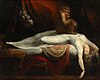
“Madness, chaos, bone-deep mayhem, devastation of innumerable souls—while we scream and perish, History licks a finger and turns the page.”
“Nothing belongs to us. Everything is something that is rented out. Our very heads are filled with rented ideas passed on from one generation to the next.”

“...One must take into account the shocking fact that we live on a world that spins. After considering this truth, nothing should come as a surprise.”
“Look at your body—
A painted puppet, a poor toy
Of jointed parts ready to collapse,
A diseased and suffering thing
With a head full of false imaginings.”
A painted puppet, a poor toy
Of jointed parts ready to collapse,
A diseased and suffering thing
With a head full of false imaginings.”

“What makes a nightmare nightmarish is the sense that something is happening that should not be. While nightmares are the most convenient reference point for this sense of the impossible, the unthinkable, as something that is actually happening, it is not restricted to our sleeping hours.”
““We, as licensed protectors of the species and members in good standing of the master-class of the race, by the power invested in us by those who wish to survive and reproduce, vow to enforce the fiction that life is worth having and worth living come hell or irreparable brain damage.””
“The major part of our species seems able to undergo any trauma without significantly re-examining its household mantras, including “everything happens for a reason,” “the show must go on,” “accept the things you cannot change,” and any other adage that gets people to keep their chins up.”
“You lie in the bed,
an arm full of tubes,
a mind full of drugs,
but still thinking.
You see the figure
enter the quiet room
and you lift your arm
and focus your mind.
You ask the doctor,
if it can be arranged,
that your last day
not be your worst day.
”
an arm full of tubes,
a mind full of drugs,
but still thinking.
You see the figure
enter the quiet room
and you lift your arm
and focus your mind.
You ask the doctor,
if it can be arranged,
that your last day
not be your worst day.
”
“As for procreation, no one in his right mind would say that it is the only activity devoid of a praiseworthy incentive. Those who reproduce, then, should not feel unfairly culled as the worst conspirators against the human race. Every one of us is culpable in keeping the conspiracy alive, which is all right with most people.”
“As history confirms, people will change their minds about almost anything, from which god they worship to how they style their hair. But when it comes to existential judgments, human beings in general have an unfalteringly good opinion of themselves and their condition in this world and are steadfastly confident they are not a collection of self-conscious nothings.”
“Optimism has always been an undeclared policy of human culture- one that grew out of our animal instincts to survive and reproduce- rather than an articulated body of thought. It is the default condition of our blood and cannot be effectively questioned by our minds or put in grave doubt by our pains. This would explain why at any given time there are more cannibals than philosophical pessimists.”
“Almost nobody declares that an ancestral curse contaminates us in utero and pollutes our existence. Doctors do not weep in the delivery room, or not often. They do not lower their heads and say, "The stopwatch has started." The infant may cry, if things went right. But time will dry its eyes; time will take care of it. Time will take care of everyone until there are none of us to take care of. Then all will be as it was before we put down roots where we do not belong.”
“To salve the pains of consciousness, some people anesthetize themselves with sunny thoughts. But not everyone can follow their lead, above all not those who sneer at the sun and everything upon which it beats down. Their only respite is in the balm of bleakness. Disdainful of the solicitations of hope, they look for sanctuary in desolate places - a scattering of ruins in a barren locale or a rubble of words in a book where someone whispers in a dry voice, "I, too, am here.””

“As a survival-happy species, our successes are calculated in the number of years we have extended our lives, with the reduction of suffering being only incidental to this aim. To stay alive under almost any circumstances is a sickness with us. Nothing could be more unhealthy than to “watch one’s health” as a means of stalling death. The lengths we will go as procrastinators of that last gasp only demonstrate a morbid dread of that event. By contrast, our fear of suffering is deficient.”
“Nature proceeds by blunders; that is its way. It is also ours. So if we have blundered by regarding consciousness as a blunder, why make a fuss over it? Our self-removal from this planet would still be a magnificent move, a feat so luminous it would bedim the sun. What do we have to lose? No evil would attend our departure from this world, and the many evils we have known would go extinct along with us. So why put off what would be the most laudable masterstroke of our existence, and the only one?”
“Nature is interested in only two things—to survive and to reproduce one like itself. Anything you superimpose on that, all the cultural input, is responsible for the boredom of man. So we have varieties of religious experience. You are not satisfied with your own religious teachings or games; so you bring in others from India, Asia or China. They become interesting because they are something new. You pick up a new language and try to speak it and use it to feel more important. But basically, it is the same thing.”
“One cringes to hear scientists cooing over the universe or any part thereof like schoolgirls over-heated by their first crush. From the studies of Krafft-Ebbing onward, we know that it is possible to become excited about anything—from shins to shoehorns. But it would be nice if just one of these gushing eggheads would step back and, as a concession to objectivity, speak the truth: THERE IS NOTHING INNATELY IMPRESSIVE ABOUT THE UNIVERSE OR ANYTHING IN IT.”

“Whatever else we may be as creatures that go to and fro on the earth and walk up and down upon it, we are meat. A cannibalistic tribe that once flourished had a word to describe what they ate. That word translates as “the food that talks.” Most of the food that we have eaten over the course of human history has not talked. But it does make other noises, terrible sounds as it is converted from living meat to dead meat on the slaughterhouse floor. If we could hear these sounds every time we sat down to a hearty meal, would we still be the wanton gobblers of flesh that most of us are now?”

“The birthrights we toss about are all lies fabricated to a purpose, as any student of humanity can verify. For those who have given thought to this matter, the only rights we may exercise are these: to seek the survival of our individual bodies, to create more bodies like our own, and to perish from corruption or mortal trauma. This is presuming that one has been brought to term and has made it to the age of being reproductively ready, neither being a natural birthright. Stringently considered, then, our only natural birthright is a right to die. No other right has ever been allocated to anyone except as a fabrication, whether in modern times or days past.”
Thomas Ligotti Quotes by Topic
Find exactly what you are looking for by browsing this categorized list of Thomas Ligotti quotes by topic.
Thomas Ligotti on Philosophical pessimism 11 quotes
“Immune to the blandishments of religions, countries, families, and everything else that puts both average and above-average citizens in the limelight, pessimists are sideliners in both history and the media. Without a belief in gods or ghosts, unmotivated by a comprehensive delusion, they could never plant a bomb, plan a revolution, or shed blood for a cause.”

Thomas Ligotti on Antinatalism 5 quotes
“Personally, I'm afraid of suffering and afraid of dying. I'm also afraid of witnessing the suffering and death of those who are close to me. And no doubt I project these fears on those around me and those to come, which makes it impossible for me to understand why everyone isn't an antinatalist, just as I have to assume pronatalists can't understand why everyone isn't like them.”

Thomas Ligotti on Pessimism
“Immune to the blandishments of religions, countries, families, and everything else that puts both average and above-average citizens in the limelight, pessimists are sideliners in both history and the media. Without a belief in gods or ghosts, unmotivated by a comprehensive delusion, they could never plant a bomb, plan a revolution, or shed blood for a cause.”

What Thomas Ligotti Said About Others
Discover personal opinions Thomas Ligotti shared regarding contemporaries.
Thomas Ligotti on H. P. Lovecraft
“Lovecraft's narrative is not only modern, it also emerged from an imagination that was deferential to no dogma that may be dated, one that assimilated what had come before and envisioned what might come to be in the evolution of human consciousness, deliberating with a fearsome honesty until it settled on a position it could hold in good faith and was ready to jettison as dictated by evidence or cerebration. Lovecraft drew upon and extended the most advanced thought of his time as well as all previous scientific and philosophical developments that tended to disenchant the human species with itself. In that sense, he really went the limit of disillusionment in assuming the meaningless, disordered, foundationless universe that became the starting point for later figures in science and philosophy....Although Lovecraft did have his earthbound illusions, at the end of the day he existed in no man's land of nihilism and disillusionment. As a fiction writer, he will ever be a contemporary of each new generation of mortals...”

Quotes About Thomas Ligotti
Gain deeper perspective through quotes about Thomas Ligotti from others.
Nic Pizzolatto on Thomas Ligotti
“As an aphorist, Cioran has no rivals other than perhaps Nietzsche, and many of his philosophies are echoed by Ligotti. But Ligotti is far more disturbing than Cioran, who is actually very funny. In exploring these philosophies, nobody I’ve read has expressed the idea of humanity as aberration more powerfully than Cioran and Ligotti.”
About Thomas Ligotti
Thomas Ligotti (born 9 July 1953) is a contemporary American horror author and reclusive literary cult figure. His writings, while unique in style, have been noted as major continuations of several literary genres – most prominently Lovecraftian horror – and have overall been described as works of "philosophical horror," often written as short stories and novellas with a "darker" undertone which is similar to gothic fiction.