Link Copied!
Leah Lakshmi Piepzna-Samarasinha Quotes (1975-)
Writer, Poet, Activist

About Leah Lakshmi Piepzna-Samarasinha
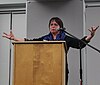
Leah Lakshmi Piepzna-Samarasinha (born April 21, 1975 in Worcester, Massachusetts) is a Toronto and Oakland-based poet, writer, educator and social activist.
Best Leah Lakshmi Piepzna-Samarasinha Quotes
Shortest
Earliest
Explore our curated collection of the most famous and impactful Leah Lakshmi Piepzna-Samarasinha quotes.
“Inclusion without power or leadership is tokenism. (p. 127)”

“A Disability Justice framework understands that all bodies are unique and essential, that all bodies have strengths and needs that must be met.”

“People like to say survivors of sexual violence make up false memories. But it’s far more common for people who perpetuate abuse to make up a false reality where they did nothing wrong.”
“our focus is less on civil rights legislation as the only solution to ableism and more on a vision of liberation that understands that the state was built on racist, colonialist ableism and will not save us, because it was created to kill us.”
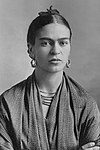
“Writing from bed is a time-honored disabled way of being an activist and a cultural worker. It's one the mainstream doesn't often acknowledge but whose lineage stretches from Frida Kahlo painting in bed to Grace Lee Boggs writing in her wheelchair at age 98.”

“I want to finish what we started. I want us not to abandon the revolutionary dream some of us touched and made in 2020-2021 — of a world where community care, mutual aid for collective survival and a refusal to obey are not just possible, they make up the bones of the new world.”

“I’ve started calling the time we live in “The Great Forgetting.” Some call it “The Great Gaslighting.” Both are true. By these terms, I mean the immense, on-purpose effort by the state to throw down the memory hole the fact that the last two years of the pandemic happened”

“everyone deserves basic income, care, and access. Everyone. Including people you don’t like. Including people who are not that likable…Because nobody deserves to die or suffer from lack of access, even if they’ve been an asshole. ("Making Space Accessible is an Act of Love for Our Communities")”
“A lot of people have had a brush with what it’s like to live a disabled life these last two years, and a lot of them want to forget it as quickly as possible. They’d rather expose themselves to all kinds of harm than continue to be disabled like us — mask, discuss risk, stay home, pass public policies for the safety of all.”

“Everyone I know longs for healing. It’s just hard to get. The good kind of healing: healing that is affordable, has childcare and no stairs, doesn’t misgender us or disrespect our disabilities or sex work, believes us when we’re hurt and listens when we say what we need, understands that we are the first and last authority on our own bodies and minds.”

“I don’t want to be fixed, if being fixed means being bleached of memory, untaught by what I have learned through this miracle of surviving. My survivorhood is not an individual problem. I want the communion of all of us who have survived, and the knowledge. (“Not Over It, Not Fixed, and Living a Life Worth Living: Towards an Anti-Ableist Vision of Survivorhood”)”

“I want abled people to get it together in 2018. Stop forgetting about disability and access. Read some of the many brilliant, made-by-disabled-people access guides out there. Normalize access and disability. Learn about disabled cultures and histories. Look at the histories of disability in your own family and communities. Ask how you are fighting ableism in every campaign you do. Don't forget about us. Realize you are or will be us.”
“Most sick and disabled people I know approach healing wanting specific things—less pain, less anxiety, more flexibility—but not usually to become able-bodied. And many of us don’t feel automatically comfortable going to healing spaces at all because of our histories of being seen as freaks, scrutinized, infantilized, patronized with “What happened?” prayed over, and asked, “Have you tried acupuncture?” and a million other “miracle cures.””
“The making of disability justice lives in the realm of thinking and talking and knowledge making, in art and sky. But it also lives in how to rent an accessible porta potty for an accessible-except-the-bathroom event space, how to mix coconut oil and aloe to make a fragrance-free hair lotion that works for curly and kinky BIPOC hair, how to learn to care for each other when everyone is sick, tired, crazy, and brilliant. And neither is possible without the other.”
“I believe that Greta’s ability to tweet #Aspiepower and frame her autism as a superpower is a product of brave-ass autistic women and nonbinary people who have been speaking about our lives and demanding an end to the ableist violence of a world that wants us ashamed and self-hating rather than proudly ourselves and able to access housing, meaningful work (or the right not to work), safety from police murder and medical violence – and love, respect and community, as we are.”
“Able-bodied practitioners without an anti-ableist analysis—including Reiki providers and anti-oppression therapists—often see us as objects of disgust, fascination, and/or inspiration porn. Mostly, these practitioners dismiss our lived expertise about our bodyminds and their needs, or on the flip side, they tell us we’re “not really disabled!” when we insist on the realities of our lives. This carries over into organizing, where, even in HJ spaces, often when the crips aren’t there, there’s no access info and no accessibility.”
“Ableism mandates that disabled and sick people are always “patients,” broken people waiting to be fixed by medicine or God, and that we’re supposed to be grateful for anything anyone offers at any time. It is a radical disability justice stance that turns the ableist world on its ear, to instead work from a place where disabled folks are the experts on our own bodies and lives, and we get to consent, or not. We’re the bosses of our own bodyminds. This has juicy implications for everyone, including abled people. (“A Modest Proposal for a Fair Trade Emotional Labor Economy”)”
“For years awaiting this apocalypse, I have worried that as sick and disabled people, we will be the ones abandoned when our cities flood. But I am dreaming the biggest disabled dream of my life—dreaming not just of a revolutionary movement in which we are not abandoned but of a movement in which we lead the way. With all of our crazy, adaptive-deviced, loving kinship and commitment to each other, we will leave no one behind as we roll, limp, stim, sign, and move in a million ways towards cocreating the decolonial living future. I am dreaming like my life depends on it. Because it does.”
“It doesn’t have to be either healing or organizing: it’s both. Someone asked me at a talk I was giving at Portland State University’s Take Back the Night how we choose between healing and activism. I tried to tell them that healing justice is not a spa vacation where we recover from organizing and then throw ourselves back into the grind. To me, it means a fundamental—and anti-ableist—shift in how we think of movement organizing work to think of it as a place where building in many pauses, where building in healing, where building in space for grief and trauma to be held makes the movements more flexible and longer lasting.”
“It’s not about self-care—it’s about collective care. Collective care means shifting our organizations to be ones where people feel fine if they get sick, cry, have needs, start late because the bus broke down, move slower, ones where there’s food at meetings, people work from home—and these aren’t things we apologize for. It is the way we do the work, which centers disabled-femme-of-color ways of being in the world, where many of us have often worked from our sickbeds, our kid beds, or our too-crazy-to-go-out-today beds. Where we actually care for each other and don’t leave each other behind. Which is what we started with, right?”
“If movements got it together about ableism, there is so much we could win—movement spaces where elders, parents, and sick and disabled folks (a huge amount of the planet) could be present—strength in numbers! We could create movement spaces where people don’t “age out” of being able to be involved after turning forty or feel ashamed of admitting any disability, Crazyness, or chronic illness. We could create visions of revolutionary futures that don’t replicate eugenics—where disabled people exist and are thriving, not, as often happens in abled revolutionary imaginations, revolutionary futures where winning the rev means we don’t exist anymore because everyone has health care.”
“You wanna know how you'll know if you're doing disability justice? You'll know you're doing it because people will show up late, someone will vomit, someone will have a panic attack, and nothing will happen on time because the ramp is broken on the supposedly "accessible" building. You won't meet your benchmarks on time, or ever. We won't be grateful to be included; we will want to set the agenda. And what our leadership looks like may include long sick or crazy leaves, being nuts in public, or needing to empty an ostomy bag and being on Vicodin at work. It is slow. It's people even the most social justice-minded abled folks stare at or get freaked out by. It looks like what many mainstream abled people have been taught to think of as failure. (p. 124)”
“Mainstream ideas of “healing” deeply believe in ableist ideas that you’re either sick or well, fixed or broken, and that nobody would want to be in a disabled or sick or mad bodymind. Unsurprisingly and unfortunately, these ableist ideas often carry over into healing spaces that call themselves “alternative” or “liberatory.” The healing may be acupuncture and herbs, not pills and surgery, but assumptions in both places abound that disabled and sick folks are sad people longing to be “normal,” that cure is always the goal, and that disabled people are objects who have no knowledge of our bodies. And deep in both the medical-industrial complex and “alternative” forms of healing that have not confronted their ableism is the idea that disabled people can’t be healers.”
“At the risk of seeming like a Christian, or a Che Guevara poster, love is bigger, huger, more complex, and more ultimate than petty fucked-up desirability politics. We all deserve love. Love as an action verb. Love in full inclusion, in centrality, in not being forgotten. Being loved for our disabilities, our weirdness, not despite them. Love in action is when we strategize to create cross-disability access spaces. When we refuse to abandon each other. When we, as disabled people, fight for the access needs of sibling crips. I’ve seen able-bodied organizers be confused by this. Why am I fighting so hard for fragrance-free space or a ramp, if it’s not something I personally need? When disabled people get free, everyone gets free. More access makes everything more accessible for everybody. ("Making Space Accessible is an Act of Love for Our Communities")”

Leah Lakshmi Piepzna-Samarasinha Quotes by Topic
Find exactly what you are looking for by browsing this categorized list of Leah Lakshmi Piepzna-Samarasinha quotes by topic.
Leah Lakshmi Piepzna-Samarasinha on Tokenism
“Inclusion without power or leadership is tokenism.”
Leah Lakshmi Piepzna-Samarasinha on Disability justice
“You wanna know how you'll know if you're doing disability justice? You'll know you're doing it because people will show up late, someone will vomit, someone will have a panic attack, and nothing will happen on time because the ramp is broken on the supposedly "accessible" building. You won't meet your benchmarks on time, or ever. We won't be grateful to be included; we will want to set the agenda. And what our leadership looks like may include long sick or crazy leaves, being nuts in public, or needing to empty an ostomy bag and being on Vicodin at work. It is slow. It's people even the most social justice-minded abled folks stare at or get freaked out by. It looks like what many mainstream abled people have been taught to think of as failure.”

What Leah Lakshmi Piepzna-Samarasinha Said About Others
Discover personal opinions Leah Lakshmi Piepzna-Samarasinha shared regarding contemporaries.
Leah Lakshmi Piepzna-Samarasinha on June Jordan
“In the words of June Jordan, “We always have choices. And capitulation is only one of them.””

Leah Lakshmi Piepzna-Samarasinha on Frida Kahlo
“Writing from bed is a time-honored disabled way of being an activist and a cultural worker. It's one the mainstream doesn't often acknowledge but whose lineage stretches from Frida Kahlo painting in bed to Grace Lee Boggs writing in her wheelchair at age 98. (preface)”
Leah Lakshmi Piepzna-Samarasinha on Grace Lee Boggs
“Writing from bed is a time-honored disabled way of being an activist and a cultural worker. It's one the mainstream doesn't often acknowledge but whose lineage stretches from Frida Kahlo painting in bed to Grace Lee Boggs writing in her wheelchair at age 98. (preface)”

Leah Lakshmi Piepzna-Samarasinha on Joe Biden
“Biden saying offhandedly that “the pandemic is over” even as thousands of people die every week and groups like Long COVID Justice and #MEAction organize — from bed and in die ins in front of the White House — demanding that the U.S. declare long COVID a public health emergency.”

Leah Lakshmi Piepzna-Samarasinha on Aurora Levins Morales
“Twenty years ago I first read Medicine Stories and had my mind blown by the elegant, virtuosic way Aurora Levins Morales imagined a theory interweaving childhood sexual abuse survival, Indigenous sovereignty, anticlassism, and deep Latinx queer anticolonial ecological justice. Twenty years later, her analysis is even more rich and full of fruit, revising and expanding her work to encompass Standing Rock and the global fight for water and land liberation, survivorhood, and disability justice.”
Leah Lakshmi Piepzna-Samarasinha on Octavia Butler
“Since Trump got elected, many people in my community have been talking about how Octavia Butler was a prophet and how her books Parable of the Sower and Parable of the Talents eerily predicted the climate change, wildfires, and fascism of our current world. Many people in movement spaces have taken Butler's words as prophecy and text...But what is often missing from these discussions is how Lauren Olamina, Butler's Black, genderqueer teenage hero who leads her community out of the ashes and founds a new spirituality that embraces change as god, is disabled. In the book, she is called a sharer: someone with hyperempathy syndrome from her mother's use of the Einstein drug, a popular drug that heightened intelligence. She feels everything everyone feels, and it's often overwhelming in a way that reminds me of some autistic and neurodivergent realities. It gives her impairments and also gifts. To me, Butler's Parable books are a Black disability justice narrative.”

Leah Lakshmi Piepzna-Samarasinha on Greta Thunberg
“Greta has the sense of moral clarity and laser focus that is one of the things I love and value about myself and other autistic people. We’re different — I’m brown, she’s white, and I feel more political commonality with Black and Brown young climate activists like Isra Hirsi and Autumn Peltier who are making connections between colonialism, racism and climate justice. But when I look at Greta’s unsmiling, outraged face, I feel a sense of autistic intimacy. But women are supposed to smile and be polite, don’t you know? Women and non-cis guys are supposed to be gracious and gentle and apologize and make eye contact. Autistic women and non-cis guys are often under even more pressure to keep up with traditional, neurotypical gender standards. We are not supposed to just say what the fuck we believe, call people out, and not smile doing it. We are not supposed to be autistic in public, without apology, let alone have any kind of radical politics. But Greta is.”

About Leah Lakshmi Piepzna-Samarasinha
Leah Lakshmi Piepzna-Samarasinha (born April 21, 1975 in Worcester, Massachusetts) is a Toronto and Oakland-based poet, writer, educator and social activist.