Link Copied!
Leó Szilárd Quotes (1898-1964)
Physicist, President, Scientist


About Leó Szilárd
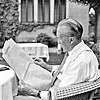
Leó Szilárd (11 February 1898 – 30 May 1964) was a Hungarian-American physicist, and probably the first scientist to take seriously the idea of actually developing atomic bombs; he drafted the famous letter sent by Albert Einstein to U.S. President Franklin Delano Roosevelt that was largely responsible for initiating the Manhattan Project to develop nuclear weapons during World War II.
Best Leó Szilárd Quotes
Shortest
Earliest
Explore our curated collection of the most famous and impactful Leó Szilárd quotes.

“A scientist's aim in a discussion with his colleagues is not to persuade, but to clarify.”

“Science is progressing at such a rapid rate that when you make a prediction and think you are ahead of your time by 100 years you may be ahead of your time by 10 at most.”

“Even in times of war, you can see current events in their historical perspective, provided that your passion for the truth prevails over your bias in favor of your own nation.”
“The most important step in getting a job done is the recognition of the problem. Once I recognize a problem I usually can think of someone who can work it out better than I could.”

“A great power imposes the obligation of exercising restraint, and we did not live up to this obligation. I think this affected many of the scientists in a subtle sense, and it diminished their desire to continue to work on the bomb.”
“In life you must often choose between getting a job done or getting credit for it. In science, the most important thing is not the ideas you have but the decision which ones you choose to pursue. If you have an idea and are not doing anything with it, why spoil someone else's fun by publishing it?”

“The people who have sufficient passion for the truth to give the truth a chance to prevail, if it runs counter to their bias, are in a minority. How important is this "minority?" It is difficult to say at this point, for, at the present time their influence on governmental decisions is not perceptible.”
“It is not necessary to succeed in order to persevere. As long as there is a margin of hope, however narrow, we have no choice but to base all our actions on that margin. America and Russia have one interest in common which may override all their other interests: to be able to live with the bomb without getting into an all-out war that neither of them wants.”
“All we had to do was lean back, turn a switch and watch a screen of a television tube. If flashes of light appeared on the screen it would mean that liberation of atomic energy would take place in our lifetime. We turned the switch, saw the flashes — we watched for about five minutes — then switched everything off and went home. That night I knew the world was headed for trouble.”
“If we focus our attention on the next twenty-five years we may say that development is likely to reach some point intermediate between the first bomb detonated over Hiroshima and processes which once initiated might put an end to all life on earth. Just what intermediate point will be reached within twenty-five years no one can tell.”
“Even if we accept, as the basic tenet of true democracy, that one moron is equal to one genius, is it necessary to go a further step and hold that two morons are better than one genius?
• Variant: I'm all in favor of the democratic principle that one idiot is as good as one genius, but I draw the line when someone takes the next step and concludes that two idiots are better than one genius.”
• Variant: I'm all in favor of the democratic principle that one idiot is as good as one genius, but I draw the line when someone takes the next step and concludes that two idiots are better than one genius.”

“I sometimes have the feeling that I have lived through all this before and, in a sense, I have. I was sixteen years old when the first World War broke out, and I lived at that time in Hungary. From reading the newspapers in Hungary, it would have appeared that, whatever Austria and Germany did was right and whatever England, France, Russia, or America did was wrong. A good case could be made out for this general thesis, in almost every single instance. It would have been difficult for me to prove, in any single instance, that the newspapers were wrong, but somehow, it seemed to me unlikely that the two nations located in the center of Europe should be invariably right, and that all the other nations should be invariably wrong. History, I reasoned, would hardly operate in such a peculiar fashion, and it didn't take long until I began to hold views which were diametrically opposed to those held by the majority of my schoolmates.”
“Suppose Germany had developed two bombs before we had any bombs. And suppose Germany had dropped one bomb, say, on Rochester and the other on Buffalo, and then having run out of bombs she would have lost the war. Can anyone doubt that we would then have defined the dropping of atomic bombs on cities as a war crime, and that we would have sentenced the Germans who were guilty of this crime to death at Nuremberg and hanged them?
But, again, don't misunderstand me. The only conclusion we can draw is that governments acting in a crisis are guided by questions of expediency, and moral considerations are given very little weight, and that America is no different from any other nation in this respect.
• Variant: If the Germans had dropped atomic bombs on cities instead of us, we would have defined the dropping of atomic bombs on cities as a war crime, and we would have sentenced the Germans who were guilty of this crime to death at Nuremberg and hanged them.”

Leó Szilárd Quotes by Topic
Find exactly what you are looking for by browsing this categorized list of Leó Szilárd quotes by topic.
Leó Szilárd on Clarity
Leó Szilárd on Democracy
Leó Szilárd on Genius
Leó Szilárd on Idiot
Leó Szilárd on Meaning of life
“Speak to all men as you do to yourself, with no concern for the effect you make, so that you do not shut them out from your world; lest in isolation the meaning of life slips out of sight and you lose the belief in the perfection of creation.”

Leó Szilárd on Hope
“It is not necessary to succeed in order to persevere. As long as there is a margin of hope, however narrow, we have no choice but to base all our actions on that margin. America and Russia have one interest in common which may override all their other interests: to be able to live with the bomb without getting into an all-out war that neither of them wants.”

Leó Szilárd on Nuclear war
“Suppose Germany had developed two bombs before we had any bombs. And suppose Germany had dropped one bomb, say, on Rochester and the other on Buffalo, and then having run out of bombs she would have lost the war. Can anyone doubt that we would then have defined the dropping of atomic bombs on cities as a war crime, and that we would have sentenced the Germans who were guilty of this crime to death at Nuremberg and hanged them? ... The only conclusion we can draw is that governments acting in a crisis are guided by questions of expediency, and moral considerations are given very little weight, and that America is no different from any other nation in this respect.”

Leó Szilárd on Atomic bombings of Hiroshima and Nagasaki
“Suppose Germany had developed two bombs before we had any bombs. And suppose Germany had dropped one bomb, say, on Rochester and the other on Buffalo, and then having run out of bombs she would have lost the war. Can anyone doubt that we would then have defined the dropping of atomic bombs on cities as a war crime, and that we would have sentenced the Germans who were guilty of this crime to death at Nuremberg and hanged them? But, again, don't misunderstand me. The only conclusion we can draw is that governments acting in a crisis are guided by questions of expediency, and moral considerations are given very little weight, and that America is no different from any other nation in this respect.”

Quotes About Leó Szilárd
Gain deeper perspective through quotes about Leó Szilárd from others.
Jacob Bronowski on Leó Szilárd
“I had not been long back from Hiroshima when I heard someone say, in Szilárd's presence; that it was the tragedy of scientists that their discoveries were used for destruction. Szilárd replied, as he more than anyone else had the right to reply; that it was not the tragedy of scientists, it is the tragedy of mankind.”

Rotblat on Leó Szilárd
“By the time his ideas became accepted he had already forged ahead to take up a new attitude. Szilard himself illustrated this characteristic in a story which he liked to tell about himself. He served once on a jury in a murder case. When the first vote was taken, eleven jurors were in favour of convicting, but one — Szilard — was for acquittal. Since unanimity was required, the discussion was resumed and Szilard expounded his arguments. After some time another vote was taken; the result was again eleven to one, but this time eleven were for acquittal, and one for conviction: the odd vote was Szilard’s who had in the meantime changed his mind!”
Barry on Leó Szilárd
“Another explanation for the failure of logic and observation alone to advance medicine is that unlike, say, politics, which uses a form of logic – mathematics – as its natural language, biology does not lend itself to logic. Leo Szilard, a prominent physicist, made this point when he complained that after switching from physics to biology he never had a peaceful bath again. As a physicist he would soak in the warmth of the bathtub and contemplate a problem, turn it in his mind, reason his way through it. But once he became a biologist, he constantly had to climb out of the bathtub to look up a fact.”
About Leó Szilárd
Leó Szilárd (11 February 1898 – 30 May 1964) was a Hungarian-American physicist, and probably the first scientist to take seriously the idea of actually developing atomic bombs; he drafted the famous letter sent by Albert Einstein to U.S. President Franklin Delano Roosevelt that was largely responsible for initiating the Manhattan Project to develop nuclear weapons during World War II.