Link Copied!
K. S. Lal Quotes (1920-2002)
About K. S. Lal
Kishori Saran Lal (1920 – 2002) was an Indian historian. He wrote many historical books, mainly on medieval India. Many of his books, such as History of the Khaljis and Twilight of the Sultanate, are regarded as standard works.
Best K. S. Lal Quotes
Shortest
Earliest
Explore our curated collection of the most famous and impactful K. S. Lal quotes.


“The special interest of Muslims in sex slavery was universal and widespread.”

“Hindus and Muslims can both be fanatics, but it is only Muslims (and Christians) who can be fundamentalists.”
“If the medieval chronicler cries out "Jihad" it is not heard, but if he cries out persistently, it is claimed that he never meant it.”
“In brief, the onus of protecting Hindus against Muslim and Christian proselytization falls on Hindu social and cultural organizations.”
“Any study of the population of the precensus times can be based only on estimates, and estimates by their very nature tend to be tentative.”

“A Hindu can not be a fundamentalist because there is nothing fundamental or obligatory in his socio-religious life, but he can be fanatic, a greater fanatic than all....”
“I have tried my utmost to be judicious in my conclusions, and have neither explained an act or policy to the extent of excusing, nor have I uncritically dispraised or blamed.”
“The forcible conversion of Frontier Tribes by Aurangzeb is a well-known fact. “Popular Hindu and Sikh tradition ascribes mass conversions by force to Aurangzeb’s reign.””
“The forcible conversion of frontier tribes by Aurangzeb is a well-known fact. “Popular Hindu and Sikh tradition ascribes mass conversions by force to Aurangzebs reign. (151)”
“Thousands of non-Muslim women were captured in the minor yearly campaigns of Firoz Tughlaq, and under him the Id celebrations were held on lines similar to those of his predecessor.”
“Husain Khan. Jagirdar of Patiali and Sruvmsabati, had ordered that the Hindus of his jagtr should wear a piece of cloth on their dress as a mark of distinction from the Muslims. (19)”
““Fundamentalism is not accidental but essential to Islam… It sees unchangeability as strength. That is why the word reform is so abhorrent to Muslim thinkers and religious leaders ...””

“In the Assam campaign “khani-khanan ordered that the prisoners should have the heads of the slain tied round them, and be thus exposed to the derision of the camp...and afterwards put to death.”
“Here the feudal nobility was a military aristocracy which incidentally owned land, rather than a landed aristocracy which occasionally had to defend Royal lands and property by military means but at other times lived quietly.”

“Bias or prejudice born out of chauvinism and imaginary interests of national glorification is not only undesirable, it is indeed dangerous. It is harmful not only to the cause of historical truth... (Meaning and Purpose of History in Volume I)”
“Muslim conquest was not without its blessings in Bengal. There, as elsewhere, developed an understanding between Hindus and Muslims. Hindus offered sweets at Muslims shrines; consulted and kept copies of the Quran. Musalmans responded with similar acts.”

“Jaisi, Rahim, Raskhan and Dara Shukoh, though no conventional philosophers, are rare phenomenon. Recognized leading lights of Islamic philosophy like Shaikh Ahmad Sarhindi, Shah Waliullah and Shah Ismail Shahid, find no place in the histories of Indian philosophy.”

“It is not surprising that for some communal historians suffering from extra-territorial chauvinism, the Persian wheel, the spinning wheel, the dome and the arch all came from lands outside India and the highly developed ancient Indian civilization was unaware of these....”

“Study of history has a value at all times. But it is of the utmost importance today when the world is shrinking and we are coming closer to one another. We can be nearer to one another better if we understand one another well. (Meaning and Purpose of History in Volume I)”

“According to Mulla Ahmad, "the main object of levying of Jiziyah on them (the Hindus) is their humiliation... God established (the custom of realising) Jiziyah for their dishonour. The object is their humiliation and the (establishment of) prestige and dignity of the Muslims."6”

“In short, while there can be no doubt about the presence of some Muslims in Sind, Gujarat and on the western coast of India, their number till the end of the tenth century was almost microscopic. In Hindustan proper, east of the river Indus, there were hardly any Musalmans in C.E. 1000.”
K. S. Lal Quotes by Topic
Find exactly what you are looking for by browsing this categorized list of K. S. Lal quotes by topic.
K. S. Lal on Hindu–Islamic relations
“Muslim conquest was not without its blessings in Bengal. There, as elsewhere, developed an understanding between Hindus and Muslims. Hindus offered sweets at Muslims shrines; consulted and kept copies of the Quran. Musalmans responded with similar acts.”

K. S. Lal on Hindu temples in Kashmir
“However, it was during the reign of Sikandar Butshikan (1394-1417), that the wind of Muslim proselytization blew the strongest. He invited from Persia, Arabia and Mesopotamia learned men of his own faith; his bigotry prompted him to destroy all the most famous temples in Kashmir - Martand, Vishya, Isna, Chakrabhrit, Tripeshwar, etc.”
K. S. Lal on Ladakh
“When Kashmir was under Muslim rule for 500 years, Hindus were constantly tortured and forcibly converted. A delegation of Kashmir Brahmans approached Guru Teg Bahadur at Anadpur Saheb to seek his help. But Kashmir was Islamized. Those who fled to preserve their religion went to Laddakh in the east and Jammu in the south. It is for this reason that non-Muslims are found in large number in these regions.”

K. S. Lal on Islam in India
“In theory all Muslims are equal; in practice some have always been more equal than the others. Foreign Muslims tried to dominate over Indian Muslims. At the top were the Ulema or the learned, nobles and army commanders. They were all foreigners or descended from migrant Muslims. It was from the Ulema class that the high officers, of government as well as religious institutions were chosen. .... It was through these men that the regime systematized the religious and social life of the Muslim community just as it organized the extension and administration of Muslim dominions in India through the nobility.”

K. S. Lal on Sati (practice)
“A word may here be said about the important though cruel customs of Sati and Jauhar prevailing in medieval times. With the loss of power and constant danger of attack, the customs of Sati and Jauhar were gaining strong roots not only among the Kshatriyas, but among other people also. However, the most significant fact about these customs is that except perhaps by Muhammad Tughlaq, no serious attempt was made to put a stop to such an inhuman system of self-immolation. On the other hand it was universally admired. Even an extremely cultured man like Amir Khusru exclaimed: “See how noble it is”. Ibn Battiita witnessed the Sati on many occasions and gives many unhappy details. Jauhar was prevalent both in the north and the south. During Timir’s invasion Muslim women also performed Jauhar when Bhatnir was sacked.””

K. S. Lal on Dalit
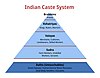
“In short, the avalanche of Turco- Mughal invaders, and the policy of their Government turned many settled agriculturists into tribals of the jungles....For example, many Parihars and Parmars, once upon a time belonging to the proud Rajput castes, are now included in lower castes. So are the “Rajputs” counted in Backward Classes in South India. ... in course of time many of these Jats and Khokhars were pushed into belonging to low castes of to-day. For the later times is the example of the Satnamis. This sect was an offshoot of the Raidasis.....At last Aurangzeb crushed them by sending 10,000 troops (March, 1672) and facing a most obstinate battle in which two thousand Satnamis fell on the field and many more were slain during the pursuit. Those who escaped spread out into small units so that today there are about 15 million Satnami Harijans....”
K. S. Lal on Islam in Kashmir
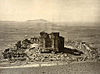
“Kashmir's conversion to Islam on a large scale also dates from the beginning of the fifteenth century....However, it was during the reign of Sikandar Butshikan (1394-1417), that the wind of Muslim proselytization blew the strongest. He invited from Persia, Arabia and Mesopotamia learned men of his own faith; his bigotry prompted him to destroy all the most famous temples in Kashmir - Martand, Vishya, Isna, Chakrabhrit, Tripeshwar, etc. Sikandar offered the Kashmiris the choice between Islam and death. Some Kashmiri Brahmans committed suicide, many left the land, many others embraced Islam, and a few began to live under Taqiya, that is, they professed Islam only outwardly. It is said that the fierce intolerance of Sikandar had left in Kashmir no more than eleven families of Brahmans. ...By the time of Akbar’s annexation of Kashmir (C.E. 1586) the valley had turned mainly Mohammadan. When Father Xavier and Brother Benedict went to Kashmir with Akbar this is what they learnt: “In antiquity this land was inhabited by the Moors, possibly a reference to Timur (contemporary of Sikandar the Iconoclast), and since then the majority of the people accept Islam.” When Kashmir was under Muslim rule for 500 years (1319-1819) Hindus were constantly tortured and forcibly converted. A delegation of Kashmir Brahmans approached Guru Teg Bahadur at Anadpur Saheb to seek his help. But Kashmir was Islamized. Those who fled to preserve their religion went to Laddakh in the east and Jammu in the south. It is for this reason that non-Muslims are found in large number in these regions. In the valley itself the Muslims formed the bulk of the population.”
K. S. Lal on Zakat
““There is a desire to equate Zakat with Jizyah to emphasize the fairness of the Islamic fiscal system. The Muslims pay Zakat and the non-Muslims Jizyah. But the analogy is fallacious. The rate of Zakat tax is as low as 2.5 per cent and that on the apparent [visible] property only. All kinds of concessions for payment of the Zakat exist with regard to the taxable minimum. In its collection no force is applied because force vitiates its character. On the other hand, the rate of Jizyah is very high for the non-Muslims: 48, 24, and 12 tankahs [one of the main historical currencies in Asia] for the rich, the middling, and the poor, whatever the currency and whichever the country. Besides, what is central to Jizyah is always the humiliation of the Infidel, particularly at the time of collection. What is central in Zakat is that it is voluntary; at least it should not be collected by force. In India Zakat ceased to be a religious tax imposed only on the Muslims. Zakat was levied in the shape of customs duties on merchandise and grazing fees on all milk-producing animals or those which went to pasture, and was realized both from Muslims and non-Muslims. According to Muslim law, ‘import duties for Muslims were 5 per cent and for non-Muslims 10 per cent of the community. Abu Hanifa, whose Sunni school of jurisprudence prevailed in India, would tax the merchandise of the Dhimmis as imposts at double the Zakat fixed for Muslims. Jizyah was calculated so as to inflict real financial pain on Infidels, and had to be paid no matter how poor they might be. This was part of their punishment for being Infidels, to pay for their own protection... Zakat, on the other hand, was never meant to be a financial burden on Muslims. Normally it would be only 2.5% of a Muslim’s wealth, and imposed only if he possessed a certain minimum wealth, or nisab.”

What K. S. Lal Said About Others
Discover personal opinions K. S. Lal shared regarding contemporaries.
K. S. Lal on Sikandar Butshikan
“Kashmir's conversion to Islam on a large scale also dates from the beginning of the fifteenth century....However, it was during the reign of Sikandar Butshikan (1394-1417), that the wind of Muslim proselytization blew the strongest. He invited from Persia, Arabia and Mesopotamia learned men of his own faith; his bigotry prompted him to destroy all the most famous temples in Kashmir - Martand, Vishya, Isna, Chakrabhrit, Tripeshwar, etc. Sikandar offered the Kashmiris the choice between Islam and death. Some Kashmiri Brahmans committed suicide, many left the land, many others embraced Islam, and a few began to live under Taqiya, that is, they professed Islam only outwardly. It is said that the fierce intolerance of Sikandar had left in Kashmir no more than eleven families of Brahmans. ...By the time of Akbar’s annexation of Kashmir (C.E. 1586) the valley had turned mainly Mohammadan. When Father Xavier and Brother Benedict went to Kashmir with Akbar this is what they learnt: “In antiquity this land was inhabited by the Moors, possibly a reference to Timur (contemporary of Sikandar the Iconoclast), and since then the majority of the people accept Islam.” When Kashmir was under Muslim rule for 500 years (1319-1819) Hindus were constantly tortured and forcibly converted.”
Quotes About K. S. Lal
Gain deeper perspective through quotes about K. S. Lal from others.
V.P. Gupta on K. S. Lal
“Dr. K.S.Lal belongs to the the galaxy of serious Indian scholars who have interpreted a number of sensitive problems of medieval Indian history and attempted to place the whole period covering about one thousand years on a rational footing in the overall context of global history.... In contrast to a large number of his companions, he does not adhere to any rigid school of historiography whether it be "pro-Muslim" or "apologist", "Marxist" or "manipulated". ... The literary flavour found in the writings of Dr. Lal recalls to the mind the style of The Decline and Fall of the Roman Empire by the celebrated historian Gibbon.”
Harbans Mukhia on K. S. Lal
“Professor Lal was already a veteran whose major book, History of the Khaljis, was compulsory reading for students of medieval Indian history from the undergraduate class onwards. I still find it very useful when I teach any course on the Delhi sultanate. ... Historiographically the book fell entirely and conspicuously in the genre of nationalist historiography whose hallmark was its challenge· to the portrayal of medieval Indian history as a story of unrelenting conflict between the medieval Muslim rulers and their Hindu subjects. History of the Khaljis is one of the best works in this genre: empirically sound, objective in its assessment of events and persons, non-judgemental in its evaluation of the motives of rulers or their opponents. The remarkable quality gave the book a long life in the discipline, even when newer problematiques of socio-economic history began to displace the ones of dynastic history that had remained the preoccupation of the earlier generation.”
R. Islam on K. S. Lal
“To write a history of an age of political disintegration, accompanied with numerous and intricate internecine wars, is an exacting task and Professor Kishori Saran Lal has accomplished it admirably... One merit of the work deserves special notice. As in his previous work, the History of the Khaljis, the author throughout exhibits a spirit of judicious impartiality in dealing with Muslim policy towards the Hindus. Evidence which in the hands of biased writers has been misused, finds its proper place in Professor Lai's assessment... On the whole the Twilight of the Sultanate is a highly creditable work. Professor Lai has a lucid, fluent, and forceful style and his book, apart from its scholarship, makes good reading.”
Review by on K. S. Lal
“The book is a valuable and scholarly contribution to a very confused period of north Indian history, and may well become one of the foundations for a full scale modern history of north India in the fifteenth century.”
History of the Khaljis on K. S. Lal
Elst on K. S. Lal
“The fact that Prof. Mukhia has many like-minded colleagues in academe while his opponents have to remain on the outside is not the result of better competence among his friends, but of a deliberate policy in university nominations. Any young historian who lets on too early that he has pro-Hindu convictions, will see his entry into academe barred. Word will spread around that this man is “dangerous to India’s secular fabric” and he will be excluded. There have been some old historians who entered the profession before their cards were on the table and who only became forthright critics of Islam at the end of their careers, the likes of Prof. Harsh Narain and Prof. K.S. Lal, both since long deceased. Today among university historians, the school that sets the record on Islam straight is simply non-existent.”
Meenakshi Jain on K. S. Lal
“K.S. Lal provided a painstakingly researched account of the Khalji period, which remains a standard reference.”

Comment written by Muhammad Habib on the jacket of K.S. Lal’s book on K. S. Lal
“Dr. KS Lal has managed to fill a very important gap in our national history. I have read his work several times with pleasure and profit. He has utilized for his work all contemporary authorities which seem to be within the reach of the present generation in Persian, Hindi and Sanskrit. He has critical discrimination and complete freedom from all prejudices. No student of Indian history can afford to ignore Dr. Lal's excellent work.”
About K. S. Lal
Kishori Saran Lal (1920 – 2002) was an Indian historian. He wrote many historical books, mainly on medieval India. Many of his books, such as History of the Khaljis and Twilight of the Sultanate, are regarded as standard works.