Link Copied!
John W. Dower Quotes (1938-)
Author
About John W. Dower
John W. Dower (born June 21, 1938, in Providence, Rhode Island) is an American author and historian.
Best John W. Dower Quotes
Shortest
Earliest
Explore our curated collection of the most famous and impactful John W. Dower quotes.
“Among the Allied war leaders, Admiral Halsey was the most notorious for making outrageous and virulently racist remarks about the Japanese enemy in public. Many of his slogans and pronouncements bordered on advocacy of genocide. Although he came under criticism for his intemperate remarks, and was even accused of being drunk in public, Halsey was immensely popular among his men and naturally attracted good press coverage. His favorite phrase for the Japanese was "yellow bastards," and in general he found the color allusion irresistible.”
“Indeed, in wartime jargon, the notion of "good Japanese" came to take on an entirely different meaning than that of "good Germans," as Admiral William F. Halsey emphasized at a news conference early in 1944. "The only good Jap is a Jap who's been dead for six months," the commander of the U.S. South Pacific Force declared, and he did not mean just combatants. "When we get to Tokyo, where we're bound to get eventually," Halsey went on, "we'll have a little celebration where Tokyo was." Halsey was improvising on a popular wartime saying, "the only good Jap is a dead Jap," and his colleagues in the military often endorsed this sentiment in their own fashion.”
“Even after they were checked at Midway and Guadalcanal in 1942, many Japanese remained convinced that the Anglo-American enemy was indeed psychologically incapable of recovering In actuality, the contrary was true, for the surprise attack provoked a rage bordering on the genocidal among Americans. Thus, Admiral William Halsey, soon to become commander of the South Pacific Force, vowed after Pearl Harbor that by the end of the war the Japanese language would be spoken only in hell, and rallied his men thereafter under such slogans as "Kill Japs, kill Japs, kill more Jap." Or as the U.S. Marines put it in a well-known variation on Halsey's motto: "Remember Pearl Harbor- keep 'em dying."”
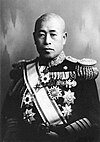
“In the wake of Pearl Harbor, a single word favored above all others by Americans as best characterizing the Japanese people was "treacherous," and for the duration of the war the surprise attack on the U.S. Pacific fleet remained the preeminent symbol of the enemy's inherent treachery. The attack also inspired a thirst for revenge among Americans that the Japanese, with their own racial blinders, had failed to anticipate. In one of his earliest presentations of the plan to attack Pearl Harbor, even Admiral Yamamoto Isoroku, who presumedly knew the American temperament firsthand from his years as a naval attache in Washington, expressed hope that shattering opening blow against the Pacific Fleet would render both the U.S. Navy and the American people "so dispirited that they will not be able to recover."”
What John W. Dower Said About Others
Discover personal opinions John W. Dower shared regarding contemporaries.
John W. Dower on William Halsey Jr. 4 quotes
“Among the Allied war leaders, Admiral Halsey was the most notorious for making outrageous and virulently racist remarks about the Japanese enemy in public. Many of his slogans and pronouncements bordered on advocacy of genocide. Although he came under criticism for his intemperate remarks, and was even accused of being drunk in public, Halsey was immensely popular among his men and naturally attracted good press coverage. His favorite phrase for the Japanese was "yellow bastards," and in general he found the color allusion irresistible.”

John W. Dower on Frank Capra 3 quotes
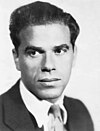
“To be inspired with the will to win, Capra told his associates as they embarked on this work, Americans needed to be shown that they were fighting for the existence of their country, and at the same time were carrying the "torch of freedom" for a better postwar world- a world in which conquest, exploitation, and economic evils had been eliminated, and peace and democracy prevailed. This seemed a clear line, and a familiar one to anyone who recalled the idealistic Allied propaganda of World War One.”
John W. Dower on Charles Lindbergh 3 quotes
“On May 18, 1944, about two weeks after Lindbergh had tied in with a Marine unit, he recorded that the camps were full of reports of Japanese torture and the beheading of captured American pilots. A month later, on June 21, he summarized the conversation of an American general who told how an unsuspecting Japanese prisoner was given a cigarette and then seized from behind and had his throat "slit from ear to ear" as a demonstration of how to kill Japanese. Lindbergh's objections were met with tolerant scorn and pity.”

John W. Dower on Douglas MacArthur 2 quotes
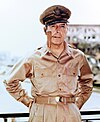
“In his distinctive way, MacArthur meant this as a compliment of sorts, in that he was attempting to convey why he believed democracy might take firmer root in postwar Japan than in Germany. The bluntness of the metaphor embarrassed the general's Japanese admirers, however, and- in one of history's smaller losses- prompted some of them to abandon plans for a Statue of Liberty-sized statue of the general in Tokyo Bay. The comment was not only a fair reflection of the supreme commander's outlook, however, but also helps illuminate the kind but frequently condescending premises of U.S. occupation policy in general. Such parent-child or teacher-student paternalism was reminiscent of Japan's own now discredited Co-Prosperity Sphere rhetoric, and had obvious roots in the Western colonial tradition exemplified by such phrases as "white man's burden" and "little brown brother". It was certainly not an attitude reserved for the Japanese alone, although MacArthur's imposing paternal presence made it especially conspicuous in the Japanese case.”
John W. Dower on Winston Churchill
“Winston Churchill, who worried about the "pan-Asian malaise" and the looming "shadow of Asiatic solidarity," was himself inordinately fond of the racial slurs that were guaranteed to alienate Asian peoples. His Chinese allies remained "little yellow men" to him, even as the same phrase became an everyday expression in discussions of the Japanese enemy.”

About John W. Dower
John W. Dower (born June 21, 1938, in Providence, Rhode Island) is an American author and historian.