Link Copied!
Jim G. Shaffer Quotes (1944-)
About Jim G. Shaffer
Jim G. Shaffer (born 1944) is an American archaeologist and professor of anthropology at Case Western Reserve University.
Best Jim G. Shaffer Quotes
Shortest
Earliest
Explore our curated collection of the most famous and impactful Jim G. Shaffer quotes.

“A key to understanding the Indo-Gangetic cultural tradition's structure is its economic and cultural focus on cattle.”

“A diffusion or migration of a culturally complex ‘Indo-Aryan‘ people into South Asia is not described by the archaeological record.”
“These emerging connections and relationships in the northern South Asian archaeological record indicate no significant cultural discontinuities.”
“The existing interpretative discussions postulating large-scale human “invasions” simply do not correlate with the physical, archaeological, or paleoanthropological, data.”
“The previous concept of a Dark Age in South Asian archaeology is no longer valid.... [we have a] cultural continuum stretching from perhaps 7000 BC into the early centuries AD...”

“A cultural tradition refers to persistent configurations o f basic technologies and cultural systems as well as structure within the context of temporal and geographic continuity.”
“The image of Indo-Aryans as nomadic, conquering warriors, driving chariots, may have been a vision that Europeans had, and continue to have, of their own assumed “noble” past.”
“While lacking fullest data, there is a growing consensus that the Harappan culture originated as a result of local cultural developments. "Mesopotamian" inventions are not needed to explain it.”
“The shift by Harappan groups, and perhaps, other Indus Valley cultural mosaic groups, is the only archaeologically documented west-to-east movement of human populations in South Asia before the first half of the first millennium BC.”
“By the close of Period II, at ca. 4500/4300 B.C., not only was a distinctive, domestic animal subsistence pattern established, but other cultural traits were present that would characterise this region down to the Early Historic Period.”
“Although the use of cattle as important cultural wealth declined in the first millennium B.C., their religious status remained high, or intensified, providing an im portant cultural link between the protohistoric and Early Historic Periods”
“Lacking fullest data, there is, nonetheless, a growing consensus that Harappan culture is the result of indigenous cultural developments, with no “Mesopotamian” people or diffusions of Western inventions, by whatever means, needed to explain it.”
“The numerous and substantial mud brick “granaries” built by the close of Period HA at Mehrgarh, in the first half of the 5th millennium B.C., suggest a concern, unparalleled in contemporary cultures, for surplus production irrespective of what was stored in them.”
“...thus there is no “Vedic night” separating the prehistoric/protohistoric from the early historic periods of South Asian culture history. These data reinforce what the site of Mehrgarh describes - an indigenous cultural continuity in South Asia of several millennia.”
“The current archaeological and paleoanthropological data simply do not support these centuries old interpretative paradigms suggesting Western, intrusive, cultural influence as responsible for the supposed major discontinuities in the South Asian cultural prehistoric record.”
“We reemphasize our earlier views, namely that scholars engaged in South Asian studies must describe emerging South Asia data objectively rather than perpetuate interpretations, now more than two centuries old, without regard to the data archaeologists have worked so hard to reveal.”
“Despite a plea by one South Asian scholar to be “. . . hopefully somewhat free from the ghosts of the past”, the legacy of a post-Enlightenment western scholarship concerning South Asian prehistory and history has been for the arguments to be repeated so often as to become dogma.”
“It is now clear that the Oxus Civilisation played a major role in the socio-economics and politics of the late third and early second millennia bc, extending far and wide across Central Asia, and exchanging and/or having contact with populations living in a number of other regions.”
“These factors suggest, given the increasingly arid savanna ecology of the Greater Indus Valley after ca. 4000 B.C., that this continued preference for cattle was a deliberate cultural decision by the social groups in the area, and that cattle were objects of important cultural wealth.”

“It is singularly refreshing, against this dogmatic pursuit of what may be an unobtainable goal, to know there are South Asian scholars who “. . . do not believe that the available data are sufficient to establish anything very conclusive about an Indo-European homeland, culture, or people””
“Given these characteristics, a preference for cattle, after 5000 B.C., undoubtedly influenced other social, economic and political relationships, and suggests that cultural developments in South Asia did not simply parallel those in Southwest Asia, where groups did not have a comparable bias.”

“The modern archaeological record for South Asia indicates a history of significant cultural continuity; an intrepretation at variance with earlier eighteenth through twentieth-century scholarly views of South Asian cultural discontinuity and South Asian cultural dependence on Western culture influences.”
“Unfortunately, there is an “academic status” associated with studying ancient states. Therefore, it is likely that either the “state” will be redefined to fit the “mature” Harappan pattern, or that “mature “Harappan culture will be moulded to the contours o f existing definitions, at the expense of exploring alternative explanations.”
Jim G. Shaffer Quotes by Topic
Find exactly what you are looking for by browsing this categorized list of Jim G. Shaffer quotes by topic.
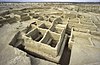
Jim G. Shaffer on Mehrgarh
“The Mehrgarh data raise serious questions about diffusion as an all-encompassing explanation for major South Asian cultural developments.”
Quotes About Jim G. Shaffer
Gain deeper perspective through quotes about Jim G. Shaffer from others.
Elst on Jim G. Shaffer
“In a joint paper, “Migration, philology and South Asian archaeology”, two of the participating archaeologists, Jim Shaffer and Diane Lichtenstein, confirm and elaborate their by now well-known finding that there is absolutely no archaeological indication of an Aryan immigration into northwestern India during or after the decline of the Harappan city culture. It is odd that the other contributors pay so little attention to this categorical finding, so at odds with the expectations of the AIT orthodoxy.”
G. Erdosy on Jim G. Shaffer
“The paper by J. Shaffer and D. Lichtenstein will illustrate the gulf still separating archaeology and linguistics. It reflects recent disillusionment with the traditional paradigmsdominating archaeological explanation be the cyclical models of cultural growth-florescence-decay, the continuing prominence — in South Asian archaeology at least — of diffusionism, or the obsession with the “Harappan Civilisation” at the expense of other social groups constituting the cultural mosaic of the Greater Indus Valley. Apart from the influence of 19th century ideas on the civilising mission of European powers, such views have also been fostered by an inadequate definition of “cultures” as recurring assemblages of artefacts (after Childe 1929). The authors, therefore, attempt to construct new analytical units based on a study of material culture, with special focus on the concept of “cultural tradition”. The paper builds on an earlier study Shaffer (1991), by placing emphasis on hitherto neglected structural features of cultural traditions; more importantly, it demonstrates by way of an example the potential of this method to lay bare the dynamics of long-term cultural change. The new concepts mark a significant advance in ways of handling the material culture of South Asia. Although they could certainly accommodate models of lan‘guage change, however, the authors stress the indigenous development of South Asian civilisation from the Neolithic onward, and downplay the role of language in the formation of (pre-modern) ethnic identities.”
Elst K on Jim G. Shaffer
“But first a glimpse of the archaeological debate. In a recent paper, two prominent archaeologists, Jim Shaffer and Diane Lichtenstein (1999), argue that there is absolutely no archeaological indication of an Aryan immigration into northwest- ern India during or after the decline of the Harappan city culture. It is odd that the other participants in this debate pay so little attention to this categorical finding, so at odds with the expectations of the AIT orthodoxy, but so in line with majority opinion among Indian archaeologists.”
Elst K. on Jim G. Shaffer
“Or it mainly was American professor James Shaffer, not exactly a “Hindu nationalist”, whose 1984 paper on the archaeological assessment of the hypothesised Aryan invasion threw the gauntlet against AIT complacency. He noted that already for more than half a century, well-financed excavations in the Harappan area had been looking for traces of the Aryan immigration (whether violent, as the archaeologists had expected, or under the radar, as they were later forced to postulate), but no trace had appeared. Indian archaeologists were becoming skeptical but the signal for them to gradually go public with this, at least in India to start with, was Shaffer’s statement.”
Kenneth A. R. Kennedy on Jim G. Shaffer
“Did Aryans exist? This is a question posed by James Shaffer (1984b). He begins his analysis with a review of the idea of Aryans in both western and Indian sources, but concentrates upon evaluation of the claims that the Aryan presence is to be found in the Harappan and/or PGW cultures. He finds several problems in the argument that the ancient Harappans were Aryans. Shaffer notes that the discovery of extensive nonceramic occupations associated with early domestication of animals at Mehrgarh, Baluchistan, date to before 6000 B.C., thereby establishing the antiquity of human occupation of the Indus Valley region and giving strong support to the idea that civilisation arose indigenously in this part of the world. In short, no invasion of more highly endowed populations is called for.”
About Jim G. Shaffer
Jim G. Shaffer (born 1944) is an American archaeologist and professor of anthropology at Case Western Reserve University.