Link Copied!
Albert O. Hirschman Quotes (1915-2012)
King

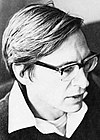

About Albert O. Hirschman
Albert Otto Hirschman (born Otto-Albert Hirschmann; April 7, 1915 – December 10, 2012) was an economist.
Best Albert O. Hirschman Quotes
Shortest
Earliest
Explore our curated collection of the most famous and impactful Albert O. Hirschman quotes.
“A taste is almost defined as a preference about which you do not argue — de gustibus non est disputandum. A taste about which you argue, with others or yourself, ceases ipso facto being a taste – it turns into a value.”
“The welfare state may thus face a wave of hostile public opinion and as a result may well pass through a difficult phase, with the need for consolidation and even retrenchment. However, if the reasons suggested here for the change in the climate of opinion are correct, the trouble could be temporary.”

“At this point, then, a junction is effected between the previously developed train of thought on countervailing passions and the doctrine of interest. Both doctrines originated in Machiavelli; yet the final outcome—the promotion of avarice to the position of the privileged passion given the job of taming the wild ones and of making in this fashion a crucial contribution to statecraft—would have greatly surprised and outraged him.”
“Which are the arguments and how many are there? I must have an inbred urge toward symmetry. In canvassing for the principal ways of criticizing, assaulting, and ridiculing the three successive "progressive" thrusts of Marshall's story, I have come up with another triad: that is, with three principal reactive-reactionary theses, which I call the perversity thesis or thesis of the perverse effect, the futility thesis, and the jeopardy thesis. According to the perversity thesis, any purposive action to improve some feature of the political, social, or economic order only serves to exacerbate the condition one wishes to remedy. The futility thesis holds that attempts at social transformation will be unavailing, that they will simply fail to “make a dent.” Finally, the jeopardy thesis argues that the code of the proposed chafe or reform is too high as it endangers some previous, precious accomplishment.”
Albert O. Hirschman Quotes by Topic
Find exactly what you are looking for by browsing this categorized list of Albert O. Hirschman quotes by topic.
Albert O. Hirschman on Political philosophy
“In attempting to teach the prince how to achieve, maintain, and expand power, Machiavelli made his fundamental and celebrated distinction between "the effective truth of things" and the "imaginary republics and monarchies that have never been seen nor have been known to exist." The implication was that moral and political philosophers had hitherto talked exclusively about the latter and had failed to provide guidance to the real world in which the prince must operate. This demand for a scientific, positive approach was extended only later from the prince to the individual, from the nature of the state to human nature. Machiavelli probably sensed that a realistic theory of the state required a knowledge of human nature, but his remarks on that subject, while invariably acute, are scattered and unsystematic.”
What Albert O. Hirschman Said About Others
Discover personal opinions Albert O. Hirschman shared regarding contemporaries.
Albert O. Hirschman on Joseph Schumpeter
“For Schumpeter, capitalism itself could not possibly make for conquest and war: its spirit was rational, calculating, and therefore averse to risk-taking on the scale implicit in warmaking and in other heroic antics. Interesting as they were as a counterpoint to the various Marxist theories of imperialism, Schumpeter's views evinced less awareness of the knottiness of the problem he was dealing with than those of Adam Ferguson and Tocqueville that have just been recalled. To go back even further: Cardinal de Retz, with his insistence that the passions are not to be counted out in situations where interest-motivated behavior is considered to be the rule, appears to have had the better part of the argument than either Keynes or Schumpeter.”
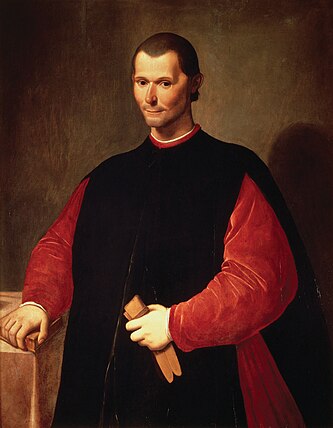
Albert O. Hirschman on Niccolò Machiavelli
“In attempting to teach the prince how to achieve, maintain, and expand power, Machiavelli made his fundamental and celebrated distinction between "the effective truth of things" and the "imaginary republics and monarchies that have never been seen nor have been known to exist." The implication was that moral and political philosophers had hitherto talked exclusively about the latter and had failed to provide guidance to the real world in which the prince must operate. This demand for a scientific, positive approach was extended only later from the prince to the individual, from the nature of the state to human nature. Machiavelli probably sensed that a realistic theory of the state required a knowledge of human nature, but his remarks on that subject, while invariably acute, are scattered and unsystematic.”

Quotes About Albert O. Hirschman
Gain deeper perspective through quotes about Albert O. Hirschman from others.
Amartya Sen on Albert O. Hirschman
“The Passions and the Interests does not have the policy urgency that a contribution to public decisions may enjoy (as Hirschman's The Strategy of Economic Development eminently does), nor the compulsive immediacy that the exigencies of practical reason generate (as Exit, Voice, and Loyalty superbly portrayed). What then is so special about this book? […] The answer lies not only in the recognition that Hirschman makes us see the ideological foundations of capitalism in a fresh way, but also in the remarkable fact that this freshness is derived from ideas that are more than two-hundred-years old. The basic hypothesis— the articulation and development of which Hirschman investigates—makes the case for capitalism rest on the belief that "it would activate some benign human proclivities at the expense of some malignant ones."”

About Albert O. Hirschman
Albert Otto Hirschman (born Otto-Albert Hirschmann; April 7, 1915 – December 10, 2012) was an economist.