Link Copied!
Hijab Quotes (0-)

About Hijab
A hijab (Arabic: حجاب, romanized: ḥijāb) is a religious veil worn by Muslim women in the presence of any male outside of their immediate family, which usually covers the hair, head and chest. The term can refer to any hair, head, face, or body covering worn by Muslim women that conforms to Islamic standards of modesty. Hijab can also refer to the seclusion of women from men in the public sphere, or it may denote a metaphysical dimension, for example referring to "the veil which separates man, or the world, from God".
Best Hijab Quotes
Shortest
Earliest
Explore our curated collection of the most famous and impactful Hijab quotes.
“To me, the hijab means power, liberation, beauty, and resistance.”
“Insulating women if they don’t wear the veil ensures that they wear it out of fear not faith… women now accept the position of being slaves.”

“For the aim of the veil is to create a truly erotic culture in which one dispenses with the need for the artificial excitement that pornography provides.”

“The veil is not always a form of self-suppression; often it is an alternative, more modest, style of beauty, even a symbol of seduction rather than seclusion.”
“In Sikhism, the turban is considered and accepted as essential to the religion. On the other hand, hijab in the context of women’s dress finds no mention in the Quran.”
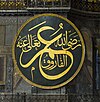
“Ibn Umar reported Umar as saying: My lord concorded with (my judgments) on three occasions. In case of the Station of Ibrahim, in case of the observance of veil and in case of the prisoners of Badr.”
“I just wish I felt supported by the image-makers of the West, who seem to have a veil fetish. They are doing the exact opposite of what the European politicians suggest: They're imposing the veil on women.”
“Narrated Anas bin Malik: The Prophet stayed with Safiya bint Huyai for three days on the way of Khaibar where he consummated his marriage with her. Safiya was amongst those (wives of the Prophet) who were ordered to use a veil.”

“They don’t even want to acknowledge the fact that women are thrown in prison, getting their faces disfigured, losing their families, friends and communities, and being threatened with death or actually being killed over hijab.”
“Yahya related to me from Malik from Hisham ibn Urwa from his father that a woman asked him for a decision, saying, "Waist-wrappers are painful to me. Can I pray in a shift and head-covering?" He replied, "Yes, if the shift is long."”

“Muslim jurists consistently argued that the laws mandating the covering of the full body did not apply to slave-girls. In fact, it is reported that ‘Umar b. al-Khaṭṭāb prohibited slave-girls from imitating free women by covering their hair.”
“O Prophet! Tell thy wives and daughters, and the believing women, that they should cast their outer garments over their persons (when abroad): that is most convenient, that they should be known (as such) and not molested. And God is Oft-Forgiving, Most Merciful.”
“Narrated Aisha, Ummul Mu'minin: Safiyyah, daughter of Shaybah, said that Aisha mentioned the women of Ansar, praised them and said good words about them. She then said: When Surat an-Nur came down, they took the curtains, tore them and made head covers (veils) of them.”

“There is no blame (on these ladies if they appear) before their fathers or their sons, their brothers, or their brother's sons, or their sisters' sons, or their women, or the (slaves) whom their right hands possess. And, (ladies), fear God; for God is Witness to all things.”
“Yahya related to me from Malik from Alqama ibn Abi Alqama that his mother said, "Hafsa bint Abd ar-Rahman visited A'isha, the wife of the Prophet, may Allah bless him and grant him peace, and Hafsa was wearing a long thin head scarf. A'isha tore it in two and made a thick one for her."”
About Hijab
A hijab (Arabic: حجاب, romanized: ḥijāb) is a religious veil worn by Muslim women in the presence of any male outside of their immediate family, which usually covers the hair, head and chest. The term can refer to any hair, head, face, or body covering worn by Muslim women that conforms to Islamic standards of modesty. Hijab can also refer to the seclusion of women from men in the public sphere, or it may denote a metaphysical dimension, for example referring to "the veil which separates man, or the world, from God".