Link Copied!
Irfan Habib Quotes (1931-)



About Irfan Habib
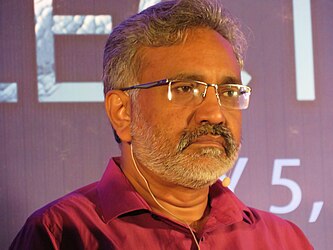
Irfan Habib (born 12 August 1931) is an Indian historian of ancient and medieval India, following the approach of Marxist historiography.
Best Irfan Habib Quotes
Shortest
Earliest
Explore our curated collection of the most famous and impactful Irfan Habib quotes.
“But it seems likely... that Sarasvati/Harakhvati was the name for the Helmand. Otherwise it is difficult to understand how Sarasvati could be put between Sindhu and Sarayu as the major intervening river in RV X, 64.9.”
““…the population during the Mughal period did not remain stable though the compound rate of growth, 0.14% per annum, was hardly spectacular and was much lower than the rate attained during the nineteenth century””
“To begin with, the new conquerors and rulers…were of a different faith (Islam) from that of their predecessors… their principal achievements lay in a great systematization of agrarian exploitation and an immense concentration of the resources so obtained.”
“While medieval Islamic literature referred to Hindus as 'infidels' and denounced polytheism and image worship, there was no criticism of the caste system, the theory of pollution and oppression of untouchables that were rampant in medieval India. ... The attitude of the Muslims towards the caste system was by no means one of disapprobation...”

“The pressure of new circumstances led initially to large-scale slave-trading and the emergence of slave labour during the thirteenth and fourteenth centuries. The numbers of slaves in the Sultans' establishments were very high (50,000 under Alauddin Khilji, and 180,000 under Firuz Tughluq). Barani judges the level of prices by referring to slave prices, and the presence of slaves was almost all-pervasive.”
“It is inherent in the unity of past and present that Marxist historiography must continuously turn to fresh aspects to explore and re-explore and fresh questions to answer... This examination must cover everything from general principles to specific facts, because both are all the time being brought into question by others. We have to answer them not by denunciation – always a bad counsellor – but careful scrutiny and investigation.”
“In one of his theses Marx said: 'Philosophers have so far interpreted the world. The point is to change it.' Marxism sees an innate unity between perception of the past and present practice. This unity implies continuous interaction: as time passes and history (human experience) lengthens, we draw greater lessons from it for the present; and as our present experience tells us more about the possibilities and limitations of social action, we turn to the past and obtain new comprehensions of it.”

“The publication of Dr. Tasneem Ahmad’s translation is a notable contribution to the National celebration of the 450th Anniversary of Akbar’s birth. I feel confident that it would reinforce the interest in Akbar’s age widespread among those who have a care for the long process of the creation of a composite culture and a unity that together constitute what is India.... ‘What it [the Tarikh-i-Akbari] now needed was a full-scale English translation.’... ‘This has been provided by Dr. Tasneem Ahmad in a very competent manner, aiming at faithful accuracy and at a critical assessment of the information here received by comparing it with that offered by other sources.’”

“"The evidence for such enslavement is there for all to see. So economically important was it that the success of military campaigns was often judged by the number of captives (burdas) obtained for enslavement. Qutbuddin Aibak's campaign in Gujarat in 1195 netted him 20,000 slaves, seven years later a campaign against Kalinjar yielded 50,000. In 1253 Balban obtained countless 'horses and slaves' from an expedition in Kalinjar. In the instructions that Alauddin Khalji is said to have issued to Malik Kafur before his campaigns in the Deccan it is assumed that 'horses and slaves' would form a large part of the booty. As the Sultanate began to be consolidated, the suppression of mawas or rebellious villages within its limits yielded a continuously rich harvest of slaves. Balban's successful expedition in the Doab made slaves cheap in the capital. How people of the village could be made slaves for nonpayment of revenue is described in the 14th century sources; and women so enslaved are mentioned in different contexts in two others".”
Irfan Habib Quotes by Topic
Find exactly what you are looking for by browsing this categorized list of Irfan Habib quotes by topic.
Irfan Habib on Slavery in India 2 quotes
“The pressure of new circumstances led initially to large-scale slave-trading and the emergence of slave labour during the thirteenth and fourteenth centuries. The numbers of slaves in the Sultans' establishments were very high (50,000 under Alauddin Khilji, and 180,000 under Firuz Tughluq). Barani judges the level of prices by referring to slave prices, and the presence of slaves was almost all-pervasive.”

What Irfan Habib Said About Others
Discover personal opinions Irfan Habib shared regarding contemporaries.
Irfan Habib on Mohammad Habib
“[He was] so conscious of the negative aspects of the medieval Islamic civilization or so sensitive to the devastation that the wars and campaigns of the sultans wrought on the inhabitants.”

Irfan Habib on Tony Joseph
“Tony Joseph has given us a book that, with its racy style, is easy to read. By proposing puzzles, he makes dull evidence lively for the reader. He simultaneously maintains a level of academic accuracy that adds weight to his hypotheses and conclusions. This is a book which all who are interested in both history and historical method should read - and enjoy.”

Irfan Habib on Firuz Shah Tughlaq
“The pressure of new circumstances led initially to large-scale slave-trading and the emergence of slave labour during the thirteenth and fourteenth centuries. The numbers of slaves in the Sultans' establishments were very high (50,000 under Alauddin Khilji, and 180,000 under Firuz Tughluq). Barani judges the level of prices by referring to slave prices, and the presence of slaves was almost all-pervasive.”

Quotes About Irfan Habib
Gain deeper perspective through quotes about Irfan Habib from others.
Suraj Bhan on Irfan Habib
“It is true that my conclusions and views on certain issues are based on my knowledge existing prior to the submission of ASI’s report in court. I and Prof. Habib had given this statement that remains of old mosque or Eidgah had been found beneath the disputed site and not of any temple. If this propaganda that remains of temple were found at the disputed site, had not taken place, there would have been no occasion for me and Prof. Irfan Habib to give the above statement.”
KS LAL on Irfan Habib
“Such an insinuation is in conformity with [Irfan] Habib's pattern of thinking and writing. He is a patently biased historian.”
K.K. Mohammed on Irfan Habib
“He always went to the extent of stifling the voices of those who disagreed with him.... The Babri issue would have been settled long ago if the Muslim intelligentsia had not fallen prey to the brain washing by the Leftist historians. A set of historians including Romila Thapar, Bipin Chandra and S Gopal argued that there was no mention of the dismantling of the temple before 19th century and Ayodhya is Bhudhist-Jain centre. They were supported by historians Irfan Habib, RS Sharma, DN Jha, Suraj Ben and Akthar Ali.”
Elst on Irfan Habib 2 quotes
“Since some ignorant dupes of these Marxists denounce as “McCarthyist” anyone who points out their ideological inspiration, it deserves to be emphasized that “eminent historians” like Romila Thapar, R.S. Sharma and Irfan Habib are certified as Marxists in standard Marxist sources like Tom Bottomore's Dictionary of Marxist Thought.”
Meenakshi Jain on Irfan Habib 2 quotes
“Now, Irfan Habib’s seemingly strongest piece of evidence (not for the temple’s non-existence, of course, but at least for the untrustworthiness of some pro-temple spokesmen) turned out to be false... During the demolition on 6 December 1992, many Hindu artefacts had turned up, albeit in less than desirable circumstances from an archaeological viewpoint... Among the first findings during the demolition was the Vishnu Hari inscription, dating from the mid-11th century Rajput temple, which the Babri Masjid masons had placed between the outer and inner wall. Several Babri historians dismissed the inscription as fake, as of much later date, or as actually brought by the Kar Sevaks during the demolition itself. Prof. Irfan Habib, in a combine with Dr. Jahnawi Roy and Dr. Pushpa Prasad, dismissed this inscription as stolen from the Lucknow Museum and to be nothing other than the Treta ka Thakur inscription. The curator kept this inscription under lock, but after some trying, Kishore Kunal, author of another Ayodhya book (Ayodhya Revisited, 2016), could finally gain access to it and publish a photograph. What had been suspected all along, turns out to be true: Prof. Habib, who must have known both inscriptions, has told a blatant lie. Both inscriptions exist and are different. Here they have been neatly juxtaposed on p.104-5. Yet, none of the three scholars has “responded to the publication of the photograph of the Treta ka Thakur inscription, which falsifies the arguments they have been persistently advocating for over two decades.””

Arun Shourie on Irfan Habib
“So great was the compulsion and enthusiasm of the historians to somehow discredit the archaeological evidence unearthed at Ayodhya that one of them, Prof. Irfan Habib, who is known amongst his fellow historians as a great scholar of medieval India, ended up making a great professional howler. He announced that he had dated the artifacts found in the Ayodhya excavations, by the carbon dating technique, and found that these artifacts were of rather recent origin. And it so happened that an officer of the Archaeological Survey reviewed the procedures of Prof. Irfan Habib and found that if Prof. Habib’s dating procedures were to be followed then one would come to the conclusion that the reign of Emperor Akbar is yet to begin: It shall begin in 2009 A.D.!”

Arif Mohammad Khan on Irfan Habib
“You have every right to protest. But you cannot shout me down... When you shut the door for debate and discussion, you are promoting culture of violence... Shri Irfan Habib tried on stage to disrupt inaugural address questioning Hon'ble Governor's right to quote Maulana Abdul Kalam Azad, shouting that he should quote (Nathuram) Godse. He pushed Hon'ble Governor's ADC and security officer, who prevented his unseemly gesture... Shri Irfan Habib raised some points on CAA. But, when Hon'ble Governor addressed these points, Sh.Habib rose from seat to physically stop him... Hon'ble Governor said that he had responded to points raised by previous speakers,as a person duty bound to defend &protect the Constitution. But trying to disrupt speech from stage&audience due to intolerance towards different opinion is undemocratic.”
S.R. Goel on Irfan Habib
“Irfan Habib.. has been a prominent member of the Stalinist gang which, starting from the days of Pandit Nehru's dominance has come to control all institutions... The gang catapulted him into the chairmanship of the ICHR, an office which members of the gang have occupied by turn for years on end. A second term in the same office was secured for him by Abdullah Bukhari, the Shahi Imam of the Jama Masjid at Delhi and the great friend of the erstwhile Prime Minister, V.P. Singh. It is while occupying this august office that Irfan Habib has launched personal attacks on historians and archaeologists who have been honest to their profession and come out openly against the antics of the Stalinist gang in the context of the Ayodhya controversy.”
Interview with M.G.S. Narayanan by Y Rosser on Irfan Habib
“Fifteen years ago there was a disagreement between the Chairman Irfan Habib and M.G.S. Narayanan, who was associated with ICHR at that time and is now the chair. In an interview in December 2001, Professor Narayanan explained, Earlier than RJB/BM when I was member secretary at ICHR, and Irfan Habib was the chairman, we had our differences. I found that he was doing many things stealthily, unacademic unethical things, acting for this Babri Masjid committee supporting the Imam… Though he claims himself to be a Marxist he used to take instructions from the Imam. I was in the office. I said that he should not do this in his office… he stopped it there…. But he had other means. He was using the ICHR for organizing the All Indian Babri Masjid Committee.”
Ten heads of Ravana on Irfan Habib
“Irfan Habib’s role in treating national institutions such as the ICHR as ‘fiefdoms’ and the Ayodhya temple case demonstrate all the hubris of a person who thinks he is beyond scientific evidence. The continuous denial of material evidence of the temple underneath the demolished mosques, the misrepresentation of biographical details about Srīrāma, sending the petitioners on a wild goose chase by claiming that the Treta ka Thakur and Vishnu-Hari inscriptions are the same, and finally refusing to accept the Supreme Court judgment itself and labelling it as judicial fallacy all point to a refusal to consider objective proofs and reason in a scientific manner. Habib’s work on IVC, and especially in his role, along with those such as Romila Thapar, in perpetuating discredited theories which have a tremendous impact on our collective historical identity, through their influence in having them adopted as published learning material from national institutes such as ICHR, for generations of students, needs to be jettisoned for good.”
Dilip K Chakrabarti on Irfan Habib
“Irfan Habib, to whom the name Sarasvati is a kind of anathema... has his faith in an obscure nineteenth century opinion that the name Sarasvati was originally given to the Helmand river in Afghanistan and that was later transferred to the one near Kurukshetra in Haryana. This opinion which was ignored by people like C.F. Oldham and Aurel Stein seems to have found favour among some modern Sanskritists and government historians like Habib. The problem with the historical linguists and those who have faith in historical linguists/ comparative philology is that they apparently inhabit a world in which there is no need for independently testing a theory. One would , however, have thought that Habib as a historian would critically examine the source on which the idea that the Helmand was the original Sarasvati was based. In any case, the Sarasvati-phobia of this group of scholars is inexplicable. If they are upset by the density of distribution of Harappan sites in the region drained by the Sarasvati and get alarmed by the prospect of the Indus civilization being associated with ancient Brahmavarta, basically the land between the Sarasvati and the Drishadvati, that is their problem.”
About Irfan Habib
Irfan Habib (born 12 August 1931) is an Indian historian of ancient and medieval India, following the approach of Marxist historiography.