Link Copied!
John Freely Quotes (1926-2017)
Physicist, Author, King
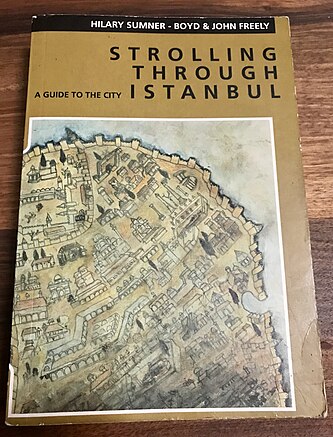
About John Freely
John Freely (26 June 1926 – 20 April 2017) was an American physicist, teacher, and author of popular travel and history books on Istanbul, Athens, Venice, Turkey, Greece, and the Ottoman Empire.
Best John Freely Quotes
Shortest
Earliest
Explore our curated collection of the most famous and impactful John Freely quotes.
“The atomic theory was not generally accepted in the time of Democritus, largely because of its deterministic character, for it allows no chance, choice, or free will.”
“Although many historians of the new millennium now take issue with the notion of a Scientific Revolution, it is generally agreed that Newton's work culminated the long development of European science, creating a synthesis that opened the way for the scientific culture of the modern age.”
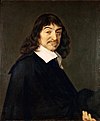
“Newton's proof of the law of refraction is based on an erroneous notion that light travels faster in glass than in air, the same error that Descartes had made. This error stems from the fact that both of them thought that light was corpuscular in nature.”

“Empedocles tried to address the problem of change by saying that there is not one fundamental arche but four—earth, water, air, and fire—which generate all the material substances in nature by mixing together in various ways under the influence of forces he called Love and Strife.”

“Parmenides believed that all Being is what he called the One, and denied absolutely the possibility of change. He believed that the cosmos is full (i.e., no void), uncreated, eternal, indestructible, unchangeable, immobile sphere of being, and all sensory evidence to the contrary is illusory. One Parmenidean fragment stated, "Either a thing is or it is not," meaning that creation and destruction is impossible.”
“The dominant concept in Aristotle's philosophy of nature is his notion of causation. ...The final cause states that each substance has an inherent purpose. Thus there must be a purpose or design in the acorn such that it always grows into an oak tree. This aspect of existence is indicated by the word entelechy; this means the purpose that guides things to develop in one way rather than another.”
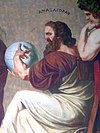
“Anaxagoras of Clazomenae (0. 500—428 BC) postulated another element called the aether, which was in constant rotation and carried with it the celestial bodies. He also believed that there was a directing intelligence in nature that he called Nous which gives order to what otherwise would be a chaotic universe. By Nous he meant literally "the Mind of the Cosmos"… Anaxagoras was the last of the Ionian physicists.”
“John Philoponus (c. 490-570) of Alexandria... refuted Aristotle's theory that the velocities of falling bodies in a given medium are proportional to their weight, making the observation that "if one lets fall simultaneously from the same height two bodies differing greatly in weight, one will find that the ratio of the times of their motion does not correspond to the ratios of their weights, but the difference in time is a very small one." …He also criticized Aristotle's antiperistasis theory of projectile motion, which states that the air displaced by the object flows back to push it from behind. Instead Philoponus concluded that "some incorporeal kinetic power is imparted by the thrower to the object thrown" and that "if an arrow or a stone is projected by force in a void, the same will happen much more easily, nothing being necessary except the thrower." This is the famous "impetus theory," which was revived in medieval Islam and again in fourteenth century Europe, giving rise to the beginning of modern dynamics.”

John Freely Quotes by Topic
Find exactly what you are looking for by browsing this categorized list of John Freely quotes by topic.
John Freely on Determinism
“The atomic theory was not generally accepted in the time of Democritus, largely because of its deterministic character, for it allows no chance, choice, or free will.”
John Freely on Atomic theory
“The atomic theory was not generally accepted in the time of Democritus, largely because of its deterministic character, for it allows no chance, choice, or free will.”

John Freely on History of optics
“Newton's proof of the law of refraction is based on an erroneous notion that light travels faster in glass than in air, the same error that Descartes had made. This error stems from the fact that both of them thought that light was corpuscular in nature.”

John Freely on Scientific revolution
“Although many historians of the new millennium now take issue with the notion of a Scientific Revolution, it is generally agreed that Newton's work culminated the long development of European science, creating a synthesis that opened the way for the scientific culture of the modern age.”

John Freely on Classical mechanics
“Although many historians of the new millennium now take issue with the notion of a Scientific Revolution, it is generally agreed that Newton's work culminated the long development of European science, creating a synthesis that opened the way for the scientific culture of the modern age.”

John Freely on Teleology
“The dominant concept in Aristotle's philosophy of nature is his notion of causation. ...The final cause states that each substance has an inherent purpose. Thus there must be a purpose or design in the acorn such that it always grows into an oak tree. This aspect of existence is indicated by the word entelechy; this means the purpose that guides things to develop in one way rather than another.”

John Freely on Monism
“Parmenides believed that all Being is what he called the One, and denied absolutely the possibility of change. He believed that the cosmos is full (i.e., no void), uncreated, eternal, indestructible, unchangeable, immobile sphere of being, and all sensory evidence to the contrary is illusory. One Parmenidean fragment stated, "Either a thing is or it is not," meaning that creation and destruction is impossible.”

What John Freely Said About Others
Discover personal opinions John Freely shared regarding contemporaries.
John Freely on Democritus
“The atomic theory was not generally accepted in the time of Democritus, largely because of its deterministic character, for it allows no chance, choice, or free will.”
John Freely on René Descartes
“Newton's proof of the law of refraction is based on an erroneous notion that light travels faster in glass than in air, the same error that Descartes had made. This error stems from the fact that both of them thought that light was corpuscular in nature.”
John Freely on Isaac Newton
“Newton's proof of the law of refraction is based on an erroneous notion that light travels faster in glass than in air, the same error that Descartes had made. This error stems from the fact that both of them thought that light was corpuscular in nature.”

John Freely on Empedocles
“He tried to address the problem of change by saying that there is not one fundamental arche but four—earth, water, air, and fire—which generate all the material substances in nature by mixing together in various ways under the influence of forces he called Love and Strife.”
John Freely on Anaxagoras
“Anaxagoras of Clazomenae postulated another element called the aether, which was in constant rotation and carried with it the celestial bodies. He also believed that there was a directing intelligence in nature that he called Nous which gives order to what otherwise would be a chaotic universe. By Nous he meant literally "the Mind of the Cosmos"… Anaxagoras was the last of the Ionian physicists.”
John Freely on Parmenides
“Parmenides believed that all Being is what he called the One, and denied absolutely the possibility of change. He believed that the cosmos is full (i.e., no void), uncreated, eternal, indestructible, unchangeable, immobile sphere of being, and all sensory evidence to the contrary is illusory. One Parmenidean fragment stated, "Either a thing is or it is not," meaning that creation and destruction is impossible.”
John Freely on Johannes Kepler
“Dumbleton was one of the first to express functional relationships in graphical form. ...Dumbleton also gave a proof of the Merton mean-speed rule... stating that "the latitude of a uniformly difform movement corresponds to the degree of the midpoint." He used the method in the Suma [Suma logicæ et philosophiæ naturalis] to study the problem of the variation in the strength of light as a function of the distance from its source. ...He realized that that the decrease in intensity of illumination was not linearly proportional to the distance... But he did not succeed in finding the exact quantitative relationship, which is that the intensity of illumination due to a luminous source is inversely proportional to the square of the distance, a law discovered by Johannes Kepler in 1604.”

John Freely on Aristotle
“John Philoponus (c. 490-570) of Alexandria... refuted Aristotle's theory that the velocities of falling bodies in a given medium are proportional to their weight, making the observation that "if one lets fall simultaneously from the same height two bodies differing greatly in weight, one will find that the ratio of the times of their motion does not correspond to the ratios of their weights, but the difference in time is a very small one." ...He also criticized Aristotle's antiperistasis theory of projectile motion, which states that the air displaced by the object flows back to push it from behind. Instead Philoponus concluded that "some incorporeal kinetic power is imparted by the thrower to the object thrown" and that "if an arrow or a stone is projected by force in a void, the same will happen much more easily, nothing being necessary except the thrower." This is the famous "impetus theory," which was revived in medieval Islam and again in fourteenth century Europe, giving rise to the beginning of modern dynamics.”

About John Freely
John Freely (26 June 1926 – 20 April 2017) was an American physicist, teacher, and author of popular travel and history books on Istanbul, Athens, Venice, Turkey, Greece, and the Ottoman Empire.