Link Copied!
F. W. de Klerk Quotes (1936-2021)
President, Politician




About F. W. de Klerk
Frederik Willem de Klerk (18 March 1936 – 11 November 2021) was a South African politician who served as State President of South Africa from 1989 to 1994 and as Deputy President from 1994 to 1996. As South Africa's last head of state from the era of white-minority rule, he and his government dismantled the apartheid system and introduced universal suffrage. Ideologically a conservative and an economic liberal, he led the National Party from 1989 to 1997.
Best F. W. de Klerk Quotes
Shortest
Earliest
Explore our curated collection of the most famous and impactful F. W. de Klerk quotes.


“Here at the crossroads of our history, we need to turn our backs on the past.”

“[S]anctions should be reserved, if we think international, for extremely serious situations.”
“[M]y ideal is that what we should do is to, to also rise above that and to achieve true non-racialism.”


“I have great sympathy with America. It's very, it's very tough to be the only remaining superpower in the world.”

“If our old policy, which was so unpopular in many circles, could work, then we would have surely clung to it. But as responsible leaders charged with the government of the country, we came to the conclusion that the policy we had planned could simply not work.”

“I apologize in my capacity as leader of the NP to the millions who suffered wrenching disruption of forced removals; who suffered the shame of being arrested for pass law offences; who over the decades suffered the indignities and humiliation of racial discrimination.”

“There are powers that are trying to manipulate our country's history by trying to portray it as dark, suppressive and unfair... Yes, we have made mistakes. Yes, we have often sinned and we don't deny this. But that we were evil, malignant and mean–to that we say "no"!”
“You have Palestinians living in Israel with full political rights. You don’t have discriminatory laws against them, I mean not letting them swim on certain beaches or anything like that. I think it's unfair to call Israel an apartheid state. If Kerry did so, I think he made a mistake.”

“History has placed a tremendous responsibility on the shoulders of this country's leadership, namely the responsibility of moving our country away from the current course of conflict and confrontation... The hope of millions of South Africans is fixed on us. The future of southern Africa depends on us. We dare not waver or fail.”

“Yes, I'm an African, born and bred. My forebears arrived in South Africa in 1688. My later forebears fought the first modern anti-colonial war on the continent of Africa, against Great Britain. I'm an African, through and through, and the fact that I'm white does not detract from my total commitment to my country and through my country, to our continent.”
“Personally, my relationship with P. W. Botha was often strained. I did not like his overbearing leadership style and was opposed to the intrusion of the State Security Council system into virtually every facet of government. After I became leader of the National Party in February 1989, I did my best to ensure that P. W. Botha would be able to end his term as president with full dignity and decorum. Unfortunately, this was not to be.”
“Peace does not simply mean the absence of conflict... There can therefore be no real peace without justice or consent... Peace does not fare well where poverty and deprivation reign... It is very significant that there has never been a war between genuine and universal democracies. There have been countless wars between totalitarian and authoritarian states. There have been wars between democracies and dictatorships - most often in defense of democratic values or in response to aggression.”
“There are a number of imperfections in the new South Africa where I would have hoped that things would be better, but on balance I think we have basically achieved what we set out to achieve. And if I were to draw balance sheets on where South Africa stands now, I would say that the positive outweighs the negative by far. There is a tendency by commentators across the world to focus on the few negatives which are quite negative, like how are we handling AIDS, like our role vis-à-vis Zimbabwe. But the positives – the stability in South Africa, the adherence to well-balanced economic policies, fighting inflation, doing all the right things in order to lay the basis and the foundation for sustained economic growth – are in place.”

“Mandela has walked a long road and now stands at the top of the hill. A traveler would sit down and admire the view. But a man of destiny knows that beyond this hill lies another and another. The journey is never complete. As he contemplates the next hill I hold out my hand in friendship and in cooperation. I should like to make clear that I believe that my political task is just beginning. Everything that we have done so far - the four years of difficult and often frustrating negotiations, the problems and the crises - have been simply a preparation for the work that lies ahead. The greatest challenge which we will face in the government of national unity will be to defend and nurture our new constitution. Our greatest task will be to ensure our young and vulnerable democracy will take root and flourish.”
“As we did before in 1994, I feel we have a capacity to do so again. We succeeded in resolving our problems by peaceful means when everybody expected war and violence... We have one of the best constitutions in the world. We should be proud of this constitution, which provides the framework for a functioning multiparty democracy, independent courts and other institutions that stand for [the] advancement of human rights... He said the country had already held three elections and that two presidents had relinquished their power through constitutional means. Although former president Thabo Mbeki had left under difficult conditions, even that had been done constitutionally... These are all signs of growing constitutional maturity. Our democracy is growing up and there are open debates which will take us to robust contestations.”

“Uri Friedman: Why did the South African government, in the mid-1970s, decide to embark on a nuclear-weapons program?
F. W. de Klerk: The main motivation was the expansionist policies of the USSR in southern Africa. They were supporting all the [African] liberation movements—they were supplying weapons and training—and it was part of their vision to gain direct or indirect control over most of the countries in southern Africa. They financed the deployment of many thousands of Cuban troops, especially to Angola, and this was interpreted as a threat first by Prime Minister John Vorster, and following upon him P.W. Botha. [W]as never intended, I think, to be used. It was a deterrent. Because of apartheid South Africa was becoming more and more isolated in the eyes of the rest of the world. There wouldn’t be, in the case of Russian aggression or invasion, assistance from the international community. It was felt that, if we have nuclear weapons, and if we then would disclose in a crisis that we have [them], it would change the political scenario and the USA and other countries might step in and assist South Africa.”
F. W. de Klerk: The main motivation was the expansionist policies of the USSR in southern Africa. They were supporting all the [African] liberation movements—they were supplying weapons and training—and it was part of their vision to gain direct or indirect control over most of the countries in southern Africa. They financed the deployment of many thousands of Cuban troops, especially to Angola, and this was interpreted as a threat first by Prime Minister John Vorster, and following upon him P.W. Botha. [W]as never intended, I think, to be used. It was a deterrent. Because of apartheid South Africa was becoming more and more isolated in the eyes of the rest of the world. There wouldn’t be, in the case of Russian aggression or invasion, assistance from the international community. It was felt that, if we have nuclear weapons, and if we then would disclose in a crisis that we have [them], it would change the political scenario and the USA and other countries might step in and assist South Africa.”
F. W. de Klerk Quotes by Topic
Find exactly what you are looking for by browsing this categorized list of F. W. de Klerk quotes by topic.
F. W. de Klerk on South Africa 4 quotes
“I prefer to live in South Africa because it's a wonderful country; because I've been there for 300 years.”
F. W. de Klerk on Past 2 quotes
“[A]t the crossroads of our history, we need to turn our backs on the past.”

F. W. de Klerk on Injustice
F. W. de Klerk on Nigeria
F. W. de Klerk on Israel and apartheid
“You have Palestinians living in Israel with full political rights. You don’t have discriminatory laws against them, I mean not letting them swim on certain beaches or anything like that. I think it’s unfair to call Israel an apartheid state. If Kerry did so, I think he made a mistake.”

F. W. de Klerk on Democracy
“It is very significant that there has never been a war between genuine and universal democracies. There have been countless wars between totalitarian and authoritarian states. There have been wars between democracies and dictatorships - most often in defense of democratic values or in response to aggression.”
F. W. de Klerk on Racism in South Africa
“Racism is a part of a problem, a world problem, which has to be overcome... We are struggling with racism [in South Africa], but racism is also alive and well in many other countries. And what we must overcome is racism being the cause of conflict. And what we need to recognize human beings as human beings; to award merit.”
F. W. de Klerk on Peace
“Peace does not simply mean the absence of conflict... There can therefore be no real peace without justice or consent... Peace does not fare well where poverty and deprivation reign... It is very significant that there has never been a war between genuine and universal democracies. There have been countless wars between totalitarian and authoritarian states. There have been wars between democracies and dictatorships - most often in defense of democratic values or in response to aggression.”
F. W. de Klerk on Cuba
“Uri Friedman: Why did the South African government, in the mid-1970s, decide to embark on a nuclear-weapons program? F. W. de Klerk: The main motivation was the expansionist policies of the USSR in southern Africa. They were supporting all the [African] liberation movements—they were supplying weapons and training—and it was part of their vision to gain direct or indirect control over most of the countries in southern Africa. They financed the deployment of many thousands of Cuban troops, especially to Angola, and this was interpreted as a threat first by Prime Minister John Vorster, and following upon him P.W. Botha. [W]as never intended, I think, to be used. It was a deterrent. Because of apartheid South Africa was becoming more and more isolated in the eyes of the rest of the world. There wouldn’t be, in the case of Russian aggression or invasion, assistance from the international community. It was felt that, if we have nuclear weapons, and if we then would disclose in a crisis that we have [them], it would change the political scenario and the USA and other countries might step in and assist South Africa.”
What F. W. de Klerk Said About Others
Discover personal opinions F. W. de Klerk shared regarding contemporaries.
F. W. de Klerk on South Africans
F. W. de Klerk on Kim Jong-un
“Friedman: In an op-ed in 2013 in the Los Angeles Times, you wrote, “South Africa has illustrated that long-term security can be far better assured by the abrogation of nuclear weapons than by their retention.” It seems that Kim Jong Un of North Korea has, at least according to his propaganda, learned the opposite lesson: that if you’re [Libya’s Muammar] Qaddafi or Saddam [Hussein in Iraq] and you give up your [pursuit of] nuclear weapons, you reduce your security [and bring about your demise at the hands of the U.S. and its allies]. Or if you’re Ukraine and you sign up to the Budapest Memorandum, and then Russia two decades later invades you, that you’ve actually given up security by relinquishing nuclear weapons.
De Klerk: I still agree with [what I wrote]. Ultimately, the world will be safe only when all the nuclear states follow South Africa’s example and dismantle their nuclear weapons.”

F. W. de Klerk on P. W. Botha
“Uri Friedman: Why did the South African government, in the mid-1970s, decide to embark on a nuclear-weapons program?
F.W. de Klerk: The main motivation was the expansionist policies of the U.S.S.R. in southern Africa. They were supporting all the [African] liberation movements—they were supplying weapons and training—and it was part of their vision to gain direct or indirect control over most of the countries in southern Africa. They financed the deployment of many thousands of Cuban troops, especially to Angola, and this was interpreted as a threat first by Prime Minister John Vorster, and following upon him P.W. Botha. [The nuclear arsenal] was never intended, I think, to be used. It was a deterrent. Because of apartheid South Africa was becoming more and more isolated in the eyes of the rest of the world. There wouldn’t be, in the case of Russian aggression or invasion, assistance from the international community. It was felt that, if we have nuclear weapons, and if we then would disclose in a crisis that we have [them], it would change the political scenario and the U.S.A. and other [Western] countries might step in and assist South Africa.”
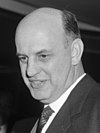
F. W. de Klerk on John Vorster
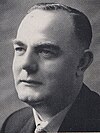
“Uri Friedman: Why did the South African government, in the mid-1970s, decide to embark on a nuclear-weapons program?
F.W. de Klerk: The main motivation was the expansionist policies of the U.S.S.R. in southern Africa. They were supporting all the [African] liberation movements—they were supplying weapons and training—and it was part of their vision to gain direct or indirect control over most of the countries in southern Africa. They financed the deployment of many thousands of Cuban troops, especially to Angola, and this was interpreted as a threat first by Prime Minister John Vorster, and following upon him P.W. Botha. [The nuclear arsenal] was never intended, I think, to be used. It was a deterrent. Because of apartheid South Africa was becoming more and more isolated in the eyes of the rest of the world. There wouldn’t be, in the case of Russian aggression or invasion, assistance from the international community. It was felt that, if we have nuclear weapons, and if we then would disclose in a crisis that we have [them], it would change the political scenario and the U.S.A. and other [Western] countries might step in and assist South Africa.”
Quotes About F. W. de Klerk
Gain deeper perspective through quotes about F. W. de Klerk from others.
Angela Davis on F. W. de Klerk
“I think movements can indeed force reluctant politicians to take steps. If one looks at the example of South Africa, who would have ever believed that de Klerk would take the position he ended up taking? That was because of the movements within South Africa, the South African movement outside of South Africa, and also the global solidarity campaign.”

About F. W. de Klerk
Frederik Willem de Klerk (18 March 1936 – 11 November 2021) was a South African politician who served as State President of South Africa from 1989 to 1994 and as Deputy President from 1994 to 1996. As South Africa's last head of state from the era of white-minority rule, he and his government dismantled the apartheid system and introduced universal suffrage. Ideologically a conservative and an economic liberal, he led the National Party from 1989 to 1997.