Link Copied!
Eric Temple Bell Quotes (1883-1960)
Author, Mathematician







About Eric Temple Bell
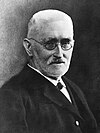
Eric Temple Bell (7 February 1883 – 21 December 1960) was a mathematician and science fiction author, born in Scotland who lived in the United States for most of his life. He published non-fiction using his given name and fiction as John Taine.
Best Eric Temple Bell Quotes
Shortest
Earliest
Explore our curated collection of the most famous and impactful Eric Temple Bell quotes.
“Wherever groups disclosed themselves, or could be introduced, simplicity crystallized out of comparative chaos.”
“Out of fifty mathematical papers presented in brief at such a meeting, it is a rare mathematician indeed who really understands what more than half a dozen are about.”
“Abstractness, sometimes hurled as a reproach at mathematics, is its chief glory and its surest title to practical usefulness. It is also the source of such beauty as may spring from mathematics.”

“The mistakes and unresolved difficulties of the past in mathematics have always been the opportunities of its future; and should analysis ever appear to be without or blemish, its perfection might only be that of death.”

“The so-called obvious was repeatedly scrutinized from every angle and was frequently found to be not obvious but false. "Obvious" is the most dangerous word in mathematics.”
“The pursuit of pretty formulas and neat theorems can no doubt quickly degenerate into a silly vice, but so also can the quest for austere generalities which are so very general indeed that they are incapable of application to any particular.”
“Some of his deepest discoveries were reasoned out verbally with very few if any symbols, and those for the most part mere abbreviations of words. Any impatient student of mathematics or science or engineering who is irked by having algebraic symbolism thrust on him should try to get on without it for a week.”
“[L]ogarithms are one of the most disorderly battlegrounds in mathematical history. ... Disputes like this and the other over the calculus have made more than one man of science envy his successors of ten thousand years hence, to whom Newton and Leibniz, Napier and Bürgi, and scores of lesser contestants for individual fame will be semimythical figures as indistinct as Pythagoras.”
“Fashion as king is sometimes a very stupid ruler. As was observed a little way back, the kernel of Plücker's theory of geometric dimensionality is that the dimensionality of a given space is not an absolute constant, but depends upon the elements, accepted as irreducible, in terms of which the space is described.”
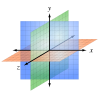
“Euclid taught me that without assumptions there is no proof. Therefore, in any argument, examine the assumptions. Then, in the alleged proof, be alert for inexplicit assumptions. Euclid's notorious oversights drove this lesson home.”
“Some, of my unmathematical friends have incautiously urged me to include a note about the origin of modern calculating machines. This is the proper place to do so, as the Queen of queens has enslaved a few of these infernal things to do some of her more repulsive drudgery. What I shall say about these marvelous aids to the feeble human intelligence will be little indeed, for two reasons: I have always hated machinery, and the only machine I ever understood was a wheelbarrow, and that but imperfectly.”

“The cowboys have a way of trussing up a steer or a pugnacious bronco which fixes the brute so that it can neither move nor think. This is the hog-tie, and it is what Euclid did to geometry.”

“Guided only by their feeling for symmetry, simplicity, and generality, and an indefinable sense of the fitness of things, creative mathematicians now, as in the past, are inspired by the art of mathematics rather than by any prospect of ultimate usefulness.”

“Objections... inspired Kronecker and others to attack Weierstrass' "sequential" definition of irrationals. Nevertheless, right or wrong, Weierstrass and his school made the theory work. The most useful results they obtained have not yet been questioned, at least on the ground of their great utility in mathematical analysis and its implications, by any competent judge in his right mind. This does not mean that objections cannot be well taken: it merely calls attention to the fact that in mathematics, as in everything else, this earth is not yet to be confused with the Kingdom of Heaven, that perfection is a chimaera, and that, in the words of Crelle, we can only hope for closer and closer approximations to mathematical truth — whatever that may be, if anything — precisely as in the Weierstrassian theory of convergent sequences of rationals defining irrationals.”
Eric Temple Bell Quotes by Topic
Find exactly what you are looking for by browsing this categorized list of Eric Temple Bell quotes by topic.
Eric Temple Bell on History of mathematics 6 quotes
“There are no absolutes... in mathematics or in its history.”

Eric Temple Bell on Mathematics 3 quotes
“Nearly always it is the recondite and complicated which is elaborated first; and it is only when some relatively unsophisticated mind attacks a problem that its deep simplicity is revealed.”
Eric Temple Bell on Unification in science and mathematics 3 quotes
“Whatever its source, mathematics has come down to the present by the two main streams of number and form. The first carried along arithmetic and algebra, the second, geometry. In the seventeenth century these two united, forming the ever-broadening river of mathematical analysis.”

Eric Temple Bell on Deductive reasoning 3 quotes
“Between the workable empiricism of the early land measurers... of ancient Egypt and the geometry of the Greeks in the sixth century before Christ, there is a great chasm. ...and the chasm is bridged by deductive reasoning applied consciously and deliberately to the practical inductions of daily life. Without the strictest deductive proof from admitted assumptions, explicitly stated as such, mathematics does not exist. This does not deny that intuition, experiment, induction, and plain guessing are important elements in mathematical invention. It merely states the criterion by which the final product of all guessing, by whatever name it be dignified, is judged to be or not to be mathematics. It is not known where or when the distinction between inductive inference—the summation of raw experience—and deductive proof from a set of postulates was first made, but it was sharply recognized by the Greek mathematicians as early as 550 B.C.”
Eric Temple Bell on Infinity 2 quotes
“In the entire history of Greek mathematics, all but the incomparable Archimedes and a few of the more heterodox sophists appear to have hated or feared the mathematical infinite. Analysis was thwarted when it might have prospered.”

Eric Temple Bell on Foundations of mathematics 2 quotes
“Fourier's analytical theory of heat (final form, 1822), devised in the Galileo-Newton tradition of controlled observation plus mathematics, is the ultimate source of much modern work in the theory of functions of a real variable and in the critical examination of the foundation of mathematics.”
Eric Temple Bell on Number 2 quotes
“With the intrusion of irrational numbers to disrupt the integral harmonies of the Pythagorean cosmos, a controversy that has raged off and on for well over two thousand years began: is the mathematical infinite a safe concept in mathematical reasoning, safe in the sense that contradictions will not result from the use of this infinite, subject to certain prescribed conditions?”
Eric Temple Bell on History of calculus 2 quotes
“Descartes' method of finding tangents and normals... was not a happy inspiration. It was quickly superseded by that of Fermat as amplified by Newton. Fermat's method amounts to obtaining a tangent as the limiting position of a secant, precisely as is done in the calculus today. ...Fermat's method of tangents is the basis of the claim that he anticipated Newton in the invention of the differential calculus.”

Eric Temple Bell on Ancient Greek mathematics 2 quotes
“Had the early Greek mind been sympathetic to the algebra and arithmetic of the Babylonians, it would have found plenty to exercise its logical acumen, and might easily have produced a masterpiece of the deductive reasoning it worshipped logically sounder than Euclid's greatly overrated Elements. The hypotheses of elementary algebra are fewer and simpler than those of synthetic geometry. ...they could have developed it with any degree of logical rigor they desired. Had they done so, Apollonius would have been Descartes, and Archimedes, Newton. As it was, the very perfection... of Greek geometry retarded progress for centuries.”
Eric Temple Bell on History of logarithms
“All computation was greatly simplified early in the seventeenth century by the invention of logarithms.”

Eric Temple Bell on Inhumanity
Eric Temple Bell on Mathematical analysis
“In the entire history of Greek mathematics, all but the incomparable Archimedes and a few of the more heterodox sophists appear to have hated or feared the mathematical infinite. Analysis was thwarted when it might have prospered.”

What Eric Temple Bell Said About Others
Discover personal opinions Eric Temple Bell shared regarding contemporaries.
Eric Temple Bell on Girard Desargues 3 quotes
“Pascal made grateful acknowlegement to Desargues for his skill in projective geometry.”
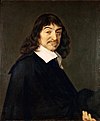
Eric Temple Bell on René Descartes 3 quotes
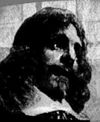
“René Descartes is more widely known as a philosopher than as a mathematician, although his philosophy has been controverted while his mathematics has not. ...In accordance with the ideals of his age, when experimental science was first seriously challenging arrogant speculation, Descartes set a greater store by his philosophy than his mathematics. But he fully appreciated the power of his new method in geometry.”
Eric Temple Bell on Emmy Noether 3 quotes
“The third and last exception to general sterility connects the arithmetic of forms with that other major outgrowth of ancient diophantine analysis, the Gaussian concept of congruence. Dickson in 1907 began the congruencial theory of forms, in which the coefficients of the forms are either natural integers reduced modulo p, p prime, or elements of a Galois field. The linear transformations in the theory, corresponding to those in the classical problem of equivalence, were similarly reduced, and hence modular invariants and covariants were defineable. By 1923 the theory was practically worked out, except for two central difficulties, by Dickson and his pupils. Simplified derivations for some of the results were given (1926) by E. Noether by an application of her methods in abstract algebra.”

Eric Temple Bell on Johannes Kepler 2 quotes
“After his own fashion, Desargues discussed... Kepler's principle (1604) of continuity, in which a straight line is closed at infinity and parallels meet there...”

Eric Temple Bell on Diophantus 2 quotes
“This work of Diaphantus... was the first Greek mathematics, if indeed it was Greek, to show a genuine talent for algebra. ...He had begun to use symbols operationally. This long stride forward is all the more remarkable because his algebraic notation... was almost as awkward as Greek logistic. That he accomplished what he did with the available techniques places him beyond question among the great algebraists.”

Eric Temple Bell on Archimedes
“Modern mathematics was born with Archimedes and died with him for all of two thousand years. It came to life again with Descartes and Newton.”

Eric Temple Bell on Joseph Fourier
“Fourier's analytical theory of heat (final form, 1822), devised in the Galileo-Newton tradition of controlled observation plus mathematics, is the ultimate source of much modern work in the theory of functions of a real variable and in the critical examination of the foundation of mathematics.”

Eric Temple Bell on Euclid
“With the completion of Euclid's Elements... For the first time in history masses of isolated discoveries were unified and correlated by a single guided principle, that of rigid deduction from explicitly stated assumptions. ...If the Pythagorean dream of a mathematized science is to be realized, all of the sciences must eventually submit to the discipline that geometry accepted from Euclid.”

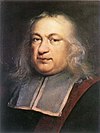
Eric Temple Bell on Pierre de Fermat
“Descartes' method of finding tangents and normals... was not a happy inspiration. It was quickly superseded by that of Fermat as amplified by Newton. Fermat's method amounts to obtaining a tangent as the limiting position of a secant, precisely as is done in the calculus today. ...Fermat's method of tangents is the basis of the claim that he anticipated Newton in the invention of the differential calculus.”
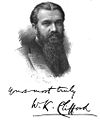
Eric Temple Bell on William Kingdon Clifford
“Pearson's enthusiasm for W. K. Clifford's intuitive dynamics and physics, also for Clifford's violent hostility to traditional beliefs, influenced at least his earlier thinking. Both Clifford and Pearson were creative mathematicians; neither fitted the milk-and-water, namby-pamby 'great man' ideal of the 'great mathematician' which seems to be the accepted norm in historical accounts of mathematicians; and at least one of them would have hooted at the idea that he was, or was to become, an object of reverence for generations of students.”
Eric Temple Bell on Nicomachus
“The sixth century [BC] was the time, and Greece the place, for human beings to reject once and for all the pernicious number mysticism of the East. Instead, Pythagoras and his followers eagerly accepted it as the celestial revelation of a higher mathematical harmony. Adding vast masses of sheer numerological nonsense of their own to an already enormous bulk, they transmitted this ancient superstition to the golden age of Greek thought, which passed it on to the first century A.D. to the decadent arithmologist Nicomachus. He, enriching his already opulent legacy with a wealth of original rubbish, left it to be sifted by the Roman Boethius, the dim mathematical light of the Middle Ages, thereby darkening the mind of Christian Europe with the venerated nonsense, and encouraging the gemaria of the Talmudists to flourish like a weed.”

Eric Temple Bell on Karl Weierstrass
“Objections... inspired Kronecker and others to attack Weierstrass' "sequential" definition of irrationals. Nevertheless, right or wrong, Weierstrass and his school made the theory work. The most useful results they obtained have not yet been questioned, at least on the ground of their great utility in mathematical analysis and its implications, by any competent judge in his right mind. This does not mean that objections cannot be well taken: it merely calls attention to the fact that in mathematics, as in everything else, this earth is not yet to be confused with the Kingdom of Heaven, that perfection is a chimaera, and that, in the words of Crelle, we can only hope for closer and closer approximations to mathematical truth—whatever that may be, if anything—precisely as in the Weierstrassian theory of convergent sequences of rationals defining irrationals.”

Quotes About Eric Temple Bell
Gain deeper perspective through quotes about Eric Temple Bell from others.
Clifford Truesdell on Eric Temple Bell
“He was admired for his science fiction and his Men of Mathematics. I was shocked when, just a few years later, Walter Pitts told me the latter was nothing but a string of Hollywood scenarios; my own subsequent study of the sources has shown me that Pitts was right, and I now find the contents of that still popular book to be little more than rehashes enlivened by nasty gossip and banal or indecent fancy.”
John Forbes Nash on Eric Temple Bell
“By the time I was a student in high school I was reading the classic Men of Mathematics by E. T. Bell and I remember succeeding in proving the classic Fermat theorem about an integer multiplied by itself p times where p is a prime.”
About Eric Temple Bell
Eric Temple Bell (7 February 1883 – 21 December 1960) was a mathematician and science fiction author, born in Scotland who lived in the United States for most of his life. He published non-fiction using his given name and fiction as John Taine.