Link Copied!
Bram Stoker Quotes (1847-1912)
Author, Writer, Novelist







About Bram Stoker
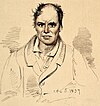
Abraham Stoker (8 November 1847 – 20 April 1912) was an Irish novelist and short story writer who wrote under the name Bram Stoker, and was the author of the horror novel Dracula.
Best Bram Stoker Quotes
Shortest
Earliest
Explore our curated collection of the most famous and impactful Bram Stoker quotes.


“We are in Transylvania, and Transylvania is not England. Our ways are not your ways, and there shall be to you many strange things.”


“"I was naturally thoughtful, and the leisure of long illness gave opportunity for many thoughts which were fruitful according to their kind in later years."”
“Do not grieve for her! Who knows, but she may have found the joy she sought? Love and patience are all that make for happiness in this world; or in the world of the past or of the future; of the living or the dead. She dreamed her dream; and that is all that any of us can ask.”

“Be careful of my guest — his safety is most precious to me. Should aught happen to him, or if he be missed, spare nothing to find him and ensure his safety. He is English and therefore adventurous. There are often dangers from snow and wolves and night. Lose not a moment if you suspect harm to him. I answer your zeal with my fortune.”

“My first impression of the man as of steel was consolidated and enhanced. He told us, amongst other things, of the work he had in hand. Three great books were partially done. The translation of the Arabian Nights, the metrical translation of Camoëns, and the Book of the Sword. These were all works of vast magnitude and requiring endless research. But he lived to complete them all.”

“In my College days I had been Auditor of the Historical Society — a post which corresponds to the Presidency of the Union in Oxford or Cambridge — and had got medals, or certificates, for History, Composition and Oratory. I had been President of the Philosophical Society; had got Honours in pure mathematics. I had won numerous silver cups for races of various kinds. I had played for years in the University football team, where I had received the honour of a “cap”! I was physically immensely strong. In fact I feel justified in saying I represented in my own person something of that aim of university education mens sana in corpore sano”

“Burton had a most vivid way of putting things — especially of the East. He had both a fine imaginative power and a memory richly stored not only from study but from personal experience. As he talked, fancy seemed to run riot in its alluring power; and the whole world of thought seemed to flame with gorgeous colour. Burton knew the East. Its brilliant dawns and sunsets; its rich tropic vegetation, and its arid fiery deserts; its cool, dark mosques and temples; its crowded bazaars; its narrow streets; its windows guarded for out-looking and from in-looking eyes; the pride and swagger of its passionate men, and the mysteries of its veiled women; its romances; its beauty; its horrors.”

“I could not but be struck by the strangers. The lady was a big, handsome blonde woman, clever-looking and capable. But the man riveted my attention. He was dark, and forceful, and masterful, and ruthless. I have never seen so iron a countenance. I did not have much time to analyse the face; the bustle of arrival prevented that. But an instant was enough to make up my mind about him. We separated in the carriage after cordial wishes that we might meet again. When we were on the platform, I asked Irving:
"Who is that man?"
"Why," he said, " I thought I introduced you!"
"So you did, but you did not mention the names of the others!" He looked at me for an instant and said inquiringly as though something had struck him:
"Tell me, why do you want to know?"
"Because," I answered, "I never saw any one like him. He is steel! He would go through you like a sword!"
"You are right!" he said. "But I thought you knew him. That is Burton — Captain Burton who went to Mecca!”

“Logically speaking, even the life of an actor has no preface. He begins, and that is all. And such beginning is usually obscure; but faintly remembered at the best. Art is a completion; not merely a history of endeavour. It is only when completeness has been obtained that the beginnings of endeavour gain importance, and that the steps by which it has been won assume any shape of permanent interest. After all, the struggle for supremacy is so universal that the matters of hope and difficulty of one person are hardly of general interest. When the individual has won out from the huddle of strife, the means and steps of his succeeding become of interest, either historically or in the educational aspect — but not before. From every life there may be a lesson to some one; but in the teeming millions of humanity such lessons can but seldom have any general or exhaustive force. The mere din of strife is too incessant for any individual sound to carry far. Fame, who rides in higher atmosphere, can alone make her purpose heard. Well did the framers of picturesque idea understand their work when in her hand they put a symbolic trumpet.”

“The fame of an actor is won in minutes and seconds, not in years. The latter are only helpful in the recurrence of opportunities; in the possibilities of repetition. It is not feasible, therefore, adequately to record the progress of his work. Indeed that work in its perfection cannot be recorded; words are, and can be, but faint suggestions of awakened emotion. The student of history can, after all, but accept in matters evanescent the judgment of contemporary experience. Of such, the weight of evidence can at best incline in one direction; and that tendency is not susceptible of further proof. So much, then, for the work of art that is not plastic and permanent. There remains therefore but the artist. Of him the other arts can make record in so far as external appearance goes. Nay, more, the genius of sculptor or painter can suggest — with an understanding as subtle as that of the sun-rays which on sensitive media can depict what cannot be seen by the eye — the existence of these inner forces and qualities whence accomplished works of any kind proceed. It is to such art that we look for the teaching of our eyes. Modern science can record something of the actualities of voice and tone. Writers of force and skill and judgment can convey abstract ideas of controlling forces and purposes; of thwarting passions; of embarrassing weaknesses; of all the bundle of inconsistencies which make up an item of concrete humanity. From all these may be derived some consistent idea of individuality. This individuality is at once the ideal and the objective of portraiture.”

Bram Stoker Quotes by Topic
Find exactly what you are looking for by browsing this categorized list of Bram Stoker quotes by topic.
Bram Stoker on Wolves
Bram Stoker on Sword
Bram Stoker on Steel
Bram Stoker on Morning
Bram Stoker on Science
“If we are successful we shall be able to let in on the world of modern science such a flood of light from the Old World as will change every condition of thought and experiment and practice.”

Bram Stoker on Small
Bram Stoker on Faith
“I heard once of an American who so defined faith, "that faculty which enables us to believe things which we know to be untrue." For one, I follow that man. He meant that we shall have an open mind, and not let a little bit of truth check the rush of the big truth, like a small rock does a railway truck. We get the small truth first. Good! We keep him, and we value him, but all the same we must not let him think himself all the truth in the universe.”

Bram Stoker on Basilisk
“A terrible desire came upon me to rid the world of such a monster. There was no lethal weapon at hand, but I seized a shovel which the workman had been using to fill the cases, and lifting it high, struck, with the edge downward, at the hateful face. But as I did so the head turned, and the eyes fell upon me, with all their blaze of basilisk horror. The sight seemed to paralyze me, and the shovel turned in my hand and glanced from the face, merely making a deep gash above the forehead.”

Bram Stoker on Prejudice
“You reason well, and your wit is bold, but you are too prejudiced. You do not let your eyes see nor your ears hear, and that which is outside your daily life is not of account to you. Do you not think that there are things which you cannot understand, and yet which are, that some people see things that others cannot? But there are things old and new which must not be contemplated by men's eyes, because they know, or think they know, some things which other men have told them. Ah, it is the fault of our science that it wants to explain all, and if it explain not, then it says there is nothing to explain. But yet we see around us every day the growth of new beliefs, which think themselves new, and which are yet but the old, which pretend to be young, like the fine ladies at the opera.”

What Bram Stoker Said About Others
Discover personal opinions Bram Stoker shared regarding contemporaries.
Bram Stoker on Richard Francis Burton 3 quotes
“My first impression of the man as of steel was consolidated and enhanced. He told us, amongst other things, of the work he had in hand. Three great books were partially done. The translation of the Arabian Nights, the metrical translation of Camoëns, and the Book of the Sword. These were all works of vast magnitude and requiring endless research. But he lived to complete them all.”

Quotes About Bram Stoker
Gain deeper perspective through quotes about Bram Stoker from others.
New York Times on Bram Stoker
“As to its effect, I had no adequate words. I can only say that after a few seconds of stony silence following his collapse I burst out into something like a violent fit of hysterics…. In those moments of our mutual emotion he too had found a friend and knew it. Soul had looked into soul! From that hour began a friendship as profound, as close, as lasting as can be between two men.”
Hall Caine on Bram Stoker
“Much has been said of his relation to Henry Irving, but I wonder how many were really aware of the whole depth and significance of that association. Bram seemed to give up his life to it. .. I say without any hesitation that never have I seen, never do I expect to see, such absorption of one man’s life in the life of another.”
Stoker on Bram Stoker 2 quotes
“Tennyson had at times that lifting of the upper lip which shows the canine tooth, and which is so marked an indication of militant instinct.”
About Bram Stoker
Abraham Stoker (8 November 1847 – 20 April 1912) was an Irish novelist and short story writer who wrote under the name Bram Stoker, and was the author of the horror novel Dracula.