Link Copied!
Randolph Bourne Quotes (1886-1918)
Writer
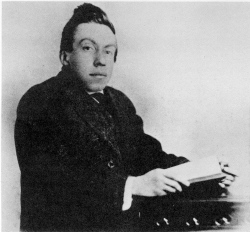
About Randolph Bourne
Randolph Silliman Bourne (30 May 1886–22 December 1918) was a progressive writer and leftist intellectual born in Bloomfield, New Jersey, and a graduate of Columbia University. Bourne is best known for his essays, especially his unfinished work The State, discovered after his death.
Best Randolph Bourne Quotes
Shortest
Earliest
Explore our curated collection of the most famous and impactful Randolph Bourne quotes.
“Indeed, it is not too much to say that the normal relation of States is war.”
“How shall I describe Youth, the time of contradictions and anomalies? The fiercest radicalisms, the most dogged conservatisms, irrepressible gayety, bitter melancholy,—all these moods are equally part of that showery spring-time of life.”
“The State is a jealous God and will brook no rivals. Its sovereignty must pervade everyone and all feeling must be run into the stereotyped forms of romantic patriotic militarism which is the traditional expression of the State herd-feeling.”


“The President is an elected king, but the fact that he is elected has proved to be of far less significance in the course of political evolution than the fact that he is pragmatically a king. … Kings have often been selected this way in European history, and the Roman Emperor was regularly chosen by election.”

“The modern State is not the rational and intelligent product of modern men desiring to live harmoniously together with security of life, property, and opinion. It is not an organization which has been devised as pragmatic means to a desired social end. All the idealism with which we have been instructed to endow the State is the fruit of our retrospective imaginations.”
“In your reaction to an imagined attack on your country or an insult to its government, you draw closer to the herd for protection, you conform in word and deed, and you act together. And you fix your adoring gaze upon the State, with a truly filial look, as upon the Father of the flock, the quasi-personal symbol of the strength of the herd, and the leader and determinant of your definite action and ideas.”
“The American Revolution began with certain latent hopes that it might turn into a genuine break with the State ideal. The Declaration of Independence announced doctrines that were utterly incompatible not only with the century-old conception of the Divine Right of Kings, but also with the Divine Right of the State. … If revolution is justifiable a State may even be criminal sometimes in resisting its own extinction.”
“The secret of life is then that this fine youthful spirit should never be lost. Out of the turbulence of youth should come this fine precipitate—a sane, strong, aggressive spirit of daring and doing. It must be a flexible, growing spirit, with a hospitality to new ideas, and a keen insight into experience. To keep one's reactions warm and true, is to have found the secret of perpetual youth, and perpetual youth is salvation.”

“The members of the working-classes... live habitually in an industrial serfdom, by which though nominally free, they are in practice as a class bound to a system of a machine-production, the implements of which they do not own, and in the distribution of whose product they have not the slightest voice... From such serfdom, military conscription is not so great a change. But into the military enterprise they go...with the same apathy with which they enter and continue in the industrial enterprise.”

“In this conflict between youth and its elders, youth is the incarnation of reason pitted against the rigidity of tradition. Youth puts the remorseless questions to everything that is old and established,—Why? What is this thing good for? And when it gets the mumbled, evasive answers of the elders, it applies its own fresh, clean spirit of reason to the institutions, customs, and ideas, and finding them stupid, inane, or poisonous, turns instinctively to overthrow them and build in their place the things with which its visions teem.”
“Intellectual radicalism should not mean repeating stale dogmas of Marxism. It should not mean the study of socialism. It had better mean a restless, controversial criticism of current ideas, and a hammering out of some clear-sighted philosophy that shall be this pillar of fire. The young radical today is not asked to be a martyr, but he is asked to be a thinker, an intellectual leader. So far as the official radicals deprecate such an enterprise they make their movement sterile. Yet how often when attempts are made to group radicals on an intellectual basis does not some orthodox elder of the socialist church arise and solemnly denounce such intellectual snobbishness.”

“All of which goes to show that the State represents all the autocratic, arbitrary, coercive, belligerent forces within a social group, it is a sort of complexus of everything most distasteful to the modern free creative spirit, the feeling for life, liberty, and the pursuit of happiness. War is the health of the State. Only when the State is at war does the modern society function with that unity of sentiment, simple uncritical patriotic devotion, cooperation of services, which have always been the ideal of the State lover. … How unregenerate the ancient State may be…is indicated by the laws against sedition, and by the Government's unreformed attitude on foreign policy.”
“Youth is the leaven that keeps all these questioning, testing attitudes fermenting in the world. If it were not for this troublesome activity of youth, with its hatred of sophisms and glosses, its insistence on things as they are, society would die from sheer decay. It is the policy of the older generation as it gets adjusted to the world to hide away the unpleasant things where it can, or preserve a conspiracy of silence and an elaborate pretense that they do not exist. But meanwhile the sores go on festering just the same. Youth is the drastic antiseptic. It will not let the elders cry peace, where there is no peace. By its fierce sarcasms it keeps issues alive in the world until they are settled right. It drags skeletons from closets and insists that they be explained. No wonder the older generation fears and distrusts the younger. Youth is the avenging Nemesis on its trail.”
“War is the health of the State. It automatically sets in motion throughout society those irresistible forces for uniformity, for passionate cooperation with the Government in coercing into obedience the minority groups and individuals which lack the larger herd sense. The machinery of government sets and enforces the drastic penalties. … [I]n general, the nation in wartime attains a uniformity of feeling, a hierarchy of values culminating at the undisputed apex of the State ideal, which could not possibly be produced through any other agency than war. Other values such as artistic creation, knowledge, reason, beauty, the enhancement of life, are instantly and almost unanimously sacrificed, and the significant classes who have constituted themselves the amateur agents of the State, are engaged not only in sacrificing these values for themselves but in coercing all other persons into sacrificing them.”
“The sense of insecurity, the desire for protection, sends one’s desire back to the father and mother, with whom is associated the earliest feelings of protection. It is not for nothing that one’s State is still thought of as Father or Motherland, that one’s relation towards it is conceived in terms of family affection... in Uncle Sam we have a symbol of protecting, kindly authority, and in the many Mother-posters of the Red Cross, we see how easily in the more tender functions of war service, the ruling organization is conceived in family terms. A people at war have become in the most literal sense obedient, respectful, trustful children again, full of that naive faith in the all-wisdom and all-power of the adult who takes care of them, imposes his mild but necessary rule upon them and in whom they lose their responsibility and anxieties. In this recrudescence of the child, there is great comfort... the strain of being an independent adult weighs heavily...”

“It cannot be too firmly realized that war…is the chief function of States. … War cannot exist without a military establishment, and a military establishment cannot exist without a State organization. War has an immemorial tradition and heredity only because the State has a long tradition and heredity. But they are inseparably and functionally joined. We cannot crusade against war without crusading implicitly against the State. And we cannot expect, or take measures to ensure, that this war is a war to end war, unless at the same time we take measures to end the State in its traditional form. … [W]ith the passing of the dominance of the State, the genuine life-enhancing forces of the nation will be liberated. … No one wlil deny that war is a vast complex of life-destroying and life-crippling forces. If the State's chief function is war, then it is chiefly concerned with coordinating and developing the powers and techniques which make for destruction. And this means not only the actual and potential destruction of the enemy, but of the nation at home as well. For the very existence of a State in a system of States means that the nation lies always under a risk of war and invasion, and the calling away of energy into military pursuits means a crippling of the productive and life-enhancing process of the national life.”
“Every little school boy is trained to recite the weaknesses and inefficiencies of the Articles of Confederation. It is taken as axiomatic that under them the new nation was falling into anarchy and was only saved by the wisdom and energy of the Convention. … The nation had to be strong to repel invasion, strong to pay to the last loved copper penny the debts of the propertied and the provident ones, strong to keep the unpropertied and improvident from ever using the government to secure their own prosperity at the expense of moneyed capital. … No one suggests that the anxiety of the leaders of the heretofore unquestioned ruling classes desired the revision of the Articles and labored so weightily over a new instrument not because the nation was failing under the Articles, but because it was succeeding only too well. Without intervention from the leaders, reconstruction threatened in time to turn the new nation into an agrarian and proletarian democracy. … All we know is that at a time when the current of political progress was in the direction of agrarian and proletarian democracy, a force hostile to it gripped the nation and imposed upon it a powerful form against which it was never to succeed in doing more than blindly struggle. The liberating virus of the Revolution was definitely expunged, and henceforth if it worked at all it had to work against the State, in opposition to the armed and respectable power of the nation.”
Randolph Bourne Quotes by Topic
Find exactly what you are looking for by browsing this categorized list of Randolph Bourne quotes by topic.
Randolph Bourne on Youth 4 quotes
“How shall I describe Youth, the time of contradictions and anomalies The fiercest radicalisms, the most dogged conservatisms, irrepressible gayety, bitter melancholy,—all these moods are equally part of that showery spring-time of life.”
Randolph Bourne on War 2 quotes
“War is the health of the State and it is during war that one best understands the nature of that institution.”
Randolph Bourne on Statism
“Government is the only form in which we can envisage the State, but it is by no means identical with it. That the State is a mystical conception is something that must never be forgotten.”
Randolph Bourne on United States Declaration of Independence
“The American Revolution began with certain latent hopes that it might turn into a genuine break with the State ideal. The Declaration of Independence announced doctrines that were utterly incompatible not only with the century-old conception of the Divine Right of Kings, but also with the Divine Right of the State. … If revolution is justifiable a State may even be criminal sometimes in resisting its own extinction.”

Randolph Bourne on Divine right of kings
“The American Revolution began with certain latent hopes that it might turn into a genuine break with the State ideal. The Declaration of Independence announced doctrines that were utterly incompatible not only with the century-old conception of the Divine Right of Kings, but also with the Divine Right of the State. … If revolution is justifiable a State may even be criminal sometimes in resisting its own extinction.”

Randolph Bourne on President of the United States
“The President is an elected king, but the fact that he is elected has proved to be of far less significance in the course of political evolution than the fact that he is pragmatically a king. It was the intention of the founders of the Constitution that he be elected by a small body of notables, representing the ruling propertied classes, who could check him up every four years in a new election. This was no innovation. Kings have often been selected this way in European history, and the Roman Emperor was regularly chosen by election.”

Randolph Bourne on State
“War is the health of the State. It automatically sets in motion throughout society those irresistible forces for uniformity, for passionate cooperation with the Government in coercing into obedience the minority groups and individuals which lack the larger herd sense. The machinery of government sets and enforces the drastic penalties. … In general, the nation in wartime attains a uniformity of feeling, a hierarchy of values culminating at the undisputed apex of the State ideal, which could not possibly be produced through any other agency than war. Other values such as artistic creation, knowledge, reason, beauty, the enhancement of life, are instantly and almost unanimously sacrificed, and the significant classes who have constituted themselves the amateur agents of the State, are engaged not only in sacrificing these values for themselves but in coercing all other persons into sacrificing them.”
Randolph Bourne on Articles of Confederation
“Every little school boy is trained to recite the weaknesses and inefficiencies of the Articles of Confederation. It is taken as axiomatic that under them the new nation was falling into anarchy and was only saved by the wisdom and energy of the Convention. … The nation had to be strong to repel invasion, strong to pay to the last loved copper penny the debts of the propertied and the provident ones, strong to keep the unpropertied and improvident from ever using the government to secure their own prosperity at the expense of moneyed capital. … No one suggests that the anxiety of the leaders of the heretofore unquestioned ruling classes desired the revision of the Articles and labored so weightily over a new instrument not because the nation was failing under the Articles, but because it was succeeding only too well. Without intervention from the leaders, reconstruction threatened in time to turn the new nation into an agrarian and proletarian democracy. … All we know is that at a time when the current of political progress was in the direction of agrarian and proletarian democracy, a force hostile to it gripped the nation and imposed upon it a powerful form against which it was never to succeed in doing more than blindly struggle. The liberating virus of the Revolution was definitely expunged, and henceforth if it worked at all it had to work against the State, in opposition to the armed and respectable power of the nation.”

Quotes About Randolph Bourne
Gain deeper perspective through quotes about Randolph Bourne from others.
Chaz Bufe on Randolph Bourne
“One can but look forward to the day when the matters discussed here by Bourne, Dos Passos, and Grieg are looked back upon as nothing but the curiosities and horrors of a pre-civilized society.”
John Dos Passos on Randolph Bourne
“This little sparrowlike man, tiny twisted bit of flesh in black cape, always in pain and ailing, put a pebble in his sling and hit Goliath square in the forehead with it.War, he wrote, is the health of the state.”
Leonard P. Liggio on Randolph Bourne
Randolph Bourne Institute on Randolph Bourne
“The Randolph Bourne Institute (RBI) seeks to honor Bourne's memory by promoting a noninterventionist foreign policy for the United States as the best way of fostering a peaceful, more prosperous world.”
Source on Randolph Bourne 5 quotes
“Those who are not in some sense of the younger generation will hardly realize what poignancy there is for us in the news of the death of Randolph Bourne. … Randolph Bourne belonged to us, and stood for us, in a way which he perhaps did not fully know, but which we now very keenly feel.”
Page on Randolph Bourne 2 quotes
“Bourne would have none of it. Instead, he scrutinized the ideas he had held in common with them, holding each up to the light—or rather, darkness—about him.”
Murray N. Rothbard on Randolph Bourne 5 quotes
“The other reason [an attack on war or a warlike foreign policy is of crucial importance to libertarians] is that, apart from the nuclear menace, war, in the words of the libertarian Randolph Bourne, "is the health of the State." War has always been the occasion of a great—and usually permanent—acceleration and intensification of State power over society. War is the great excuse for mobilizing all the energies and resources of the nation, in the name of patriotic rhetoric, under the aegis and dictation of the State apparatus. It is in war that the State really comes into its own: swelling in power, in number, in pride, in absolute dominion over the economy and the society. Society becomes a herd, seeking to kill its alleged enemies, rooting out and suppressing all dissent from the official war effort, happily betraying truth for the supposed public interest. Society becomes an armed camp, with the values and the morals—as the libertarian Albert Jay Nock once phrased it—of an "army on the march."”
About Randolph Bourne
Randolph Silliman Bourne (30 May 1886–22 December 1918) was a progressive writer and leftist intellectual born in Bloomfield, New Jersey, and a graduate of Columbia University. Bourne is best known for his essays, especially his unfinished work The State, discovered after his death.