Link Copied!
Yukio Mishima Quotes (1925-1970)
Actor, Author, Poet
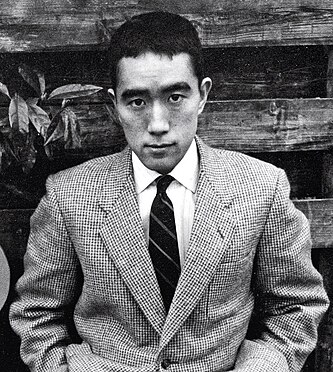


About Yukio Mishima
Yukio Mishima (January 14, 1925 – November 25, 1970) was the pen name of Kimitake Hiraoka, a Japanese author, poet, playwright, actor, model, film director, nationalist, and founder of the Tatenokai.
Best Yukio Mishima Quotes
Shortest
Earliest
Explore our curated collection of the most famous and impactful Yukio Mishima quotes.



“Actually the action called a kiss represented nothing more for me than some place where my spirit could seek shelter.”
“The most appropriate type of daily life for me was a day-by-day world destruction; peace was the most difficult and abnormal state to live in.”

“Within those confining walls, teachers — a bunch of men all armed with the same information — gave the same lectures every year from the same notebooks and every year at the same point in the textbooks made the same jokes.”
“Japan was to be married, not to Hitler, but to the German forests; not to Mussolini, but to the Roman pantheon. It was a pact joining German, Roman, and Japanese mythology: a friendship among the beautiful, masculine, pagan gods of East and West.”

“At no time are we ever in such complete possession of a journey, down to its last nook and cranny, as when we are busy with preparations for it. After that, there remains only the journey itself, which is nothing but the process through which we lose our ownership of it.”
“All my life I have been acutely aware of a contradiction in the very nature of my existence. For forty-five years I struggled to resolve this dilemma by writing plays and novels. The more I wrote, the more I realized mere words were not enough. So I found another form of expression.”

“I received an impassioned letter from Sonoko. There was no doubt that she was truly in love. I felt jealous. Mine was the unbearable jealousy a cultured pearl must feel toward a genuine one. Or can there be such a thing in this world as a man who is jealous of the woman who loves him, precisely because of her love?”

“By means of microscopic observation and astronomical projection the lotus flower can become the foundation for an entire theory of the universe and an agent whereby we may perceive the Truth. And first we must know that each of the petals has eighty-four thousand veins and that each vein gives eighty-four thousand lights.”
“Held in the custody of childhood is a locked chest; the adolescent, by one means or another, tries to open it. The chest is opened: inside, there is nothing. So he reaches a conclusion: the treasure chest is always like this, empty. From this point on, he gives priority to this assumption of his rather than to reality. In other words, he is now a "grown-up."”
“Just let matters slide. How much better to accept each sweet drop of the honey that was Time, than to stoop to the vulgarity latent in every decision. However grave the matter at hand might be, if one neglected it for long enough, the act of neglect itself would begin to affect the situation, and someone else would emerge as an ally. Such was Count Ayakura's version of political theory.”

“‘The human body is the work of art. It doesn’t need artists.’ But the artist replies: ‘Okay, let’s say you’re right. What good does your sweating and grunting do. Even the most beautiful body is destroyed by age. Where is beauty then? Only art makes human beauty endure. You must devise an artist’s scheme to preserve it. You must commit suicide at the height of your beauty.’”
“The arrows have eaten into the tense, fragrant, youthful flesh and are about to consume his body from within with flames of supreme agony and ecstasy. But there is no flowing blood, nor yet the host of arrows seen in other pictures of Sebastian’s martyrdom. Instead, two lone arrows cast their tranquil and graceful shadows upon the smoothness of his skin, like the shadows of a bough falling upon a marble stairway...”

“I've never done much, but I've lived my whole life thinking of myself as the only real man. And if I'm right, then a limpid, lonely horn is going to trumpet through the dawn some day, and a turgid cloud laced with light will sweep down, and the poignant voice of glory will call for me from the distance — and I'll have to jump out of bed and set out alone. That's why I've never married. I've waited, and waited, and here I am past thirty.”

“The purest evil that human efforts could attain, in other words, was probably achieved by those men who made their wills the same and who made their eyes see the world in the same way, men who went against the pattern of life's diversity, men whose spirits shattered the natural wall of the individual body, making nothing of this barrier, set up to guard against mutual corrosion, men whose spirit accomplished what flesh could never accomplish.”
“We Japanese must reveal the true form of our imperial land, in which the sovereign and the people are gloriously united. We must become an example of the freedom, the peace, the happiness, and the spiritual enlightenment desired by every nation in the world and every race. It is our heaven-sent mission to stake our lives on our faith in the emperor and to guard the prosperity of our Imperial Throne. Therein resides our greatness, our sublimity.”
Yukio Mishima Quotes by Topic
Find exactly what you are looking for by browsing this categorized list of Yukio Mishima quotes by topic.
Yukio Mishima on Purity

Yukio Mishima on Abstraction
“Words are a medium that reduces reality to abstraction for transmission to our reason, and in their power to corrode reality inevitably lurks the danger that the words will be corroded too.”

Quotes About Yukio Mishima
Gain deeper perspective through quotes about Yukio Mishima from others.
James Dean Bradfield on Yukio Mishima
“Yukio Mishima is one of my favourite authors. It's not his suicide I'm obsessed with. We've got enough reference points there. I like the fact that he was coming to the end — he knew that he was working on his last novel. He knew that was the sum of everything he'd ever done. I like the fact that he saw the end of the road. I like to feel that you do follow your years out and you do get your answer in the end.”

Hasuda Zenmei on Yukio Mishima
“The author is very young in years. I prefer not to disclose just what sort of person he is, for I believe it best not to. For those who insist on knowing, I will say only that he is one of us, a youthful version of ourselves. That young men like this are emerging in Japan is a joy too great for words. And for those with no confidence in our national literature, his advent will come as an overwhelming surprise. But there is no cause for surprise: the truth is that this young man is heir to Japan's everlasting history. Though far younger than we, he emerges fully mature. And it is from ourselves that he is born.”
Ross Leckie on Yukio Mishima
“In the highly conformist culture of Japan, Yukio Mishima stands out. He was, for example, a homosexual — who thought it his duty to marry and breed. He is also Japan's most renowned novelist whose very Japanese industry produced 40 novels, 20 volumes of stories and many essays in only 22 years of writing. But Mishima is most famous not for his life, but for his death by ritual suicide, or hara-kiri... Mishima's final act was a political protest against the liberalisation that has continued, slowly, in Japan. It was also a deep and dark aesthetic deed. Mishima was a narcissist, and wanted to beautify his body in death.”
Boyd Tonkin on Yukio Mishima
“His devotion to bushido (the "way of warriors"), sacred monarchy and ascetic Buddhist traditions coincided with a media-savvy, role-playing, club-hopping hunger for celebrity that could have had Andy Warhol kowtowing in homage. With Mishima scarcely the wafer breadth of an antique sword-blade separated high art from screamingly high camp.”
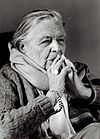
Marguerite Yourcenar on Yukio Mishima
“Let us remember that the central reality must be sought in the writer's work: it is what the writer chose to write, or was compelled to write, that finally matters. And certainly Mishima's carefully premeditated death is part of his work.”
About Yukio Mishima
Yukio Mishima (January 14, 1925 – November 25, 1970) was the pen name of Kimitake Hiraoka, a Japanese author, poet, playwright, actor, model, film director, nationalist, and founder of the Tatenokai.