Link Copied!
Wonder Woman Quotes (0-)
King

About Wonder Woman
Wonder Woman is a fictional character and superhero, also known as Diana, princess of the Amazons, and as Diana Prince. Wonder Woman was created by psychologist William Moulton Marston, debuting in All Star Comics #8.
Best Wonder Woman Quotes
Shortest
Earliest
Explore our curated collection of the most famous and impactful Wonder Woman quotes.
“If it means interfering in an ensconced, outdated system, to help just one woman, man or child…I’m willing to accept the consequences.”

“If the prospect of living in a world where trying to respect the basic rights of those around you and valuing each other simply because we exist are such daunting, impossible tasks that only a superhero born of royalty can address them,then what sort of world are we left with? And what sort of world do you want to live in?"”

“Wonder Woman, Wonder Woman.
All the world's waiting for you,
and the power you possess.
In your satin tights,
Fighting for your rights
And the old Red, White and Blue.
Wonder Woman, Wonder Woman.
Now the world is ready for you,
and the wonders you can do.
Make a hawk a dove,
Stop a war with love,
Make a liar tell the truth.
Wonder Woman,
Get us out from under, Wonder Woman.
All our hopes are pinned on you.
And the magic that you do.
Stop a bullet cold,
Make the Axis fold,
Change their minds,
and change the world.
Wonder Woman, Wonder Woman.
You're a wonder, Wonder Woman.”

“"Wonder Woman" was conceived by Dr. Marston to set up a standard among children and young people of strong, free, courageous womanhood; to combat the idea that women are inferior to men, and to inspire girls to self-confidence and achievement in athletics, occupations and professions monopolized by men....Since millions of young people are reading "wonder Woman" today, it is quite possible that their acceptance of this womanly ideal may alter our whole standards, as to what is admirable in women. Children who admire the heroic type of woman will no longer have any use for the timid, physically weak, dependent and emotionally possessive woman of the old school, and will model themselves on the self-reliant, strong comradely woman who can be honest and fearless because she is not dependent upon a man for her living.”
Quotes About Wonder Woman
Gain deeper perspective through quotes about Wonder Woman from others.
Gabrielle Bellot on Wonder Woman
“A significant reason Wonder Woman became verboten soon after she debuted was her then-implicit bisexuality, having come from a land populated solely by women.”
Lauretta Bender, M.D. on Wonder Woman
“She does not believe that Wonder Woman tends to masochism or sadism. Furthermore, she believes that even if it did-you can teach either perversion to children-one can only bring out what is inherent in the child. However she did make the reservation that if the woman slaves wore chains (and enjoyed them) for no purpose whatsoever, there would be no point in chaining them.”
Lynda Carter on Wonder Woman 2 quotes
“I never really thought of Wonder Woman as a super-racy character. She wasn’t out there being predatory. She was saying: “You have a problem with a strong woman? I am who I am, get over it.” I never played her as mousy. I played her being for women, not against men. For fair play and fair pay.”
Samuel Delany on Wonder Woman
“In 1968, under Denny as scripter and Mike Sekowsky as editor, they'd taken away Wonder Woman's powers and sexy costume to remain in "Man's World" rather than accompany her fellow Amazons back to Paradise Island, in Denny's words to me, "to solve the Superman problem," that is: if she can deflect bullets with her bracelet and tie up criminals with a magic lasso and fly around in a magic transparent plane, you run out of stories pretty fast—as well.”
Michelle R. Finn on Wonder Woman 3 quotes
“Wonder Woman failed to challenge the long-standing prejudice that the feminine ideal was white. Not only were Wonder Woman and her sister Amazon's all fair skinned, the Wonder Woman comic books reinforced racism by debasing minority characters. While the grotesque and evil "Jap" enemies that populated Wonder Woman's adventures were the most frequent illustration of this racism, the comic book was rife with other degrading characterizations, like the dim-witted African American porter and duplicitous Mexican "hussy" who make an appearance in Wonder Woman #1, (Summer 1942) (187). Hateful depictions of Asian, African American and Mexican characters reinforced the racist association of "white with "right". This inherint racism undercut Marston's message of women's freedom and empowerment and would have required minority readers to negotiate some serious obstacles in accepting or rejecting, his comic book superheroine as a feminist role model. On top of this racism, Marston's view that women deserved to be in power because that were intrinsically virtuous and would use their power to bring about peace and happiness further complicates Wonder Woman's feminist claims. Although Marston aimed to elevate women, arguments that base women's right to power on a set of assumptions about "the female character" ultimately reinforce the idea that women must adhere to the standards identified by the dominant culture as appropriately feminine. Those women who fail to meet society's expectations, whether by circumstance or by choice, risk being denied the rights that "acceptable" behavior would presumably earn them. For such individuals, Marston offered a rather unsympathetic solution: conform.”
Josetta Frank on Wonder Woman
“Intentionally or otherwise the strip is full of significant sex antagonisms and perversions. Personally I would find an out-and-out striptease less unwholesome than this kind of symbolism.”
Marie Goetz as quoted on Wonder Woman 2 quotes
“The idea was to make the character of Wonder Woman the face of a U.N. social media campaign to promote women's rights via tweets and facebook callouts. Women's rights advocates exploded in outrage, and nearly 45,000 people signed a petition against the decision. "It's an insult, frankly," said Anne Marie Goetz at the time. Goetz, a professor of global affairs at New York University and a former adviser on peace and security issues to the United Nations agency, U.N. Women, said a big issue was the timing.”
Donna B. Knaff on Wonder Woman
“It was the Amazon Princess' origins in wartime, though - the critical moment of her arrival - that have helped to give her the staying power she has shown as a character. Because her appearance coincided with a moment in history when women were called upon to take on duties, responsibilities, and aspects of gender identity formerly in men's domain, her demonstration of "masculine" qualities was seen as appropriate for the times. Further, she was held to the same standards of female behavior as the World War II women she inspired and represented: her masculinity and power over men were managed, and she maintained her femininity no matter the circumstances. From her inception, beyond merely being entertainment for children, Wonder Woman represented a vision of women's qualities that were equal to or greater than men's and exemplified a mix of gender qualities that adult women and men recognized as necessary to the Allied effort. Wonder Woman rode a wave of wartime feminism that permitted her to show that her greatest qualities were ones that helped win the war. Those same qualities enabled her use as an image of strength, self-reliance and self-belief that were the basis of the Second Wave, pushing women further up the shore to equality.”
Travis Langley on Wonder Woman
“We look at the strong, healthy character for some of the same reasons recent psychologists now charge psychology with a criticism her creator made long ago. Too much of psychology has focused on that which is abnormal without exploring that which is normal-hence Marston's classic book, Emotions of Normal People. Whereas other psychologists and other fictional characters might views humankind pessimistically, William Moulton Marston and Wonder Woman look for the best in us all and hope for our world. In the twenty-first century, a psychologist best known for studying the causes and consequences of learned helplessness promotes positive psychology on the belief that psychology has overemphasized the worst parts of human nature to the neglect of trying to understand the best.”
Jill Lepore on Wonder Woman 7 quotes
“Wonder Woman isn’t only an Amazonian princess with badass boots. She’s the missing link in a chain of events that begins with the woman's suffrage campaigns of the 1910s and ends with the troubled place of feminism fully a century later. Feminism made Wonder Woman. And then Wonder Woman remade feminism, which hasn’t been altogether good for feminism. Superheroes, who are supposed to be better than everyone else, are excellent at clobbering people; they’re lousy at fighting for equality.”

McClelland-Nugent on Wonder Woman
“...exhorted women to become physically and mentally strong, promoted paid female employment, and critiqued over-masculinized aspects of American culture.”
William Moulton Marston on Wonder Woman 8 quotes
“Wonder Woman breaks the bonds of those who are slaves to evil masters but she doesn't leave the freed ones free to assert their own egos and uncontrolled self-gratification. Wonder Woman binds the victims again in love chains - that is, she makes them submit to a loving superior ... Wonder Woman is trying to show children - who understand this far better than adults - that it's much more fun to be controlled by a loving person that [sic] to go ranting round submitting to no one.”
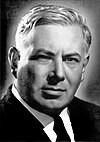
William Moulton Marston As quoted on Wonder Woman
“Oh yes, but not until women control men. Wonder Woman – and the trend toward male acceptance of female love power, which she represents, indicates that the first psychological step has actually been taken. Boys, young and old, satisfy their wish thoughts by reading comics. If they go crazy over Wonder Woman, it means they’re longing for a beautiful, exciting girl who is stronger than they are. These simple, highly imaginative picture stories satisfy longings that ordinary daily life thwarts and denies. Superman and the army of male comics characters who resemble him satisfy the simple desire to be stronger and more powerful than anybody else. Wonder Woman satisfies the subconscious, elaboratedly disguised desire of males to be mastered by a woman who loves them.”
William Moulton Marston as quoted on Wonder Woman
“Normal men retain their childish longing for a woman to mother them. At adolescence a new desire is added. They want a girl to allure them. When you put these two together, you have the typical male yearning Wonder Woman satisfies.”
William Moulton Marston on Wonder Woman
“Men, (Greeks) were captured by predatory love-seeking females until they got sick of it and made the women captive by force. But they were afraid of them (masculine inferiority complex) and kept them heavily chained lest the women put one over as they always had before. The Goddess of Love comes along and helps women break their chains by giving them the greater force of real altruism. Were upon men turned about face and actually helped the women get away from domestic slavery - as men are doing now. The New Women thus freed and strengthened by supporting themselves (on paradise Island) developed enormous physical and mental power. But they have to use it for other people’s benefit or they go back to chains, and weakness.”
Grant Morrison on Wonder Woman 2 quotes
View all 2 quotes on Grant Morrison →
Maher Nasser as quoted on Wonder Woman
“The focus [of the U.N.] was on her feminist background, being the first female superhero in a world of male superheroes and that basically she always fought for fairness, justice and peace.”
Walter J. Ong on Wonder Woman 2 quotes
“Ong has no quarrel with the old-style comics like Mr. & Mrs., The Gumps, Gasoline Alley, and he seems to have a sneaking admiration for Li'l Abner ("sexy and synthetic pastoralism" done with "manifest cleverness.") But, he says, "there seems to be nothing in the good comics which keeps readers from liking the others." He saves his sharpest slings for Superman's female counterpart, a four-year-old character named Wonder Woman, who is described by her creator as "the girl from Paradise Isle, beautiful as Aphrodite, wise as Athena, stronger than Hercules and swifter than Mercury." Wonder Woman swears "By Zeus!" and regularly prays to Aphrodite—which Ong says is Hitlerite paganism.”

Richard Reynolds as quoted as quoted on Wonder Woman
“Developed as a frank appeal to male fantasies of sexual domination.”
Lilian Robinson on Wonder Woman
“Throughout the [Marston] period...she accomplished her remarkable feats without any apparent definition in her biceps or thighs. Her calf muscles, highlighted by the red boots, are developed only to-but not beyond-the point required for "nice legs" in the pinup sense.”
Gail Simone on Wonder Woman
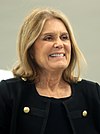
Gloria Steinem on Wonder Woman 2 quotes
“[Wonder Woman's] creator has...seen straight into my heart and understood the secret fears of violence hidden there. No longer did I have to pretend to like the "pow!" and "Crunch" style of Captain Marvel or the Green Hornet. No longer did I have nightmares after reading ghoulish comics filled with torture and mayhem, comics made all the more terrifying by their real-life setting in World War II....Here was a heroic person who might conquer with force, but only a force that was tempered by love and justice.”
Craig This on Wonder Woman
“Wonder Woman emerged in the 1940s just as American entered World War II. As women entered the war production in various capacities, the image of Wonder Woman spoke to the promise of the future for women strong, independent and career-minded. When the war ended, Fredric Wertham fought to contain that image of the strong, independent, career-minded woman or he felt it threatened the American family and American society. His attempts to contain Wonder Woman forced her, like so many women during the 1950's, to struggle with the tension between family and career. In the end, Wertham may have contained the symbol of the 1940s Wonder Woman - strength and independence - but the 1950s Wonder Woman - having to choose between marriage and career - spoke to and inspired another generation.”
“Think Of All The Wonders We Can Do” on Wonder Woman
“The iconic Wonder Woman fictional character was named an Honorary Ambassador for the Empowerment of Women and Girls on 21 October 2016, in support of Sustainable Development Goal 5 – to achieve gender equality and empower all women and girls. The designation ceremony coincided with the 75th anniversary of Wonder Woman's first appearance in a comic book in 1941. Wonder Woman has since then been depicted in movies and TV series. She is a global citizen and universally recognized for her commitment to justice, peace and equality and is seen as a model of strength, fairness and compassion becoming a symbol of empowerment for women and girls in much of the world. Women and girls represent half of the world’s population and therefore also half of its potential. But today, gender inequality persists everywhere and stagnates social progress. In many parts of the world women endure physical and sexual violence, face barriers to opportunities for leadership and education and receive less pay than men for equal work among other forms of discrimination.”
About Wonder Woman
Wonder Woman is a fictional character and superhero, also known as Diana, princess of the Amazons, and as Diana Prince. Wonder Woman was created by psychologist William Moulton Marston, debuting in All Star Comics #8.