Winston Churchill on Ferdinand Foch
← Back to Winston Churchill Profile
“On Armistice Day, the German armies had marched homeward in good order. "They fought well," said Marshal Foch, Generalissimo of the Allies, with the laurels bright upon his brow, speaking in soldierly mood: "let them keep their weapons." But he demanded that the French frontier should henceforth be the Rhine. Germany might be disarmed; her military system shivered in fragments; her fortresses dismantled: Germany might be impoverished; she might be loaded with measureless indemnities; she might become a prey to internal feuds: but all this would pass in ten years or in twenty. The indestructible might "of all the German tribes" would rise once more and the unquenched fires of warrior Prussia glow and burn again. But the Rhine, the broad, deep, swift-flowing Rhine, once held and fortified by the French Army, would be a barrier and a shield behind which France could dwell and breathe for generations. Very different were the sentiments and views of the English-speaking world, without whose aid France must have succumbed. The territorial provisions of the Treaty of Versailles left Germany practically intact. She still remained the largest homogeneous racial block in Europe. When Marshal Foch heard of the signing of the Peace Treaty of Versailles he observed with singular accuracy: "This is not Peace. It is an Armistice for twenty years."”
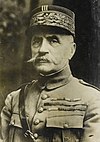
“France had been bled white by the war. The generation that had dreamed since 1870 of a war of revenge had triumphed, but at a deadly cost in national life-strength. It was a haggard France that greeted the dawn of victory. Deep fear of Germany pervaded the French nation on the morrow of their dazzling success. It was this fear that had prompted Marshal Foch to demand the Rhine frontier for the safety of France against her far larger neighbour. But the British and American statesmen held that the absorption of German-populated districts in French territory was contrary to the Fourteen Points and to the principles of nationalism and self-determination upon which the Peace Treaty was to be based. They therefore withstood Foch and France. They gained Clemenceau by promising: first, a joint Anglo-American guarantee for the defence of France; secondly, a demilitarised zone; and thirdly, the total, lasting disarmament of Germany. Clemenceau accepted this in spite of Foch’s protests and his own instincts. The Treaty of Guarantee was signed accordingly by Wilson and Lloyd George and Clemenceau. The United States Senate refused to ratify the treaty. They repudiated President Wilson’s signature. And we, who had deferred so much to his opinions and wishes in all this business of peacemaking, were told without much ceremony that we ought to be better informed about the American Constitution.”