Link Copied!
William Wordsworth Quotes (1770-1850)
Poet























































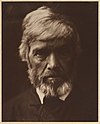






































About William Wordsworth
William Wordsworth (April 7, 1770 – April 23, 1850) was a major English poet who, with Samuel Taylor Coleridge, launched the Romantic Age in English literature with the 1798 publication of Lyrical Ballads.
Best William Wordsworth Quotes
Shortest
Earliest
Explore our curated collection of the most famous and impactful William Wordsworth quotes.
“Nature's old felicities.”


“A brotherhood of venerable trees.”

“These feeble and fastidious times.”

“Habit rules the unreflecting herd.”
“A noticeable man, with large gray eyes.”
“Surprised by joy—impatient as the Wind.”

“In years that bring the philosophic mind.”
William Wordsworth Quotes by Topic
Find exactly what you are looking for by browsing this categorized list of William Wordsworth quotes by topic.
William Wordsworth on Flowers 20 quotes
View all 20 quotes on Flowers →William Wordsworth on Love 6 quotes
“The unconquerable pang of despised love.”

William Wordsworth on Joy 6 quotes
View all 6 quotes on Joy →William Wordsworth on Music 6 quotes
View all 6 quotes on Music →William Wordsworth on Beauty 5 quotes
View all 5 quotes on Beauty →William Wordsworth on Duty 5 quotes
View all 5 quotes on Duty →William Wordsworth on Poetry about love 5 quotes
View all 5 quotes on Poetry about love →William Wordsworth on Poets 5 quotes
View all 5 quotes on Poets →William Wordsworth on Daisies 4 quotes
View all 4 quotes on Daisies →William Wordsworth on Trees 4 quotes
“A brotherhood of venerable Trees.”

William Wordsworth on Prayer 4 quotes
View all 4 quotes on Prayer →What William Wordsworth Said About Others
Discover personal opinions William Wordsworth shared regarding contemporaries.
William Wordsworth on Women 5 quotes
View all 5 quotes on Women →William Wordsworth on Mother Nature 2 quotes
View all 2 quotes on Mother Nature →William Wordsworth on Luís de Camões
William Wordsworth on Alexander Pope
William Wordsworth on Abraham Cowley
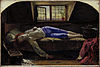
William Wordsworth on Thomas Chatterton
“Chatterton, the marvellous boy, The sleepless soul that perished in his pride.”
William Wordsworth on Edmund Burke
“[Burke was] the most sagacious Politician of his age... Time has verified his predictions.”

William Wordsworth on Virgil
“Virgil's style is an inimitable mixture of the elaborately ornate, and the majestically plain and touching.”

William Wordsworth on Maiden
William Wordsworth on William Shakespeare
“Scorn not the Sonnet. Critic, you have frowned, Mindless of its just honours; with this key Shakespeare unlocked his heart.”

William Wordsworth on Edmund Spenser
“Sweet Spenser, moving through his clouded heaven With the moon's beauty and the moon's soft pace, I called him Brother, Englishman, and Friend!”

Quotes About William Wordsworth
Gain deeper perspective through quotes about William Wordsworth from others.
Paula Gunn Allen Interview on William Wordsworth
“My poetry has a haunted sense to it and it has a sorrow and a grievingness in it that comes directly from being split, not in two but in twenty, and never being able to reconcile all the places that I am. I think of it as Wordsworth did when he said we come into this world "trailing clouds of glory," when he said nothing can bring back the hour when we saw "splendor in the grass and glory in the flower." We shall not weep but find strength in what remains behind. That poem-I was in college, I was a sophomore when I read it, and I just wept. I was completely, absolutely desolate because I thought he understood. He understood, of course, in his own way exactly what happens when your reality is so disordered that you can't ever make it whole, but you have the knowledge of what has happened, what has been done.”
Matthew Arnold on William Wordsworth 5 quotes
“I firmly believe that the poetical performance of Wordsworth is, after that of Shakspeare and Milton, of which all the world now recognises the worth, undoubtedly the most considerable in our language from the Elizabethan age to the present time. Chaucer is anterior; and on other grounds, too, he cannot well be brought into the comparison. But taking the roll of our chief poetical names, besides Shakspeare and Milton, from the age of Elizabeth downwards, and going through it,—Spenser, Dryden, Pope, Gray, Goldsmith, Cowper, Burns, Coleridge, Scott, Campbell, Moore, Byron, Shelley, Keats (I mention those only who are dead),—I think it certain that Wordsworth's name deserves to stand, and will finally stand, above them all. Several of the poets named have gifts and excellences which Wordsworth has not. But taking the performance of each as a whole, I say that Wordsworth seems to me to have left a body of poetical work superior in power, in interest, in the qualities which give enduring freshness, to that which any one of the others has left.”

Robert Browning "The Lost Leader" on William Wordsworth
Thomas Carlyle on William Wordsworth
“The languid way in which he gives you a handful of numb unresponsive fingers is very significant. It seems also rather to grieve him that you have any admiration for anybody but him. No man that I ever met has give me less, has disappointed me less. My peace be with him, and a happy evening to his, on the whole, respectable life.”

Alfred Cobban on William Wordsworth
“For Wordsworth, as for Burke, local attachment is "the tap-root of the tree of Patriotism". That was particularly true of the part of England from which Wordsworth himself came—the dales of Cumberland and Westmorland, with their tiny scattered communities of "statesmen" as they were called, small independent owner-farmers, soon, alas, to be driven out of existence as such by the increasing prosperity of the country. "Neither high-born nobleman, knight, nor esquire, was here; but many of these humble sons of the hills had a consciousness that the land, which they walked over and tilled, had for more than five hundred years been possessed by men of their name and blood." This is the environment out of which Wordsworth's political theory springs; and along with local patriotism it taught him the meaning of tradition in a nation's life. He draws his conclusions in phrases that wonderfully, and surely not accidentally, echo Burke. "There is a spiritual community binding together the living and the dead, the good, the brave, and the wise, of all ages." To Wordsworth, as to Burke, tradition is essential to a nation. How well he knew "the solemn fraternity which a great Nation composes—gathered together, in a stormy season, under the shade of ancestral feeling". He cries, as the shadow of Napoleon looms over his mind, "Perdition to the Tyrant who would wantonly cut off an independent nation from its inheritance in past ages".”
Hartley Coleridge "He Lived Amidst Th'Untrodden Ways" on William Wordsworth
“He lived amidst th'untrodden ways To Rydal Lake that lead:- A bard whom there were none to praise, And very few to read.Behind a cloud his mystic sense, Deep-hidden, who can spy? Bright as the night, when not a star Is shining in the sky.Unread his works – his "Milk-white Doe" With dust is dark and dim; It's still in Longman's shop, and Oh! The difference to him!”
Thomas Cooper on William Wordsworth 3 quotes
“Nothing struck me so much in Wordsworth's conversation as his remark concerning Chartism—after the subject of my imprisonment had been touched upon. "You were right," he said; "I have always said the people were right in what they asked; but you went the wrong way to get it." I almost doubted my ears—being in the presence of the "Tory" Wordsworth. He read the inquiring expression of my look in a moment,—and immediately repeated what he had said. "You were quite right: there is nothing unreasonable in your Charter: it is the foolish attempt at physical force, for which many of you have been blamable." I had heard that Wordsworth was vain and egotistical, but had always thought this very unlikely to be true, in one whose poetry is so profoundly reflective; and I now felt astonished that these reports should ever have been circulated. To me, he was all kindness and goodness; while the dignity with which he uttered every sentence seemed natural in a man whose grand head and face, if one had never known of his poetry, would have proclaimed his intellectual superiority.”
Sebastian Faulks on William Wordsworth
“Lyrical Ballads (1798) by William Wordsworth and Samuel Taylor Coleridge. A manifesto and a revolution in verse whose fallout is still being measured. The strongest single volume of poetry yet published?”
Isabella Fenwick on William Wordsworth
“There are very few days that I do not see the poet for an hour or two. What strange workings are there in his great mind, and how fearfully strong are all his feelings and affections! If his intellect had been less powerful they must have destroyed him long ago; but even in the midst of his strongest emotions his attention may be attracted to some intellectual speculation, or his imagination excited by some of those external objects which have such influence over him; and his feelings subside like the feelings of a child, and he will go out and compose some beautiful sonnet.”
Elizabeth Gaskell on William Wordsworth
“As for the Poetry of Humble Life, that, even in a town, is met with on every hand. We have such a district, and we constantly meet with examples of the beautiful truth in that passage of The Cumberland Beggar.”
Charles Greville on William Wordsworth
“Wordsworth may be bordering on sixty; hard-featured, brown, wrinkled, with prominent teeth and a few scattered grey hairs, but nevertheless not a disagreeable countenance; and very cheerful, merry, courteous, and talkative, much more so than I should have expected from the grave and didactic character of his writings. He held forth on poetry, painting, politics, and metaphysics, and with a great deal of eloquence; he is more conversible and with a greater flow of animal spirits than Southey. He mentioned that he never wrote down as he composed, but composed walking, riding, or in bed, and wrote down after; that Southey always composes at his desk. He talked a great deal of Brougham, whose talents and domestic virtues he greatly admires; that he was very generous and affectionate in his disposition, full of duty and attention to his mother, and had adopted and provided for a whole family of his brother's children, and treats his wife's children as if they were his own.”
William Hazlitt on William Wordsworth
“He is in this sense the most original poet now living, and the one whose writings could the least be spared: for they have no substitute elsewhere. The vulgar do not read them; the learned, who see all things through books, do not understand them; the great despise. The fashionable may ridicule them: but the author has created himself an interest in the heart of the retired and lonely student of nature, which can never die.”

Misattributed Quotes
Quotes mistakenly credited to William Wordsworth
“Faith is a passionate intuition”
About William Wordsworth
William Wordsworth (April 7, 1770 – April 23, 1850) was a major English poet who, with Samuel Taylor Coleridge, launched the Romantic Age in English literature with the 1798 publication of Lyrical Ballads.