Link Copied!
William Wilberforce Quotes (1759-1833)
Politician, Leader, Theologian


About William Wilberforce
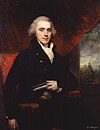
William Wilberforce (August 24 1759 – July 29 1833) was a British politician, philanthropist, theologian, and leader of the movement to abolish the slave trade. His third son was Bishop Samuel Wilberforce.
Best William Wilberforce Quotes
Shortest
Earliest
Explore our curated collection of the most famous and impactful William Wilberforce quotes.
“God Almighty has set before me two great objects: the suppression of the slave trade and the reformation of manners...”
“God Almighty has set before me two great objects, the suppression of the slave trade and the reformation of manners (morality).”
“If to be feelingly alive to the sufferings of my fellow-creatures is to be a fanatic, I am one of the most incurable fanatics ever permitted to be at large.”
“The very loss of our church establishment, though, as in all human institutions, some defects may be found in it, would in itself be attended with the most fatal consequences. No prudent man dares hastily pronounce how for its destruction might not greatly endanger our civil institutions.”
“All men of enlightened understandings, who acknowledge the moral government of God, must also acknowledge, that vice must offend and virtue delight him. In short they must, more or less, assent to the Scripture declaration, “without holiness no man shall see the Lord.” ”
“I hoped that it would please God to enable the friends of Christianity to be the instruments of wiping away what I have long thought, next to the slave trade, the foulest blot on the moral character of our countrymen, the suffering of our fellow-subjects — nay, they even stand towards us in the closer relation of our tenants — in the East Indies to remain, without any effort on our part to enlighten and reform them, under the grossest, the darkest, and most depraving system of idolatrous superstition that almost ever existed on earth.”

“The gospel freely admitted makes a man happy. It gives him peace with God, and makes him happy in God. It gives to industry a noble, contented look which selfish drudgery never wore; and from the moment that a man begins to do his work for his Saviour's sake, he feels that the most ordinary employments are full of sweetness and dignity, and that the most difficult are not impossible. And if any of you, my friends, is weary with his work, if dissatisfaction with yourself or sorrow of any kind disheartens you, if at any time you feel the dull paralysis of conscious sin, or the depressing influence of vexing thoughts, look to Jesus, and be happy. Be happy, and your joyful work will prosper well.”
“Let true Christians then, with becoming earnestness, strive in all things to recommend their profession, and to put to silence the vain scoffs of ignorant objectors. Let them boldly assert the cause of Christ in an age when so many, who bear the name of Christians, are ashamed of Him: and let them consider as devolved on Them the important duty of suspending for a while the fall of their country, and, perhaps, of performing a still more extensive service to society at large; not by busy interference in politics, in which it cannot but be confessed there is much uncertainty; but rather by that sure and radical benefit of restoring the influence of Religion, and of raising the standard of morality.”
“When we think of eternity, and of the future consequences of all human conduct, what is there in this life that should make any man contradict the dictates of his conscience, the principles of justice, the laws of religion, and of God? Sir, the nature and all the circumstances of this trade are now laid open to us; we can no longer plead ignorance, we can not evade it; it is now an object placed before us, we can not pass it; we may spurn it, we may kick it out of our way, but we can not turn aside so as to avoid seeing it; for it is bro directly before our eyes that this House must decide, and must justify to all the world, and to their own consciences, the rectitude of the grounds and principles of their decision.”

“Let us not despair; it is a blessed cause, and success, ere long, will crown our exertions. Already we have gained one victory; we have obtained, for these poor creatures, the recognition of their human nature, which, for a while was most shamefully denied. This is the first fruits of our efforts; let us persevere and our triumph will be complete. Never, never will we desist till we have wiped away this scandal from the Christian name, released ourselves from the load of guilt, under which we at present labour, and extinguished every trace of this bloody traffic, of which our posterity, looking back to the history of these enlightened times, will scarce believe that it has been suffered to exist so long a disgrace and dishonour to this country.”

“In our own days, when it is but too clear that infidelity increases, it is not in consequence of the reasonings of the infidel writers having been much studied, but from the progress of luxury, and the decay of morals: and, so far as this increase may be traced at all to the works of sceptical writers; it has been produced, not by argument and discussion, but by sarcasms and points of wit, which have operated on weak minds, or on nominal Christians, by bringing gradually into contempt, opinions which, in their case, had only rested on the basis of blind respect and the prejudices of education. It may therefore be laid down as an axiom, that infidelity is in general a disease of the heart more than of the understanding. If Revelation were assailed only by reason and argument, it would have little to fear. '''The literary opposers of Christianity, from Herbert to Hume, have been seldom read. They made some stir in their day: during their span of existence they were noisy and noxious; but like the locusts of the east, which for a while obscure the air, and destroy the verdure, they were soon swept away and forgotten.'''' Their very names would be scarcely found, if Leland had not preserved them from oblivion.”

“Christianity is not satisfied with producing merely the specious guise of virtue. She requires the substantial reality, which may stand the scrutinizing eye of that Being “who searches the heart.” Meaning therefore that the Christian should live and breathe; in an atmosphere, as it were, of benevolence, she forbids whatever can tend to obstruct its diffusion or vitiate its purity. It is on this principle that Emulation is forbidden: for, besides that this passion almost insensibly degenerates into envy, and that it derives its origin chiefly from pride and a desire of self-exaltation; how can we easily love our neighbour as ourselves, if we consider him at the same time our rival, and are intent upon surpassing him in the pursuit of whatever is the subject of our competition?
Christianity, again, teaches us not to set our hearts on earthly possessions and earthly honours; and thereby provides for our really loving, or even cordially forgiving, those who have been more successful than ourselves in the attainment of them, or who have even designedly thwarted us in the pursuit. “Let the rich,” says the Apostle, “rejoice in that he is brought low.” How can he who means to attempt, in any degree, to obey this precept, be irreconcilably hostile towards any one who may have been instrumental in his depression?
Christianity also teaches us not to prize human estimation at a very high rate; and thereby provides for the practice of her injunction, to love from the heart those who, justly or unjustly, may have attacked our reputation, and wounded our character. She commands not the shew, but the reality of meekness and gentleness; and by thus taking away the aliment of anger and the fomenters of discord, she provides for the maintenance of peace, and the restoration of good temper among men, when it may have sustained a temporary interruption.
It is another capital excellence of Christianity, that she values moral attainments at a far higher rate than intellectual acquisitions, and proposes to conduct her followers to the heights of virtue rather than of knowledge. On the contrary, most of the false religious systems which have prevailed in the world, have proposed to reward the labour of their votary, by drawing aside the veil which concealed from the vulgar eye their hidden mysteries, and by introducing him to the knowledge of their deeper and more sacred doctrines.”

“If then we would indeed be “filled with wisdom and spiritual understanding;” if we would “walk worthy of the Lord unto all well pleasing, being fruitful in every good work, and increasing in the knowledge of God;” here let us fix our eyes! “Laying aside every weight, and the sin that does so easily beset us; let us run with patience the race that is set before us, Looking unto Jesus, the Author and Finisher of our faith, who for the joy that was set before him endured the cross, despising the shame, and is set down at the right hand of the throne of God.
Here best we may learn the infinite importance of Christianity. How little it can deserve to be treated in that slight and superficial way, in which it is in these days regarded by the bulk of nominal Christians, who are apt to think it may be enough, and almost equally pleasing to God, to be religious in any way, and upon any system. What exquisite folly it must be to risk the soul on such a venture, in direct contradiction to the dictates of reason, and the express declaration of the word of God! “How shall we escape, if we neglect so great salvation?”
LOOKING UNTO JESUS!
Here we shall best learn the duty and reasonableness of an absolute and unconditional surrender of soul and body to the will and service of God.—“We are not our own; for we are bought with a price,” and must “therefore” make it our grand concern to “glorify God with our bodies and our spirits, which are God’s.” Should we be base enough, even if we could do it with safety, to make any reserves in our returns of service to that gracious Saviour, who “gave up himself for us?” If we have formerly talked of compounding by the performance of some commands for the breach of others; can we now bear the mention of a composition of duties, or of retaining to ourselves the right of practising little sins! The very suggestion of such an idea fills us with indignation and shame, if our hearts be not dead to every sense of gratitude.
LOOKING UNTO JESUS!
Here we find displayed, in the most lively colours, the guilt of sin, and how hateful it must be to the perfect holiness of that Being, “who is of purer eyes than to behold iniquity.” When we see that, rather than sin should go unpunished, “God spared not his own Son,” but “was pleased[99], to bruise him and put him to grief” for our sakes; how vainly must impenitent sinners flatter themselves with the hope of escaping the vengeance of Heaven, and buoy themselves up with I know not what desperate dreams of the Divine benignity!
Here too we may anticipate the dreadful sufferings of that state, “where shall be weeping and gnashing of teeth;” when rather than that we should undergo them, “the Son of God” himself, who “thought it no robbery to be equal with God,” consented to take upon him our degraded nature with all its weaknesses and infirmities; to be “a man of sorrows,” “to hide not his face from shame and spitting,” “to be wounded for our transgressions, and bruised for our iniquities,” and at length to endure the sharpness of death, “even the death of the Cross,” that he might “deliver us from the wrath to come,” and open the kingdom of Heaven to all believers.
LOOKING UNTO JESUS!
Here best we may learn to grow in the love of God! The certainty of his pity and love towards repenting sinners, thus irrefragably demonstrated, chases away the sense of tormenting fear, and best lays the ground in us of a reciprocal affection. And while we steadily contemplate this wonderful transaction, and consider in its several relations the amazing truth, that “God spared not his own Son, but delivered him up for us all;” if our minds be not utterly dead to every impulse of sensibility, the emotions of admiration, of preference, of hope, and trust, and joy, cannot but spring up within us, chastened with reverential fear, and softened and quickened by overflowing gratitude. Here we shall become animated by an abiding disposition to endeavour to please our great Benefactor; and by a humble persuasion, that the weakest endeavours of this nature will not be despised by a Being, who has already proved himself so kindly affected towards us. Here we cannot fail to imbibe an earnest desire of possessing his favour, and a conviction, founded on his own declarations thus unquestionably confirmed, that the desire shall not be disappointed. Whenever we are conscious that we have offended this gracious Being, a single thought of the great work of Redemption will be enough to fill us with compunction. We shall feel a deep concern, grief mingled with indignant shame, for having conducted ourselves so unworthily towards one who to us has been infinite in kindness: we shall not rest till we have reason to hope that he is reconciled to us; and we shall watch over our hearts and conduct in future with a renewed jealousy, [Pg 243] lest we should again offend him. To those who are ever so little acquainted with the nature of the human mind, it were superfluous to remark, that the affections and tempers which have been enumerated, are the infallible marks and the constituent properties of Love. Let him then who would abound and grow in this Christian principle, be much conversant with the great doctrines of the Gospel.
It is obvious, that the attentive and frequent consideration of these great doctrines, must have a still more direct tendency to produce and cherish in our minds the principle of the love of Christ.”

William Wilberforce Quotes by Topic
Find exactly what you are looking for by browsing this categorized list of William Wilberforce quotes by topic.
William Wilberforce on Slavery 3 quotes
“God Almighty has set before me two great objects, the suppression of the slave trade and the reformation of manners (morality).”

William Wilberforce on Music
William Wilberforce on Suppression
“God Almighty has set before me two great objects: the suppression of the slave trade and the reformation of manners.”
William Wilberforce on Fanaticism
“If to be feelingly alive to the sufferings of my fellow-creatures is to be a fanatic, I am one of the most incurable fanatics ever permitted to be at large.”

What William Wilberforce Said About Others
Discover personal opinions William Wilberforce shared regarding contemporaries.
William Wilberforce on William Pitt the Younger 2 quotes
“In society he was remarkably cheerful and pleasant, full of wit and playfulness, neither, like Mr. Fox, fond of arguing a question, nor yet holding forth, like some others. He was always ready to hear others as well as to talk himself.”

William Wilberforce on Henry Addington
“The general opinion of government is, that it is sadly blundering and inefficient. Yet people are afraid of the old set entire. Windham and Co. strong in opposition. Fox manifestly drawing towards them. Provoked by cursory remarks. 'Tis said Sheridan trying to pique him by saying, "You will get Pitt in again if you oppose." He peevishly says, "I can't bear fools, any thing but fools."”
Quotes About William Wilberforce
Gain deeper perspective through quotes about William Wilberforce from others.
Edmund Burke on William Wilberforce
“He thought the House, the nation, and all Europe, under very great and serious obligations to the hon. gentleman for having brought the subject forward in a manner the most masterly, impressive, and eloquent. Principles so admirable, laid down with so much order and force, were equal to any thing he had ever heard of in modern oratory; and perhaps were not excelled by any thing to be met with in Demosthenes.”

Frederick Douglass on William Wilberforce
“The abolition of the slave trade was supposed to be the certain death of slavery. Cut off the stream, and the pond will dry up, was the common notion at the time. Wilberforce and Clarkson, clear-sighted as they were, took this view; and the American statesmen, in providing for the abolition of the slave trade, thought they were providing for the abolition of the slavery. This view is quite consistent with the history of the times.”

Joseph Farington on William Wilberforce
“Abt. a quarter before 10 oClock, the family assembled to prayers, which were read by Wilberforce in the dining room. As we passed from the drawing room I saw all the servants standing in regular order, the woemen ranged in a line against the wall & the men the same. There were 7 woemen & 6 men.—When the whole were collected in the dining room, all knelt down each against a chair or Sopha, and Wilberforce knelt at a table in the middle of the room, and after a little pause began to read a prayer, which He did very slowly in a low, solemnly awful voice. This was followed by 2 other prayers & the grace. It occupied abt. 10 minutes, and had the best effect as to the manner of it.”
William Ewart Gladstone on William Wilberforce
“[T]he pure and saintly character, and the noble career, of Mr. Wilberforce.”

Ernest Marshall Howse on William Wilberforce
“The Hammonds...rarely mention Wilberforce save to sneer at his conservatism and his piety. Certainly a picture sketched from references in their pages would be viciously untrue to the real Wilberforce. But the Hammonds are not without clerical associates. Canon Raven, in his Christian Socialism, charges that Wilberforce "never realised that, while he was bringing liberty to negroes in the plantations, the white slaves of industry in mine and factory were being made the victims of a tyranny a thousandfold more cruel," and that Wilberforce "consistently opposed every single attempt to benefit the condition of the workers by legislation." Had Canon Raven read a few copies of Zachary Macaulay's Anti-Slavery Monthly Reporter he would have rushed less thoughtlessly into his extravagant rhetoric that tyranny in factories was "a thousandfold more cruel" than tyranny on slave plantations. And had he read the Life of Wilberforce more carefully he would have found that Wilberforce did not "consistently oppose every single attempt" to benefit factory workers by legislation, but rather that he ardently supported the first attempt ever made to benefit them by legislation, and objected only...that the act did not go far enough.”
Rev. Martin Luther King Jr. on William Wilberforce
“One of the best ways to face this problem of self-centeredness is to discover some cause and some purpose, some loyalty outside of yourself and give yourself to that something... you are then able to live because you have given your life to something outside and something that is meaningful, objectified. You rise above this self-absorption to something outside. We look through history. We see that biography is a running commentary of this. We see Wilberforce. We see him somehow satisfying his desire by absorbing his life in the slave trade, those who are victims of the slave trade.”
About William Wilberforce
William Wilberforce (August 24 1759 – July 29 1833) was a British politician, philanthropist, theologian, and leader of the movement to abolish the slave trade. His third son was Bishop Samuel Wilberforce.