Link Copied!
William Penn Quotes (1644-1718)




About William Penn
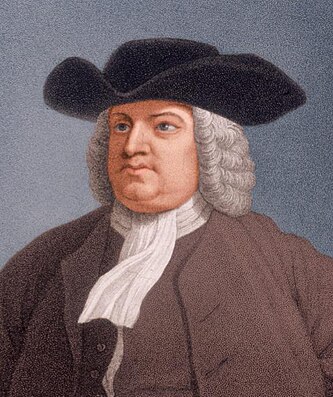
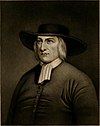
William Penn (14 October 1644 – 30 July 1718) was a Quaker who founded the Province of Pennsylvania, the British North American colony that became the U.S. state of Pennsylvania. The democratic and libertarian principles that he set forth served as an inspiration for the United States Constitution.
Best William Penn Quotes
Shortest
Earliest
Explore our curated collection of the most famous and impactful William Penn quotes.
“Make few resolutions, but keep them strictly.”
“Fidelity has enfranchised slaves, and adopted servants to be sons”


“It were endless to dispute upon everything that is disputable.”
“Hasty resolutions are of the nature of vows, and to be equally avoided.”

“Government seems to me to be a part of religion itself — a thing sacred in its institutions and ends.”

“In all debates let truth be thy aim; not victory or an unjust interest; and endeavor to gain rather than to expose thy antagonist.”

“As Puppets are to Men, and Babies to Children, so is Man’s Workmanship to God’s: We are the Picture, he the Reality.”
“The Country is both the Philosopher’s Garden and his Library, in which he Reads and Contemplates the Power, Wisdom and Goodness of God.”
“Rex & Tyrannus are very different Characters: One Rules his People by Laws, to which they consent; the other by his absolute Will and Power.”

“Much reading is an oppression of the mind, and extinguishes the natural candle, which is the reason of so many senseless scholars in the world.”

“It is admirable to consider how many Millions of People come into, and go out of the World, Ignorant of themselves, and of the World they have lived in.”

“It were Happy if we studied Nature more in natural Things; and acted according to Nature; whose rules are few, plain and most reasonable.”

“Zeal ever follows an appearance of truth, and the assured are too apt to be warm; but it is their weak side in argument; zeal being better shown against sin than persons, or their mistakes.”
“Where charity keeps pace with grain, industry is blessed, but to slave to get, and keep it sordidly, is a sin against Providence, a vice in government and an injury to their neighbours.”
William Penn Quotes by Topic
Find exactly what you are looking for by browsing this categorized list of William Penn quotes by topic.
William Penn on Oppression 2 quotes
“Much reading is an oppression of the mind, and extinguishes the natural candle, which is the reason of so many senseless scholars in the world.”
William Penn on Quakers 2 quotes
“Men being born with a title to perfect freedom and uncontrolled enjoyment of all the rights and privileges of the law of nature … no one can be put out of his estate and subjected to the political view of another, without his consent.”
William Penn on Patience
William Penn on Mob
William Penn on Discipline
William Penn on Religion
William Penn on Justice
William Penn on Good and evil
William Penn on Goodness
William Penn on Zeal
“It is a coal from God's altar must kindle our fire; and without fire, true fire, no acceptable sacrifice.”
Quotes About William Penn
Gain deeper perspective through quotes about William Penn from others.
Angelina Grimké on William Penn
“I fled to the land of Penn; for here, thought I, sympathy for the slave will surely be found. But I found it not. The people were kind and hospitable, but the slave had no place in their thoughts.”
Mark Kurlansky on William Penn
“War burdens the working class, and that was traditionally the source of antiwar sentiments. Quaker founder George Fox was a shoemaker. But William Penn, a convert to Quakerism in 1667, at the age of twenty-three, was the son of a British admiral and an aristocrat with a personal acquaintanceship with King James II. Even after his conversion, he was reluctant at first to drop the aristocratic fashion of wearing a sword. Penn wrote of the power of love and the unchristian, warlike nature of Christians whom he termed—in the ultimate seventeenth-century European insult—to be worse than the Turks. It was Penn who offered the simplest formula for ending war, that it starts with an individual refusing to fight. According to Penn, "Somebody must begin it."”

Jim Powell on William Penn
“William Penn was the first great hero of American liberty. During the late seventeenth century, when Protestants persecuted Catholics, Catholics persecuted Protestants, and both persecuted Quakers and Jews, Penn established an American sanctuary which protected freedom of conscience.”
Ronald Reagan on William Penn
“In the history of this Nation, there has been a small number of men and women whose contributions to its traditions of freedom, justice, and individual rights have accorded them a special place of honor in our hearts and minds, and to whom all Americans owe a lasting debt... William Penn, as a British citizen, founded the Commonwealth of Pennsylvania in order to carry out an experiment based upon representative government; public education without regard to race, creed, sex, or ability to pay; and the substitution of workhouses for prisons. He had a Quaker's deep faith in divine guidance, and as the leader of the new colony, he worked to protect rights of personal conscience and freedom of religion. The principles of religious freedom he espoused helped to lay the groundwork for the First Amendment of our Constitution. As a man of peace, William Penn was conscientiously opposed to war as a means of settling international disputes and worked toward its elimination by proposing the establishment of a Parliament of Nations, not unlike the present-day United Nations.”

Voltaire on William Penn 2 quotes
“William Penn, when only fifteen years of age, chanced to meet a Quaker in Oxford, where he was then following his studies. This Quaker made a proselyte of him; and our young man, being naturally sprightly and eloquent, having a very winning aspect and engaging carriage, soon gained over some of his companions and intimates, and in a short time formed a society of young Quakers, who met at his house; so that at the age of sixteen he found himself at the head of a sect. Having left college, at his return home to the vice-admiral, his father, instead of kneeling to ask his blessing, as is the custom with the English, he went up to him with his hat on, and accosted him thus: "Friend, I am glad to see thee in good health." The viceadmiral thought his son crazy; but soon discovered he was a Quaker. He then employed every method that prudence could suggest to engage him to behave and act like other people. The youth answered his father only with repeated exhortations to turn Quaker also. After much altercation, his father confined himself to this single request, that he would wait on the king and the duke of York with his hat under his arm, and that he would not "thee" and "thou" them. William answered that his conscience would not permit him to do these things. This exasperated his father to such a degree that he turned him out of doors. Young Penn gave God thanks that he permitted him to suffer so early in His cause, and went into the city, where he held forth, and made a great number of converts; and being young, handsome, and of a graceful figure, both court and city ladies flocked very devoutly to hear him. The patriarch Fox, hearing of his great reputation, came to London — notwithstanding the length of the journey — purposely to see and converse with him. They both agreed to go upon missions into foreign countries; and accordingly they embarked for Holland, after having left a sufficient number of laborers to take care of the London vineyard.”

Disputed Quotes
Quotes attributed to William Penn that are questionable.
“All men have a natural and indefeasible right to worship Almighty God according to the dictates of their own consciences; no man can of right be compelled to attend, erect, or support any place of worship, or to maintain any ministry against his consent; no human authority can, in any case whatever, control or interfere with the rights of conscience, and no preference shall ever be given by law to any religious establishment or modes of worship.”
Misattributed Quotes
Quotes mistakenly credited to William Penn
“No men, nor number of men upon earth, hath power or authority to rule over men's consciences in religious matters.”
About William Penn
William Penn (14 October 1644 – 30 July 1718) was a Quaker who founded the Province of Pennsylvania, the British North American colony that became the U.S. state of Pennsylvania. The democratic and libertarian principles that he set forth served as an inspiration for the United States Constitution.