Link Copied!
William Law Quotes (1686-1761)
Writer, King
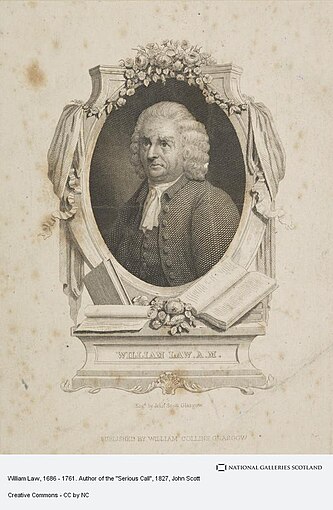



About William Law
William Law (1686 – 9 April 1761) was a Church of England priest who lost his position at Emmanuel College, Cambridge, when his conscience would not allow him to take the required oath of allegiance to the first Hanoverian monarch, King George I. Previously, William Law had given his allegiance to the House of Stuart and is sometimes considered a second-generation non-juror. Thereafter, Law continued as a simple priest (curate), and when that too became impossible without the required oath, Law taught privately and wrote extensively. His personal integrity, as well as his mystic and theological writing, greatly influenced the evangelistic movement of his day, as well as Enlightenment thinkers such as the writer Samuel Johnson and the historian Edward Gibbon.
Best William Law Quotes
Shortest
Earliest
Explore our curated collection of the most famous and impactful William Law quotes.
“You can have no greater sign of confirmed pride than when you think you are humble enough.”

“Man needs to be Saved from his own Wisdom as much as from his own Righteousness, for they produce one and the same corruption. Nothing saves a man from his own righteousness, but that which delivers him from his own wisdom.”

“He that is endeavouring to subdue, and root out of his mind,all those passions of pride,envy and ambition,which religion opposes, is doing more to make himself happy, even in this life than he that is contriving means to indulge them.”
“Now if you will stop here and ask yourself why you are not as pious as the primitive Christians were, your own heart will tell you that it is neither through ignorance nor inability, but purely because you never thoroughly intended it.”

“The Deists, and unbelievers, have a great share of my compassionate affections, and I never can think, or write of the infinite blessings of the Christian redemption, without feeling in my heart, an impatient longing to see them the happy partakers of them. And as one naturally believes, what one strongly wishes; so I cannot help hoping, that both Christians and Deists will here find truths of such a nature, as must in some degree touch their hearts, if not read with prejudice and aversion. OF THE Nature and Necessity OF R E G E N E R A T I O N, OR, THE N E W - B I R T H.”

“So that Christianity is so far from leaving us to live in the common ways of life, conforming to the folly of customs, and gratifying the passions and tempers which the spirit of the world delights in, it is so far from indulging us in any of these things, that all its virtues which it makes necessary to salvation are only so many ways of living above and contrary to the world, in all the common actions of our life. If our common life is not a common course of humility, self-denial, renunciation of the world, poverty of spirit, and heavenly affection, we do not live the lives of Christians.”

“All possible goodness that either can be named, or is nameless, was in God from all eternity, and must to all eternity be inseparable from him; it can be nowhere but where God is. As therefore before God created anything, it was certainly true that there was but one that was good, so it is just the same truth, after God has created innumerable hosts of blessed and holy and heavenly beings, that there is but one that is good, and that is God.
All that can be called goodness, holiness, divine tempers, heavenly affections, in the creatures, are no more their own, or the growth of their created powers, than they were their own before they were created. But all that is called divine goodness and virtue in the creature is nothing else, but the one goodness of God manifesting a birth and discovery of itself in the creature, according as its created nature is fitted to receive it. This is the unalterable state between God and the creature. Goodness for ever and ever can only belong to God, as essential to him and inseparable from him, as his own unity.”
All that can be called goodness, holiness, divine tempers, heavenly affections, in the creatures, are no more their own, or the growth of their created powers, than they were their own before they were created. But all that is called divine goodness and virtue in the creature is nothing else, but the one goodness of God manifesting a birth and discovery of itself in the creature, according as its created nature is fitted to receive it. This is the unalterable state between God and the creature. Goodness for ever and ever can only belong to God, as essential to him and inseparable from him, as his own unity.”

“As man lives, and moves, and has his Being in the Divine Nature, and is supported by it, whether his Nature be good or bad; so the Wrath of Man, which was awakened in the dark Fire of his fallen Nature, may, in a certain Sense, be called the Wrath of God, as Hell itself may be said to be in God, because nothing can be out of his Immensity; yet this Hell, is not God, but the dark Habitation of the Devil. And this Wrath which may be called the Wrath of God, is not God, but the fiery Wrath of the fallen Soul.
And it was solely to quench this Wrath, awakened in the human Soul, that the Blood of the Son of God was necessary, because nothing but a Life and a Birth, derived from him into the human Soul, could change this darkened Root of a self-tormenting Fire, into an amiable Image of the holy Trinity, as it was at first created.
This was the Wrath, Vengeance, and vindictive Justice that wanted to be satisfied, in order to our Salvation; it was the Wrath and Fire of Nature and Creature kindled only in itself, by its departing from true Resignation, and Obedience to God.”
“If Reason seems to have any Power against Religion, it is only where Religion is become a dead Form, has lost its true State, and is dwindled into Opinion; and when this is the Case, that Religion stands only as a well-grounded Opinion, then indeed it is always liable to be shaken; either by having its own Credibility lessened, or that of a contrary Opinion increased. But when Religion is that which it should be, not a Notion or Opinion, but a real Life growing up in God, then Reason has just as much power to stop its Course, as the barking Dog to stop the Course of the Moon. For true and genuine Religion is Nature, is Life, and the Working of Life; and therefore, wherever it is, Reason has no more Power over it, than over the Roots that grow secretly in the Earth, or the Life that is working in the highest Heavens. If therefore you are afraid of Reason hurting your Religion, it is a Sign, that your Religion is not yet as it should be, is not a self-evident Growth of Nature and Life within you, but has much of mere Opinion in it.”

“The reason why we know so little of Jesus Christ, as our savior, atonement, and justification, why we are so destitute of that faith in him, which alone can change, rectify, and redeem our souls, why we live starving in the coldness and deadness of a formal, historical, hearsay-religion, is this; we are strangers to our own inward misery and wants, we know not that we lie in the jaws of death and hell; we keep all things quiet within us, partly by outward forms, and modes of religion and morality, and partly by the comforts, cares and delights of this world. Hence it is that we consent to receive a savior, as we consent to admit of the four gospels, because only four are received by the church. We believe in a savior, not because we feel an absolute want of one, but because we have been told there is one, and that it would be a rebellion against God to reject him. We believe in Christ as our atonement, just as we believe, that he cast seven devils out of Mary Magdalene, and so are no more helped, delivered, and justified by believing that he is our atonement, than by believing that he cured Mary Magdalene.”

“Some People have an Idea, or Notion of the Christian Religion, as if God was thereby declared so full of Wrath against fallen Man, that nothing but the Blood of his only begotten Son could satisfy his Vengeance.
Nay, some have gone such Lengths of Wickedness, as to assert that God had by immutable Decrees reprobated, and rejected a great Part of the Race of Adam, to an inevitable Damnation, to show forth and magnify the Glory of his Justice.
But these are miserable Mistakers of the Divine Nature, and miserable Reproachers of his great Love, and Goodness in the Christian Dispensation.
For God is Love, yea, all Love, and so all Love, that nothing but Love can come from him; and the Christian Religion is nothing else but an open, full Manifestation of the universal Love towards all Mankind.
As the Light of the Sun has only one common Nature towards all Objects that can receive it, so God has only one common Nature of Goodness towards all created Nature, breaking forth in infinite Flames of Love, upon every Part of the Creation, and calling everything to the highest Happiness it is capable of.”

“Christian doctors reproach the old learned rabbis, for their vain faith, and carnal desire of a glorious, temporal, outward Christ, who should set up their temple-worship all over the world. Vanity indeed, and learned blindness enough?
But nevertheless, in these condemners of rabbinic blindness, St. Paul's words are remarkably verified, viz., "Wherein thou judgest another, thou condemnest thyself, for thou that judgest dost the same thing." For, take away all that from Christ which Christian doctors call enthusiasm, suppose him not to be an inward birth, a new life and Spirit within us, but only an outward, separate, distant heavenly prince, no more really in us, than our high cathedrals are in the third heavens, but only by an invisible hand from his throne on high, some way or other raising and helping great scholars, or great temporal powers, to make a rock in every nation for his church to stand upon; suppose all this (which is the very marrow of modern divinity) and then you have that very outward Christ, and that very outward kingdom, which the carnal Jew dreamed of, and for the sake of which the spiritual Christ was then nailed to the cross, and is still crucified by the new risen Jew in the Christian church.”
But nevertheless, in these condemners of rabbinic blindness, St. Paul's words are remarkably verified, viz., "Wherein thou judgest another, thou condemnest thyself, for thou that judgest dost the same thing." For, take away all that from Christ which Christian doctors call enthusiasm, suppose him not to be an inward birth, a new life and Spirit within us, but only an outward, separate, distant heavenly prince, no more really in us, than our high cathedrals are in the third heavens, but only by an invisible hand from his throne on high, some way or other raising and helping great scholars, or great temporal powers, to make a rock in every nation for his church to stand upon; suppose all this (which is the very marrow of modern divinity) and then you have that very outward Christ, and that very outward kingdom, which the carnal Jew dreamed of, and for the sake of which the spiritual Christ was then nailed to the cross, and is still crucified by the new risen Jew in the Christian church.”
“God therefore is all Love, and nothing but Love and Goodness can come from him. He is as far from Anger in himself, as from Pain and Darkness. But when the fallen Soul of Man, had awakened in itself, a wrathful, self-tormenting Fire, which could never be put out by itself, which could never be relieved by the natural Power of any Creature whatsoever, then the Son of God, by a Love, greater than that which created the World, became Man, and gave his own Blood, and Life into the fallen Soul, that it might through his Life in it, be raised, quickened, and born again into its first State of inward Peace and Delight, Glory and Perfection, never to be lost any more. O inestimable Truths! precious Mysteries, of the Love of God, enough to split the hardest Rock of the most obdurate Heart, that is but able to receive one Glimpse of them! Can the World resist such Love as this? Or can any Man doubt, whether he should open all that is within him, to receive such a Salvation?
O unhappy Unbelievers, this Mystery of Love compels me in Love, to call upon you, to beseech and entreat you, to look upon the Christian Redemption in this amiable Light. All the Ideas that your own Minds can form of Love and Goodness, must sink into nothing, as soon as compared with God's Love and Goodness in the Redemption of Mankind.”
O unhappy Unbelievers, this Mystery of Love compels me in Love, to call upon you, to beseech and entreat you, to look upon the Christian Redemption in this amiable Light. All the Ideas that your own Minds can form of Love and Goodness, must sink into nothing, as soon as compared with God's Love and Goodness in the Redemption of Mankind.”
“"Except a man be born again of the Spirit, he cannot see or enter into the kingdom of God." Therefore the new birth from above, or of the Spirit, is that alone which gives true knowledge and perception of that which is the kingdom of God. The history may relate truths enough about it; but the kingdom of God, being nothing else but the power and presence of God, dwelling and ruling in our souls, this can only manifest itself, and can manifest itself to nothing in man but to the new birth. For everything else in man is deaf and dumb and blind to the kingdom of God; but when that which died in Adam is made alive again by the quickening Spirit from above, this being the birth which came at first from God, and a partaker of the divine nature, this knows, and enjoys the kingdom of God.
"I am the way, the truth, and the life," says Christ: this record of scripture is true; but what a delusion, for a man to think that he knows and finds this to be true, and that Christ is all this benefit and blessing to him, because he assents, consents, and contends, it may be, for the truth of those words. This is impossible. The new birth is here again the only power of entrance; everything else knocks at the door in vain: I know you not says Christ to everything, but the new birth. "I am the way, the truth and the life"; this tells us neither more nor less, than if Christ had said, I am the kingdom of God, into which nothing can enter, but that which is born of the Spirit.”
"I am the way, the truth, and the life," says Christ: this record of scripture is true; but what a delusion, for a man to think that he knows and finds this to be true, and that Christ is all this benefit and blessing to him, because he assents, consents, and contends, it may be, for the truth of those words. This is impossible. The new birth is here again the only power of entrance; everything else knocks at the door in vain: I know you not says Christ to everything, but the new birth. "I am the way, the truth and the life"; this tells us neither more nor less, than if Christ had said, I am the kingdom of God, into which nothing can enter, but that which is born of the Spirit.”
“The eternal Son of God came into the world, only for the sake of this new birth, to give God the glory of restoring it to all the dead sons of fallen Adam. All the mysteries of this incarnate, suffering, dying Son of God, all the price that he paid for our redemption, all the washings that we have from his all-cleansing blood poured out for us, all the life that we receive from eating his flesh, and drinking his blood, have their infinite value, their high glory, and amazing greatness in this, because nothing less than these supernatural mysteries of a God-man, could raise that new creature out of Adam's death, which could be again a living temple, and deified habitation of the Spirit of God.
That this new birth of the Spirit, or the divine life in man, was the truth, the substance, and sole end of his miraculous mysteries, is plainly told us by Christ himself, who at the end of all his process on earth, tells his disciples, what was to be the blessed, and full effect of it, namely, that the Holy Spirit, the comforter (being now fully purchased for them) should after his ascension, come in the stead of a Christ in the flesh. "If I go not away," says he, "the comforter will not come; but if I go away, I will send him unto you, and he shall guide you into all truth." Therefore all that Christ was, did, suffered, dying in the flesh, and ascending into heaven, was for this sole end, to purchase for all his followers a new birth, new life, and new light, in and by the Spirit of God restored to them, and living in them, as their support, comforter, and guide into all truth. And this was his, "LO, I AM WITH YOU ALWAY, EVEN UNTO THE END OF THE WORLD.”
That this new birth of the Spirit, or the divine life in man, was the truth, the substance, and sole end of his miraculous mysteries, is plainly told us by Christ himself, who at the end of all his process on earth, tells his disciples, what was to be the blessed, and full effect of it, namely, that the Holy Spirit, the comforter (being now fully purchased for them) should after his ascension, come in the stead of a Christ in the flesh. "If I go not away," says he, "the comforter will not come; but if I go away, I will send him unto you, and he shall guide you into all truth." Therefore all that Christ was, did, suffered, dying in the flesh, and ascending into heaven, was for this sole end, to purchase for all his followers a new birth, new life, and new light, in and by the Spirit of God restored to them, and living in them, as their support, comforter, and guide into all truth. And this was his, "LO, I AM WITH YOU ALWAY, EVEN UNTO THE END OF THE WORLD.”
“That which the learned Jews did with the outward letter of their Law, that same do learned Christians with the outward letter of their gospel. Why did the Jewish church so furiously and obstinately cry out against Christ, Let him be crucified? It was because their letter-learned ears, their worldly spirit and temple-orthodoxy, would not bear to hear of an inward savior, not bear to hear of being born again of his Spirit, of eating his flesh, and drinking his blood, of his dwelling in them, and they in him. To have their Law of ordinances, their temple-pomp sunk into such a fulfilling savior as this, was such enthusiastic jargon to their ears, as forced their sober, rational theology, to call Christ, Beelzebub, his doctrine, blasphemy, and all for the sake of Moses and rabbinic orthodoxy.
Need it now be asked, whether the true Christ of the gospel be less blasphemed, less crucified, by that Christian theology which rejects an inward Christ, a savior living and working in the soul, as its inward light and life, generating his own nature and Spirit in it, as its only redemption, whether that which rejects all this as mystic madness be not that very same old Jewish wisdom sprung up in Christian theology, which said of Christ when teaching these very things, "He is mad, why hear ye him?" Our blessed Lord in a parable sets forth the blind Jews, as saying of himself, "We will not have this man to reign OVER us." The sober-minded Christian scholar has none of this Jewish blindness, he only says of Christ, we will not have this man to REIGN IN US, and so keeps clear of such mystic absurdity as St. Paul fell into, when he enthusiastically said, "Yet not I, but Christ that liveth in me."”
Need it now be asked, whether the true Christ of the gospel be less blasphemed, less crucified, by that Christian theology which rejects an inward Christ, a savior living and working in the soul, as its inward light and life, generating his own nature and Spirit in it, as its only redemption, whether that which rejects all this as mystic madness be not that very same old Jewish wisdom sprung up in Christian theology, which said of Christ when teaching these very things, "He is mad, why hear ye him?" Our blessed Lord in a parable sets forth the blind Jews, as saying of himself, "We will not have this man to reign OVER us." The sober-minded Christian scholar has none of this Jewish blindness, he only says of Christ, we will not have this man to REIGN IN US, and so keeps clear of such mystic absurdity as St. Paul fell into, when he enthusiastically said, "Yet not I, but Christ that liveth in me."”
“We have no spiritual need except for a restoration of the divine nature in us. And if this be true, then nothing can be our salvation except that which brings us into a right relationship with God, making us partakers of the divine nature in such a manner and degree as we need. But to reason about life cannot communicate it to the soul, nor can a religion of rational notions and opinions logically deduced from Scripture words bring the reality of the gospel into our lives. Do we not see sinners of all sorts, and men under the power of every corrupt passion, equally zealous for such a religion? How is it then that Christian leaders spend so much time reasoning about Scripture doctrines, and yet remain so blind to the obvious fact that filling the head with right notions of Christ can never give to the heart the reality of His Spirit and life? For logical reasoning about Scripture words and doctrines will do no more to remove pride, hypocrisy, envy, or malice from the soul of man, than logical reasoning about geometry. The one leaves man as empty of the life of God in Christ as the other. Yet the church is filled with professing Christians whose faith has never gone beyond a conviction that the words of Scripture are true. They believe in the Christ of the Bible, but do not know Him personally. The indwelling of the Holy Spirit is sound doctrine to their minds, but their lives are empty of His manifest power either to overcome the power of sin within, or to convert others to Christ. Though many are zealous to preach the gospel, yet instead of bringing men to Christ, they seek to reason them into a trust in their own learned opinions about Scripture doctrines. In contrast to Paul, their gospel is in word only, without the demonstration and power of the Spirit. Nor can they see their need of the Holy Spirit to fill them with Christ, and then to overflow through them in rivers of living water to others, because reason tells them that they are sound in the letter of doctrine.”
“Show me a man whose heart has no desire, or prayer in it, but to love God with his whole soul and spirit, and his neighbor as himself, and then you have shown me the man who knows Christ, and is known of him; the best and wisest man in the world, in whom the first paradisaical wisdom and goodness are come to life. Not a single precept in the gospel, but is the precept of his own heart, and the joy of that new-born heavenly love which is the life and light of his soul. In this man, all that came from the old serpent is trod under his feet, not a spark of self, of pride, of wrath, of envy, of covetousness, or worldly wisdom, can have the least abode in him, because that love, which fulfilleth the whole Law and the prophets, that love which is God and Christ, both in angels and men, is the love that gives birth, and life, and growth to everything that is either thought, or word, or action in him. And if he has no share or part with foolish errors, cannot be tossed about with every wind of doctrine, it is because, to be always governed by this love, is the same thing as to be always taught of God.
On the other hand, show me a scholar as full of learning, as the Vatican is of books, and he will be just as likely to give all that he has for the gospel-pearl, as he would be, if he was as rich as Croesus. Let no one here imagine, that I am writing against all human literature, arts and sciences, or that I wish the world to be without them. I am no more an enemy to them, than to the common useful labors of life. It is literal learning, verbal contention, and critical strife about the things of God, that I charge with folly and mischief to religion. And in this, I have all learned Christendom, both popish and Protestant on my side. For they both agree in charging each other with a bad and false gospel-state, because of that which their learning, logic, and criticism do for them. Say not then, that it is only the illiterate enthusiast that condemns human learning in the gospel kingdom of God. For when he condemns the blindness and mischief of popish logic and criticism, he has all the learned Protestant world with him; and when he lays the same charge to Protestant learning, he has a much larger kingdom of popish great scholars, logically and learnedly affirming the same thing. So that the private person, charging human learning with so much mischief to the church, is so far from being led by enthusiasm, that he is led by all the church-learning that is in the world.”
On the other hand, show me a scholar as full of learning, as the Vatican is of books, and he will be just as likely to give all that he has for the gospel-pearl, as he would be, if he was as rich as Croesus. Let no one here imagine, that I am writing against all human literature, arts and sciences, or that I wish the world to be without them. I am no more an enemy to them, than to the common useful labors of life. It is literal learning, verbal contention, and critical strife about the things of God, that I charge with folly and mischief to religion. And in this, I have all learned Christendom, both popish and Protestant on my side. For they both agree in charging each other with a bad and false gospel-state, because of that which their learning, logic, and criticism do for them. Say not then, that it is only the illiterate enthusiast that condemns human learning in the gospel kingdom of God. For when he condemns the blindness and mischief of popish logic and criticism, he has all the learned Protestant world with him; and when he lays the same charge to Protestant learning, he has a much larger kingdom of popish great scholars, logically and learnedly affirming the same thing. So that the private person, charging human learning with so much mischief to the church, is so far from being led by enthusiasm, that he is led by all the church-learning that is in the world.”

“Now the Spirit of Love has this Original. God, as considered in himself in his Holy Being, before any thing is brought forth by him or out of him, is only an eternal Will to all Goodness. This is the one eternal immutable God, that from Eternity to Eternity changeth not, that can be neither more nor less nor any thing else but an eternal Will to all the Goodness that is in himself, and can come from him. The Creation of ever so many Worlds or Systems of Creatures adds nothing to, nor takes any thing from this immutable God. He always was and always will be the same immutable Will to all Goodness. So that as certainly as he is the Creator, so certainly is he the Blesser of every created Thing, and can give nothing but Blessing, Goodness, and Happiness from himself because he has in himself nothing else to give. It is much more possible for the Sun to give forth Darkness, than for God to do, or be, or give forth anything but Blessing and Goodness. Now this is the Ground and Original of the Spirit of Love in the Creature; it is and must be a Will to all Goodness, and you have not the Spirit of Love till you have this Will to all Goodness at all Times and on all Occasions. You may indeed do many Works of Love and delight in them, especially at such Times as they are not inconvenient to you, or contradictory to your State or Temper or Occurrences in Life. But the Spirit of Love is not in you till it is the Spirit of your Life, till you live freely, willingly, and universally according to it. For every Spirit acts with Freedom and Universality according to what it is. It needs no command to live its own Life, or be what it is, no more than you need bid Wrath be wrathful. And therefore when Love is the Spirit of your Life, it will have the Freedom and Universality of a Spirit; it will always live and work in Love, not because of This or That, Here or There, but because the Spirit of Love can only love, wherever it is or goes or whatever is done to it. As the Sparks know no Motion but that of flying upwards, whether it be in the Darkness of the Night or in the Light of the Day, so the Spirit of Love is always in the same Course; it knows no Difference of Time, Place, or Persons, but whether it gives or forgives, bears or forbears, it is equally doing its own delightful Work, equally blessed from itself. For the Spirit of Love, wherever it is, is its own Blessing and Happiness because it is the Truth and Reality of God in the Soul, and therefore is in the same Joy of Life and is the same Good to itself, everywhere and on every Occasion.”
“God could not make the creature to be great and glorious in itself; this is as impossible, as for God to create beings into a state of independence on himself. "The heavens," saith David, "declare the glory of God"; and no creature, any more than the heavens, can declare any other glory but that of God. And as well might it be said, that the firmament shows forth its own handiwork, as that a holy divine or heavenly creature shows forth its own natural power.
But now, if all that is divine, great, glorious, and happy, in the spirits, tempers, operations, and enjoyments of the creature, is only so much of the greatness, glory, majesty, and blessedness of God, dwelling in it, and giving forth various births of his own triune life, light, and love, in and through the manifold forms and capacities of the creature to receive them, then we may infallibly see the true ground and nature of all true religion, and when and how we may be said to fulfill all our religious duty to God. For the creature's true religion, is its rendering to God all that is God's, it is its true continual acknowledging all that which it is, and has, and enjoys, in and from God. This is the one true religion of all intelligent creatures, whether in heaven, or on earth; for as they all have but one and the same relation to God, so though ever so different in their several births, states or offices, they all have but one and the same true religion, or right behavior towards God. Now the one relation, which is the ground of all true religion, and is one and the same between God and all intelligent creatures, is this, it is a total unalterable dependence upon God, an immediate continual receiving of every kind, and degree of goodness, blessing and happiness, that ever was, or can be found in them, from God alone. The highest angel has nothing of its own that it can offer unto God, no more light, love, purity, perfection, and glorious hallelujahs, that spring from itself, or its own powers, than the poorest creature upon earth. Could the angel see a spark of wisdom, goodness, or excellence, as coming from, or belonging to itself, its place in heaven would be lost, as sure as Lucifer lost his. But they are ever abiding flames of pure love, always ascending up to and uniting with God, for this reason, because the wisdom, the power, the glory, the majesty, the love, and goodness of God alone, is all that they see, and feel, and know, either within or without themselves. Songs of praise to their heavenly Father are their ravishing delight, because they see, and know, and feel, that it is the breath and Spirit of their heavenly Father that sings and rejoices in them. Their adoration in spirit and in truth never ceases, because they never cease to acknowledge the ALL of God; the ALL of God in the whole creation. This is the one religion of heaven, and nothing else is the truth of religion on earth.”
But now, if all that is divine, great, glorious, and happy, in the spirits, tempers, operations, and enjoyments of the creature, is only so much of the greatness, glory, majesty, and blessedness of God, dwelling in it, and giving forth various births of his own triune life, light, and love, in and through the manifold forms and capacities of the creature to receive them, then we may infallibly see the true ground and nature of all true religion, and when and how we may be said to fulfill all our religious duty to God. For the creature's true religion, is its rendering to God all that is God's, it is its true continual acknowledging all that which it is, and has, and enjoys, in and from God. This is the one true religion of all intelligent creatures, whether in heaven, or on earth; for as they all have but one and the same relation to God, so though ever so different in their several births, states or offices, they all have but one and the same true religion, or right behavior towards God. Now the one relation, which is the ground of all true religion, and is one and the same between God and all intelligent creatures, is this, it is a total unalterable dependence upon God, an immediate continual receiving of every kind, and degree of goodness, blessing and happiness, that ever was, or can be found in them, from God alone. The highest angel has nothing of its own that it can offer unto God, no more light, love, purity, perfection, and glorious hallelujahs, that spring from itself, or its own powers, than the poorest creature upon earth. Could the angel see a spark of wisdom, goodness, or excellence, as coming from, or belonging to itself, its place in heaven would be lost, as sure as Lucifer lost his. But they are ever abiding flames of pure love, always ascending up to and uniting with God, for this reason, because the wisdom, the power, the glory, the majesty, the love, and goodness of God alone, is all that they see, and feel, and know, either within or without themselves. Songs of praise to their heavenly Father are their ravishing delight, because they see, and know, and feel, that it is the breath and Spirit of their heavenly Father that sings and rejoices in them. Their adoration in spirit and in truth never ceases, because they never cease to acknowledge the ALL of God; the ALL of God in the whole creation. This is the one religion of heaven, and nothing else is the truth of religion on earth.”
“What is the difference between man's own righteousness and man's own light in religion? They are strictly the same thing, do one and the same work, namely, keep up and strengthen every evil, vanity, and corruption of fallen nature. Nothing saves a man from his own righteousness, but that which saves and delivers him from his own light. The Jew that was most of all set against the gospel, and unable to receive it was he that trusted in his own righteousness; this was the rich man, to whom it was as hard to enter into the kingdom of heaven as for a camel to go through the eye of a needle. But the Christian, that trusts in his own light, is the very Jew that trusted in his own righteousness; and all that he gets by the gospel, is only that which the Pharisee got by the Law, namely, to be further from entering into the kingdom of God than publicans and harlots. … Nothing but God in man can be a godly life in man. Hence is that of the apostle, "The letter killeth, but the spirit giveth life." But you will say, can this be true of the spiritual divine letter of the gospel? Can it kill, or give death? Yes, it kills, when it is rested in; when it is taken for divine power, and supposed to have goodness in itself; for then it kills the Spirit of God in man, quenches his holy fire within us, and is set up instead of it. It gives death, when it is built into systems of strife and contention about words, notions, and opinions, and makes the kingdom of God to consist, not in power, but in words. When it is thus used, then of necessity it kills, because it keeps from that which alone is life and can give life. … All the Law, the prophets, and the gospel are fulfilled, when there is in Christ a new creature, having life in and from him, as really as the branch has its life in and from the vine. And when all scripture is thus understood, and all that either Christ says of himself, or his apostles say of him, are all heard, or read, only as one and the same call to come to Christ, in hunger and thirst to be filled and blessed with his divine nature made living within us; then, and then only, the letter kills not, but as a sure guide leads directly to life. But grammar, logic, and criticism knowing nothing of scripture but its words, bring forth nothing but their own wisdom of words, and a religion of wrangle, hatred, and contention, about the meaning of them.
But lamentable as this is, the letter of scripture has been so long the usurped province of school-critics, and learned reasoners making their markets of it, that the difference between literal, notional, and living divine knowledge, is almost quite lost in the Christian world. So that if any awakened souls are here or there found among Christians, who think that more must be known of God, of Christ, and the powers of the world to come, than every scholar can know by reading the letter of scripture, immediately the cry of enthusiasm, whether they be priests, or people, is sent after them. A procedure, which could only have some excuse, if these critics could first prove, that the apostle's text ought to be thus read, "The spirit killeth, but the letter giveth life." ”
But lamentable as this is, the letter of scripture has been so long the usurped province of school-critics, and learned reasoners making their markets of it, that the difference between literal, notional, and living divine knowledge, is almost quite lost in the Christian world. So that if any awakened souls are here or there found among Christians, who think that more must be known of God, of Christ, and the powers of the world to come, than every scholar can know by reading the letter of scripture, immediately the cry of enthusiasm, whether they be priests, or people, is sent after them. A procedure, which could only have some excuse, if these critics could first prove, that the apostle's text ought to be thus read, "The spirit killeth, but the letter giveth life." ”

William Law Quotes by Topic
Find exactly what you are looking for by browsing this categorized list of William Law quotes by topic.
William Law on Vegetarianism
“Physiologists have usually represented that our species holds a middle rank, in the masticatory and digestive apparatus, between the flesh-eating and the herbivorous animals;—a statement which seems rather to have been deduced from what we have learned by experience on this subject, than to result fairly from an actual comparison of man and animals. ... The teeth of man have not the slightest resemblance to those of the carnivorous animals, except that their enamel is confined to the external surface. He possesses, indeed, teeth called canine, but they do not exceed the level of the others, and are obviously unsuited to the purposes which the corresponding teeth execute in carnivorous animals. ... Thus we find that, whether we consider the teeth and jaws, or the immediate instruments of digestion, the human structure closely resembles that of the simiæ; all of which, in their natural state, are completely herbivorous.”

William Law on Son of God
“As man lives, and moves, and has his Being in the Divine Nature, and is supported by it, whether his Nature be good or bad; so the Wrath of Man, which was awakened in the dark Fire of his fallen Nature, may, in a certain Sense, be called the Wrath of God, as Hell itself may be said to be in God, because nothing can be out of his Immensity; yet this Hell, is not God, but the dark Habitation of the Devil. And this Wrath which may be called the Wrath of God, is not God, but the fiery Wrath of the fallen Soul. And it was solely to quench this Wrath, awakened in the human Soul, that the Blood of the Son of God was necessary, because nothing but a Life and a Birth, derived from him into the human Soul, could change this darkened Root of a self-tormenting Fire, into an amiable Image of the holy Trinity, as it was at first created. This was the Wrath, Vengeance, and vindictive Justice that wanted to be satisfied, in order to our Salvation; it was the Wrath and Fire of Nature and Creature kindled only in itself, by its departing from true Resignation, and Obedience to God.”
William Law on Religious views on love
“Now the Spirit of Love has this Original. God, as considered in himself in his Holy Being, before any thing is brought forth by him or out of him, is only an eternal Will to all Goodness. This is the one eternal immutable God, that from Eternity to Eternity changeth not, that can be neither more nor less nor any thing else but an eternal Will to all the Goodness that is in himself, and can come from him. The Creation of ever so many Worlds or Systems of Creatures adds nothing to, nor takes any thing from this immutable God. He always was and always will be the same immutable Will to all Goodness. So that as certainly as he is the Creator, so certainly is he the Blesser of every created Thing, and can give nothing but Blessing, Goodness, and Happiness from himself because he has in himself nothing else to give. It is much more possible for the Sun to give forth Darkness, than for God to do, or be, or give forth anything but Blessing and Goodness. Now this is the Ground and Original of the Spirit of Love in the Creature; it is and must be a Will to all Goodness, and you have not the Spirit of Love till you have this Will to all Goodness at all Times and on all Occasions. You may indeed do many Works of Love and delight in them, especially at such Times as they are not inconvenient to you, or contradictory to your State or Temper or Occurrences in Life. But the Spirit of Love is not in you till it is the Spirit of your Life, till you live freely, willingly, and universally according to it. For every Spirit acts with Freedom and Universality according to what it is. It needs no command to live its own Life, or be what it is, no more than you need bid Wrath be wrathful. And therefore when Love is the Spirit of your Life, it will have the Freedom and Universality of a Spirit; it will always live and work in Love, not because of This or That, Here or There, but because the Spirit of Love can only love, wherever it is or goes or whatever is done to it. As the Sparks know no Motion but that of flying upwards, whether it be in the Darkness of the Night or in the Light of the Day, so the Spirit of Love is always in the same Course; it knows no Difference of Time, Place, or Persons, but whether it gives or forgives, bears or forbears, it is equally doing its own delightful Work, equally blessed from itself. For the Spirit of Love, wherever it is, is its own Blessing and Happiness because it is the Truth and Reality of God in the Soul, and therefore is in the same Joy of Life and is the same Good to itself, everywhere and on every Occasion.”
William Law on Love
“Now the Spirit of Love has this Original. God, as considered in himself in his Holy Being, before any thing is brought forth by him or out of him, is only an eternal Will to all Goodness. This is the one eternal immutable God, that from Eternity to Eternity changeth not, that can be neither more nor less nor any thing else but an eternal Will to all the Goodness that is in himself, and can come from him. The Creation of ever so many Worlds or Systems of Creatures adds nothing to, nor takes any thing from this immutable God. He always was and always will be the same immutable Will to all Goodness. So that as certainly as he is the Creator, so certainly is he the Blesser of every created Thing, and can give nothing but Blessing, Goodness, and Happiness from himself because he has in himself nothing else to give. It is much more possible for the Sun to give forth Darkness, than for God to do, or be, or give forth anything but Blessing and Goodness. Now this is the Ground and Original of the Spirit of Love in the Creature; it is and must be a Will to all Goodness, and you have not the Spirit of Love till you have this Will to all Goodness at all Times and on all Occasions. You may indeed do many Works of Love and delight in them, especially at such Times as they are not inconvenient to you, or contradictory to your State or Temper or Occurrences in Life. But the Spirit of Love is not in you till it is the Spirit of your Life, till you live freely, willingly, and universally according to it. For every Spirit acts with Freedom and Universality according to what it is. It needs no command to live its own Life, or be what it is, no more than you need bid Wrath be wrathful. And therefore when Love is the Spirit of your Life, it will have the Freedom and Universality of a Spirit; it will always live and work in Love, not because of This or That, Here or There, but because the Spirit of Love can only love, wherever it is or goes or whatever is done to it. As the Sparks know no Motion but that of flying upwards, whether it be in the Darkness of the Night or in the Light of the Day, so the Spirit of Love is always in the same Course; it knows no Difference of Time, Place, or Persons, but whether it gives or forgives, bears or forbears, it is equally doing its own delightful Work, equally blessed from itself. For the Spirit of Love, wherever it is, is its own Blessing and Happiness because it is the Truth and Reality of God in the Soul, and therefore is in the same Joy of Life and is the same Good to itself, everywhere and on every Occasion.”
What William Law Said About Others
Discover personal opinions William Law shared regarding contemporaries.
William Law on Women
“Whatever littleness and vanity is to be observed in the minds of women, it is like the cruelty of butchers, a temper that is wrought into them by that life which they are taught and accustomed to lead.”

About William Law
William Law (1686 – 9 April 1761) was a Church of England priest who lost his position at Emmanuel College, Cambridge, when his conscience would not allow him to take the required oath of allegiance to the first Hanoverian monarch, King George I. Previously, William Law had given his allegiance to the House of Stuart and is sometimes considered a second-generation non-juror. Thereafter, Law continued as a simple priest (curate), and when that too became impossible without the required oath, Law taught privately and wrote extensively. His personal integrity, as well as his mystic and theological writing, greatly influenced the evangelistic movement of his day, as well as Enlightenment thinkers such as the writer Samuel Johnson and the historian Edward Gibbon.