Link Copied!
William James Quotes (1842-1910)
Philosopher
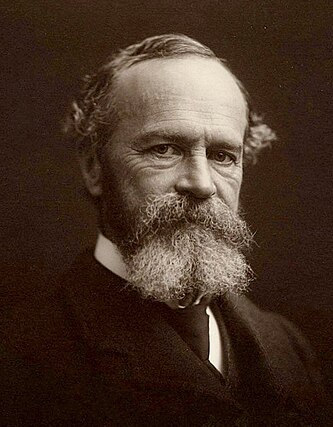





































About William James
William James (11 January 1842 – 26 August 1910) was a pioneering American psychologist and philosopher. He developed the philosophical perspective known as radical empiricism, and wrote influential books on the science of psychology, the psychology of religious experience and mysticism, and the philosophy of pragmatism.
Best William James Quotes
Shortest
Earliest
Explore our curated collection of the most famous and impactful William James quotes.

“A purely disembodied human emotion is a nonentity.”
“Freedom is only necessity understood.”
“The trail of the human serpent is thus over everything.”
“Instinct leads, intelligence does but follow.”

“Religion...is a man's total reaction upon life.”
“Act as if what you do makes a difference. It does.”
“Everything which is demanded is by that fact a good.”



“A difference which makes no difference is no difference at all.”
“The impulse to take life strivingly is indestructible in the race.”
“A paradise of inward tranquility seems to be faith's usual result.”
“All our scientific and philosophic ideals are altars to unknown gods.”
“There is no worse lie than a truth misunderstood by those who hear it.”
“Nothing is so fatiguing as the eternal hanging on of an uncompleted task.”
“I wished, by treating Psychology like a natural science, to help her to become one.”

“In the practical use of our intellect, forgetting is as important a function as recollecting.”

“As a rule we disbelieve all the facts and theories for which we have no use.”
“Tell him to live by yes and no — yes to everything good, no to everything bad.”
William James Quotes by Topic
Find exactly what you are looking for by browsing this categorized list of William James quotes by topic.
William James on Attitude 4 quotes
“An attitude of orientation, is what the pragmatic method means. The attitude of looking away from first things, principles, "categories", supposed necessities; and of looking towards last things, fruits, consequences, facts.”

William James on Pragmatism 4 quotes
“No particular results then, so far, but only an attitude of orientation, is what the pragmatic method means. The attitude of looking away from first things, principles, 'categories,' supposed necessities; and of looking towards last things, fruits, consequences, facts.”

William James on Truth 3 quotes
“Truth of our mental operations must always be an intra- experiential affair.”
William James on Faith 3 quotes
“The most any one can do is to confess as candidly as he can the grounds for the faith that is in him, and leave his example to work on others as it may.”

William James on Monism 3 quotes
“The instant field of the present is at all times what I call the "pure" experience. It is only virtually or potentially either object or subject as yet. For the time being, it is plain, unqualified actuality or existence, a simple that.”

William James on Life 2 quotes
“Be not afraid of life. Believe that life is worth living, and your belief will help create the fact.”

William James on Consciousness 2 quotes
“The total possible consciousness may be split into parts which co-exist but mutually ignore each other.”

William James on Common sense 2 quotes
“In practical talk, a man's common sense means his good judgement, his freedom from eccentricity, his gumption.”
William James on Empiricism 2 quotes
“'Pure experience' is the name I gave to the immediate flux of life which furnishes the material to our later reflection with its conceptual categories.”

William James on Stoicism 2 quotes
“It makes a tremendous emotional and practical difference to one whether one accepts the universe in the drab discolored way of stoic resignation to necessity, or with the passionate happiness of Christian saints.”

William James on Determinism 2 quotes
“The stronghold of the determinist argument is the antipathy to the idea of chance...This notion of alternative possibility, this admission that any one of several things may come to pass is, after all, only a roundabout name for chance.”
William James on Philosophy 2 quotes
“Pretend what we may, the whole man within us is at work when we form our philosophical opinions. Intellect, will, taste, and passion co-operate just as they do in practical affairs; and lucky it is if the passion be not something as petty as a love of personal conquest over the philosopher across the way.”

What William James Said About Others
Discover personal opinions William James shared regarding contemporaries.
William James on Saints 2 quotes
“It makes a tremendous emotional and practical difference to one whether one accepts the universe in the drab discolored way of stoic resignation to necessity, or with the passionate happiness of Christian saints.”

William James on Helen Keller
William James on George Santayana
“But what a perfection of rottenness in a philosophy!”
William James on Hugo Münsterberg
“Munsterberg's Congress program seems to me to be sheer humbug.”
William James on Gustave Flaubert
“As a rule we disbelieve all the facts and theories for which we have no use.”
William James on Henry James
William James on Johann Wolfgang von Goethe
“But even the distant reader must allow that Clifford's mental personality belonged to the highest possible type to say no more. The union of the mathematician with the poet, fervor with measure, passion with correctness, this surely is the ideal. And if in these modern days we are to look for any prophet or saviour who shall influence our feelings towards the universe as the founders and renewers of past religions have influenced the minds of our fathers, that prophet, if he ever come, must, like Clifford, be no mere sentimental worshipper of science, but an expert in her ways. And he must have what Clifford had in so extraordinary a degree—that lavishly generous confidence in the worthiness of average human nature to be told all truth, the lack of which in Goethe made him an inspiration to the few but a cold riddle to the many.”
William James on William Kingdon Clifford
“But even the distant reader must allow that Clifford's mental personality belonged to the highest possible type to say no more. The union of the mathematician with the poet, fervor with measure, passion with correctness, this surely is the ideal. And if in these modern days we are to look for any prophet or saviour who shall influence our feelings towards the universe as the founders and renewers of past religions have influenced the minds of our fathers, that prophet, if he ever come, must, like Clifford, be no mere sentimental worshipper of science, but an expert in her ways. And he must have what Clifford had in so extraordinary a degree—that lavishly generous confidence in the worthiness of average human nature to be told all truth, the lack of which in Goethe made him an inspiration to the few but a cold riddle to the many.”
William James on Margaret Fuller
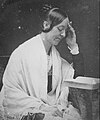
“"I accept the universe" is reported to have been a favorite utterance of our New England transcendentalist, Margaret Fuller; and when some one repeated this phrase to Thomas Carlyle, his sardonic comment is said to have been: "Gad! she'd better!" At bottom the whole concern of both morality and religion is with the manner of our acceptance of the universe. Do we accept it only in part and grudgingly, or heartily and altogether? Shall our protests against certain things in it be radical and unforgiving, or shall we think that, even with evil, there are ways of living that must lead to good? If we accept the whole, shall we do so as if stunned into submission — as Carlyle would have us — "Gad! we'd better!" — or shall we do so with enthusiastic assent? Morality pure and simple accepts the law of the whole which it finds reigning, so far as to acknowledge and obey it, but it may obey it with the heaviest and coldest heart, and never cease to feel it as a yoke. But for religion, in its strong and fully developed manifestations, the service of the highest never is felt as a yoke. Dull submission is left far behind, and a mood of welcome, which may fill any place on the scale between cheerful serenity and enthusiastic gladness, has taken its place.”
Quotes About William James
Gain deeper perspective through quotes about William James from others.
The Phenomenology of The Spirit, by Georg Wilhelm Friedrich Hegel Freely translated from the German by Josiah Royce on William James
“The "unhappy" or "contrite" consciousness (das unglückliche Bewusstsein) is a phase or stage of consciousness which is subjectively idealistic in its interpretation of reality, but which is abstract and dualistic in its view of its relations to truth. It is therefore concerned not with external nature, but with its own private ideals, and with a search for personal perfection. It is, in brief, what Professor William James might call a "variety of religious experience." This experience is here that of a lonely devotee, whose world consists of his search for inner spiritual perfection, together with the goal of this search, namely his far-off "changeless" or divine consciousness. Both the social and the more technically theological aspects of religion play no essential part in the phase of consciousness here in question. The illustrations are obviously derived from mediaeval cloister life; but this part of the setting of the phase in question is accidental. Any lonely religious experience might present essentially the same features.”
Will Durant on William James
“Certainly, as everyone has pointed out, the manner, if not the substance, of James's thinking was specifically and uniquely American. The American lust for movement and acquisition fills the sails of his style and thought, and gives them a buoyant and almost aerial motility. Huneker calls it “a philosophy for philistines,” and indeed there is something that smacks of salesmanship in it: James talks of God as of an article to be sold to a materialistically-minded consumer by every device of optimistic advertising; and he counsels us to believe as if he were recommending long-term investments, with high dividends, in which there was nothing to lose, and all the (other) world to win. It was young America's defense-reaction against European metaphysics and European Science...When some pragmatists speak of a belief having been true once because they were useful (though now disproved), they utter nonsense learnedly; it was a useful error, not a truth. Pragmatism is correct only if it is a platitude.”

Leon Edel on William James
“[of William James] a writer of vivid and lucid scientific papers, of works in psychology and philosophy, in a vigorous, muscular style that abounded in image and example and created an effect of rich spontaneous talk.”
Bernard J. Baars on William James 2 quotes
“In Principles of Psychology James suggests a way of focusing on the issue of consciousness by contrasting comparable conscious and unconscious events. James himself was hindered in carrying out this program because he believed that psychology should not deal with unconscious processes; unconscious events, he thought, were physiological.”
William Barrett on William James
“Of all the non-European philosophers, William James probably best deserves to be an Existentialist.”
Edwin Arthur Burtt on William James
“Berkeley, Hume, Kant, Fichte, Hegel, James, Bergson all are united in one earnest attempt, the attempt to reinstate man with his high spiritual claims in a place of importance in the cosmic scheme.”
Francis Crick on William James
“The American psychologist William James discussed consciousness at some length. In his monumental work The Principles of Psychology... he described five properties of what he called "thought." Every thought, he wrote, tends to be part of personal consciousness. Thought is always changing, is sensibly continuous, and appears to deal with objects independent of itself. In addition, thought focuses on some objects to the exclusion of others. In other words, it involves attention. Of attention he wrote, in an oft-quoted passage: "Everyone knows what attention is. It is the taking possession by the mind, in clear and vivid form, of one out of what seem several possible objects or trains of thought. ...It implies withdrawal from some things in order to deal effectively with others.”

The Autobiography of W.E.B. Du Bois: A Soliloquy on Viewing My Life from the Last Decade of Its First Century on William James
“I revelled in the keen analysis of William James, Josiah Royce and young George Santayana. But it was James with his pragmatism and Albert Bushnell Hart with his research method, that turned me back from the lovely but sterile land of philosophic speculation, to the social sciences as the field for gathering and interpreting that body of fact which would apply to my program for the Negro. As undergraduate, I had talked frankly with William James about teaching philosophy, my major subject. He discouraged me, not by any means because of my record in his classes. He used to give me A's and even A-plus, but as he said candidly, there is "not much chance for anyone earning a living as a philosopher."”
Tillie Olsen on William James
“Little is written about revolutionaries, let alone Jews who became atheists, "idealists," some people might term them, not "realists." I like to quote William James, who said, "The world can and has been changed by those to whom the ideal and the real are dynamically contiguous." It was their struggle to do this and make needed changes.”

Jane Roberts on William James
“Ruburt tuned in to the world view of a man known dead. He was not directly in communication with William James. He was aware, however, of the universe through William James' world view. As you might tune into a program on a television set, Ruburt tuned into the view of reality now held in the mind of William James. Because that view necessarily involved emotions, Ruburt felt some sense of emotional contact — but only with the validity of the emotions. Each person has such a world view, whether living or dead in your terms, and that "living picture" exists despite tome or space. It can be perceived by others.”
Muriel Rukeyser on William James
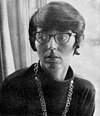
“The dogma is one of repetition; a ritual nonsense is uttered, in a loud voice; and suitable tests for the conforming of other scientists and the rest of the citizenry are performed by these, who-working scientists, educators, politicians, critics of all forms-now will swear they are behaving scientifically. William James met one such, in the person of a lady from Boston. As F. O. Matthiessen tells it, James was presenting one of his lucid, cogent arguments, and paused to say ironically, "That is like asking 'What holds the world up?"" The lady from Boston, impatient with all the talk, answered with clipped decision, "A rock." James wanted to take this farther-"What holds the rock up?" he asked. The lady said, "Another rock." "And that rock," James pursued, "what holds it up?" The lady stiffened. "Young man," she said in a voice that a dog-hater might use on an off-bounds Pekinese, "let me make myself clear: it's rocks, all the way!"”
George Santayana on William James
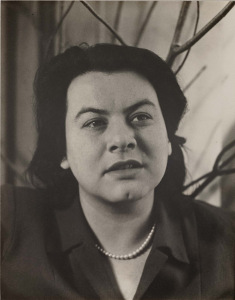
“Philosophy to him was rather like a maze in which he happened to find himself wandering, and what he was looking for was the way out.”
Misattributed Quotes
Quotes mistakenly credited to William James
“Man alone, of all the creatures on earth, can change his own patterns. Man alone is the architect of his destiny. The greatest revolution in our generation is the discovery that human beings, by changing the inner attitudes of their minds, can change the outer aspects of their lives ... It is too bad that most people will not accept this tremendous discovery and begin living it.”
“Many people think they are thinking when they are merely rearranging their prejudices.”
“The most significant characteristic of modern civilization is the sacrifice of the future for the present, and all the power of science has been prostituted to this purpose.”
About William James
William James (11 January 1842 – 26 August 1910) was a pioneering American psychologist and philosopher. He developed the philosophical perspective known as radical empiricism, and wrote influential books on the science of psychology, the psychology of religious experience and mysticism, and the philosophy of pragmatism.