Link Copied!
Virginia Woolf Quotes (1882-1941)
Writer
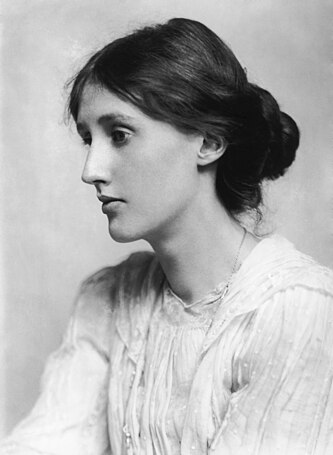










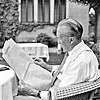








About Virginia Woolf
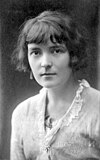
Virginia Woolf (25 January 1882 – 28 March 1941), born Adeline Virginia Stephen, was a British writer who is considered to be one of the foremost modernist/feminist literary figures of the twentieth century.
Best Virginia Woolf Quotes
Shortest
Earliest
Explore our curated collection of the most famous and impactful Virginia Woolf quotes.
“Ch. 2,”
- Virginia Woolf, A Room of One's Own
“Think we must.”
- Virginia Woolf, Three Guineas


“Happiness is to have a little string onto which things will attach themselves.”
- Virginia Woolf, A Moment's Liberty

“Society is the most powerful conception in the world and society has no existence whatsoever.”
- Virginia Woolf, Orlando
“Happily, at forty-six I still feel as experimental and on the verge of getting at the truth as ever.”
- Virginia Woolf, A Moment's Liberty
“Theirs, too, is the word-coining genius, as if thought plunged into a sea of words and came up dripping.”
- Virginia Woolf, The Common Reader

“Among the tortures and devastations of life is this then — our friends are not able to finish their stories.”
- Virginia Woolf, The Waves
“Words rose above the intolerably laden dumb oxen plodding through the mud. Words without meaning - wonderful words.”
- Virginia Woolf, Between the Acts

“Literature is strewn with the wreckage of men who have minded beyond reason the opinions of others.”
- Virginia Woolf, A Room of One's Own

Virginia Woolf Quotes by Topic
Find exactly what you are looking for by browsing this categorized list of Virginia Woolf quotes by topic.
Virginia Woolf on Misogyny 3 quotes
“The history of men's opposition to women's emancipation is more interesting perhaps than the story of that emancipation itself.”
- Virginia Woolf, W)
Virginia Woolf on Clothing 2 quotes
“Thus, there is much to support the view that it is clothes that wear us and not we them.”

Virginia Woolf on Sexism 2 quotes
“The history of men's opposition to women's emancipation is more interesting perhaps than the story of that emancipation itself.”
Virginia Woolf on Fiction 2 quotes
“Novels so often provide an anodyne and not an antidote, glide one into torpid slumbers instead of rousing one with a burning brand.”
Virginia Woolf on Orlando: A Biography 2 quotes
Virginia Woolf's journal entry reveals the genesis of *Orlando*, inspired by Vita Sackville-West, outlining her initial vision for a biographical novel spanning centuries and challenging gender norms.
“Instantly the usual exciting devices enter my mind: a biography beginning in the year 1500 & continuing to the present day, called Orlando: Vita; only with a change about from one sex to the other.”
Virginia Woolf on Soul
Virginia Woolf on Soil
Virginia Woolf on Flowers
Virginia Woolf on Night
“Melancholy were the sounds on a winter's night.”

Virginia Woolf on Translation
Virginia Woolf on Writing
“I think writing, my writing, is a species of mediumship. I become the person.”

What Virginia Woolf Said About Others
Discover personal opinions Virginia Woolf shared regarding contemporaries.
Virginia Woolf on The Faerie Queene 3 quotes
View all 3 quotes on The Faerie Queene →Virginia Woolf on Jane Austen 3 quotes
“Charlotte Brontë, with all her splendid gift for prose, stumbled and fell with that clumsy weapon in her hands. George Eliot committed atrocities with it that beggar description. Jane Austen looked at it and laughed at it and devised a perfectly natural, shapely sentence proper for her own use and never departed from it. Thus, with less genius for writing than Charlotte Brontë, she got infinitely more said.”
Virginia Woolf on E. M. Forster 2 quotes
“The middle age of buggers is not to be contemplated without horror.”
Virginia Woolf on Women 2 quotes
“A woman must have money and a room of her own if she is to write fiction.”

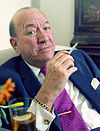
Virginia Woolf on Noël Coward 2 quotes
“Now I'm off to Sibyl to meet Noel Coward, with whom I am slightly in love.”
Virginia Woolf on Lewis Carroll 2 quotes
“For some reason, we know not what, his childhood was sharply severed. It lodged in him whole and entire. He could not disperse it.”

Virginia Woolf on Vita Sackville-West 2 quotes
In her journal, Virginia Woolf excitedly envisioned *Orlando* as a biography of Vita Sackville-West, playfully imagining a protagonist who shifts between genders across centuries.
“Instantly the usual exciting devices enter my mind: a biography beginning in the year 1500 & continuing to the present day, called Orlando: Vita; only with a change about from one sex to the other.”
Virginia Woolf on Max Beerbohm 2 quotes
“But what did Mr. Beerbohm give to the essay and what did he take from it? That is a much more complicated question, for here we have an essayist who has concentrated on the work and is without doubt the prince of his profession.”
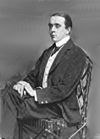
Virginia Woolf on Anthony Trollope 2 quotes
“Certainly, the Barchester novels tell the truth, and the English truth, at first sight, is almost as plain of feature as the French truth, though with a difference. Mr. Slope is a hypocrite, with a "pawing, greasy way with him". Mrs. Proudie is a domineering bully. The Archdeacon is well-meaning but coarse-grained and thick-cut. Thanks to the vigour of the author, the world of which these are the most prominent inhabitants goes through its daily rigmarole of feeding and begetting children and worshipping with a thoroughness, a gusto, which leaves us no loophole of escape. We believe in Barchester as we believe in the reality of our own weekly bills.”
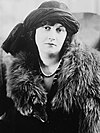
Virginia Woolf on Elizabeth Bibesco
“She is pasty and podgy, with the eyes of a currant bun, suddenly protruding with animation.”
Virginia Woolf on W. Somerset Maugham
Virginia Woolf on Percy Bysshe Shelley
“Shelley, both as son and as husband, fought for reason and freedom in private life, and his experiments, disastrous as they were in many ways, have helped us to greater sincerity and happiness in our own conflicts.”

Quotes About Virginia Woolf
Gain deeper perspective through quotes about Virginia Woolf from others.
Bettina Aptheker on Virginia Woolf
“Of the modern writers, Virginia Woolf is one who consistently attempted to place women at the center of her thinking. But she did not do it with the bold and inclusive sweep of Sappho. She did it awkwardly and with apology, with a tone of self-deprecation. This is apparent, for example, in A Room of One's Own, in its style and tone and in its apparent random "female" ambience of thought hither and yon, an innovation to mask the real power of her intellect.”

Margaret Atwood on Virginia Woolf
“Writing is also a profession, and, at its best, an honourable one. It has been made honourable by those who have already been members of it. Whether you like it or not, every time you set pen to paper you’re staring at the same blank space that confronted Milton, Melville, Emily Bronte, Dostoevsky and George Eliot, George Orwell and William Faulkner and Virginia Woolf and William Carlos Williams, not to mention the latest hero, Gabriel Garcia Marquez.”

Beth Brant on Virginia Woolf
“I am tired of hearing Virginia Woolf and Emily Dickinson held up as the matriarchs of feminist and/or women's literature. Woolf was a racist, Dickinson was a woman of privilege who never left her house, nor had to deal with issues beyond which white dress to wear on a given day. Race and class have yet to be addressed, or if they are discussed, it is on their terms not ours”
Rita Mae Brown on Virginia Woolf
“I now think tragedy is not foul deeds done to a person (usually noble in some manner) but rather that tragedy is irresolvable conflict. Both sides/ideas are right. Plot involves fragmentary reality, and it might involve composite reality. Fragmentary reality is the view of the individual. Composite reality is the community or state view. Fragmentary reality is always set against composite reality. Virginia Woolf did this by creating fragmentary monologues and for a while this was all the rage in literature. She was a genius. In the hands of the merely talented it came off like gibberish.”
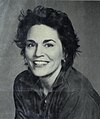
Ana Castillo "A Countryless Woman" on Virginia Woolf
“I cannot say I am a citizen of the world as Virginia Woolf, speaking as an Anglo woman born to economic means, declared herself; nor can I make the same claim to U.S. citizenship as Adrienne Rich does despite her universal feeling for humanity. As a mestiza born to the lower strata, I am treated at best, as a second class citizen, at worst, as a non-entity. I am commonly perceived as a foreigner everywhere I go, including in the United States and in Mexico. This international perception is based on my color and features. I am neither black nor white. I am not light skinned and cannot be mistaken for "white"; because my hair is so straight I cannot be mistaken for "black." And by U.S..standards and according to some North American Native Americans, I cannot make official claims to being india.”
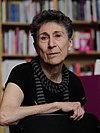
Silvia Federici on Virginia Woolf
“Not surprisingly, a valorization of the body has been present in nearly all the literature of "second wave" 20th-century feminism, as it has characterized the literature produced by the anti-colonial revolt and by the descendants of the enslaved Africans. On this ground, across great geographic and cultural boundaries, Virginia Woolf's A Room of One's Own (1929) anticipates Aimé Cesaire's Return to the Native Land (1938), when she mockingly scolds her female audience and, behind it, a broader female world, for not having managed to produce anything but children.”
Rosario Ferré interview on Virginia Woolf
Martin Gerhard Giesbrecht on Virginia Woolf
“[S]ome economic awareness may even be a prerequisite to the full appreciation of [some] books, plays, and operas. Virginia Woolf's Orlando must be quite bewildering to the economically ignorant.”
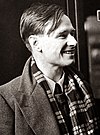
Christopher Isherwood on Virginia Woolf
Isherwood's description of a female author's intimate writing style, accessible like a personal letter, underscores the power of individual connection in literature.
“Her genius was intensely feminine and personal—private almost. To read one of her books was (if you liked it) to receive a letter from her, addressed specially to you.”
Selma James on Virginia Woolf
“...on race, as on so much else, Virginia was not a typical white European feminist, but stood against much of what that sector of women has come to stand for. Virginia Woolf wanted the military budget for women. She made the case for middle-class women. She said it should come to women as wages for the housework we did; that that was a better way to spend the money. I can't see an argument against it. In Three Guineas, the only extensive nonfiction book she ever wrote, she made this central. But the case she makes for wages for housework, spelled out most brilliantly in this extraordinary book, seems not to interest - may even be censored out by - her admirers...I think Virginia can be tremendously useful to us, to all of us, women of color, Third World women, white women, and men on our side, because she gives us the strength to demand more of what we're entitled to. And the strength also to refuse to replicate or allow other women to replicate what we have been attacking men for doing and being.”
Erica Jong "Blood on Virginia Woolf
Erica Jong's essay dissects the unique challenges female writers face, arguing that overcoming internalized anger and masochism is crucial for authentic creation, yet must be followed by nurture.
“Nothing is more destructive of the spirit and ultimately of creativity than false meekness, anger that does not know its own name. And nothing is more freeing for a woman (or for a woman writer) than giving up the pleasures of masochism and beginning to fight. But we must always remember that fighting is only a first step. As Virginia Woolf points out in A Room of One's Own, many women's books have been destroyed by the rage and bitterness at their own centers. Rage opens the doors into the spirit, but then the spirit must be nurtureed.”
Alix Kates Shulman on Virginia Woolf
“How begin to describe the permission Woolf’s feminism and artistry bestowed on the hopeful beginner? For me, her work, which never panders, was a reliable antidote to literary men’s scorn or disregard. Her novels demonstrated that despised domesticity, including dinner parties and shopping, could be transformed into unrivaled art.”
Misattributed Quotes
Quotes mistakenly credited to Virginia Woolf
About Virginia Woolf
Virginia Woolf (25 January 1882 – 28 March 1941), born Adeline Virginia Stephen, was a British writer who is considered to be one of the foremost modernist/feminist literary figures of the twentieth century.