Link Copied!
Victoria of the United Kingdom Quotes (1819-1901)
King, Queen
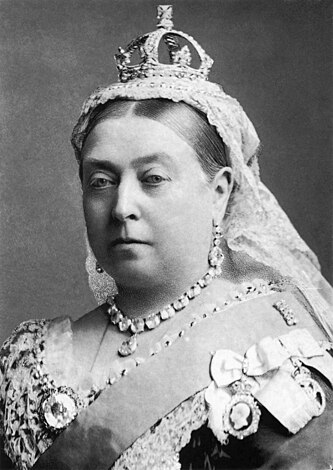
About Victoria of the United Kingdom
Victoria of the United Kingdom (Alexandrina Victoria Wettin, née Hanover) (24 May 1819 – 22 January 1901) was Queen of the United Kingdom from 20 June 1837, and Empress of India from 1876 until her death. Her reign lasted more than sixty-three years, second only to that of Elizabeth II. The reign of Victoria was marked by a great expansion of the British Empire and is called the Victorian Era. Victoria was the last monarch of the House of Hanover; her successor belonged to the House of Saxe-Coburg-Gotha.
Best Victoria of the United Kingdom Quotes
Shortest
Earliest
Explore our curated collection of the most famous and impactful Victoria of the United Kingdom quotes.
“We are not interested in the possibilities of defeat; they do not exist.”
“It seems to me a defect in our much famed Constitution, to have to part with an admirable Govt like Ld Salisbury's for no question of any importance or any particular reason, merely on account of the number of votes.”

“I am too horrified for words at this monstrous horrible sentence against this poor martyr Dreyfus. If only all Europe would express its horror and indignation! I trust there will be a severe retribution.”

“My dearest Uncle,- I have the greatest pleasure in announcing to you a piece of news which I know will give you as much satisfaction and relief as it does to us, and will do to the whole of the world. Lord Palmerston is no longer Foreign Secretary—and Lord Granville has already named his successor!”

“Since it has pleased Providence to place me in this station, I shall do my utmost to fulfil my duty towards my country; I am very young and perhaps in many, though not in all things, inexperienced, but I am sure that very few have more real good will and more real desire to do what is fit and right than I have.”
“I sympathise most deeply with your expressions on the horrors of war, than which no one can feel more strongly than I do; and earnestly hope that it may be averted. But I cannot abandon my own subjects who have appealed to me for protection. If President Kruger is reasonable, there will be no war, but the issue is in his hands.”
“All marriage is such a lottery -- the happiness is always an exchange -- though it may be a very happy one -- still the poor woman is bodily and morally the husband's slave. That always sticks in my throat. When I think of a merry, happy, and free young girl -- and look at the ailing aching state a young wife is generally doomed to -- which you can't deny is the penalty of marriage.”

“I am most anxious to enlist everyone who can speak or write to join in checking this mad, wicked folly of "Women's Rights," with all its attendant horrors, on which her poor feeble sex is bent, forgetting every sense of womanly feelings and propriety. Feminists ought to get a good whipping. Were women to "unsex" themselves by claiming equality with men, they would become the most hateful, heathen, and disgusting of beings and would surely perish without male protection.”

“The names of the little one will be, Philippe Eugène Ferdinand Marie Clement Baudoin (baldwin, a name of the old counts of Flanders) Leopold George. My aunt who is his godmother wished he should be called Philippe, honour of his grandfather, and as Philippe le bon, who was one of the most powerful princes of this country. I gave him the name with pleasure. Eugene is her own name, Ferdinand that of Chartres, Marie is the name of the queen and of princess Marie, Clement of princess Clémentine, Leopold your aunt wished and George honour of St. George of England and of George the IV.”
“Queen Victoria on promotion of Lionel Rothschild to peerage: "It is not only the feeling, of which she cannot divest herself, against making a person of the Jewish religion, a Peer; but she cannot think that one who owes his great wealth to contracts with foreign Governments for Loans, or to successful speculation on the Stock Exchange, can fairly claim a British Peerage. However high Sir L. Rothschild may stand personally in public estimation, this seems to her not less a species of gambling because it is on a gigantic scale and far removed from that legitimate trading which she delights to honour, in which men have raised themselves by patient industry and unswerving probity to positions of wealth and influence."”

Victoria of the United Kingdom Quotes by Topic
Find exactly what you are looking for by browsing this categorized list of Victoria of the United Kingdom quotes by topic.
Victoria of the United Kingdom on Peerage
“It is not only the feeling, of which she cannot divest herself, against making a person of the Jewish religion, a Peer; but she cannot think that one who owes his great wealth to contracts with foreign Governments for Loans, or to successful speculation on the Stock Exchange, can fairly claim a British Peerage. However high Sir L. Rothschild may stand personally in public estimation, this seems to her not less a species of gambling because it is on a gigantic scale and far removed from that legitimate trading which she delights to honour, in which men have raised themselves by patient industry and unswerving probity to positions of wealth and influence.”
Quotes About Victoria of the United Kingdom
Gain deeper perspective through quotes about Victoria of the United Kingdom from others.
Arthur Balfour on Victoria of the United Kingdom
“Those kindly graces, those admirable qualities, have endeared her to every class in the community, and are known to all. Perhaps less known was the life of continuous labour which her position as Queen threw upon her. Short as was the interval between the last trembling signature affixed to a public document and the final and perfect rest, it was yet long enough to clog and hamper the wheels of administration; and when I saw the accumulating mass of untouched documents which awaited the attention of the Sovereign, I marvelled at the unostentatious patience which for sixty-three years, through sorrow, through suffering, in moments of weariness, in moments of despondency, had enabled her to carry on without break or pause her share in the government of this great Empire. For her there was no holiday, to her there was no intermission of toil. Domestic sorrow, domestic sickness, made no difference in her labours, and they were continued from the hour at which she became our Sovereign to within a few days—I had almost said a few hours—of her death. It is easy to chronicle the growth of Empire, the course of discovery, the progress of trade, the triumphs of war, all the events that make history interesting or exciting; but who is there that will dare to weigh in the balance the effect which such an example, continued over sixty-three years, has produced on the highest life of her people?”
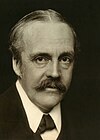
John Bright on Victoria of the United Kingdom
“He...made observations with regard to the Queen, which, in my opinion, no meeting of people in this country, and certainly no meeting of Reformers, ought to have listened to with approbation. (Cheers.) Let it be remembered that there has been no occasion on which any Ministry has proposed an improved representation of the people when the Queen has not given her cordial, unhesitating, and, I believe, hearty assent. (Cheers.) ... But Mr. Ayrton referred further to a supposed absorption of the sympathies of the Queen with her late husband to the exclusion of sympathy for and with the people. (Hear, hear.) I am not accustomed to stand up in defence of those who are possessors of crowns. (Hear, hear.) But I could not sit here and hear that observation without a sensation of wonder and of pain. (Loud cheers.) I think there has been by many persons a great injustice done to the Queen in reference to her desolate and widowed position. (Cheers.) And I venture to say this, that a woman, be she the Queen of a great realm or be she the wife of one of your labouring men, who can keep alive in her heart a great sorrow for the lost object of her life and affection, is not at all likely to be wanting in a great and generous sympathy with you. (Loud and prolonged cheers.)”

George W. Bush on Victoria of the United Kingdom
“The centerpiece of the Oval Office was the resolute desk. I had chosen the desk because of its historical significance. Its story began in 1852, when Queen Victoria dispatched the HMS Resolute to search for the British explorer John Franklin, who had been lost looking for the Northwest Passage. The Resolute was trapped in ice near the Arctic and abandoned by its crew. In 1855 it was discovered by an American whaling ship, which sailed the Resolute back to Connecticut. The vessel was purchased by the U.S. government, refitted, and returned to England as a goodwill gift to the queen. When the Resolute was decommissioned two decades later, Her Majesty had several ornate desks made out of its timbers, one of which she gave to President Rutherford B. Hayes.”

Winston Churchill on Victoria of the United Kingdom
“The colonisation of Australia and New Zealand, and the acquisition of South Africa in the decline of Holland, created the new and wider British Empire still based upon sea-power and comprising a fifth of the human race, over which Queen Victoria, in the longest reign of British history, presided. In this period moral issues arising from Christian ethics became prominent. The slave trade, from which Britain had so shamelessly profited in the past, was suppressed by the Royal Navy. By a terrible internal struggle, at the cost of nearly a million lives, slavery was extirpated from the United States; above all, the Union was preserved.”

John Fowles on Victoria of the United Kingdom

William Ewart Gladstone on Victoria of the United Kingdom
“We are servants of the Crown as well as servants of the people... I am not ashamed to say that in my old age I rejoice in any opportunity which enables me to testify that, whatever may be thought of my opinions, whatever may be thought of my proposals in general politics, I do not forget the service which I have borne for so many years to the illustrious representative of the British Monarchy.”

Letitia Elizabeth Landon on Victoria of the United Kingdom
“The warrior, sage, and poet fill their story With all the various honours of mankind ; — May thy young reign achieve yet truer glory, The pure, enlightened triumphs of the mind ! Too much in this wide world yet needs redressing ; But with thy reign Hope’s loveliest promise came. May thy sweet youth be sheltered by the blessing A nation breathes upon Victoria’s name!”
Sidney Lee on Victoria of the United Kingdom 2 quotes
“No British sovereign was more sincerely mourned. As the news of the queen's death spread, impassioned expressions of grief came from every part of the United Kingdom, of the British empire, and of the world. Native chieftains in India, in Africa, in New Zealand, vied with their British-born fellow-subjects in the avowals of a personal sense of loss. The demonstration of her people's sorrow testified to the spirit of loyalty to her person and position which had been evoked by her length of life and reign, her personal sorrows, and her recent manifestations of sympathy with her subjects' welfare.”

Florence Becker Lennon on Victoria of the United Kingdom
Baroness Orczy on Victoria of the United Kingdom
“Another great—far greater—event now occupied the mind of the "man in the street": the illness and subsequent death of Queen Victoria. The "man in the street" certainly took a great interest in that event which filled us and our English friends with sorrow. It was such a great passing away of the most outstanding personality of the past hundred years. The morning that the news appeared in the Paris Daily Mail we were greeted by all our friendly tradespeople with subdued voices and a certain awed expression of face: "Vous savez?" they all said, even before they answered to our "bonjour" "Votre idole est morte". Your idol! That is how they talked of Queen Victoria. She was to their minds (more insular than those of our own people) something quite apart. Not altogether real. A fetish that we, the hated English, almost worshipped, and to their credit be it said that with her death, all scurrilous cartoons and postcards disappeared from the kiosks, nor did any derogatory or disrespectful article appear in the Press.”
Lytton Strachey on Victoria of the United Kingdom 3 quotes
“Victoria was the Queen of England, the Empress of India, the quintessential pivot round which the whole magnificent machine was revolving—but how much more besides! For one thing, she was of a great age—an almost indispensable qualification for popularity in England. She had given proof of one of the most admired characteristics of the race—persistent vitality. She had reigned for sixty years, and she was not out. And then, she was a character. The outlines of her nature were firmly drawn, and, even through the mists which envelop royalty, clearly visible. In the popular imagination her familiar figure filled, with satisfying ease, a distinct and memorable place. It was, besides, the kind of figure which naturally called forth the admiring sympathy of the great majority of the nation. Goodness they prized above every other human quality; and Victoria, who had said that she would be good at the age of twelve, had kept her word. Duty, conscience, morality—yes! in the light of those high beacons the Queen had always lived. She had passed her days in work and not in pleasure—in public responsibilities and family cares. The standard of solid virtue which had been set up so long ago amid the domestic happiness of Osborne had never been lowered for an instant.”

G. M. Trevelyan on Victoria of the United Kingdom 2 quotes
“Queen Victoria had put an end to the Republican movement in Great Britain and in the Dominions, not by what she had done, but by what she had been, and by what she had refrained from doing. She had won back public respect for the monarchy in her person. And she had disarmed political hostility to the throne by effacing its occupant as a governing power. It was her habit to express to her advisers, often with unnecessary emphasis, her views on all public questions, but she had not insisted on having her way. She had been content with a purely consultative function in relation to Ministers who were in effect chosen for her by Parliament, sometimes much against her own ideas of their fitness.”
About Victoria of the United Kingdom
Victoria of the United Kingdom (Alexandrina Victoria Wettin, née Hanover) (24 May 1819 – 22 January 1901) was Queen of the United Kingdom from 20 June 1837, and Empress of India from 1876 until her death. Her reign lasted more than sixty-three years, second only to that of Elizabeth II. The reign of Victoria was marked by a great expansion of the British Empire and is called the Victorian Era. Victoria was the last monarch of the House of Hanover; her successor belonged to the House of Saxe-Coburg-Gotha.