Link Copied!
Thomas Wolfe Quotes (1900-1938)
Poet, Novelist
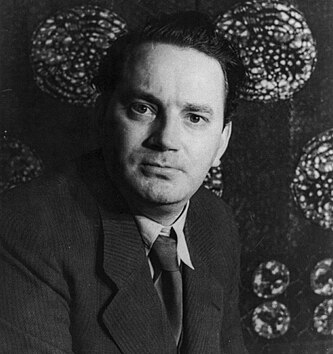


About Thomas Wolfe
Thomas Clayton Wolfe (October 3, 1900 – September 15, 1938) was a major American novelist of the early twentieth century. Wolfe wrote four lengthy novels, plus many short stories, dramatic works and novellas. He is known for mixing highly original, poetic, rhapsodic, and impressionistic prose with autobiographical writing.
Best Thomas Wolfe Quotes
Shortest
Earliest
Explore our curated collection of the most famous and impactful Thomas Wolfe quotes.
“The surest cure for vanity is loneliness.”



“Go, seeker, if you will, throughout the land and you will find us burning in the night.”
“The old church, with its sharp steeple, rotted slowly, decently, prosperously, like a good man's wife.”

“In New York the opportunities for learning, and acquiring a culture that shall not come out of the ruins, but belong to life, are probably greater than anywhere else in the world.”

“The whole conviction of my life now rests upon the belief that loneliness, far from being a rare and curious phenomenon, peculiar to myself and to a few other solitary men, is the central and inevitable fact of human existence.”
“And it was this that awed him — the weird combination of fixity and change, the terrible moment of immobility stamped with eternity in which, passing life at great speed, both the observer and the observed seem frozen in time.”
“To a future world,— inhabited, no doubt, by a less acute and understanding race of men, — all this may seem a trifle strange. If so, that will be because the world of the future will have forgotten what it was like to live in 1929.”

“To believe that new monsters will arise as vicious as the old, to believe that the great Pandora's Box of human frailty, once opened, will never show a diminution of its ugly swarm, is to help, by just that much, to make it so forever.”
“Through Chance, we are each a ghost to all the others, and our only reality; through Chance, the huge hinge of the world, and a grain of dust; the stone that starts an avalanche, the pebble whose concentric circles widen across the seas.”

“By Christmas, with fair luck, he might be eligible for service in khaki: by Spring, if God was good, all the proud privileges of trench-lice, mustard gas, spattered brains, punctured lungs, ripped guts, asphyxiation, mud and gangrene, might be his.”
“Nacreous pearl light swam faintly about the hem of the lilac darkness; the edges of light and darkness were stitched upon the hills. Morning moved like a pearl-gray tide across the fields and up the hillflanks, flowing rapidly down into the soluble dark.”

“And the eternal paradox of it is that if a man is to know the triumphant labor of creation, he must for long periods resign himself to loneliness, and suffer loneliness to rob him of the health, the confidence, the belief and joy which are essential to creative work.”
“Who owns the earth? Did we want the earth that we should wander on it? Did we need the earth that we were never still upon it? Whoever needs the earth shall have the earth: he shall be still upon it, he shall rest within a little place, he shall dwell in one small room for ever.”

“So, then, to every man his chance—to every man, regardless of his birth, his shining, golden opportunity—to every man the right to live, to work, to be himself, and to become whatever thing his manhood and his vision can combine to make him — this, seeker, is the promise of America.”

“They belonged to that futile, desolate, and forsaken horde who felt that all will be well with their lives, that all the power they lack themselves will be supplied, and all the anguish, fury, and unrest, the confusion and the dark damnation of man's soul can magically be healed if only they eat bran for breakfast.”

“You can't go back home to your family, back home to your childhood, … back home to a young man's dreams of glory and of fame … back home to places in the country, back home to the old forms and systems of things which once seemed everlasting but which are changing all the time -- back home to the escapes of Time and Memory.”

“And Christ himself, who preached the life of love, was yet as lonely as any man that ever lived. Yet I could not say that he was mistaken because he preached the life of love and fellowship, and lived and died in loneliness; nor would I dare assert his way was wrong because a billion men have since professed his way and never followed it.”

“What Christ is saying always, what he never swerves from saying, what he says a thousand times and in a thousand different ways, but always with a central unity of belief, is this: "I am my Father’s son, and you are my brothers." And the unity that binds us all together, that makes this earth a family, and all men brothers and the sons of God, is love.”
“Perhaps this is our strange and haunting paradox in America--that we are fixed and certain only when we are in movement. At any rate, this is how it seemed to young George Webber, who was never so assured of his purpose as when he was going somewhere on a train. And he never had the sense of home so much as when he felt that he was going there. It was only when he got there that his homelessness began.”

Thomas Wolfe Quotes by Topic
Find exactly what you are looking for by browsing this categorized list of Thomas Wolfe quotes by topic.
Thomas Wolfe on New York City 3 quotes
“New York blazes like a magnificent jewel in its fit setting of sea, and earth, and stars.”

Thomas Wolfe on Home
“You can't go back home to your family, back home to your childhood, … back home to a young man's dreams of glory and of fame … back home to places in the country, back home to the old forms and systems of things which once seemed everlasting but which are changing all the time-back home to the escapes of Time and Memory.”

About Thomas Wolfe
Thomas Clayton Wolfe (October 3, 1900 – September 15, 1938) was a major American novelist of the early twentieth century. Wolfe wrote four lengthy novels, plus many short stories, dramatic works and novellas. He is known for mixing highly original, poetic, rhapsodic, and impressionistic prose with autobiographical writing.