Link Copied!
Thomas De Quincey Quotes (1785-1859)
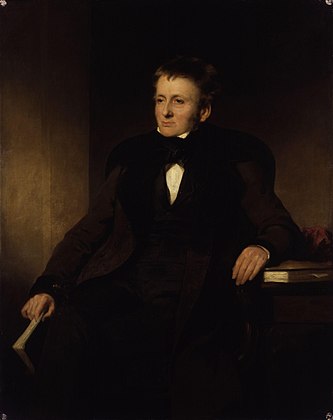




About Thomas De Quincey
Thomas Penson De Quincey (August 15, 1785 – December 8, 1859) was an English essayist and intellectual.
Best Thomas De Quincey Quotes
Shortest
Earliest
Explore our curated collection of the most famous and impactful Thomas De Quincey quotes.
“The burden of the incommunicable.”

“Dyspepsy is the ruin of most things: empires, expeditions, and everything else.”
“Everlasting farewells! and again, and yet again reverberated—everlasting farewells!”
“In many walks of life, a conscience is a more expensive encumbrance than a wife or a carriage.”
“Tea, though ridiculed by those who are naturally coarse in their nervous sensibilities … will always be the favourite beverage of the intellectual.”

“So, then, Oxford Street, stonyhearted stepmother, thou that listenest to the sighs of orphans, and drinkest the tears of children, at length I was dismissed from thee.”
“Cows are amongst the gentlest of breathing creatures; none show more passionate tenderness to their young when deprived of them; and, in short, I am not ashamed to profess a deep love for these quiet creatures.”
“For if once a man indulges himself in murder, very soon he comes to think little of robbing; and from robbing he comes next to drinking and Sabbath-breaking, and from that to incivility and procrastination. Once begin [sic] upon this downward path, you never know where you are to stop. Many a man has dated his ruin from some murder or other that perhaps he thought little of at the time.”
“Flowers … that are so pathetic in their beauty, frail as the clouds, and in their colouring as gorgeous as the heavens, had through thousands of years been the heritage of children—honoured as the jewellery of God only by them—when suddenly the voice of Christianity, counter-signing the voice of infancy, raised them to a grandeur transcending the Hebrew throne, although founded by God himself, and pronounced Solomon in all his glory not to be arrayed like one of these.”

Thomas De Quincey Quotes by Topic
Find exactly what you are looking for by browsing this categorized list of Thomas De Quincey quotes by topic.
Thomas De Quincey on Imagination
Thomas De Quincey on Memory
“It is notorious that the memory strengthens as you lay burdens upon it, and becomes trustworthy as you trust it.”
Thomas De Quincey on Sunday
Thomas De Quincey on Solitude
Thomas De Quincey on Failure
“Allow me to offer my congratulations on the truly admirable skill you have shown in keeping clear of the mark. Not to have hit once in so many trials, argues the most splendid talents for missing.”

Thomas De Quincey on Procrastination
“If once a man indulges himself in murder, very soon he comes to think little of robbing; and from robbing he comes next to drinking and Sabbath-breaking, and from that to incivility and procrastination.”

Thomas De Quincey on Gracefulness
“The only true retirement is that of the heart; the only true leisure is the repose of the passions. To such persons it makes little difference whether they are young or old; and they die as they have lived, with graceful resignation.”

Thomas De Quincey on Scholarship
“A great scholar…is…not one who depends simply on an infinite memory, but also on an infinite and electrical power of combination; bringing together from the four winds, like the angel of the resurrection, what else were dust from dead men's bones, into the unity of breathing life.”

Thomas De Quincey on Soup
“Taking soup gracefully, under the difficulties opposed to it by a dinner dress at that time fashionable, was reared into an art about forty-five years ago by a Frenchman, who lectured upon it to ladies in London; and the most brilliant duchess of that day, viz., the Duchess of Devonshire, was amongst his best pupils.”

Thomas De Quincey on Literature
“There is first the literature of knowledge, and secondly, the literature of power. The function of the first is—to teach; the function of the second is—to move, the first is a rudder, the second an oar or a sail. The first speaks to the mere discursive understanding; the second speaks ultimately, it may happen, to the higher understanding or reason, but always through affections of pleasure and sympathy.”

What Thomas De Quincey Said About Others
Discover personal opinions Thomas De Quincey shared regarding contemporaries.
Thomas De Quincey on Girls
“The laughter of girls is, and ever was, among the delightful sounds of earth.”

Thomas De Quincey on Dorothy Wordsworth
“Her eyes were not soft, as Mrs. Wordsworth's, nor were they fierce or bold; but they were wild and startling, and hurried in their motion. Her manner was warm and even ardent; her sensibility seemed constitutionally deep; and some subtle fire of impassioned intellect apparently burned within her.”
Thomas De Quincey on John Donne
“I have heard it said, by the way, that Donne's intolerable defect of ear grew out of his own baptismal name, when harnessed to his own surname -- John Donne. No man, it was said, who had listened to this hideous jingle from childish years, could fail to have his genius for discord, and the abominable in sound, improved to the utmost.”

Thomas De Quincey on Robert Fludd
“At the beginning of the 17th century many learned heads in England were occupied with Theosophy, Cabbalism, and Alchemy: amongst the proofs of this... may be cited the works of John Pordage, of Norbert, of Thomas and Samuel Norton, but above all (in reference to our present inquiry) of Robert Fludd. Fludd it was, or whosoever was the author of the Summum Bonum 1629, that must be considered as the immediate father of Freemasonry, as Andrea was its remote father. What was the particular occasion of his own first acquaintance with Rosicrucianism, is not recorded: all the books of Alchemy or other occult knowledge, published in Germany, were at that time immediately carried over to England — provided they were written in Latin; and, if written in German, were soon translated for the benefit of English students. He may therefore have gained his knowledge immediately from the three Rosicrucian books. But it is more probable that he acquired his knowledge on this head from his friend Maier (mentioned in the preceding chapter) who was intimate with Fludd during his stay in England, and corresponded with him after he left it. At all events he must have been initiated into Rosicrucianism at an early period, having published his apology for it in the year 1617.”

Quotes About Thomas De Quincey
Gain deeper perspective through quotes about Thomas De Quincey from others.
Jane Addams on Thomas De Quincey
“At one time five of us tried to understand De Quincey's marvelous "Dreams" more sympathetically, by drugging ourselves with opium. We solemnly consumed small white powders at intervals during an entire long holiday, but no mental reorientation took place, and the suspense and excitement did not even permit us to grow sleepy. About four o'clock on the weird afternoon, the young teacher whom we had been obliged to take into our confidence, grew alarmed over the whole performance, took away our De Quincey and all the remaining powders, administered an emetic to each of the five aspirants for sympathetic under- standing of all human experience, and sent us to our separate rooms with a stern command to appear at family worship after supper "whether we were able to or not."”

About Thomas De Quincey
Thomas Penson De Quincey (August 15, 1785 – December 8, 1859) was an English essayist and intellectual.