Link Copied!
Thales Quotes (-624--546)
Philosopher, Singer
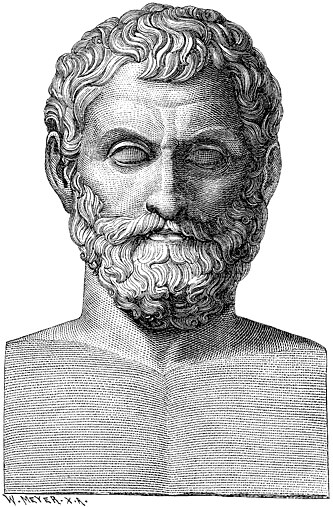



About Thales
Thales (Θαλῆς; c. 624 BC – c. 546 BC) was a philosopher born in Tyre, South of Lebanon and one of the Seven Sages of Greece. He has been called the "father of science."Singer, Charles (2013) A Short History of Science to the Nineteenth Century
Best Thales Quotes
Shortest
Earliest
Explore our curated collection of the most famous and impactful Thales quotes.
“Water is the first principle of everything.”

“Γνῶθι σαυτόν
• Know thyself.
• Variant:”
• Know thyself.
• Variant:”

“Σοφώτατον χρόνος· ἀνευρίσκει γὰρ πάντα.
• Time is the wisest of all things that are; for it brings everything to light.”
• Time is the wisest of all things that are; for it brings everything to light.”


Thales Quotes by Topic
Find exactly what you are looking for by browsing this categorized list of Thales quotes by topic.
Thales on Water
“Water is the first principle of everything.”
Thales on Necessity
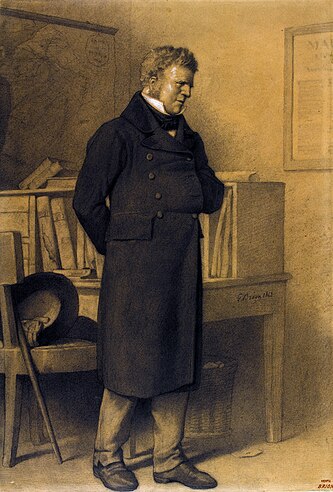
Thales on Les Misérables
“Thalès resta quatre ans immobile. Il fonda la philosophie.”
Thales on Beauty
“Do not beautify your appearance, but be beautiful in your way of life.”
Quotes About Thales
Gain deeper perspective through quotes about Thales from others.
Francis Bacon on Thales
“Thales asserted Water to be the principle of things. For he saw that matter was principally dispensed in moisture, and moisture in water; and it seemed proper to make that the principle of things, in which the virtues and powers of beings, and especially the elements of their generations and restorations, were chiefly found. He saw that the breeding of animals is in moisture ; that the seeds and kernels of plants (as long as they are productive and fresh), are likewise soft and tender; that metals also melt and become fluid, and are as it were concrete juices of the earth, or rather a kind of mineral waters; that the earth itself is fertilised and revived by showers or irrigation, and that earth and mud seem nothing else than the lees and sediment of water; that air most plainly is but the exhalation and expansion of water; nay, that even fire itself cannot be lighted, nor kept in and fed, except with moisture and by means of moisture. He saw, too, that the fatness which belongs to moisture, and which is the support and life of flame and fire, seems a kind of ripeness and concoction of the water.”

Dennis Batchelder on Thales
“Thales had a motto — sophotaton chronos aneuriskei gar panta — which means time is wisest because it discovers everything. We still live by that motto — we mark the time and aid the discoveries by keeping the soul lines intact.”
W. W. Rouse Ball on Thales
“It seems probable that the early Greeks were largely indebted to the Phoenicians for their knowledge of practical arithmetic or the art of calculation, and perhaps also learnt from them a few properties of numbers. It may be worthy of note that Pythagoras was a Phoenician; and according to Herodotus, but this is more doubtful, Thales was also of that race.”
Eric Temple Bell on Thales
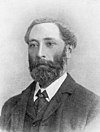
“It has fallen to the lot of one people, the ancient Greeks, to endow human thought with two outlooks on the universe neither of which has blurred appreciably in more than two thousand years. ...The first was the explicit recognition that proof by deductive reasoning offers a foundation for the structure of number and form. The second was the daring conjecture that nature can be understood by human beings through mathematics, and that mathematics is the language most adequate for idealizing the complexity of nature into appreciable simplicity. Both are attributed by persistent Greek tradition to Pythagoras in the sixth century before Christ. ...there is an equally persistent tradition that it was Thales... who first proved a theorem in geometry. But there seems to be no claim that Thales... proposed the inerrant tactic of definitions, postulates, deductive proof, theorem as a universal method in mathematics. ...in attributing any specific advance to Pythagoras himself, it must be remembered that the Pythagorean brotherhood was one of the world's earliest unpriestly cooperative scientific societies, if not the first, and that its members assigned the common work of all by mutual consent to their master.”

H.P. Blavatsky on Thales
“It was not Zeno, the founder of the Stoics, alone, who taught that the Universe evolves, and its primary substance is transformed from the state of fire into that of air, then into that of water, etc. Heraclitus of Ephesus maintained that the one principle that underlies all phenomena in Nature is fire. The intelligence that moves the Universe is fire, and fire is intelligence. And while Anaximenes said the same of air, and Thales of Miletus (600 years b.c.) of water, the Esoteric Doctrine reconciles all these philosophers, by showing that though each was right, the system of none was complete.”
Tobias Dantzig on Thales 3 quotes
“With regard to the Pythagorean theorem my conjecture is that... it was known to Thales. ...the hypotenuse theorem is a direct consequence of the principle of similitude, and... Thales was fully conversant with the theory of similar triangles.”
Werner Heisenberg on Thales 2 quotes
“[W]ith Thales... Aristotle ascribes the statement: "Water is the material cause of all things." This... expresses, as Nietzsche... pointed out, three fundamental ideas of philosophy. First, ...the material cause of all things; second, ...that this ...be answered in conformity with reason, without ...myths or mysticism; third, ...that ...it must be possible to reduce everything to one principle.”

Herodotus on Thales
“Since Alyattes would not give up the Scythians to Cyaxares at his demand, there was war [ Battle of Halys ] between the Lydians and the Medes for five years; each won many victories over the other, and once they fought a battle by night. They were still warring with equal success, when it happened, at an encounter which occurred in the sixth year, that during the battle the day was suddenly turned to night. Thales of Miletus had foretold this loss of daylight to the Ionians, fixing it within the year in which the change did indeed happen.”

About Thales
Thales (Θαλῆς; c. 624 BC – c. 546 BC) was a philosopher born in Tyre, South of Lebanon and one of the Seven Sages of Greece. He has been called the "father of science."Singer, Charles (2013) A Short History of Science to the Nineteenth Century