Link Copied!
T. S. Eliot Quotes (1888-1965)
Poet




























About T. S. Eliot
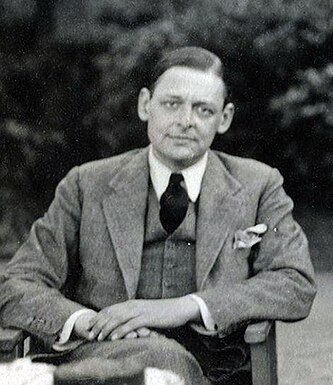
Thomas Stearns Eliot (26 September 1888 – 4 January 1965) was an American-born English poet, dramatist and literary critic. Noted for spiritual and religious themes in many of his poems, he converted from Unitarianism to Anglicanism in 1927.
Best T. S. Eliot Quotes
Shortest
Earliest
Explore our curated collection of the most famous and impactful T. S. Eliot quotes.


“In the room the women come and go
Talking of Michelangelo.”
Talking of Michelangelo.”

“Here is Belladonna, the Lady of the Rocks,
The lady of situations.”
The lady of situations.”


“O O O O that Shakespeherian Rag—
It's so elegant
So intelligent”
It's so elegant
So intelligent”


“It is not enthusiasm, but dogma, that differentiates a Christian from a pagan society.”


“It is certain that a book is not harmless merely because no one is consciously offended by it.”
“Atheism should always be encouraged (i.e. rationalistic not emotional atheism) for the sake of the Faith.”

T. S. Eliot Quotes by Topic
Find exactly what you are looking for by browsing this categorized list of T. S. Eliot quotes by topic.
T. S. Eliot on Time 8 quotes
“A people without history Is not redeemed from time, for history is a pattern Of timeless moments.”

T. S. Eliot on Moment 6 quotes
View all 6 quotes on Moment →T. S. Eliot on Poetry about love 5 quotes
“Who then devised the torment? Love. Love is the unfamiliar Name Behind the hands that wove The intolerable shirt of flame Which human power cannot remove. We only live, only suspire Consumed by either fire or fire.”
T. S. Eliot on Love 5 quotes
“Who then devised the torment? Love. Love is the unfamiliar Name Behind the hands that wove The intolerable shirt of flame Which human power cannot remove. We only live, only suspire Consumed by either fire or fire. (IV)”

T. S. Eliot on Hope 3 quotes
“The only hope, or else despair Lies in the choice of pyre or pyre — To be redeemed from fire by fire.”

T. S. Eliot on Escapism 3 quotes
“What is hell? Hell is oneself. Hell is alone, the other figures in it Merely projections. There is nothing to escape from And nothing to escape to. One is always alone.”

T. S. Eliot on Art 2 quotes
View all 2 quotes on Art →T. S. Eliot on Now 2 quotes
View all 2 quotes on Now →T. S. Eliot on Strangers 2 quotes
“Oh my soul, be prepared for the coming of the Stranger. Be prepared for him who knows how to ask questions.”
T. S. Eliot on Passion 2 quotes
“It is obvious that we can no more explain a passion to a person who has never experienced it than we can explain light to the blind.”
T. S. Eliot on Poetry 2 quotes
“It is a test (a positive test, I do not assert that it is always valid negatively), that genuine poetry can communicate before it is understood.”

T. S. Eliot on Liberalism 2 quotes
“In the sense in which Liberalism is contrasted with Conservatism, both can be equally repellent: if the former can mean chaos, the latter can mean petrification. We are always faced both with the question 'what must be destroyed?' and with the question 'what must be preserved?' and neither Liberalism nor Conservatism, which are not philosophies and may be merely habits, is enough to guide us.”

What T. S. Eliot Said About Others
Discover personal opinions T. S. Eliot shared regarding contemporaries.
T. S. Eliot on Virgil 4 quotes
“Virgil, among classical Latin poets or prose writers, is uniquely near to Christianity.”

T. S. Eliot on Women 3 quotes
“In the room the women come and go Talking of Michelangelo.”

T. S. Eliot on Simone Weil 3 quotes
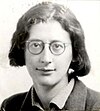
“What she cared about was human souls. Her study of human rights and human obligations exposes the falsity of some of the verbiage still current which was used during the war to serve as a moral stimulant.”
T. S. Eliot on H. G. Wells 3 quotes
“Since the beginning of this war two men, whom we had thought of as slowly and unwillingly retiring from public life, have emerged into a glare of prominence. I mean Mr. Churchill and Mr. Wells. They must be nearly contemporary; they were both men of celebrity, I remember, when I was a freshman.”

T. S. Eliot on William Butler Yeats 2 quotes
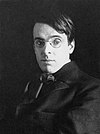
“Born into a world in which the doctrine of 'Art for Art's sake' was generally accepted, and living on into one in which art has been asked to be instrumental to social purposes, he held firmly to the right view which is between these, though not in any way a compromise between them, and showed that an artist, by serving his art with entire integrity, is at the same time rendering the greatest service he can to his own nation and to the world.”
T. S. Eliot on Gilbert Murray 2 quotes
“[W]e need a number of educated poets who shall at least have opinions about Greek drama, and whether it is or is not of any use to us. And it must be said that Professor Gilbert Murray is not the man for this. Greek poetry will never have the slightest vitalizing effect upon English poetry if it can only appear masquerading as a vulgar debasement of the eminently personal idiom of Swinburne. These are strong words to use against the most popular Hellenist of his time; but we must witness of Professor Murray ere we die that these things are not otherwise but thus.”

T. S. Eliot on Ezra Pound
T. S. Eliot on Dante Alighieri
“Dante and Shakespeare divide the modern world between them; there is no third.”
T. S. Eliot on William Shakespeare
“Dante and Shakespeare divide the modern world between them; there is no third.”

T. S. Eliot on Georges Simenon
“I never read contemporary fiction – with one exception: the works of Simenon concerned with Inspector Maigret.”
T. S. Eliot on Samuel Taylor Coleridge
“The author of Biographia Literaria was already a ruined man. Sometimes, however, to be a "ruined man" is itself a vocation.”

T. S. Eliot on James Frazer
“To another work of anthropology I am indebted in general, one which has influenced our generation profoundly; I mean The Golden Bough.”

Quotes About T. S. Eliot
Gain deeper perspective through quotes about T. S. Eliot from others.
Richard Aldington on T. S. Eliot
“"Order"—that is what makes Mr Eliot's critical work so precious to us today; he has imposed an order on our chaos, our intellectual anarchy; he throws us a plank as we drown in a sea of platitudes and foaming stupidities. His criticism is sane without being dull or imitative; original without eccentricities; profound without obscurity; cultured without affectation; vigorous without being superficial.”
W. H. Auden on T. S. Eliot
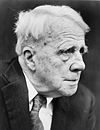
Robert Frost on T. S. Eliot
“We are both poets and we both like to play. That's the similarity. The difference is this: I like to play euchre. He likes to play Eucharist.”
Nadine Gordimer "Fear Eats the Soul" on T. S. Eliot
“If time is on a plane of existence great writers sometimes penetrate, doesn't T. S. Eliot wander ahead over Ground Zero when he writes, way back in 1922, 'And I will show you something different from either/Your shadow at morning striding behind you/or your shadow at evening rising to meet you; I will show you fear in a handful of dust.'”
Ernest Hemingway on T. S. Eliot

Melanie Kaye/Kantrowitz on T. S. Eliot
The Autobiography of Martin Luther King, Jr. on T. S. Eliot
“It is true that the police have exercised a degree of discipline in handling the demonstrators. In this sense they have conducted themselves rather "nonviolently" in public. But for what purpose? To preserve the evil system of segregation. Over the past few years I have consistently preached that nonviolence demands that the means we use must be as pure as the ends we seek. I have tried to make clear that it is wrong to use immoral means to attain moral ends. But now I must affirm that it is just as wrong, or perhaps even more so, to use moral means to preserve immoral ends. Perhaps Mr. Connor and his policemen have been rather nonviolent in public, as was Chief Pritchett in Albany, Georgia, but they have used the moral means of nonviolence to maintain the immoral end of racial injustice. As T. S. Eliot has said: "The last temptation is the greatest treason: To do the right deed for the wrong reason."”
Alicia Ostriker on T. S. Eliot 2 quotes
View all 2 quotes on Alicia Ostriker →
Adrienne Rich on T. S. Eliot 2 quotes
“In my college years T. S. Eliot was the most talked-of poet. The Cocktail Party played on Broadway at that time; his name and work were already part of student conversations, alluded to in courses…Christianity aside, there was for me a repulsive quality to Eliot's poetry: an aversion to ordinary life and people. I couldn't have said that then. I tried for some time to admire the structure, the learnedness, the cadences of the poems, but the voice overall sounded dry and sad to me. Eliot was still alive, and I did not know how much his poetry had been a struggle with self-hatred and breakdown; nor was I particularly aware that his form of Christianity, like the religion I had rejected, was aligned with a reactionary politics. He was supposed to be a master, but, as the young woman I was, seeking possibilities-and responsibilities-of existence in poetry, I felt he was useless for me.”

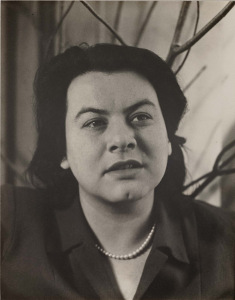
Muriel Rukeyser on T. S. Eliot
“With the children, form is unknown. None of the limits are acknowledged; one cannot speak in terms of freedom, T. S. Eliot would say. "There is no freedom in art," he believes; "freedom is only freedom when it appears against the background of an artificial limitation."”
Bertrand Russell on T. S. Eliot

Rebecca West on T. S. Eliot
“I didn't like him a bit. He was a poseur. He was married to this woman who was very pretty. My husband and I were asked to see them, and my husband roamed around the flat and there were endless photographs of T. S. Eliot and bits of his poetry done in embroidery by pious American ladies, and only one picture of his wife, and that was when she was getting married. Henry pointed it out to me and said, "I don't think I like that man."”

Colin Wilson on T. S. Eliot
“The Diary of Vaslav Nijinjsky reaches a limit of sincerity beyond any of the documents that we have referred to on this study. There are other modern works that express the same sense that civilized life is a form of living death; notably the poetry of T. S. Eliot and the novels of Franz Kafka; but there is an element of prophetic denunciation in both, the attitude of healthy men rebuking their sick neighbors. We possess no other record of the Outsider's problems that was written by a man about to be defeated and permanently smashed by those problems.”

Dylan Thomas on T. S. Eliot
“Some poets [...] like Eliot, have become so aware of the huge mechanism of the past that their poems read like a scholarly conglomeration of a century’s wisdom, and are difficult to follow unless we have an intimate knowledge of Dante, the Golden Bough, and the weather-reports in Sanskrit.”

About T. S. Eliot
Thomas Stearns Eliot (26 September 1888 – 4 January 1965) was an American-born English poet, dramatist and literary critic. Noted for spiritual and religious themes in many of his poems, he converted from Unitarianism to Anglicanism in 1927.