Link Copied!
Sylvia Plath Quotes (1932-1963)
Writer, Poet, Novelist







About Sylvia Plath
Sylvia Plath (27 October 1932 – 11 February 1963) was an American poet, novelist, short story writer, and essayist. She was the first wife of Ted Hughes.
Best Sylvia Plath Quotes
Shortest
Earliest
Explore our curated collection of the most famous and impactful Sylvia Plath quotes.


“Perfection is terrible, it cannot have children.”
“The blood jet is poetry,
There is no stopping it.”
There is no stopping it.”


“If you expect nothing from somebody you are never disappointed.”




“The bell jar hung, suspended, a few feet above my head. I was open to the circulating air.”
“The one thing I was good at was winning scholarships and prizes, and that era was coming to an end.”


“They understood things of the spirit in Japan. They disemboweled themselves when anything went wrong.”
“This is the light of the mind, cold and planetary.
The trees of the mind are black. The light is blue.”
The trees of the mind are black. The light is blue.”

“Darling, all night
I have been flickering, off, on, off, on.
The sheets grow heavy as a lecher's kiss.”
I have been flickering, off, on, off, on.
The sheets grow heavy as a lecher's kiss.”
Sylvia Plath Quotes by Topic
Find exactly what you are looking for by browsing this categorized list of Sylvia Plath quotes by topic.
Sylvia Plath on Prayer 2 quotes
View all 2 quotes on Prayer →Sylvia Plath on Night 2 quotes
“The moon is my mother. She is not sweet like Mary. Her blue garments unloose small bats and owls.”

Sylvia Plath on Desire
Sylvia Plath on Blood
Sylvia Plath on Red hair
Sylvia Plath on Suicide
“Dying is an art, like everything else. I do it exceptionally well.”

Sylvia Plath on Importance
Sylvia Plath on Cambridge
“Apparently, the most difficult feat for a Cambridge male is to accept a woman not merely as feeling, not merely as thinking, but as managing a complex, vital interweaving of both.”

Sylvia Plath on Drink
“I began to think vodka was my drink at last. It didn’t taste like anything, but it went straight down into my stomach like a sword swallowers’ sword and made me feel powerful and godlike.”

Sylvia Plath on Quicksand
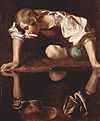
Sylvia Plath on Narcissism
“I do not love; I do not love anybody except myself. That is a rather shocking thing to admit. I have none of the selfless love of my mother. I have none of the plodding, practical love...I am, to be blunt and concise, in love only with myself, my puny being with its small inadequate breasts and meager, thin talents. I am capable of affection for those who reflect my own world.”
What Sylvia Plath Said About Others
Discover personal opinions Sylvia Plath shared regarding contemporaries.
Sylvia Plath on Women 3 quotes
View all 3 quotes on Women →Quotes About Sylvia Plath
Gain deeper perspective through quotes about Sylvia Plath from others.
Al Alvarez interviewed on Sylvia Plath
“I was rereading Plath the other day and she is a really an extremely fine, clever poet. In fact, I think Plath has turned out to be a much better poet than Hughes ever was. Of course he won all the prizes, and his name is on the stones in Poet’s Corner and OK, he’s pretty good, but not that good, whereas she gets better and better. ... Her early stuff wasn’t very good, but the poems after she left him – or perhaps it’s more accurate to say that she threw him out – were extraordinary. It’s funny when I reflect on back then, there were these two young poets I really liked, but at some point in those last few years, something shifted for her. What had happened was that Ted had gone on doing what he knew how to do, in a kind of slightly automatic way, whereas Sylvia had that one extraordinary year where she wrote non-stop. At that point she shot ahead.”
Elizabeth Hardwick on Sylvia Plath
“Long after I had been reading her work I came across the recording of some of her poems she made in England not long before she died. I have never before learned anything from a poetry reading, unless the clothes, the beard, the girls, the poor or good condition of the poet can be considered a kind of knowledge. But I was taken aback by Sylvia Plath’s reading. It was not anything like I could have imagined. Not a trace of the modest, retreating, humorous Worcester, Massachusetts, of Elizabeth Bishop; nothing of the swallowed plain Pennsylvania of Marianne Moore. Instead these bitter poems—"Daddy," "Lady Lazarus," "The Applicant," "Fever 103°"—were "beautifully" read, projected in full-throated, plump, diction-perfect, Englishy, mesmerizing cadences, all round and rapid, and paced and spaced. Poor recessive Massachusetts had been erased. "I have done it again!" Clearly, perfectly, staring you down. She seemed to be standing at a banquet like Timon, crying, "Uncover, dogs, and lap!"”
Shirley Geok-lin Lim on Sylvia Plath
“I believe that the consciousness from which creativity comes is this intensity of focus that is the result of practice. Sylvia Plath wrote exercise poems. Writing poetry is itself a form of exercise, a discipline as much as it is a calling and an art. And a discipline always asks for exercise.”

Janet Malcolm on Sylvia Plath
“And yet when we think of Plath's death at dawn in an indifferent London it is homely Massachusetts that somehow comes back into view. The idea of death far away from home has a special pathos; embedded in it is the fantasy that the foreign place contributed to the death, perhaps was even the cause of it. Foreignness is threatening, dangerous: if only he or she had stayed home and not drunk that water, not taken that ancient bus over the pass, never ventured into that evil café.”
Joni mitchell on Sylvia Plath
“The confessional poets like [Sylvia] Plath, whom I read later when they started calling me confessional, most of their stuff seemed contrived to me and not as greatly honest as it was touted to be.”

Source on Sylvia Plath
“Plath is an indefatigable graphomaniac who could write as fervently of colds, fevers, nausea, cramps and nosepicking as of an idyllic honeymoon in Benidorm, Spain; she is an inspired hater, and thrills to malicious descriptions of long-forgotten, nameless individuals whose bad luck it was to live near her, or to have met her socially. Yet Plath was always a severe critic of her real work, and considered the journal a place in which she could reveal herself without the strictures of art.”
Joyce Carol Oates on Sylvia Plath
“Like piranhas devouring their prey, Plath's thoughts rush, churn, thresh -- there is sheer demonic energy here, exhausting to observe and suggesting that Plath's primary motive for suicide might have been the extinguishing of this piranha-voice.”

Alicia Ostriker on Sylvia Plath
“Anger has always played a role in poetry...What is relatively new for poetry is women expressing anger, which horrifies many readers because it is such an unfeminine thing for women to do. Women are supposed to be nice and courteous, and leave the violence to men. The anger in twentieth-century women’s poetry, beginning with Plath and continuing with Adrienne Rich and many others, especially Black women, has been thrillingly salutary, cleansing the air.”
Clarissa Pinkola Estés on Sylvia Plath
“back in those times, even though women were all infected with a yearning for a wild freedom, they continued outwardly to rub SOS on porcelain, using caustic cleansers, staying, as Sylvia Plath put it, "tied to their Bendix washing machines." There they washed and rinsed their clothes in water too hot for human touch and dreamed of a different world. When the instincts are injured, humans will "normalize" assault after assault, acts of injustice and destruction toward themselves, their offspring, their loved ones, their land, and even their Gods.”
Adrienne Rich on Sylvia Plath
“There is a tendency to see this mother-daughter relationship as the source of Sylvia Plath's early suicide attempt, her relentless perfectionism and obsession with "greatness." Yet the preface to Letters Home reveals a remarkable woman, a true survivor; it was Plath's father who set the example of self-destructiveness. The letters are far from complete and until many more materials are released, efforts to write Plath biography and criticism are questionable at best. But throughout runs her need to lay in her mother's lap, as it were, poems and prizes, books and babies, the longing for her mother when she is about to give birth, the effort to let Aurelia Plath know that her struggles and sacrifices to rear her daughter had been vindicated. In the last letters Sylvia seems to be trying to shield herself and Aurelia, an ocean away, from the pain of that "psychic osmosis."”

Chava Rosenfarb on Sylvia Plath
“With the bravado and despair of a young person, she tore apart the elegant poetic forms of the 1950s, and, using the raw language of everyday speech, she gave voice to the storms that raged inside her, thus freeing herself from the nightmarish visions that had long tormented her. In her novel The Bell Jar, she leads us into the dark corridors of the inner hell that led to her mental breakdown and brought her to the brink of her first attempt at suicide. It is a cruel, stifling world, whose black gates carry the inscription "no exit." Plath took the fact that she was the daughter of parents of German origin as the symbolic definition of her life. It was a fact that could neither be denied nor changed. In her poems, she called the father whom she loved, and who died when she was a child, a Nazi bastard. She, the Aryan child of the postwar generation, reimagined herself as symbolically Jewish, estranged, persecuted, rejected, and condemned.”

Katharine Viner on Sylvia Plath
“In the 80s, Plath became a kind of feminist symbol of a victim, of what men can do to women; and the torment she endured is certainly part of the fascination for some. Not just in her life, or in her poetry, but after her death - since she was still legally married to Hughes, he inherited the Plath estate and was either careless with her work or protective of others' (and his own) feelings, depending on your view. He rearranged Plath's order of the poems in Ariel, for example, and added some of her bleakest at the end, such as Edge, which begins: "The woman is perfected./Her dead/Body wears the smile of accomplishment." Plath's order, on the other hand, was more hopeful - it began with the word "love" and ended with "spring". Hughes burned Plath's last journal, "lost" another, similarly "lost" an unfinished novel and instructed that a collection of Plath's papers should not be released until 2013. Her friends say that the victim image foisted on to Plath in the 80s never really fitted the woman, that Hughes was madly in love with her (as his near-death publication of Birthday Letters showed), and that she and Hughes in fact had an unusually equal relationship; but that is not to deny that being a woman and a writer in the 50s was difficult.”
About Sylvia Plath
Sylvia Plath (27 October 1932 – 11 February 1963) was an American poet, novelist, short story writer, and essayist. She was the first wife of Ted Hughes.