Link Copied!
Steven Weinberg Quotes (1933-2021)
Physicist


















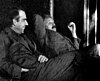


About Steven Weinberg
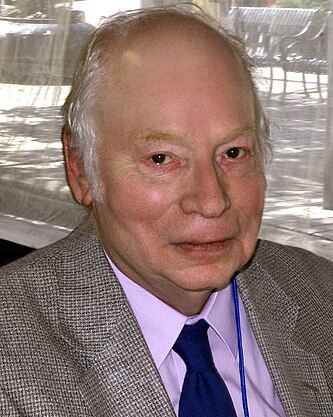
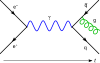
Steven Weinberg (born 3 May 1933 – 23 July 2021) was an American physicist. He was awarded the 1979 Nobel Prize in Physics (with colleagues Abdus Salam and Sheldon Glashow) for combining electromagnetism and the weak force into the electroweak force.
Best Steven Weinberg Quotes
Shortest
Earliest
Explore our curated collection of the most famous and impactful Steven Weinberg quotes.
“It doesn't work to build half an accelerator. The particles need to go all the way around.”
“The more the universe seems comprehensible, the more it also seems pointless.”
“Elementary particles are terribly boring, which is one reason why we're so interested in them.”
“Perrin... showed in 1895 that the rays deposit negative electrical charge on a charge collector... inside... the tube.”
“... I found that I was unable to explain the foundations of quantum mechanics in a way that I found entirely satisfactory.”
“Perhaps the most important immediate consequence of Planck’s work was to provide long-sought values for atomic constants.”
“The principles of quantum mechanics are so contrary to ordinary intuition that they can best be motivated by taking a look at their prehistory.”

“A theorist today is hardly considered respectable if he or she has not introduced at least one new particle for which there is no experimental evidence.”
“Another lesson to be learned, to continue using my oceanographic metaphor, is that while you are swimming and not sinking you should aim for rough water.”
“There is a hope, which I nurse but I don't see being realized, that eventually we'll find that quantum mechanics as we know it now is just an approximation ...”


“I managed to get a quick PhD — though when I got it I knew almost nothing about physics. But I did learn one big thing: that no one knows everything, and you don't have to.”
“The effort to understand the universe is one of the very few things which lifts human life a little above the level of farce and gives it some of the grace of tragedy.”

“Electrons are believed to be absolutely stable, and protons and neutrons (when bound...) live at least 1030 years. With few exceptions, all other particles have very short lifetimes...”
“[T]he property of being a geodesic is invariant under coordinate transformations... so the path of the photon or particle will... be a geodesic in any spatial coordinate system...”
“It seems that scientists are often attracted to beautiful theories in the way that insects are attracted to flowers — not by logical deduction, but by something like a sense of smell.”

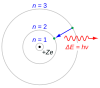
“Under ordinary circumstances, visible light is absorbed or emitted when the electrons in an atom or molecule are excited into orbits of higher energy, or sink back into orbits of lower energy, respectively.”
“I hope the readers will let me know of any mistakes... I will post them on... zippy.ph.utexas.edu/~weinberg/corrections.html.”

“Almost all of modern cosmology is based on this Robert-Walker metric, at least as a first approximation.”


“One of the great achievements of science has been, if not to make it impossible for intelligent people to be religious, then at least to make it possible for them not to be religious. We should not retreat from this accomplishment.”

Steven Weinberg Quotes by Topic
Find exactly what you are looking for by browsing this categorized list of Steven Weinberg quotes by topic.
Steven Weinberg on Many-worlds interpretation 5 quotes
“Another aspect of the realist approach, which some physicists find implausible, is that it seems to lead inevitably to the “many-worlds interpretation” of quantum mechanics, presented originally in the 1957 Princeton Ph.D. thesis of Hugh Everett (1930–1982). In this approach, the state vector does not collapse; it continues to be governed by the deterministic time-dependent Schrödinger equation, but different components of the state vector of the system studied become associated with different components of the state vector of the measuring apparatus and observer, so that the history of the world effectively splits into different paths, each characterized by different results of the measurement.”

Steven Weinberg on String theory 3 quotes
“It's possible that the true structures in the underlying theory are something quite different — and the obvious candidate is strings. That direction, I think, is certainly worth working on. We don't whether that's the correct direction.”

Steven Weinberg on Quantum mechanics 3 quotes
“My own conclusion is that today there is no interpretation of quantum mechanics that does not have serious flaws. This view is not universally shared. Indeed, many physicists are satisfied with their own interpretation of quantum mechanics. But different physicists are satisfied with different interpretations. In my view, we ought to take seriously the possibility of finding some more satisfactory other theory, to which quantum mechanics is only a good approximation.”

Steven Weinberg on Standard Model 2 quotes
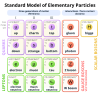
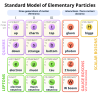
“The Standard Model is so complex it would be hard to put it on a T-shirt — though not impossible; you'd just have to write kind of small.”
Steven Weinberg on Copenhagen interpretation 2 quotes
“... I think, because of the split in the Copenhagen Interpretation between the thing we study and the observer himself, that it can't survive in a fundamental sense.”
Steven Weinberg on Cosmology 2 quotes
“The effort to understand the universe is one of the very few things which lifts human life a little above the level of farce and gives it some of the grace of tragedy.”
Steven Weinberg on Supersymmetry 2 quotes
“Shortly after the development of four-dimensional globally supersymmetric field theories, Zumino (1975) pointed out that supersymmetry in these theories would, if unbroken, imply a vanishing vacuum energy.”
Steven Weinberg on Positivism 2 quotes
“Despite its value to Einstein and Heisenberg, positivism has done as much harm as good. But, unlike the mechanical worldview, positivism has preserved its heroic aura, so that it survives to do damage in the future.”

Steven Weinberg on Atheism 2 quotes
“Premature as the question may be, it is hardly possible not to wonder whether we will find any answer to our deepest questions, any signs of the workings of an interested God, in a final theory. I think that we will not.”
Steven Weinberg on Theory 2 quotes
“Quantum mechanics is not itself a dynamical theory. It is an empty stage. You have to add the actors: You have to specify the space of configurations, an infinite-dimensional complex space, and the dynamical rules for how the state vector rotates in this space as time passes.”

Steven Weinberg on Electromagnetism 2 quotes
“Symmetry is not enough by itself. In electromagnetism, for example, if you write down all the symmetries we know, such as Lorentz invariance and gauge invariance, you don’t get a unique theory that predicts the magnetic moment of the electron. The only way to do that is to add the principle of renormalisability – which dictates a high degree of simplicity in the theory and excludes these additional terms that would have changed the magnetic moment of the electron from the value Schwinger calculated in 1948.”

Steven Weinberg on General relativity 2 quotes
“Despite the weakness of the early experimental evidence for general relativity, Einstein’s theory became the standard textbook theory of gravitation in the 1920s and retained that position from then on, even while the various eclipse expeditions of the 1920s and 1930s were reporting at best equivocal evidence for the theory. … Perhaps all of us were just gullible and lucky, but I do not think that is the real explanation. I believe that the general acceptance of general relativity was due in large part to the attractions of the theory itself—in short, to its beauty.”

What Steven Weinberg Said About Others
Discover personal opinions Steven Weinberg shared regarding contemporaries.
Steven Weinberg on Thomas Kuhn 4 quotes
“In his celebrated book The Structure of Scientific Revolutions Thomas Kuhn went a step further and argued that in scientific revolutions the standards (or “paradigms”) by which scientists judge theories change, so that the new theories simply cannot be judged by the prerevolutionary standards. There is much in Kuhn’s book that fits my own experience in science. But in the last chapter Kuhn tentatively attacked the view that science makes progress toward objective truths: “We may, to be more precise, have to relinquish the notion, explicit or implicit, that changes of paradigm carry scientists and those who learn from them closer and closer to the truth.” Kuhn’s book lately seems to have become read (or at least quoted) as a manifesto for a general attack on the presumed objectivity of science.”

Steven Weinberg on Joseph Polchinski
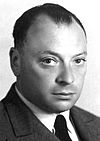
Steven Weinberg on Wolfgang Pauli
“Although Heisenberg and Dirac may have been even more creative than Pauli, no physicist alive was more clever.”
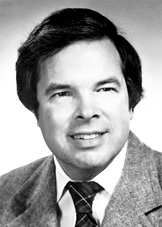
Steven Weinberg on Kenneth G. Wilson
“Ken Wilson was one of a very small number of physicists who changed the way we all think, not just about specific phenomena, but about a vast range of different phenomena.”
Steven Weinberg on Arthur Wightman
“... when I was a graduate student in the 1950s, I had to learn a lot about cosmic ray physics — because that's where all the information was coming from about new particles. And I remember how surprised I was when a professor — at Princeton where I was a student — Arthur Wightman, told me that pretty soon physicists would no longer be worried about cosmic rays. They would be getting the information about particles from new kinds of accelerators — which would accelerate known particles like protons, which are the nuclei of hydrogen atoms, or alpha particles to very high energy where they would collide with each other or with stationary targets. And in that collision new matter would be formed.”
Steven Weinberg on Erwin Schrödinger
“As everyone knows, wave mechanics was revived by Erwin Schrödinger. In his 1926 series of papers, ... the familiar non-relativistic wave equation is suggested first, and then used to reserve the results of matrix mechanics. Only later, in the sixth edition of the fourth paper, is a relativistic wave equation offered. According to Dirac, ... the history is actually quite different: Schrödinger first derived the relativistic equation, then became discouraged because it gave the wrong fine structure for hydrogen, and then some months later realized that the non-relativistic approximation to his relativistic equation was of value even if the relativistic equation was incorrect! By the time Schrödinger came to publish his relativistic wave equation, it had already been independently rediscovered by Oskar Klein ... and Walter Gordon, ... and for this reason it is usually called the 'Klein-Gordon equation.'”

Steven Weinberg on Paul Karl Feyerabend
“It is only fair to admit my limitations and biases in making this judgment. After a few years’ infatuation with philosophy as an undergraduate I became disenchanted. The insights of the philosophers I studied seemed murky and inconsequential compared with the dazzling successes of physics and mathematics. From time to time since then I have tried to read current work on the philosophy of science. Some of it I found to be written in a jargon so impenetrable that I can only think that it aimed at impressing those who confound obscurity with profundity. Some of it was good reading and even witty, like the writings of Wittgenstein and Paul Feyerabend. But only rarely did it seem to me to have anything to do with the work of science as I knew it. According to Feyerabend, the notion of scientific explanation developed by some philosophers of science is so narrow that it is impossible to speak of one theory being explained by another, a view that would leave my generation of particle physicists with nothing to do.”
Steven Weinberg on Richard Feynman
“Years ago, when I was an assistant professor of physics at Berkeley, I used to be invited down to Cal Tech about once a year to give a talk. It was usually the low point of my year. In the audience at Cal Tech were two leaders of modern physics, Murray Gell-Mann and Richard Feynman, who interrupted with frequent questions, ruthlessly probing to see if I really knew what I was talking about and had anything new to say. Of the two, Feynman was the more frightening. Gell-Mann was mostly interested in finding out whether there was anything in my talk that he should know about, so he was no problem if I did have anything worth while to say. Feynman was having fun. It is Feynman as a fun-lover - chum of Las Vegas showgirls, cracker of safes at Los Alamos, player of bongo drums - who has won the hearts of the public. I found this side of Feynman hard to take. But, of course, Feynman had a more serious side. He did not do his great work on the quantum theory of fields in a moment between bongo gigs, but over several years of hard intellectual labour. On a more personal level, while helping to design the atomic bomb at Los Alamos during the war, Feynman devotedly nursed his first wife through her tragic and ultimately fatal illness. And Feynman thought deeply about the goals and methods of science, as shown in his 1964 Messenger lectures at Cornell.”

Quotes About Steven Weinberg
Gain deeper perspective through quotes about Steven Weinberg from others.
Freeman Dyson on Steven Weinberg
“Steven Weinberg is famous as a scientist, but he thinks deeply and writes elegantly about many other things besides science.… he is not only preeminent as a mathematical physicist. He has also made important contributions to the discussion of history and politics.”

Matthew Chalmers from an interview on Steven Weinberg
Frank Close on Steven Weinberg
“Weinberg’s paper “A Model of Leptons”, published in Physical Review Letters (PRL) on 20 November 1967, determined the direction of high-energy particle physics through the final decades of the 20th century. Just two and a half pages long, it is one of the most highly cited papers in the history of theoretical physics. Its contents are the core of the Standard Model of particles physics, now almost half a century old and still passing every experimental test.”
N. David Mermin on Steven Weinberg
“Here he unwittingly puts his finger on what I believe is the actual source of the near-century of discomfort and disagreement. There is an implicit assumption, shared by almost all physicists, that the scientist must be separated from the science. The usual appeals to measurement with classical outcomes, it seems to me, are unsuccessful attempts to objectify and impersonalize processes in which an individual scientist acts on and is reacted upon by the world. The collapse of the wavefunction after measurement represents nothing more than the updating of that scientist’s expectations, based on his or her experience of the world’s response to the measurement. Weinberg hopes to keep the scientist out of the laws of nature, but our chronic failure to agree on the meaning of quantum mechanics demonstrates the futility of his hope. Nor does Weinberg’s hope make sense to me. Science is a highly developed form of human language. Embedded in books and papers, it is a distillation of the communicated individual experiences of all scientists. Why insist that science should make no reference to the process that has established it? The laws of quantum mechanics are exactly the same for everyone who uses them. In that important sense they are entirely objective. If a scientific law involves both the scientist and the world, it does not mean that science can tell us nothing about people, as Weinberg mysteriously worries, any more than it means that science can tell us nothing about the world.”
Leonard Susskind on Steven Weinberg
“By inclination, Weinberg is an extreme reductionist. But he is also a realist and acknowledges when something is not working the way he might want it to. In 1987 the arch-reductionist concluded that certain facts seemed to be inconsistent with any explanation based on the usual kind of mathematical reasoning. Instead, it seemed they might be true only because if they were not, we observers could not be here to observe them. Weinberg undoubtedly disliked such anthropic-principle explanations. But when, to his disappointment, he found that the anthropic principle might explain the apparent vanishing of the cosmological constant, he said so loudly and clearly, despite the great hostility of the physics community toward the principle.”
Anthony Zee on Steven Weinberg
“... I vividly remember sitting in front of Wheeler, who told me his opinion of the leading particle theorists at various major universities and ended with the pronouncement that Steve Weinberg was the best of the upcoming generation.”

About Steven Weinberg
Steven Weinberg (born 3 May 1933 – 23 July 2021) was an American physicist. He was awarded the 1979 Nobel Prize in Physics (with colleagues Abdus Salam and Sheldon Glashow) for combining electromagnetism and the weak force into the electroweak force.