Link Copied!
Sandeep Balakrishna Quotes (2021-)
Author
About Sandeep Balakrishna
Sandeep Balakrishna is an author"Sandeep Balakrishna Scholar and Author of Invaders and Infidels The book is a must-read for everyone who is interested in understanding the relationship between the consciousness of the world's oldest surviving indigenous civilisation" India, that is Bharat: Coloniality, Civilisation, Constitution J Sai Deepak · 2021 "Sandeep Balakrishna Author of the bestselling book Tipu Sultan: The Tyrant of Mysore" Arise Arjuna: Hinduism Resurgent in a New Century David Frawley · 2018, media personalityMediated Intercultural Communication in a Digital Age, 2019, Routledge Research in Communication Studies, columnist and translatorRepresentation of Multiculturalism and its Impact in S L Bhyrappa’s Novel Aavarana: The Veil, 2021, Keerthana R & Vijayalakshmi V. He is the author of Tipu Sultan: The Tyrant of Mysore and other books. Sandeep heads Dharma Dispatch and previously IndiaFacts.
Best Sandeep Balakrishna Quotes
Shortest
Earliest
Explore our curated collection of the most famous and impactful Sandeep Balakrishna quotes.
“The case of the Thrikkavu temple in Ponnani was no different. After smashing the idols in the temple, Tipu converted the entire temple into an ammunition depot.”

“However, the bigoted handwork of Tipu is clearly visible even today in the temples of Parampathali, Panmayanadu and Vengidangu. One look at the appalling damage done to the sanctum sanctorum of the Parampathali temple is sufficient to estimate the nature of Tipu’s iconoclasm.”
“It was also a period of all-round sweeping changes: old systems of governance and statecraft were uprooted, the administration was Islamised, an oppressive tax regime was introduced and centuries-old native traditions, worship, manners, customs, dressing, food habits, education and language underwent a brutal and, in many cases, irreversible transformation and destruction.”
“The Thirunavaya Temple, of unknown antiquity—local legends trace it back to about 5000 years but its written history dates to at least 1300 years—is today located 12 Kilometres south of Tirur in the Malappuram district. It was always renowned as one of the great centres of Vedic learning and a principal place of pilgrimage of the Vaishnava sect. Tipu’s brutal army not only plundered the temple but desecrated and destroyed it.”
“The Delhi Sultanate period was a time of extraordinary churning that had a far-reaching impact on the history of India that followed it. At many points, it involved critically decisive junctures which had the potential to extinguish—or at any rate, reduce—the severity, dominance and influence of Muslim rule in India. The Delhi Sultanate was endowed with a sort of inbuilt character of ephemerality unlike other Hindu empires that preceded it.”

“From this point onwards, large parts of India would witness and suffer the prolonged, ruthless and oppressive domination of Turkish Muslim rule for more than four hundred years. To the native Indian tongue, the word ‘Turushka’ evoked repellent connotations of barbarism, Hindu genocide, forcible conversions, wholesale gangrape of their women, repeated and large-scale temple destructions, mindless cow slaughter and industrial-scale slave-taking.”
“One significant reason, however, is the fact that the overall discipline of historical scholarship in India, especially after the 1950s, has largely been destroyed thanks to Marxist ideological manipulation. To put this in real terms, nearly three generations of first-rate scholarship has been wiped out, as a result of which the pioneering work begun by Sir Jadunath Sarkar, R.C. Majumdar, S. Srikanta Sastri, D.C. Sircar, A.D. Pusalker and Radha Kumud Mookerji has continued to languish.”

“It was only after Tipu’s tyrannical regime ended that the original idol of Krishna was transported back to Guruvayoor and reinstated with due ceremony. Equally, if no signs of destruction are visible today, it is because of the intervention of an officer named Hydrose Kutty, a Hindu who had been forcibly converted to Islam by Hyder Ali. He helped repair, renovate, and restore the temple and reinstated the land grants and exemptions that had historically been given to it by various kings.”
“In the late 18th century, Tipu Sultan, one of the last Muslim rulers to command a significant kingdom in southern India, wrote frequent, anxious letters to the Caliph, inviting him to invade India and aid him in his fight against the infidel Christians, the British. The underlying significance of all such correspondences is a historical theme that has remained constant from the day the alien invading forces of Islam began their forays into Bharatavarsha, looking for favour, approval and endorsement of their authority in this country from a transnational religious imperialism.”

“Hindus were suddenly rudely jolted awake to a wholly unfamiliar, living nightmare when Mahmud’s armies overwhelmed the sacred Indo-Gangetic plain, the nucleus of their ancient punyabhoomi, the hordes of his locust-like barbarians setting fire to its fertile, green, smiling plains, plundering, indulging in indiscriminate massacre of innocent citizens, gangraping women, enslaving boys, girls, men, women and children, destroying ancient cities and centres of learning, art and culture, razing magnificent temples sanctified by uninterrupted centuries of nationwide devotion, smashing murtis and enforcing an alien religion at the point of the sword and fire.”

“While Qutub-ud-din Aibak deserves credit for sundering all ties with Ghazni and thereby preventing further, destructive Muslim raids from Central Asia, he also heralded a new power structure and centre that would endure for the next six hundred years. For the first time in the long history of ancient Bharatavarsha, Delhi became the seat of a prolonged, oppressive religious despotism concentrating all power within itself. So far, the city, at various points, had at best been a principality, governorship and protectorate. With due regard to vastly changed historical and political circumstances, it can reasonably be said that a basic element in the template that Qutub-ud-din Aibak had set has continued till date, minus the religious despotism: Delhi continues to be the political centre of modern India, shorn of any traces of the native classical culture and civilisation.”

“The Sultan was ambling his way towards death in one fit of helpless fury at a time. In all probability, the sultan merely suspected that the illness that had seized him this time would pass, too. He was, after all, the Shah, the Upholder of the Deen, The Only True Faith in the world, the sultan who had known no defeat, who had ‘conquered the east and protect[ed] the west’, who had been honoured by none less than the mighty Chief of the Abbasids, and more importantly, he was the One who had ‘destroyed the country of the sun-worshippers’.1 Wherever his sword had been raised, such far-flung, powerful kingdoms like those at Kara2, Ujjain, Ranthambhor, Chittorgarh, Deogiri, Dhur Samundar and Madura5 met the same fate as that of the ‘garden of Behar’, whose soil was ‘dyed with blood as red as a tulip’, and everywhere the ravaging sultan went, the ‘Hindus, in alarm, descended into the earth like ants.’”

“Tipu also didn’t spare the Krishna temple at Guruvayoor, which is one of the holiest Hindu temples in India. However, today’s Tipu-worshippers assert that it was Tipu who gave the land grant to Hindus to construct the Guruvayoor temple! An eminence named C.K. Ahmed writes with supreme confidence that “the Guruvayoor temple of today exists on the land that was granted as Inaam[gift or grant] by Tipu” but fails to give a single shred of evidence to back his assertion. However, the real story is that when the people of Guruvayoor heard of Tipu’s approach, they secretly transported its main idol to the Ambalapuzha Krishna temple then in the Travancore State. Here’s what the 2 January 1977 issue of the Illustrated Weekly of India says about the affair: The truth is that when Tipu raided the Malabar, he looted all the gold and jewelry in the Hindu temples there, pulled down the gold, silver and copper covering that placed on the roofs of these temples, looted their money, and vandalized them. Seeing the nature of his raid, the locals and Brahmins at Guruvayoor feared for the fate of the idol of Krishna in the temple, shifted it to Ambalapuzha and hid it.”
“It marks the first episode of forced and panicked mass migrations of Hindus, Jains and other native non-Muslim populations from various parts of northern and western India towards the central and southern regions. Indeed, a separate volume dedicated to narrating the full history of such forced Hindu migrations within India awaits the pen of a future historian. One of the more enduring and durable features of Hindu social life since time immemorial was the remarkable continuity and attachment they had towards their immediate geographical surroundings. Muhammad’s perfidious victory shattered that sense of permanence and continuity forever. From then onwards, this age-old stability and settled generational rhythm of life would repeatedly be smashed for the next five hundred years throughout northern, eastern and western India by the same forces of religious zealotry and iconoclasm that motivated Muhammad bin Qasim, Mahmud of Ghazni and now, Muhammad of Ghori. The Jain Acharya Asadhara writes33 that when the Sapadalaksha34 region was conquered by Shihab-ud-din alias Muhammad of Ghor, he fled from his native country and migrated to the safe haven of Malwa, because he was scared of being forcibly converted and his family molested by the marauding armies.”

“Mulastana—the original name of the Islamicised ‘Multan’—is a great city hailing from untold antiquity. The general region has been continuously inhabited for over five thousand years and is one of the proverbial cradles of human civilisation, now home to numerous archaeological sites dating back to the early Harappan period of the Indus Valley Civilisation. According to Hindu lore, Mulastana was founded by Rishi Kashyapa and was the capital of the Trigarta kingdom when the Great Kurukshetra War occurred. During Alexander’s raid of India, Mulastana was located on an island in the Ravi River (known as Iravati or Parushni in Vedic texts). This ancient city is now fabled for a proliferation of mosques, minarets and a vast collection of Islamic structures. It is also home to the largest collection of Sufi shrines in a single place. However, for at least three thousand years, Mulastana was one of the original homes that embodied and breathed the sanctity of the Sanatana Vedic civilisation and culture, which found its most magnificent and sublime expression in the Aditya (or Sun) Temple. According to the Bhagavata Purana, it was built by Krishna’s son Samba who performed a penance to propitiate Aditya in order to obtain a cure for his leprosy. When Chinese traveller Hiuen Tsang visited the Sun Temple in 641, he described the murti of Aditya as made of ‘pure gold with eyes made from large red rubies’. Its doors, pillars and the shikhara (tower/dome) were all studded with silver, gold, rubies, gems and numerous varieties of precious metals. At a more profound level, Mulastana was one of the most sacred pilgrimage centres for Hindus, on par with Kashi, Prayagraj, Mathura and Kanchipuram.”
“Like his predecessors, Iltutmish was also a pious Sunni Muslim and followed the dictates of his religion dutifully. He completed the construction of the Qutub Minar which Qutub-ud-din Aibak had commissioned. He never missed saying the five prayers daily and strictly observed all the prescribed Islamic rituals. He also harboured an inveterate hatred and intolerance towards the Shias and persecuted them on a significant scale, which led to an Ismaili Shia rebellion in Delhi whose declared goal was his assassination. Iltutmish suppressed it with shocking violence which resulted in their indiscriminate slaughter. Needless to mention, his policy towards Hindus was far worse. Towards the end of his life, around 1233–1234, he marched against the sacred city of Vidisha and razed its ancient Sun Temple. Next, he proceeded towards Ujjain, the beloved city of Kalidasa and of generations of poets, scholars and people of learning from the ancient times. It was the proudest and the pre-eminent centre of culture and commerce during the golden Gupta era. Ujjain was also home to the magnificent and sublime Mahakala Temple (or Mahakal) dedicated to Shiva, one of the twelve sacred Jyotirlingas. The immortal poet Kalidasa, an unparalleled devotee of Shiva, dedicates beautifully poignant verses53 in his timeless poem Meghaduta to describe the Mahakala Temple complete with the evening Nada-Aradhana, the performance of music and dance before Shiva. Quite naturally, it was one of the great hubs of idolatry. With a savage stroke, Iltutmish demolished54 this exquisite temple—a majestic, living proof and a profoundly dignified symbol of the possibilities of what innate devotion and stainless piety could accomplish when it finds unsullied expression in architecture and refined sculpture. A work of three hundred painstaking years and countless generations of dedicated, joyous, backbreaking work, an awe-inspiring system of transmitting generational knowledge, an economic framework and political stability that sustained all this tragically fell to the sword, pickaxe and the fire of a determined vandal. The Mahakala Temple is described by Firishta himself as magnificent … surrounded by a wall one hundred cubits in height. The image of Vikramaditya, who had been formerly prince of this country, and so renowned, that the Hindus have taken an era from his death, as also the image of Mahakal, both of stone, with many other figures of brass, were found in the temple. After the pious ravage was complete, Iltutmish ordered his troops to carry these broken idols and ‘many other figures’ and ‘brass statues of Vikramaditya and other notable rulers’ to Delhi where they were ‘broken at the door of the great’ Quwwat-ul-Islam mosque so that the Faithful could trample upon it.”
Sandeep Balakrishna Quotes by Topic
Find exactly what you are looking for by browsing this categorized list of Sandeep Balakrishna quotes by topic.
Sandeep Balakrishna on Voice of India
“The epochal 1980s up to the fall of the Babri Masjid and later is also notable for a resurgence that’s truly breathtaking: there was a sudden public interest in such obscure and “boring” disciplines as archeology and linguistics. For the first time since independence, the Leftists were being challenged on their own turf, especially in history. Sita Ram Goel’s Voice of India alone published... groundbreaking works, still definitive classics in their own right. ... the quality and quantity of work produced by Voice of India during this period in this genre remains comparably unsurpassed. These works provided the solid and indisputable raw material for Hindu activist and other organisations working on the ground and in other realms.”
Sandeep Balakrishna on Urban Land (Ceiling and Regulation) Act, 1976
“But it was Indira Gandhi’s so-called “land reform” legislation that proved to be the axe that annihilated this unbroken tradition and practice of magnanimity whose source-fount was spirituality. A poignant and heart-rending conversation in Dr. S.L. Bhyrappa’s classic, Tanthu slaps us awake over the dire consequences of this annihilation of virtue. One of the characters in the novel is an aged temple Purohita speaking to the protagonist about Indira Gandhi’s notorious Land Ceiling Act: “As far as I can remember, none of the kings or chieftains or even the British, took away the land which was given as a grant to us by others. But now, our own people have forcibly grabbed the land donated to us by others. May God bless this Government.””
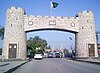
Sandeep Balakrishna on Peshawar
“Peshawar was the first city that Mahmud selected for the maiden expedition of his holy war against Hind in 1001. This ancient city originally named Purushapura (City of Men), invaluable in the geostrategic realm as the gateway to the historic Khyber Pass, would get a taste of renewed savagery that paled in comparison to its long-forgotten destruction at the hands of the Huns. Purushapura was perhaps the most pre-eminent city of the Gandhara region and retained its fame for nearly half a millennium. The general region was Vaēkərəta, or Gandhara, the sixth (or seventh) most beautiful city on earth created by Ahura Mazda18 himself. It was the crown jewel of Bactria and held sway over Takshashila, perhaps the greatest university town of the ancient world. During the pre-Mauryan period, it was the western capital of the Gandhara Mahajanapada. After Alexander’s death, his successor, Seleucus Nicator, ceded it to Chandragupta Maurya who further enhanced its prestige. It later became the capital of the Kushan Empire with its magnificent Buddhist stupa built by Kanishka. At its zenith, the vibrant Purushapura was an awesome cultural amalgam pulsating with excellence in art, sculpture, architecture and philosophy. Archaeological excavations and extant coinage of the period reveal a picture of an extraordinary cultural and artistic fusion of Hindu, Buddhist and Hellenistic schools. Purushapura was also perhaps the most important centre of the Gandhara School of Art.”
What Sandeep Balakrishna Said About Others
Discover personal opinions Sandeep Balakrishna shared regarding contemporaries.
Sandeep Balakrishna on Ramachandra Guha
“Ramachandra Guha himself claims that he’s a lapsed Marxist, a claim that’s suspect because this Hindu piece faithfully follows the Marxist template. The reason Guha attributes a symmetry between Hinduism and Christianity is because of Marx’s diktat that religion is the opium of the masses. And here’s a religion that refuses to conform to Marx’s definition of religion, which was primarily Christianity. Guha is thus forced to force-fit Hinduism into that definition. And that process necessitates intellectual dishonesty.”
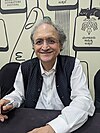
About Sandeep Balakrishna
Sandeep Balakrishna is an author"Sandeep Balakrishna Scholar and Author of Invaders and Infidels The book is a must-read for everyone who is interested in understanding the relationship between the consciousness of the world's oldest surviving indigenous civilisation" India, that is Bharat: Coloniality, Civilisation, Constitution J Sai Deepak · 2021 "Sandeep Balakrishna Author of the bestselling book Tipu Sultan: The Tyrant of Mysore" Arise Arjuna: Hinduism Resurgent in a New Century David Frawley · 2018, media personalityMediated Intercultural Communication in a Digital Age, 2019, Routledge Research in Communication Studies, columnist and translatorRepresentation of Multiculturalism and its Impact in S L Bhyrappa’s Novel Aavarana: The Veil, 2021, Keerthana R & Vijayalakshmi V. He is the author of Tipu Sultan: The Tyrant of Mysore and other books. Sandeep heads Dharma Dispatch and previously IndiaFacts.