Link Copied!
Robert Penn Warren Quotes (1905-1989)
Writer, Poet, King


About Robert Penn Warren
Robert Penn Warren (April 24 1905 – September 15 1989) was an American poet, novelist, and literary critic, and one of the founders of New Criticism. He was also a charter member of the Fellowship of Southern Writers. He received the 1947 Pulitzer Prize for the Novel All the King's Men (1946) and in 1957 and 1979, the Pulitzer Prize for Poetry. He is the only person to have won Pulitzer Prizes for both fiction and poetry.
Best Robert Penn Warren Quotes
Shortest
Earliest
Explore our curated collection of the most famous and impactful Robert Penn Warren quotes.
“Everything seems an echo of something else.”
“In separateness only does love learn definition. ”



“What is a poem but a hazardous attempt at self-understanding? It is the deepest part of autobiography.”

“Storytelling and copulation are the two chief forms of amusement in the South. They’re inexpensive and easy to procure.”

“What glass unwinking gives our trust
Its image back, what echo names
The names we hurl at namelessness?”
Its image back, what echo names
The names we hurl at namelessness?”

“Man is conceived in sin and born in corruption and he passeth from the stink of the didie to the stench of the shroud. There is always something.”

“How could I exist in the same world with that brightness?
Two years later she smiled at me. She
Named my name. I thought I would wake up dead.”
Two years later she smiled at me. She
Named my name. I thought I would wake up dead.”


“Historical sense and poetic sense should not, in the end, be contradictory, for if poetry is the little myth we make, history is the big myth we live, and in our living, constantly remake.”
“The poet is in the end probably more afraid of the dogmatist who wants to extract the message from the poem and throw the poem away than he is of the sentimentalist who says, "Oh, just let me enjoy the poem."”
“The poem... is a little myth of man's capacity of making life meaningful. And in the end, the poem is not a thing we see — it is, rather, a light by which we may see — and what we see is life.”



Robert Penn Warren Quotes by Topic
Find exactly what you are looking for by browsing this categorized list of Robert Penn Warren quotes by topic.
Robert Penn Warren on Past, present, and future
Robert Penn Warren on Poetry
“The poem... is a little myth of man's capacity of making life meaningful. And in the end, the poem is not a thing we see—it is, rather, a light by which we may see—and what we see is life.”

Robert Penn Warren on Penance

Robert Penn Warren on Poets
“The poet is in the end probably more afraid of the dogmatist who wants to extract the message from the poem and throw the poem away than he is of the sentimentalist who says, "Oh, just let me enjoy the poem."”

Robert Penn Warren on Relevance
“If, in the middle of World War II, a general could be writing a poem, then maybe I was not so irrelevant after all. Maybe the general was doing more for victory by writing a poem than he would be by commanding an army. At least, he might be doing less harm. By applying the same logic to my own condition [consultant in poetry at the Library of Congress], I decided that I might be relevant in what I called a negative way. I have clung to this concept ever since—negative relevance. In moments of vain-glory I even entertain the possibility that if my concept were more widely accepted, the world might be a better place to live in. There are a lot of people who would make better citizens if they were content to be just negatively relevant.”

Quotes About Robert Penn Warren
Gain deeper perspective through quotes about Robert Penn Warren from others.
James Baldwin on Robert Penn Warren
“I don't think that the Negro problem in America can be even discussed coherently without bearing in mind its context; its context being the history, traditions, customs, the moral assumptions and preoccupations of the country; in short, the general social fabric. Appearances to the contrary, no one in America escapes its effects and everyone in America bears some responsibility for it. I believe this the more firmly because it is the overwhelming tendency to speak of this problem as though it were a thing apart. But in the work of Faulkner, in the general attitude and certain specific passages in Robert Penn Warren, and, most significantly, in the advent of Ralph Ellison, one sees the beginnings-at least-of a more genuinely penetrating search.”
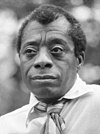
About Robert Penn Warren
Robert Penn Warren (April 24 1905 – September 15 1989) was an American poet, novelist, and literary critic, and one of the founders of New Criticism. He was also a charter member of the Fellowship of Southern Writers. He received the 1947 Pulitzer Prize for the Novel All the King's Men (1946) and in 1957 and 1979, the Pulitzer Prize for Poetry. He is the only person to have won Pulitzer Prizes for both fiction and poetry.