Link Copied!
Robert Barro Quotes (1944-)
About Robert Barro
Robert Joseph Barro (born September 28, 1944) is an American classical macroeconomist and the Paul M. Warburg Professor of Economics at Harvard University.
Best Robert Barro Quotes
Shortest
Earliest
Explore our curated collection of the most famous and impactful Robert Barro quotes.
“For me, a key lesson is that Friedman’s influence was achieved mainly through the force of ideas, not by direct participation in the policy process.”
“If we look beyond the issue of monetary nonneutrality, then we do find areas of macroeconomics that use rational expectations and in which important recent progress has been made.”

“Adam Smith is, of course, justly lauded for his advocacy of free markets and limited government. Particularly famous is his idea that each person’s pursuit of self-interest leads, as if by an invisible hand, to socially efficient outcomes.”

“My recent work on macroeconomics has stressed long-term issues, including the determinants of long-run economic growth. From the standpoint of fighting world poverty, nothing is more important than figuring out which policies differentiate the fast-growing countries from the slow-growing ones.”
“Mundell’s models allowed a significant role for fiscal policy, especially under fixed exchange rates. However, the treatment was entirely Keynesian—an increased budget deficit operated solely by raising the aggregate demand for goods. Moreover, increases in government spending and cuts in taxes had pretty much the same effect on the economy.”
“The role of expectations is not limited to monetary policy but is crucial in many areas of economics, as Bob showed in his later research on investment, unemployment, taxation, public debt management, and asset pricing. In all of these situations, the appropriate evaluation of policy takes account of the way that expectations would be rationally formed.”

“One hypothesis about the delay for the award is that the prize committee realizes that recipients tend to shirk once they get the prize. This consideration was particularly important in Gary’s case because he had continued to exhibit high productivity. Thus, the drop in output caused by an early prize for Gary might have had severe adverse consequences for economic research.”

“In contrast to Smith’s incomplete modeling, his follower, David Ricardo, provides a coherent setting— basically, the first macroeconomic model—that can be tested, modified, and applied. Although Ricardo is surely narrower and less imaginative and insightful than Smith, he is also a lot better organized. That is why Ricardo’s analysis of macroeconomics—for example, of the implications of public debt—is more coherent and useful than Smith’s.”
“One troublesome aspect is the place of rational expectations macroeconomics in the often political debate over Keynesian economics. At least implicitly, many people feel that what's bad for the rational expectations viewpoint is good for the Keynesian one, and vice versa. But it is hard to see how the problems in using the rational expectations approach to explain monetary nonneutrality can alleviate the theoretical and empirical shortcomings of the Keynesian model.”
“My views are more akin to the nineteenth-century liberal philosophy espoused by Milton Friedman, especially in his Capitalism and Freedom. In that work, he proposed many policies that are harmonious with free markets and are receiving serious attention in the United States and other countries. This list includes school choice, the flat-rate income tax, rules for monetary stability, privatized social security, and the elimination of affirmative-action programs.”
“Things would have worked out a lot better if we had bought our first television set a year earlier, in 1950, so that I could have watched DiMaggio while he was still great. Then I could have shared with my father and other people the vision of the eternal baseball star. It might even have helped me to have more appreciation for some of my elders in the economics profession. But maybe I should be worrying instead about what the young hot shots in economics are thinking of me.”
“I learned later that economic reasoning was not just mathematics and could be applied to a wide variety of social problems. Now, I think that no forms of social interaction—including religion, love, crime, and fertility choice—are immune from the power of economic reasoning. Hence, even widely held beliefs—for example, that beauty is an illegitimate credential of a worker or that democracy is important for economic growth—are not sacred truths and are subject to analysis.”
“Summers’s outlook on economic policy can be summarized by the remark that he gave me some years ago: “If I had your views on economics, I would find another profession.” He meant that if free markets usually worked well and the government ought usually to stay out, then he would find economics to be an uninteresting occupation. Fortunately for Summers, he has always believed in the potential benefits from governmental activism, although the strength of this belief may have diminished over time.”
“The last chapter modeled technological progress as an increase in the number of types of products, N. In this chapter, we allow for improvements in the quality or productivity of each type. This approach has come to be known as the Schumpeterian approach to endogenous growth. We can think of increases in N as basic innovations that amount to dramatically new kinds of goods or methods of production. In contrast, increases in the quality of the existing products involve a continuing series of improvements and refinements of goods and techniques.”
“Keynesian economics — the go - to theory for those who like government at the controls of the economy — is in the forefront of the ongoing debate on fiscal - stimulus packages. For example, in true Keynesian spirit, Agriculture Secretary Tom Vilsack said recently that food stamps were an "economic stimulus" and that "every dollar of benefits generates $1.84 in the economy in terms of economic activity." Many observers may see how this idea—that one can magically get back more than one puts in — conflicts with what I will call "regular economics." What few know is that there is no meaningful theoretical or empirical support for the Keynesian position.”
“I find it amazing now that my first economics class, taught by Alan Sweezy, used John Maynard Keynes’s General Theory of Income and Employment as the textbook. Although this book is one of the most influential works of the twentieth century, it makes a really lousy textbook. Moreover, since I now regard Keynes’s analysis as seriously flawed, it is surprising that I enjoyed the course so much. As a student, I appreciated the simple way that the Keynesian model explained the workings and failings of the overall economy. Especially appealing were the clever policy remedies, such as increased government spending and tax cuts, that Keynes recommended to combat unemployment. Too bad that I discovered later that the model was theoretically and empirically deficient!”
“In fact, the only person to rival Friedman for policy influence in the twentieth century is John Maynard Keynes, who had a strikingly different view of the role of government. Keynes was influential because he advocated more government intervention into what he perceived as poorly functioning private economies caught up in the Great Depression. In contrast to Keynes, Friedman put the main blame for the Depression on government failures, especially of monetary policy. Hence, the Depression did not make Friedman a fan of big government. He also found in the Federal Reserve’s failure to prevent deflation an argument in favor of monetary rules. As the world evolved— with low inflation becoming the major mission of central banks and free markets and secure property rights becoming the main policies to promote economic growth—Friedman surely won the intellectual battle.”
Robert Barro Quotes by Topic
Find exactly what you are looking for by browsing this categorized list of Robert Barro quotes by topic.
Robert Barro on Chicago school of economics
“A key tenet of the Chicago school is that free markets function well in most circumstances, so government intervention into the economy ought to be limited. A second theme is that economic analysis has substantial explanatory power for empirical phenomena, not only in the narrow economic realm but also—as Gary Becker (whom I discuss next) has particularly demonstrated—in a wide variety of social interactions.”

Robert Barro on New Keynesian economics
“Macroeconomics has been in an unsettled state since the early 1970s. The Keynesian model, which was almost universally accepted as the basic paradigm until the late 1960s, is regarded by most economists as scientifically not quite respectable. Periodically, some group of economists tries to patch up the Keynesian framework—the most recent effort was by the new Keynesians in the 1980s—but the results have never really been successful.”

Robert Barro on Macroeconomic model
“In contrast to Smith’s incomplete modeling, his follower, David Ricardo, provides a coherent setting— basically, the first macroeconomic model—that can be tested, modified, and applied. Although Ricardo is surely narrower and less imaginative and insightful than Smith, he is also a lot better organized. That is why Ricardo’s analysis of macroeconomics—for example, of the implications of public debt—is more coherent and useful than Smith’s.”
Robert Barro on Social Security (United States)
“My views are more akin to the nineteenth-century liberal philosophy espoused by Milton Friedman, especially in his Capitalism and Freedom. In that work, he proposed many policies that are harmonious with free markets and are receiving serious attention in the United States and other countries. This list includes school choice, the flat-rate income tax, rules for monetary stability, privatized social security, and the elimination of affirmative-action programs.”

Robert Barro on Eucharist
“God created the world through an active speech. God's Word is not descriptive, it is creative. God speaks the worls is being...God's Word changes, it is effective, makes things happen...What God says, is. If Jesus is just a spiritual teacher among many, one great religious figure, okay, fine. But there are thousands of those. What claims the Church is He is not a human figure amomg many, but He is the Word made flesh. The very embodiement of God [as a] transformative and creative work. The night before he dies, that Jesus took bread, the Pasqual bead, and said: "This is my Body." Taking the goblet with the meal, said: "This is the chalice of my Blood". If that [was said] by a human being, a great hero, a philosopher, a social reformer, okay, we say: "He is using a symbolic talk." But who is saying that? The Word made flesh. The Word whose speech constitutes reality at the deepest level. Just as if God spokes you to be, so Jesus speaks His presence into being, over the appearence of bread and wine...We move into His very identity at that point. We now commence to speak in the first person, saying: "Take this, all of you, and eat it. This is my Body given for you." We speak in persona Christi, we speak in the very Word of Jesus.”

What Robert Barro Said About Others
Discover personal opinions Robert Barro shared regarding contemporaries.
Robert Barro on George Stigler
“George’s most distinctive contributions to the Chicago school involved studies of the actual effects of government regulations, such as in the electric utility and financial sectors.”

Robert Barro on Robert Mundell
“Mundell’s models allowed a significant role for fiscal policy, especially under fixed exchange rates. However, the treatment was entirely Keynesian—an increased budget deficit operated solely by raising the aggregate demand for goods. Moreover, increases in government spending and cuts in taxes had pretty much the same effect on the economy.”
Robert Barro on Robert Lucas Jr.
“When I was on the economics faculty in Chicago, I had a sign in my office that said, “No smoking, except for Bob Lucas.” It was worth enduring the smoke to talk to Bob but not to any other economist-smoker. This behavior accorded with my view that his selection for a Nobel Prize was a great idea, one that had been anticipated by most economists for several years.”
Robert Barro on Domingo Cavallo
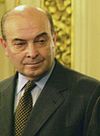
“In the early years of the twentieth century, Argentina was one of the richest countries in the world. Then came many years of failed policies, and Argentina retreated to the status of a middle-income country. […] Things changed in 1991 when Domingo Cavallo (an economics Ph.D. from Harvard) took over as economy minister. Argentina implemented an array of promarket economic reforms, including a currency-board type of monetary system.”
Robert Barro on Lawrence Summers
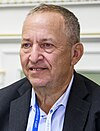
“Summers’s outlook on economic policy can be summarized by the remark that he gave me some years ago: “If I had your views on economics, I would find another profession.” He meant that if free markets usually worked well and the government ought usually to stay out, then he would find economics to be an uninteresting occupation. Fortunately for Summers, he has always believed in the potential benefits from governmental activism, although the strength of this belief may have diminished over time.”
Robert Barro on Richard Feynman
“People often ask me why I became an economist. In college and before that, I tended toward mathematics and science. As a physics major at Caltech in the early 1960s, I was lucky to take the two-year sequence taught to freshmen and sophomores the one and only time by the great Richard Feynman. (To prove this, I have a signed and leather-bound copy of the notes from his course.) Feynman's approach was to skip the standard topics in physics and use with frontier material. That was partly why many of the faculty and graduate students attended the course. It also meant that I learned early on what it would mean to be an actual physicist, and I decided pretty quickly that I would not be a great one. In retrospect, it was fortunate that I learned this so soon, rather than having to wait until my senior year or, perhaps, even to graduate school.”

Robert Barro on Milton Friedman
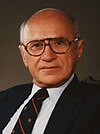
“In fact, the only person to rival Friedman for policy influence in the twentieth century is John Maynard Keynes, who had a strikingly different view of the role of government. Keynes was influential because he advocated more government intervention into what he perceived as poorly functioning private economies caught up in the Great Depression. In contrast to Keynes, Friedman put the main blame for the Depression on government failures, especially of monetary policy. Hence, the Depression did not make Friedman a fan of big government. He also found in the Federal Reserve’s failure to prevent deflation an argument in favor of monetary rules. As the world evolved— with low inflation becoming the major mission of central banks and free markets and secure property rights becoming the main policies to promote economic growth—Friedman surely won the intellectual battle.”
Robert Barro on John Kenneth Galbraith
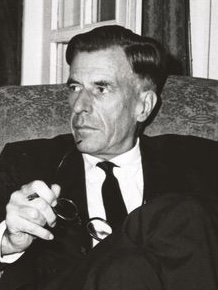
“In the mid-1960s, I was a typical left-wing undergraduate student at Caltech. For any social problem that arose, I had no doubt that the appropriate cure involved some form of government intervention. So, naturally, Galbraith was my hero, and I was therefore greatly excited when he came to my school in 1964 to give a speech in support of Lyndon Johnson’s campaign for the presidency. I confess that I cannot remember a lot of the details of the speech, but I know that I was disappointed. In particular, I recall feeling that his arguments for bigger government were not compelling. No doubt, this event started me on the road to doubting the wisdom of governmental activism and appreciating the wonders of free markets. When I discussed this experience with Ken after more than thirty years, his surprising reaction was to apologize for what must have been a bad speech. He said that he especially regretted his endorsement of Lyndon Johnson, who was later to become anathema to liberals because of his pursuit of the Vietnam War. If it had been me, I would have apologized mainly for Johnson’s Great Society programs.”
Robert Barro on Philip Wicksteed
“Somehow the discussion got around to Gary Becker, and I opined that Gary was also quite a good economist. However, Cordemí began to shake his head in a doleful manner, and I sensed, first, that he did not approve of Becker and, second, that I was losing his respect because of my own good opinion of Becker. Then Cordemí said that Becker’s problem was his lack of originality. This was really a surprise—many people object to Gary because he is outrageous, not because he is unoriginal. Then Cordemí dropped his bombshell: all of Becker’s ideas are in Philip Wicksteed’s book, The Common Sense of Political Economy.After this revelation, I was pretty eager to get home to consult my copy of The Common Sense, which I owned but had not studied. When I read the book, I discovered quickly what Cordemí was referring to. Wicksteed urged his fellow economists to apply economics broadly to a variety of social interactions, not just to usual business matters. However, as far as I could tell, he had not gone anywhere with this idea. Therefore, Gary’s originality seemed to be intact. Nevertheless, I filed away this incident and figured I could use it against Gary at some future time.[…] I figured that I needed to create something of a psychological edge, and I arranged for my younger son, Josh (then eight years old), to be on the tennis court prior to the big match. He was set up to be reading the Common Sense of Political Economy. I figured that Gary would ask Josh what he was reading, and I told Josh to report the author and title and then say, “I understand that you got all your ideas from this fellow.”[…] Gary quickly responded, “Oh, yes, I copied all his work.””
Quotes About Robert Barro
Gain deeper perspective through quotes about Robert Barro from others.
Alan S. Blinder on Robert Barro
“Some of the new classical economists are extremely ideological. If you give them evidence, for example, that fully anticipated money matters, evidence counter to their world view, they say that you're wrong. And if you say that their evidence is wrong, they'll say you're wrong again. I give up! Barro once said to me that there isn't any evidence in the world that fiscal policy is effective. Just open your eyes and see episodes of tax cutting and government-spending increases. How about World War II? That had big effects on real output. His response? ... He sometimes shrugs, he sometimes gives a clearer alternative explanation. Sargent is much more serious. He doesn't come to these economic views from a rigidly maintained ideological position. He's a sort of tinkerer, playing an intellectual game. He looks at a puzzle to see if he can solve it in a particular way, exercising these fancy techniques. That's his thing, so to speak. I think Lucas is a blend of those two, actually. He's not extreme as Barro, he's more open. And he's not quite as technical as Sargent.”
About Robert Barro
Robert Joseph Barro (born September 28, 1944) is an American classical macroeconomist and the Paul M. Warburg Professor of Economics at Harvard University.