Bram Stoker on Richard Francis Burton
← Back to Richard Francis Burton Profile
“I could not but be struck by the strangers. The lady was a big, handsome blonde woman, clever-looking and capable. But the man riveted my attention. He was dark, and forceful, and masterful, and ruthless. I have never seen so iron a countenance. I did not have much time to analyse the face; the bustle of arrival prevented that. But an instant was enough to make up my mind about him. We separated in the carriage after cordial wishes that we might meet again. When we were on the platform, I asked Irving: "Who is that man?" "Why," he said, " I thought I introduced you!" "So you did, but you did not mention the names of the others!" He looked at me for an instant and said inquiringly as though something had struck him: "Tell me, why do you want to know?" "Because," I answered, "I never saw any one like him. He is steel! He would go through you like a sword!" "You are right!" he said. "But I thought you knew him. That is Burton — Captain Burton who went to Mecca!"”
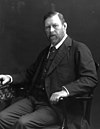
“My first impression of the man as of steel was consolidated and enhanced. He told us, amongst other things, of the work he had in hand. Three great books were partially done. The translation of the Arabian Nights, the metrical translation of Camoëns, and the Book of the Sword. These were all works of vast magnitude and requiring endless research. But he lived to complete them all.”
“Burton had a most vivid way of putting things — especially of the East. He had both a fine imaginative power and a memory richly stored not only from study but from personal experience. As he talked, fancy seemed to run riot in its alluring power; and the whole world of thought seemed to flame with gorgeous colour. Burton knew the East. Its brilliant dawns and sunsets; its rich tropic vegetation, and its arid fiery deserts; its cool, dark mosques and temples; its crowded bazaars; its narrow streets; its windows guarded for out-looking and from in-looking eyes; the pride and swagger of its passionate men, and the mysteries of its veiled women; its romances; its beauty; its horrors.”